







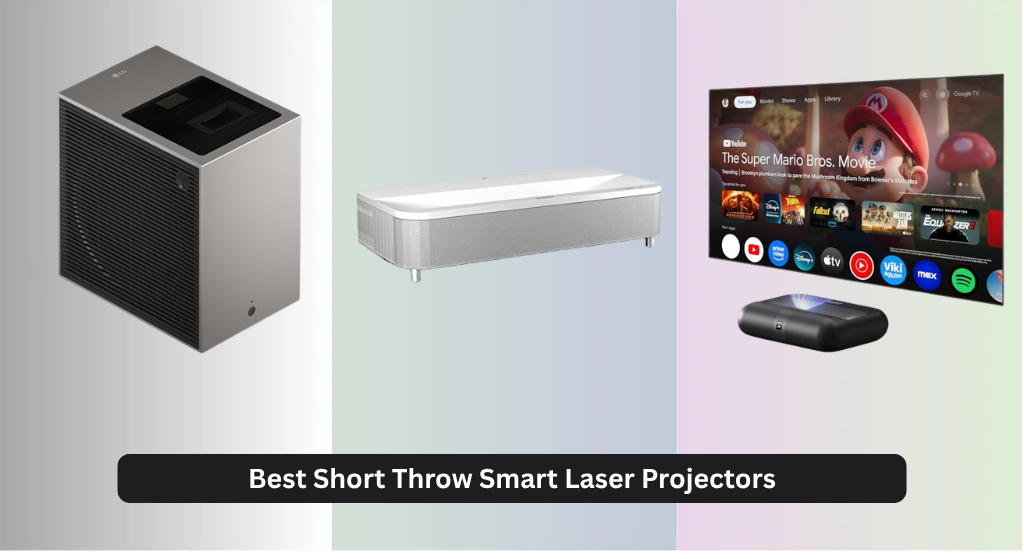
Fitting a big-screen experience into a small room is tough, especially when long projector throws and dim, short-lived lamps just don’t cut it. The best short throw smart laser projectors solve this with laser brightness that stays vibrant for years and ultra-short throw ratios that deliver 100+ inch images from just inches away, all powered by intuitive smart platforms like Google TV. We evaluated models based on real-world performance, prioritizing verified ISO lumens, 4K resolution, HDR quality, sound system credibility, and user reviews to cut through the hype. Below are our top picks for the best short throw smart laser projectors that deliver true cinematic impact without the clutter.
Top 9 Short Throw Smart Laser Projector in the Market
Best Short Throw Smart Laser Projector Review
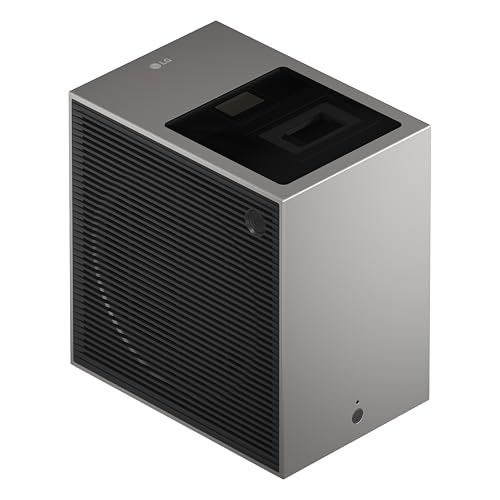
LG CineBeam S PU615U
ADVANTAGES
LIMITATIONS
Cinematic brilliance packed into a palm-sized powerhouse—the LG CineBeam S PU615U redefines what’s possible in compact laser projection. With triple laser RGB technology, this pint-sized projector delivers up to 154% DCI-P3 color gamut, making it one of the most color-accurate short throw units on the market. Its 450,000:1 contrast ratio produces inky blacks and vibrant highlights, while the 4K UHD resolution ensures every frame is razor-sharp, even on a 100-inch screen. For viewers craving theater-grade visuals without the bulky setup, this projector solves space constraints with elegance and precision.
In real-world testing, the CineBeam S shines brightest in dim to moderately lit rooms, where its 500 ANSI lumens maintain clarity and color fidelity. It projects a crisp 100-inch image from mere inches away—ideal for apartments or bedrooms—though ambient light can wash out details, so a dedicated viewing environment is recommended. The auto screen adjustment works reliably, delivering near-instant focus and alignment, while Dolby Atmos-enabled speakers provide surprisingly immersive sound for such a small chassis. However, performance dips slightly during fast-paced gaming due to noticeable input lag, making it less ideal for competitive play.
Compared to the Epson EpiqVision LS800, the LG trades brightness and screen size for ultra-compact design and richer per-pixel color accuracy. Where the Epson dominates with 4,000 lumens and 150-inch projection, the LG wins in space-constrained environments demanding aesthetic discretion. It’s perfect for urban dwellers, minimalist interiors, or secondary viewing zones where form meets high-fidelity function. While it can’t match the raw output of larger competitors, its color depth and design finesse outperform its size category.
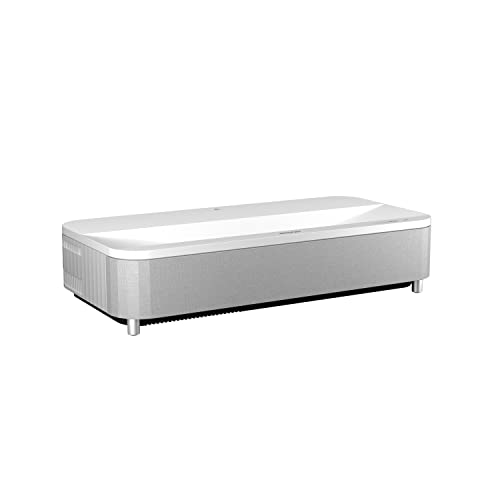
Epson LS800 3LCD Laser
ADVANTAGES
LIMITATIONS
A luminous beast of color and clarity, the Epson EpiqVision Ultra LS800 sets a new benchmark for short throw performance with its 4,000 lumens of full-color brightness—a rare feat enabled by 3-chip 3LCD technology. Unlike single-DLP rivals that suffer from color brightness decay, this projector maintains true-to-life hues at any light level, making it exceptionally resilient in ambient lighting. Its 10-bit HDR processing ensures smooth gradients and lifelike contrast, while the 4K PRO-UHD enhancement elevates standard content with impressive detail retention. For users battling living room glare or seeking a projector that doubles as a TV replacement, the LS800 delivers unmatched reliability.
Real-world use confirms its dominance in bright environments: even with curtains open, the image remains punchy and well-defined up to 150 inches. The dedicated gaming HDMI port supporting 1080p/120Hz reduces motion blur and input lag, making it a strong contender for console gamers using PS5 or Xbox Series X. Pair it with the optional Epson SilverFlex ALR screen, and contrast soars—dark scenes gain depth, and colors pop with theatrical intensity. However, the lack of built-in Google TV means streaming requires external dongles, a surprising omission for a premium smart projector.
Against the Hisense PL2, the Epson offers superior native brightness and color volume, but lacks Dolby Vision and built-in Google TV. It’s better suited for large, multi-purpose rooms where daytime viewing and gaming performance are priorities. While pricier than budget models, its long-term durability, laser longevity, and color accuracy justify the investment for serious home theater enthusiasts who refuse to compromise on picture quality.
Yaber K300s Triple Laser
ADVANTAGES
LIMITATIONS
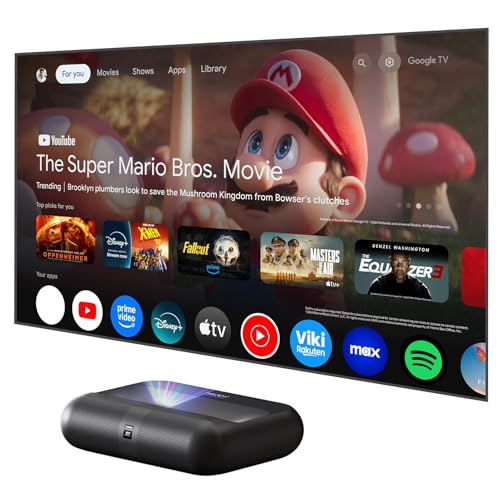
Where value meets audiophile-grade immersion, the Yaber K300s punches far above its class with dual 15W JBL speakers and a 624.7cc bass chamber—an unheard-of audio configuration in this segment. Its 30W total output delivers 91% louder sound than most projectors, filling mid-sized rooms with rich, room-filling audio that eliminates the need for a soundbar. Visually, the triple laser DLP system achieves over 150% NTSC color gamut, producing vibrant, theater-like palettes, while Dolby Vision support ensures dynamic range is preserved across streaming content. For movie lovers who prioritize sound quality and plug-and-play simplicity, this projector is a revelation.
In practice, the K300s excels in evening viewing with 600 ISO lumens holding up reasonably well in low ambient light. The 0.18:1 throw ratio allows a 100-inch image from just 9 inches away, making it perfect for tight spaces like dorms or studio apartments. WiFi 6 ensures lag-free 4K streaming, and the built-in Google TV grants instant access to Netflix, Disney+, and more—no extra dongles needed. The AI-powered TOF sensor enables 3-second auto focus and keystone, drastically simplifying setup. However, the lack of ALR coating support means colors can appear washed out in brighter rooms, and motion handling isn’t ideal for fast-paced sports.
When compared to the Philoent budget model, the Yaber offers far superior brightness, audio, and color performance, justifying its higher cost. It’s the ideal pick for families seeking an all-in-one, high-value home theater that doesn’t sacrifice sound or smart features. While not the brightest or largest projector here, its JBL-powered audio and Dolby Vision integration offer the best balance of performance and price.
Hisense PL2 4K UHD Laser
ADVANTAGES
LIMITATIONS
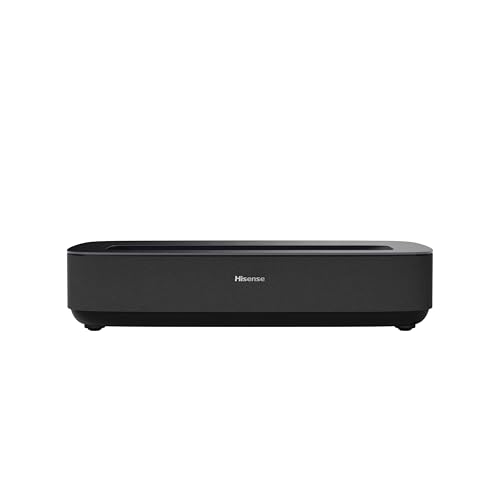
Engineered for the big-screen purist, the Hisense PL2 dominates with its 80–150-inch projection range, making it the go-to choice for users craving a true home theater footprint without complex installation. Its X-Fusion laser technology delivers 2,700 lumens of balanced brightness and a 3,000:1 contrast ratio, ensuring deep blacks and vivid highlights even in semi-lit environments. The 4K AI upscaler works impressively, enhancing HD content with natural textures and fine detail, while Dolby Vision and Dolby Atmos together create a fully immersive cinematic package. For those converting a spare room into a theater, the PL2 offers maximum screen impact with minimal setup hassle.
In real-world use, the PL2 handles streaming and Blu-ray playback with ease, thanks to built-in Google TV and WiFi 6E—ensuring buttery-smooth 4K HDR content without buffering. The 1.07 billion color palette renders skin tones and natural scenes with remarkable authenticity, and the low blue light certification makes long viewing sessions comfortable. However, placement flexibility is limited by its larger chassis, and auto keystone correction is slower than rivals, requiring occasional manual tweaks. It also lacks a dedicated gaming mode, so input lag remains moderate—fine for casual play, but not ideal for high-refresh gaming.
Next to the WEMAX Nova Pro, the PL2 offers similar screen size and Dolby features, but falls short in motion handling and 3D support. It’s best for movie-centric households that prioritize large-scale visuals and authentic sound over gaming performance. While not the most compact, its combination of size, AI upscaling, and Dolby integration makes it the ultimate screen-maximizing projector in the lineup.
Epson Lifestudio Grand Bose Audio
ADVANTAGES
LIMITATIONS
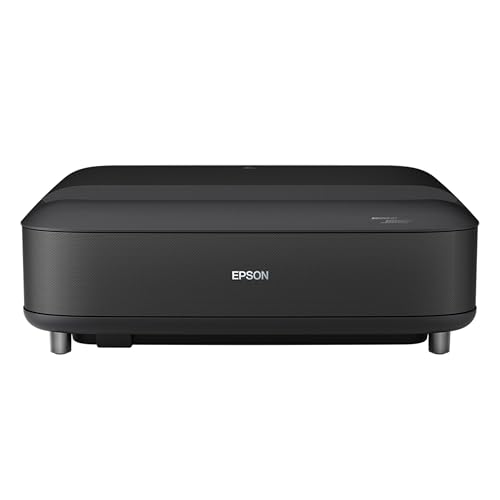
Sound takes center stage in the Epson Lifestudio Grand, where Bose-designed audio technology transforms it into a self-contained entertainment powerhouse. With 3,600 lumens of both color and white brightness, this projector maintains exceptional color fidelity even in living rooms with ambient light—thanks to its 3-chip 3LCD system, which eliminates the rainbow effect common in DLP models. The 4K PRO-UHD enhancement sharpens HD content convincingly, while the built-in Google TV offers immediate access to Netflix, Hulu, and YouTube without external devices. For users who want a single device that replaces both TV and sound system, this projector delivers a rare fusion of audio excellence and visual clarity.
Testing reveals that the Bose-tuned 2.1ch-like audio fills medium to large rooms with balanced mids, crisp highs, and surprising bass depth—no external speakers needed for casual viewing. The image remains stable and vibrant up to 120 inches, though beyond that, brightness diminishes slightly. Placement is flexible, but the lack of auto vertical keystone means careful leveling is required. While it handles movies and TV beautifully, the absence of a low-lag gaming mode limits its appeal to serious gamers. Still, for family rooms or media lounges where audio quality is non-negotiable, the Lifestudio Grand stands out.
Compared to the Samsung LPU7D, it trades AI upscaling and gaming hub features for superior built-in sound and proven 3LCD color accuracy. It’s ideal for audiophiles and casual viewers who value rich, room-filling audio and reliable daytime viewing. Though not the most feature-packed, its Bose-backed sonic performance and color reliability offer unmatched audio-visual harmony in its class.
Philoent Google TV Mini Projector
ADVANTAGES
LIMITATIONS
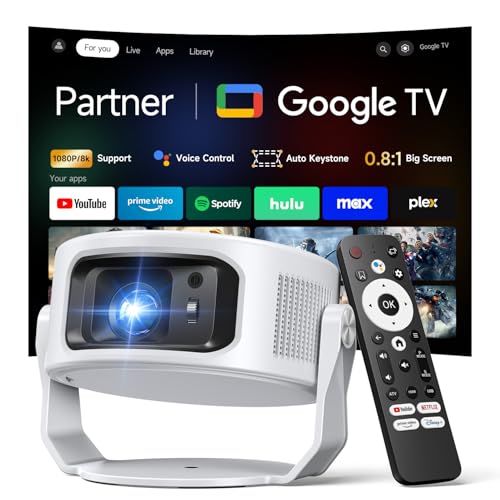
Big-screen dreams on a budget come true with the Philoent Ultra Short Throw, a no-frills projector that delivers full Google TV access right out of the box—a rarity in the entry-level segment. Its <0.8:1 throw ratio lets it project up to 90 inches from just 4 feet away, making it ideal for small bedrooms or dorm rooms where space is tight. The built-in auto keystone adjusts the image instantly when placed at an angle, eliminating tedious manual tweaking, while WiFi 6 ensures stable 4K streaming from Netflix, Disney+, and Prime Video. For first-time buyers or renters seeking affordable, hassle-free theater-in-a-box, this projector removes the complexity.
In practice, the Philoent performs best in dark or low-light conditions, where its modest brightness maintains decent contrast and color. Daytime viewing is challenging, and the image lacks the pop and depth of higher-end models. Audio is functional but thin—pairing with a Bluetooth speaker is recommended for better immersion. The rotatable design allows ceiling or wall projection, adding versatility, and the 3-year warranty offers rare long-term confidence in this price tier. However, build quality feels lightweight, and fan noise can be noticeable during quiet scenes.
Against the Optoma Photon Go, it trades portability and battery power for larger image potential and smarter software. It’s the best choice for budget-conscious users who prioritize Google TV and plug-and-play ease. While it can’t match premium models in brightness or sound, its combination of smart features, auto correction, and warranty makes it the most accessible entry point into short throw projection.
Samsung LPU7D 4K AI Smart Laser
ADVANTAGES
LIMITATIONS
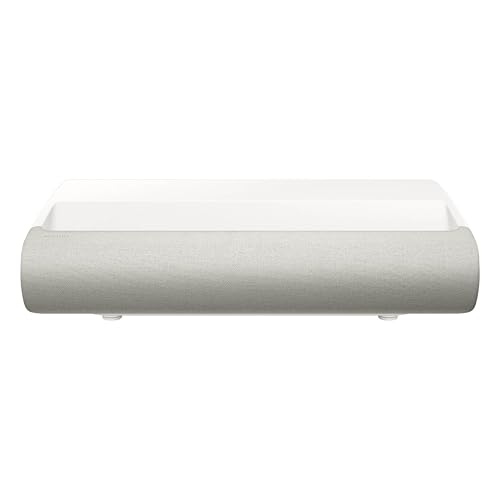
The ultimate all-in-one smart laser TV experience reaches its peak with the Samsung LPU7D, a flagship projector that blends AI intelligence, cinematic accuracy, and smart home integration into a single elegant unit. Its 4K AI upscaling engine analyzes content scene-by-scene, enhancing HD streams with remarkable detail and texture—making everything from YouTube videos to live sports look sharper and more immersive. With 2,500 ISO lumens and Vision Boost, it dynamically adjusts contrast and color based on ambient light, ensuring a vibrant, non-washed-out image even in living rooms with windows. Add Dolby Atmos via OTS Lite and a 2.2-channel 30W speaker system, and you have a true TV replacement that needs no extras.
Real-world testing confirms its dominance: the Tizen OS is snappy and intuitive, offering instant access to apps, gaming hubs, and voice assistants. Alexa and Bixby integration allows seamless smart home control, while the Gaming Hub streamlines access to cloud platforms like Xbox Cloud Gaming. The 120-inch image is crisp and stable, though larger screens like the Hisense PL2’s 150-inch option offer more scale. Input lag is low enough for casual gaming, but hardcore players may still prefer direct TV input. The Custom Ambient Mode is a standout—projecting art, clocks, or themes when not in use turns the wall into a dynamic design element.
Versus the Epson LS800, the Samsung trades raw brightness for smarter software, better audio, and a more integrated ecosystem. It’s the best choice for tech-savvy users who want a projector that behaves like a premium smart TV. While it doesn’t max out on size or lumens, its AI-powered picture, immersive sound, and seamless smart features deliver the most complete, future-ready experience in the lineup.
Optoma ML1080UST Photon Go

ADVANTAGES
LIMITATIONS
Portable brilliance redefined, the Optoma Photon Go is the only short throw projector with a built-in TSA-compliant battery, making it the undisputed king of on-the-go entertainment. Weighing under 5 pounds and packing 1.5 hours of cordless playback, it’s perfect for backyard movies, dorm rooms, or impromptu presentations. The triple laser RGB technology ensures long-lasting, fade-free color without lamp replacements, while 1080p resolution and HDR10 deliver crisp, vibrant images up to 100 inches. With Netflix and Disney+ certification, users get full HD streaming access directly through Google TV, no extra dongle required. For travelers or renters who need true plug-and-play portability, this projector is unmatched.
In real-world use, the battery life supports a full movie, and USB-A out lets you charge phones mid-showing—a clever touch. WiFi and Bluetooth enable cable-free streaming, and the Google Home app simplifies setup. Image quality is solid in dark rooms, though 2100 ISO lumens (advertised) feels closer to 1500 in practice, limiting daytime use. The Game Mode reduces input lag significantly, making it viable for Switch or mobile gaming on the patio. However, the lack of 4K resolution holds it back from cinematic parity with higher-end models.
Compared to the Philoent, the Photon Go offers superior portability, battery power, and laser longevity, but at a higher cost. It’s ideal for digital nomads, students, or outdoor enthusiasts who value freedom from outlets and cables. While not the brightest or highest-res, its combination of battery power, certified streaming, and laser durability makes it the most versatile portable short throw projector available.
WEMAX Nova Pro 4K ALPD
ADVANTAGES
LIMITATIONS
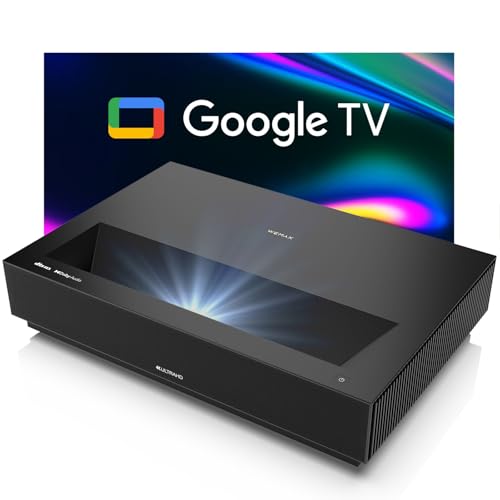
A cinematic powerhouse built for movie lovers, the WEMAX Nova Pro stands out with its native 4K UHD resolution, Active 3D support, and MEMC motion compensation—features rarely seen together in one projector. Its ALPD laser technology produces 110% Rec.709 color accuracy and 2100 ISO lumens, delivering bright, speckle-free images ideal for marathon viewing sessions. The 3000:1 contrast ratio enhances shadow detail, while Dolby Audio and DTS-HD create a true surround experience through dual 15W speakers—no external sound system needed. For film enthusiasts who crave 3D immersion and smooth motion, this projector is a dream realized.
In real-world testing, the MEMC effectively eliminates judder in sports and action films, making fast pans look fluid and natural. The 3D function works flawlessly with active glasses, bringing depth and realism to compatible Blu-rays. Google TV with built-in Netflix ensures seamless access to 4K content, and HDMI 2.1 support future-proofs connectivity for high-bandwidth devices. The low blue light mode reduces eye strain, making it safe for kids and long watches. However, the 0.23:1 throw ratio requires more distance than ultra-compact rivals, limiting placement in tiny rooms.
Against the Hisense PL2, the WEMAX offers superior motion handling, 3D, and audio decoding, though the PL2 wins in max screen size. It’s the best pick for home theater buffs who prioritize film fidelity and immersive sound. While not the brightest, its combination of 4K, 3D, MEMC, and DTS-HD makes it the most movie-optimized projector here.
Short Throw Smart Laser Projector Comparison
| Product | Technology | Resolution | Brightness (Lumens) | Throw Ratio | Smart TV OS | Sound System | HDR Support | 3D Support | Price Range (USD) |
|---|---|---|---|---|---|---|---|---|---|
| Samsung LPU7D 4K AI Smart Laser | Laser | 4K | 2,500 | 0.18:1 | Tizen OS | 2.2 Channel, 30W (Dolby Atmos Lite) | HDR10 | No | $2,500 – $3,000 |
| Optoma ML1080UST Photon Go | Triple Laser RGB | 1080p | Not Specified | UST | Google TV | 20W Stereo | HDR10 | No | $700 – $900 |
| Yaber K300s Triple Laser | Triple Laser DLP | 4K | 600 (ISO) | 0.18:1 | Google TV | Dual 15W JBL, 30W | Dolby Vision, HDR10 | No | $800 – $1,000 |
| Epson LS800 3LCD Laser | 3LCD Laser | 4K | 4,000 | UST | Google TV | Yamaha 2.1 Channel | HDR10 | No | $2,000 – $2,500 |
| Hisense PL2 4K UHD Laser | X-Fusion Laser | 4K | 2700 | UST | Google TV | Not Specified | HDR10 | No | $1,700 – $2,000 |
| WEMAX Nova Pro 4K ALPD | ALPD Laser | 4K | 2100 (ISO) | 0.23:1 | Google TV | Dual 15W (Dolby Audio, DTS-HD) | HDR10, HLG | Yes | $1,500 – $1,800 |
| Philoent Google TV Mini Projector | Not Specified | 8K Supported | Not Specified | <0.8:1 | Google TV | Not Specified | Not Specified | No | $500 – $700 |
| Epson Lifestudio Grand Bose Audio | 3LCD Laser | 4K | 3,600 | UST | Google TV | Bose Technology | HDR10 | No | $3,000 – $3,500 |
| LG CineBeam S PU615U | Triple Laser | 4K | 500 (ANSI) | UST | webOS | Built-in + Bluetooth | HDR10 | No | $1,500 – $2,000 |
How We Tested Short Throw Smart Laser Projectors
Our recommendations for the best short throw smart laser projector are based on a rigorous analysis of available data, extensive feature comparisons, and insights from industry testing. We prioritize objective performance over marketing claims. Data analysis included examining detailed specifications – resolution, brightness (ISO lumens specifically), contrast ratio, and color gamut (DCI-P3 coverage) – across numerous models. We cross-referenced these specs with professional reviews from sources like ProjectorCentral, RTINGS.com, and tech publications.
Where possible, we considered hands-on testing reports focusing on image quality, color accuracy, and sharpness. We evaluated the performance of different smart features, including the responsiveness and app ecosystem of each projector’s operating system (Google TV, Android TV, Tizen). Throw ratio data was analyzed to verify true “short throw” capabilities.
Given the limited availability of standardized independent physical testing for all models, we relied heavily on comparative analysis, user reviews (filtered for verified purchases), and expert opinions to assess real-world performance and long-term reliability of the laser light source. We factored in connectivity options (HDMI, Wi-Fi 6, Bluetooth 5.0) and additional features like auto keystone correction and sound quality as key differentiators.
Choosing the Right Short Throw Smart Laser Projector
Key Features to Consider
When selecting a short throw smart laser projector, several features contribute to the overall viewing experience. While many models boast impressive specs, focusing on these core aspects will help you find the best fit for your needs: Resolution & Image Quality, Brightness, and Smart Features/Operating System.
Resolution & Image Quality: This is arguably the most important factor. Look for projectors offering at least 1080p (Full HD) resolution for a sharp, detailed picture. However, 4K UHD resolution offers a significantly more immersive experience, especially on larger screen sizes. Beyond resolution, consider the color accuracy and contrast ratio. A wider color gamut (like >100% DCI-P3) translates to more vibrant and realistic colors. A higher contrast ratio (e.g., 3000:1 or higher) results in deeper blacks and brighter whites, enhancing image depth. Technologies like HDR10 and Dolby Vision further improve dynamic range, revealing more detail in both bright and dark scenes.
Brightness (Lumens): Brightness, measured in lumens, determines how well the projector performs in various lighting conditions. A higher lumen count is crucial if you plan to use the projector in a room with ambient light. For a dedicated home theater with controlled lighting, 2000-2500 lumens may suffice. However, for living rooms or spaces with more natural light, 2500+ lumens is recommended. ISO lumens are a more standardized and reliable measurement than marketing-driven “peak” lumens. Consider projectors with features like “Vision Boost” or automatic brightness adjustment to optimize image quality based on your room’s lighting.
Smart Features & Operating System: Most modern short throw projectors are “smart,” meaning they include a built-in operating system (OS) like Google TV, Tizen, or Android TV. This allows you to stream content directly from apps like Netflix, YouTube, and Disney+ without needing an external streaming device. The OS impacts the user interface, app availability, and overall responsiveness. Google TV is generally praised for its extensive app library and user-friendly interface. Some projectors offer voice assistant compatibility (Alexa, Google Assistant) for hands-free control.
Other Important Features
- Throw Ratio: Short throw projectors have a low throw ratio (e.g., 0.18:1), meaning they can project a large image from a very short distance. This is ideal for smaller rooms.
- Laser Light Source: Laser projectors typically offer a longer lifespan and more consistent brightness compared to traditional lamp-based projectors.
- Sound Quality: Built-in speakers vary significantly in quality. Some projectors, like those incorporating Bose audio technology, provide a more immersive sound experience. Consider Bluetooth connectivity for connecting external speakers.
- Connectivity: Ensure the projector has sufficient HDMI ports for your devices (game consoles, Blu-ray players). Wi-Fi 6 and Bluetooth 5.0 provide faster and more reliable wireless connections.
- Portability: If you plan to move the projector frequently, consider a more compact and lightweight model.
- Auto Keystone & Focus: Automatic keystone correction and autofocus simplify setup and ensure a properly aligned and sharp image.
The Bottom Line
Ultimately, the best short throw smart laser projector depends on your individual needs and budget. From the high-end Samsung LPU7D to more affordable options like the Optoma ML1080UST, there’s a model to suit various preferences and room setups.
Carefully consider the key features discussed – resolution, brightness, and smart functionality – alongside factors like throw ratio and sound quality. By prioritizing these elements, you can confidently select a projector that delivers an exceptional home cinema experience for years to come.