





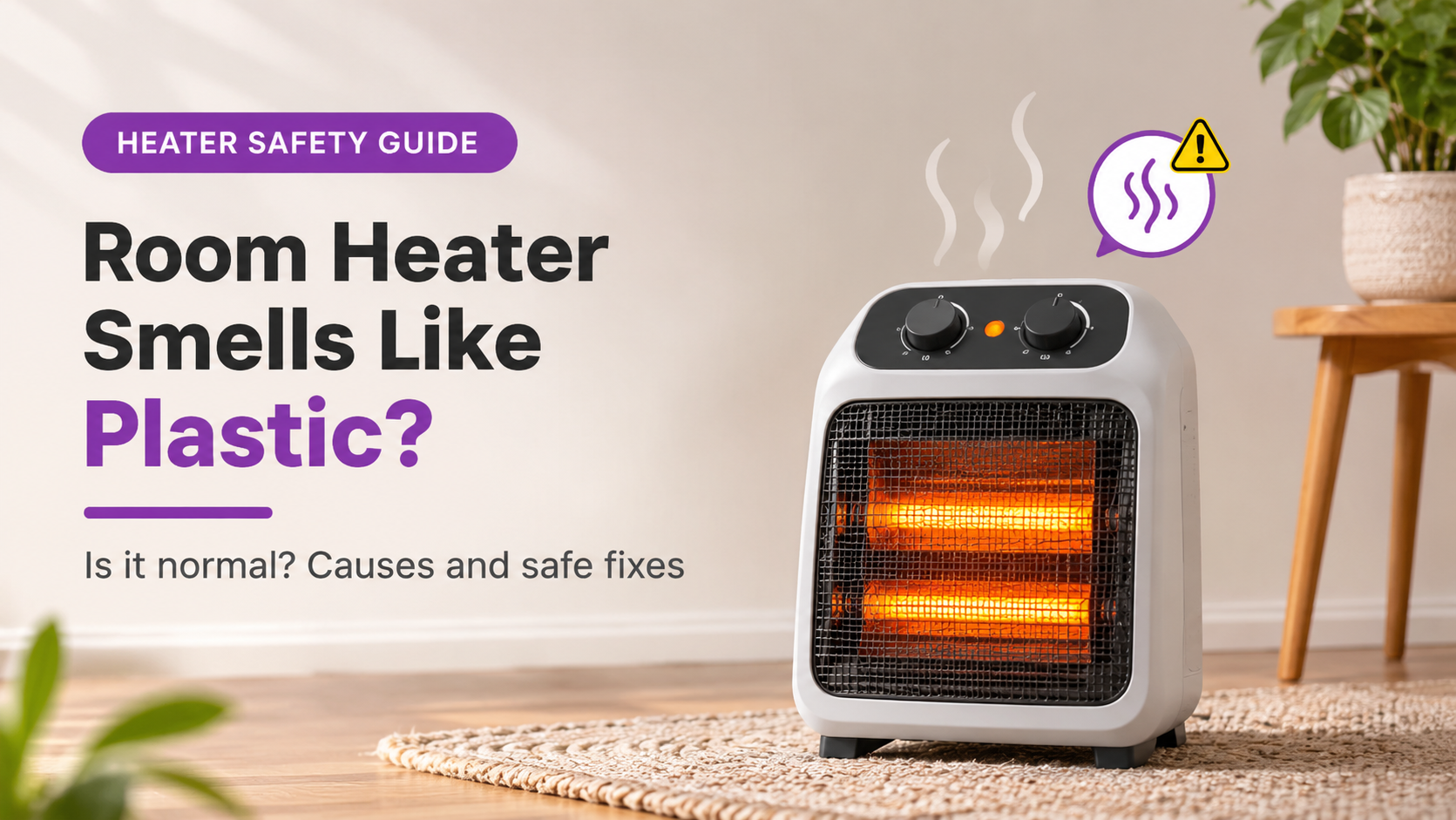
You switch on your heater and a strange smell fills the room. It is sharp, a little chemical and a lot like burning plastic. It is natural to worry. If your room heater smells like plastic, the cause can range from a harmless first-use odor to a warning sign of overheating or an electrical fault.
This guide explains when the smell is normal, when it is not, the eight most common causes, the safe steps to take immediately, how to prepare a new heater safely, and when to replace the unit.
Safety First
If the smell is strong or you see smoke, sparks or melting, switch the heater off, unplug it if it is safe to do so, ventilate the room and do not use it again until it has been checked. If there are flames or heavy smoke, leave the area and call emergency services. Never leave a smelling heater running unattended.
Quick Answer
A faint plastic smell on the first few uses of a new heater, or a dusty smell when you first turn on an old heater for the season, is often harmless and fades quickly. A strong, persistent or sharp smell, especially with a hot plug, discoloration, smoke or noises, can mean overheating, damaged insulation or an electrical fault and needs you to stop using the heater.
Table of Contents
- Is a plastic smell from a heater normal?
- 8 causes of a plastic smell
- What the smell may mean
- What to do right now: 7 safe steps
- How to safely break in a new heater
- How to clean and prevent smells
- When to replace your heater
- Choosing a safer heater
- Frequently asked questions
Is a Plastic Smell From a Heater Normal?
Sometimes, yes. New heaters often have coatings, oils and residues from manufacturing. When the element heats up for the first few times, these can burn off with a mild chemical smell. Similarly, dust that collected during storage can burn off when you start the heater for the season. In both cases the smell should be faint, short-lived and get weaker with use.
A strong or lingering smell is different. It can be a sign that plastic parts or electrical insulation are overheating, or that something is touching the hot element. These situations carry a real fire risk, so it is important to know the difference.
8 Causes of a Room Heater Smelling Like Plastic
Cause 1: New-heater residues and coatings
New heaters often carry oils from manufacturing, protective coatings or adhesives. The first time the element heats up, these can burn off and produce a faint chemical or plastic smell. This is common and usually temporary.
What to do:
- Unpack and remove all plastic wrap, tags and protective film from the heater.
- Run it in a well-ventilated room, with windows open, on a hard, non-flammable surface.
- Use short sessions of 30-60 minutes at first, and stay in the home while it runs. Repeat until the smell fades.
Cause 2: Burning dust
Dust collects on the heating element, inside the vents and on the fan during storage. When you first switch on the heater for the season, it burns off with a dusty, burnt smell.
What to do:
- Before first use each season, unplug the heater and vacuum the vents and grills with a soft brush attachment.
- Wipe the outside with a dry or slightly damp cloth. Do not spray liquid into the heater.
- Run it for a short time in a ventilated room and check that the smell fades.
Cause 3: Blocked vents and overheating
If vents are blocked, heat builds up inside the heater. Plastic parts, internal insulation and wiring can become too hot and release a smell.
What to do:
- Switch off, unplug and allow the heater to cool.
- Clear anything blocking the front, back or sides, such as curtains, clothes or furniture.
- If the smell returns once the vents are clear, stop using the heater.
Cause 4: Plastic or objects touching hot parts
A plastic bag, wrapper, toy or fabric near the heater, or falling into the vents, can melt or scorch and give off a strong plastic smell. This is a fire hazard.
What to do:
- Keep at least 1 meter (3 feet) around the heater clear.
- Switch off and unplug the heater before checking for objects. Do not poke inside with metal tools.
- If you see melted plastic or discoloration on the heater, do not use it again.
Cause 5: Hot or damaged cord and plug
A loose, damaged or poorly fitting plug can overheat and melt its insulation, giving off a plastic smell near the wall socket.
What to do:
- Feel the plug and cord gently with the heater switched off after use. They should not be hot, deformed or discolored.
- Replace the heater if the cord is frayed, cracked, pinched or the plug is loose or burnt.
- Have a damaged wall outlet checked by an electrician.
Cause 6: Overloaded outlets, extension cords and power strips
Heaters draw a lot of power. Extension cords or power strips that are not rated for the load can overheat, melt and cause fires.
What to do:
- Plug the heater directly into a wall outlet, and do not share the outlet with other high-power appliances.
- Follow the manufacturer’s instructions on extension cords. Many forbid them.
- If the breaker trips repeatedly, stop using the heater and contact an electrician.
Cause 7: An internal electrical fault
Worn motors, damaged wiring or a failing control board can cause sharp, acrid or fishy burning smells. These faults are not visible from the outside.
What to do:
- Stop using the heater immediately.
- Do not open or repair the heater yourself unless you are qualified.
- Contact the manufacturer or a qualified technician, or replace the heater.
Cause 8: A low-quality or uncertified heater
Heaters with poor materials, weak insulation or missing safety features are more likely to smell, overheat and fail. Unusual smells can be an early warning.
What to do:
- Check that the heater carries a recognized safety certification mark that applies in your country.
- Avoid heaters with missing labels, flimsy plugs, loose parts or strange build quality.
- Replace a heater that repeatedly smells or overheats instead of continuing to use it.
What the Smell May Mean
| What you notice | Likely meaning | What to do |
|---|---|---|
| Faint chemical or plastic smell on first use of a new heater | Manufacturing oils, coatings or residues burning off | Ventilate, run in short sessions and watch it; it should fade |
| Dusty or slightly burnt smell at the start of winter | Dust that settled on the element or inside the vents | Switch off, unplug, cool and clean the vents; ventilate the room |
| Strong, sharp plastic smell that continues | Plastic or insulation overheating, or an object near the heat | Stop using it, unplug and inspect when cool |
| Sharp, fishy or acrid electrical smell | Overheated electrical parts or wiring | Do not use it again; contact the manufacturer or an electrician |
| Smell with a hot, discolored or loose plug | Poor contact, overloaded cord or damaged outlet | Stop using it; replace the heater or cord and have the outlet checked |
| Smell with smoke, sparks or crackling | Serious fault or fire risk | Switch off power if safe, leave the area and call emergency services |
| Part | How it may smell | Why it happens |
|---|---|---|
| Heating element and coating | Faint chemical or hot-metal smell, mostly new | Residues burn off the first few times it heats |
| Dust and lint | Dusty, burnt-toast smell | Debris collected during storage burns off |
| Plastic housing or controls | Hot plastic smell | Parts are too close to the heat, or the heater is overheating |
| Cord and plug | Hot or burning plastic smell near the wall | Loose connection, damage or overload |
| Fan motor | Hot, electrical smell | Worn motor or dust clogging the fan |
| Internal wiring or control board | Sharp, acrid smell | Insulation overheating or an electrical fault |
What to Do Right Now: 7 Safe Steps
- Switch off the heater and unplug it if it is safe to do so. Do not touch a plug that is hot, melted or sparking. Switch off power at the breaker instead.
- Ventilate by opening windows and doors.
- Move people, pets and birds away from the room. Birds in particular are very sensitive to fumes.
- Wait until it is completely cool before touching or moving it.
- Inspect the plug, cord, wall outlet and vents for heat, discoloration, melting or objects.
- Clean the vents with a vacuum and soft brush while unplugged and cool.
- Decide whether the smell was likely dust or residue. If the smell is strong or comes back, stop using the heater.
How to Safely Break In a New Heater
If your new heater has a mild smell, a careful break-in can help the residues burn off without risk.
- Remove all packaging, plastic film, tags and stickers from the heater.
- Place it on a hard, flat, non-flammable surface, at least 1 meter (3 feet) from walls, curtains and furniture.
- Open windows to ventilate the room, and keep children, pets and birds out.
- Plug it directly into a wall outlet, with no extension cord.
- Run it on high for 30-60 minutes while you remain in the home, then switch off and let it cool. Repeat a few times.
- If the smell is not reducing, is strong, or you notice smoke, noise or heat from the plug, stop and contact the seller.
Important
Never leave a smelling heater unattended or running while you sleep. A break-in is only for mild, fading smells.
How to Clean and Prevent Smells
- Clean the vents before each heating season and every few weeks of regular use.
- Store the heater clean and dry, in its box or covered, so dust does not collect.
- Keep clear space around the heater and avoid placing it near curtains, bedding or clutter.
- Plug directly into a wall outlet and avoid extension cords unless the manual allows them.
- Never dry clothes on a heater or cover it.
- Avoid spraying air fresheners, aerosols or cleaning chemicals near an operating heater.
- Check the cord and plug regularly for damage, discoloration or heat.
When to Replace Your Heater
| Situation | Recommended action |
|---|---|
| New heater with a faint smell that fades within a few uses | Keep using it normally, with ventilation |
| New heater that still smells strongly after several uses | Stop using it and contact the seller or manufacturer under warranty |
| Older heater with a new burning smell | Stop using it; clean the vents once, and if the smell returns, replace or have it inspected |
| Heater with a damaged cord, plug or melted parts | Replace the heater; do not repair it yourself |
| Heater that trips the breaker or smells and sparks | Do not use it; contact an electrician or replace it |
| Heater with no recognized safety certification | Consider replacing it with a certified model |
Choosing a Safer Heater
- Recognized safety certification marks that apply in your country.
- Tip-over and overheat protection as standard features.
- Well-made plug, thick cord and solid housing, with no loose or flimsy parts.
- Appropriate power for the room, without needing extension leads.
- Adjustable thermostat and timer for control.
- Cool-touch exterior where possible, especially around children and pets.
- Easy-to-clean vents or filters that reduce dust build-up.
- Clear manual and warranty so you know how to use and register it.
Frequently Asked Questions
Is it normal for a new room heater to smell like plastic?
A faint, short-lived chemical or plastic smell can be normal on the first uses, as factory residues burn off. It should fade within hours of use, with no smoke, sparks or noises. If it is strong or does not fade, stop using the heater.
How long should a new heater smell last?
Many new heaters stop smelling after a few hours of use spread across a day or two. If the smell is not clearly reducing after several uses, contact the seller or manufacturer.
Is the smell harmful to breathe?
A faint odor that quickly fades is usually minor, but fumes from overheated plastic or electrical parts can be unhealthy and signal a fire risk. Ventilate the room, keep pets and especially birds away, and stop using the heater if the smell is strong.
Why does my old heater smell when I turn it on for the first time in winter?
Dust and lint collected on the element and in the vents burn off when the heater first warms up. Clean the vents while unplugged and cool, and ventilate the room.
Can a plastic smell mean the heater is going to catch fire?
It can be an early warning of overheating or an electrical fault. A persistent or strong smell, especially with a hot plug, discoloration, smoke or sparks, should be treated as serious. Stop using the heater.
Should I leave the heater running while I sleep if it smells a bit?
No. If the heater is giving off any unusual smell, do not leave it running unattended or while you sleep. Check it fully first.
Can I fix the heater myself?
You can safely clean vents when it is unplugged and cool, and remove objects that are clearly nearby. Internal parts, wiring and cords should only be repaired by qualified people, and in most cases a portable heater should be replaced.
What should I do if there is smoke or fire?
Leave the area, take everyone with you and call emergency services. Do not use water on an electrical fire. Only try to switch the power off if it is safe to do so.
Final Thoughts
A heater that smells like plastic is not always dangerous, but it should never be ignored. A faint, brief odor from a new heater or dusty element is common. A strong, persistent or worsening smell, particularly with a hot plug, smoke or noises, means you should stop using the heater straight away.
Err on the side of caution. Ventilate, unplug, inspect and, if you are not certain, replace the heater with a certified model. A new heater is far cheaper than the cost of a fire.