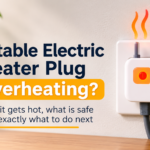
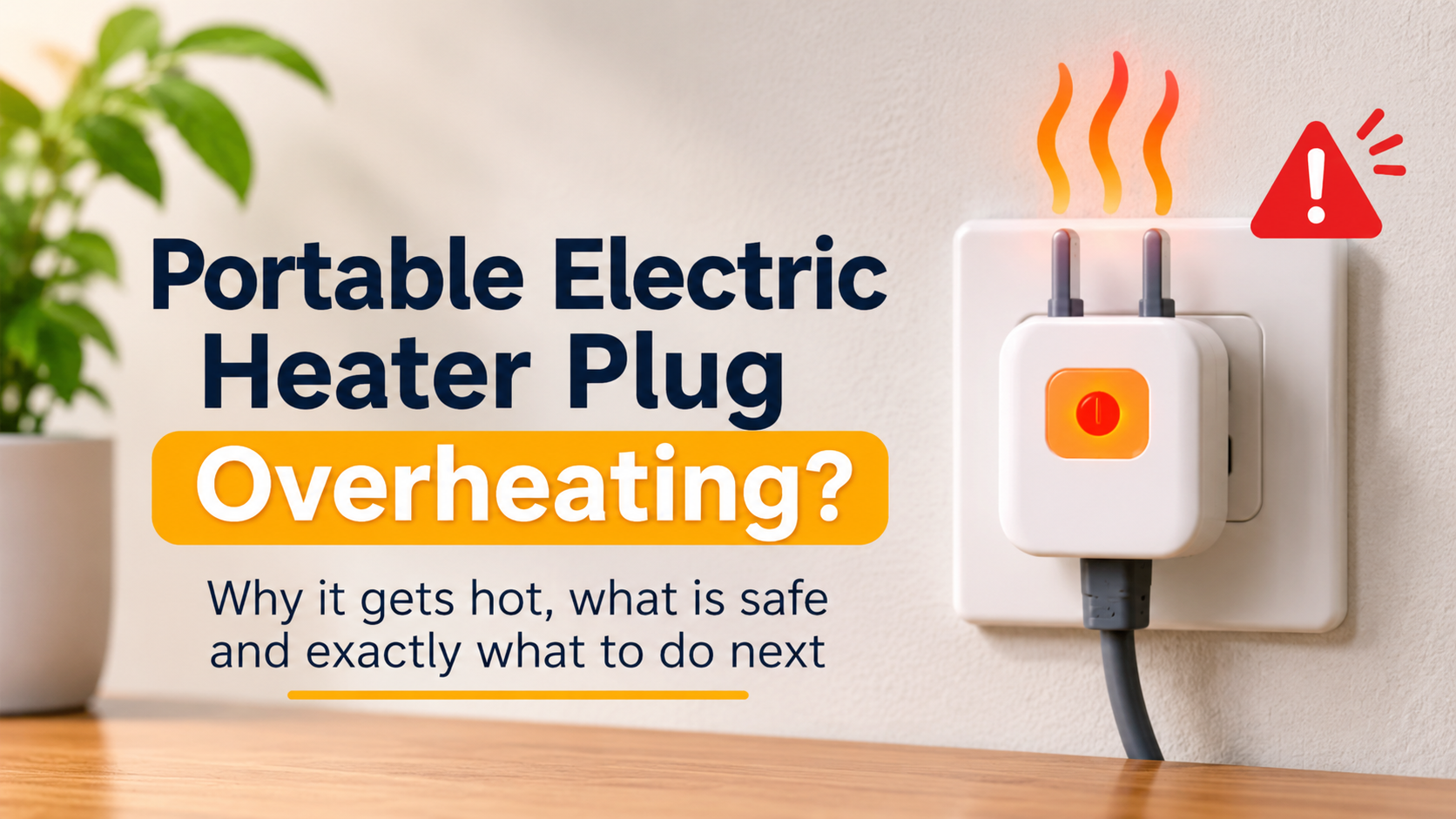
You switch on your portable electric heater, and a little later you notice the plug is hot. Sometimes it is only warm, sometimes it is too hot to hold, and occasionally there is a faint burning smell. If this sounds familiar, you are dealing with one of the most important warning signs in home heating: portable electric heater plug overheating.
A hot plug is not something to ignore. Heaters draw far more current than most household appliances, so even a small connection problem can generate serious heat at the plug and outlet. In this guide you will learn why a heater plug overheats, how to tell normal warmth from dangerous heat, what to do right away, how to fix or prevent the problem and what to look for in a safer heater.
Is It Normal for a Heater Plug to Get Warm?
A slightly warm plug can be normal. Portable heaters draw a large current, and cords and plugs warm up a little under load. What is not normal is a plug that feels hot, smells, changes colour or deforms.
Why Heater Plugs Overheat
Electricity heats whatever it flows through, and the amount of heat depends on current and resistance. Specifically, heat rises with the square of the current. A heater already draws a high current, so any extra resistance at the plug, such as a loose connection, creates a lot of heat in a very small space.
1. Loose or Worn Outlet
Over years of plugging and unplugging, the metal contacts inside an outlet lose their grip. A plug that wiggles or falls out partially creates a poor connection, and a poor connection generates heat. This is one of the most common causes, and it often shows up as a warm wall plate as well as a warm plug.
Fix: Try a different, newer outlet. If the plug fits loosely in a particular outlet, have a qualified electrician replace that outlet.
2. Plug Not Fully Inserted
If the plug is only half in, the contact area is small and the metal pins heat up quickly.
Fix: Push the plug firmly all the way in and make sure the cord is not pulling it sideways.
3. Extension Lead or Power Strip
Extension leads and power strips add extra connections, and many are not rated for a heater’s load. The thin cable or the strip’s internal contacts can overheat long before the heater itself does. Most heater manufacturers say never to use them, and fire safety organisations agree.
Fix: Plug the heater directly into a wall outlet. If the cord is too short, move the heater or have an electrician add a suitable outlet.
4. Overloaded Circuit
When a heater shares a circuit with other high-power devices such as a kettle, hair dryer, microwave or another heater, the total current can rise above what the wiring and plug are comfortable with.
Fix: Use the heater on its own circuit if possible and unplug other high-power devices on the same line.
5. Bent, Dirty or Corroded Plug Pins
Bent pins do not seat properly, and dirty or corroded pins conduct poorly. Both increase resistance and heat.
Fix: Inspect the pins. If they are dirty, unplug the heater and wipe them lightly with a dry cloth. If they are bent, burnt, pitted or loose in the plug body, replace the plug or the heater.
6. Damaged Cord or Internal Wire Breakage
Cords that have been bent sharply, crushed under furniture, chewed by pets or repeatedly yanked can have broken strands inside. Fewer intact strands mean higher resistance and more heat, often near the plug where the cord is flexed most.
Fix: Look for cracks, kinks, flat spots or bare wire. A damaged cord means the heater should not be used until the manufacturer or a qualified technician repairs it, or you replace the heater.
7. Damaged or Low-Quality Plug
Cheap or counterfeit heaters sometimes come with thin cords and plugs made from poor materials. These may heat up even on a good outlet.
Fix: Replace the heater with a certified model. Do not swap the plug yourself unless you are qualified.
8. Moisture or Dust in the Outlet
Damp conditions, dust and debris can cause corrosion and poor contact.
Fix: Never use heaters in damp areas such as bathrooms, and keep outlets clean and dry.
9. Wiring Problems in the Wall
Old, loose or poorly made wiring behind the outlet can overheat even with a perfect plug. Signs include a warm or discoloured wall plate, a buzzing sound, flickering lights and breakers that trip often.
Fix: Stop using that outlet and call a licensed electrician.
| Cause | Typical Sign | Seriousness | What to Do |
|---|---|---|---|
| Plug not fully in | Warm pins, partly visible metal | Low | Push in firmly |
| Loose or worn outlet | Plug wiggles, warm wall plate | Medium to high | Use another outlet, call an electrician |
| Extension lead or power strip | Hot strip or cord | High | Plug directly into the wall |
| Overloaded circuit | Tripping breaker, hot plug | Medium to high | Use a dedicated outlet |
| Damaged pins or cord | Discolouration, kinks, cracks | High | Stop using, repair or replace |
| Faulty in-wall wiring | Scorched outlet, buzzing | Very high | Stop and call an electrician |
Warning Signs You Should Never Ignore
- A burning or hot plastic smell near the plug or outlet
- Brown, black or yellow discolouration on the plug or wall plate
- Soft, warped or melted plastic
- Crackling, buzzing or sizzling sounds
- Sparks when plugging in or while running
- Power that flickers on and off
- A plug that is hot enough that you cannot comfortably touch it
- A breaker that trips repeatedly when the heater runs
What to Do Right Now If Your Heater Plug Is Hot
- Switch the heater off at its own control.
- Unplug it carefully by gripping the plug body, not the cord. If the plug or outlet is visibly burnt or you smell burning, switch off the circuit at the breaker first if you can do so safely.
- Let everything cool for at least 30 minutes.
- Inspect the plug, cord and outlet for discolouration, melting, bent pins or looseness.
- Do not reuse any plug, cord or outlet showing damage.
- Test on a different outlet only if there is no damage, and run the heater for a short period while checking the plug.
- Replace or repair anything damaged. Outlets and wiring need a licensed electrician.
How to Prevent Heater Plug Overheating
- Plug directly into a wall outlet. Avoid extension leads, power strips and adapters.
- Give the heater its own circuit or at least keep other high-power devices off that line.
- Check the plug and cord before every heating season and regularly during use.
- Make sure the fit is snug. Replace any loose outlet.
- Keep cords straight and uncovered. Do not run them under rugs, furniture or through doorways, and never coil a cord while the heater is running.
- Keep the plug and outlet dry and clean.
- Match heater size to the room so you can use a lower power setting.
- Do not leave a heater running unattended or while you sleep, unless the model is explicitly designed for it.
- Replace old heaters that show wear on the cord or plug.
Can I Use an Extension Cord With a Heater?
The safest answer is no. Heaters should be plugged directly into a wall outlet. If you absolutely cannot avoid an extension cord, many safety authorities say it must be a heavy-duty cord clearly rated for the heater’s power, as short as possible, fully uncoiled and free of damage. Even then, check the plug and cord temperature often and follow your heater manual. A power strip or surge protector is not suitable for a heater under any circumstances.
Does Plug Heat Mean the Heater Is Faulty?
Not always. A hot plug can come from the outlet, the circuit or the plug rather than the heater itself. The quickest way to narrow it down is to try the heater in another good wall outlet on a different circuit. If it is still hot in a different outlet, the heater’s plug or cord is the likely cause and the heater should be retired or repaired by the manufacturer. If it is cool in the new outlet, the original outlet or wiring is at fault and should be checked by an electrician.
How to Choose a Heater With a Safer Plug and Cord
1. Look for Safety Certification
Choose heaters with a recognised safety mark such as UL or ETL in North America, or CE and UKCA in Europe and the UK, or the equivalent approval in your country. Certified heaters are tested for cord, plug and temperature performance.
2. Check the Cord
A thick, heavy-duty, flexible cord is a good sign. A thin, flimsy cord on a high-wattage heater is a red flag. The cord should be long enough to reach a wall outlet without an extension.
3. Look for Plug Safety Features
Some heaters include a temperature-sensing plug that cuts power if the plug itself gets too hot. Others include leakage detection plugs or fused plugs, depending on the region. These extras add protection, though they do not replace regular inspection.
4. Choose a Sensible Wattage
The higher the wattage, the higher the current at the plug. If a 600 to 1000W heater is enough for a small room, you reduce stress on the plug, cord and outlet.
5. Prefer Grounded, Well-Fitting Plugs
The plug should feel solid, fit snugly in a standard outlet and have straight, firm pins. Avoid heaters whose plugs feel loose, light or poorly moulded.
6. Choose Complete Safety Protection
- Overheat protection and a thermal fuse
- Tip-over protection
- Thermostat and timer
- Cool-touch housing where possible
Common Mistakes to Avoid
- Using an extension lead or power strip with a heater
- Ignoring a plug that feels hotter than usual
- Continuing to use a plug with discolouration or burn marks
- Plugging the heater into a loose outlet
- Sharing a circuit with other high-power appliances
- Pinching or bending the cord sharply behind furniture
- Attempting DIY repairs on plugs or outlets without qualifications
Frequently Asked Questions
Why does my space heater plug get so hot?
Heaters draw a lot of current, so any loose connection, damaged pin, worn outlet or overloaded circuit can turn into heat at the plug. An extension lead is a common culprit.
How hot should a heater plug get?
At most mildly warm. If it is uncomfortable to touch or smells, stop using it.
Is a warm heater plug dangerous?
Mild warmth is normal. Strong heat, discolouration, melting or a burning smell are dangerous and mean you should stop immediately.
Can a loose outlet cause a plug to overheat?
Yes. A loose outlet gives poor contact, which creates resistance and heat. Replace worn outlets through a qualified electrician.
Why is my wall outlet hot as well as the plug?
This suggests a loose connection at the outlet or a problem in the wiring. Stop using the outlet and call a licensed electrician.
Can I fix a melted heater plug myself?
It is not recommended. A melted plug often means the outlet or cord is damaged as well. Replace the heater or have a qualified technician assess it.
Is it okay to leave a heater running when the plug feels warm?
If it is only mildly warm and everything else is normal, it can be fine under supervision. If it is hot, do not leave it running, and never leave a heater unattended.
Why does my plug get hot only on the highest setting?
The highest setting draws the most current, which exposes weak connections. If the plug becomes hot only at high power, the outlet or plug contact is probably marginal. Use a lower setting and have the outlet checked.
Do heaters with a thicker cord run cooler at the plug?
A properly sized, thicker cord handles current with less heating along its length, but the plug connection still matters. Both the cord and a snug outlet are important.
Final Thoughts
A heater plug that overheats is your early warning that something in the chain from the outlet to the heater is not right. Most cases come down to loose outlets, extension leads, overloaded circuits or damaged cords and pins. Acting early by unplugging, inspecting and fixing the cause can prevent a serious fire.
Treat a hot plug as a stop sign, never as something to live with. Plug straight into a good wall outlet, keep an eye on temperature, replace damaged cords and heaters and choose a certified model with a solid plug and cord. Stay warm and stay safe.
Disclaimer: This article is for general information only. Electrical work should be done by a licensed electrician. Always follow your heater’s manual and local safety regulations.