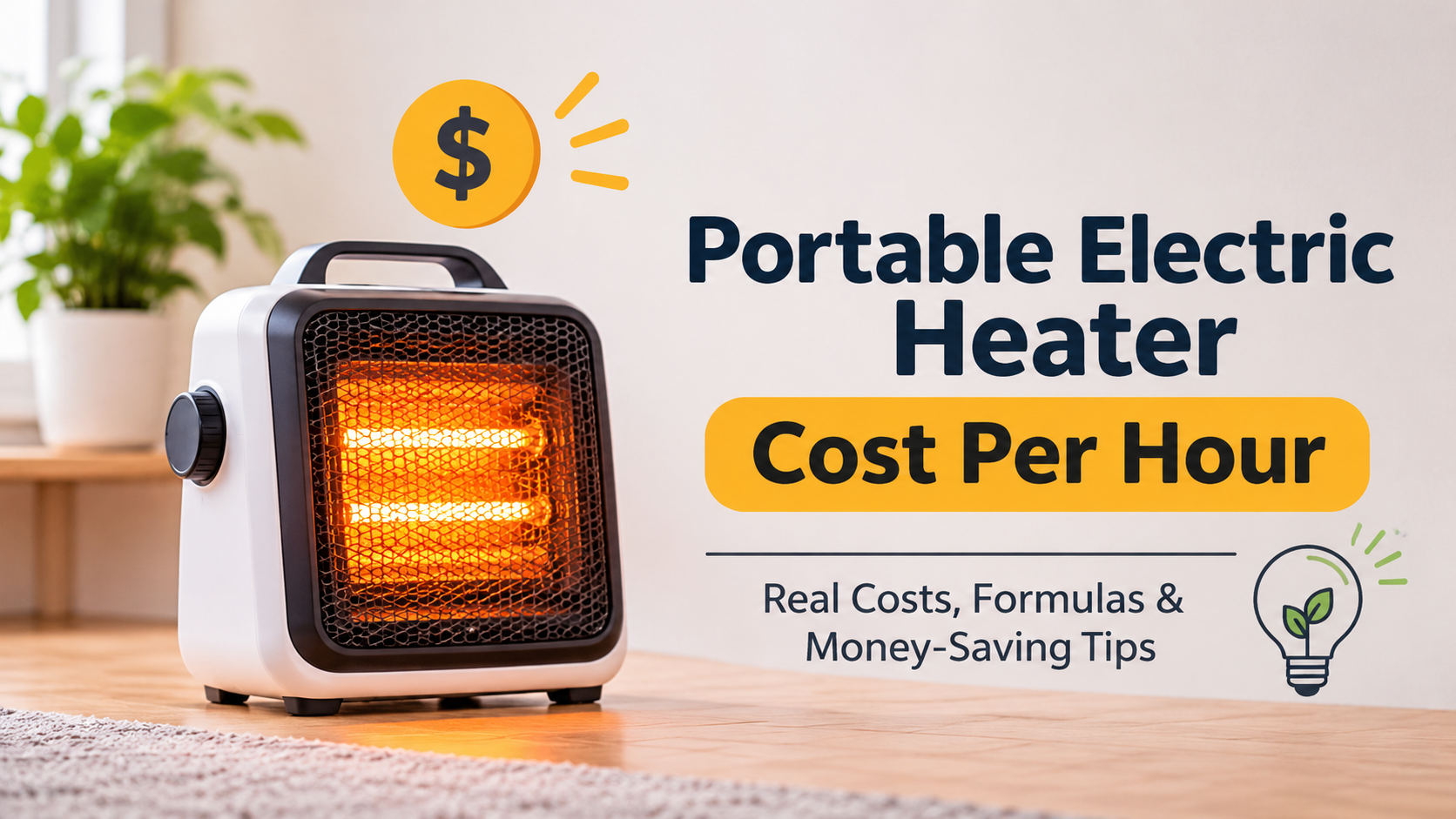
Portable Electric Heater Cost Per Hour: How Much Does It Really Cost to Run?
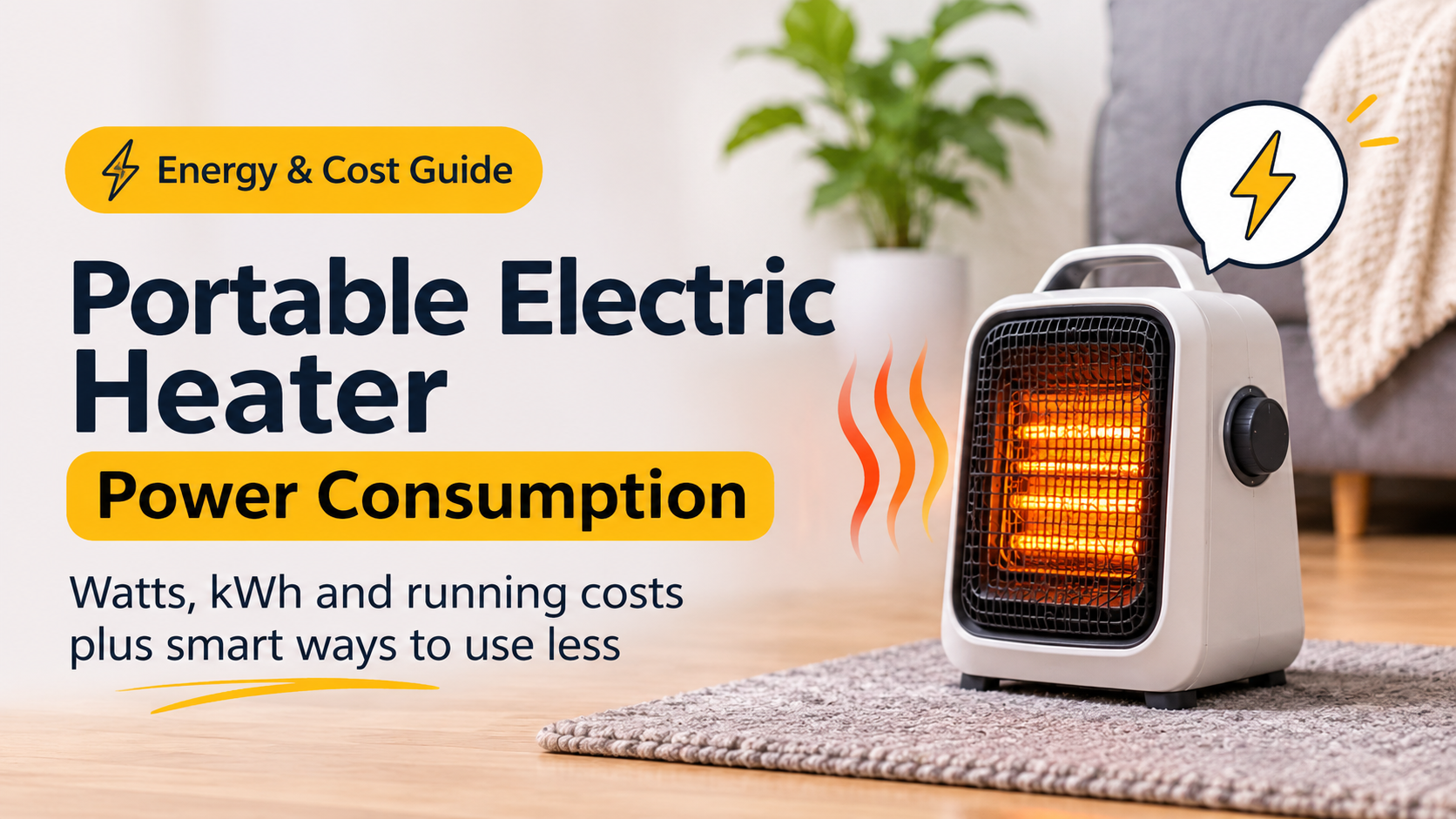
Portable electric heaters are cheap to buy and easy to use, but many people are shocked when the electricity bill arrives. The real question is not the price tag of the heater, but the portable electric heater cost per hour. Once you know that number, you can decide how long to run it, which size to buy, and whether it is the right choice for your home.
This guide gives you a simple formula, ready-made cost tables for different heater sizes and electricity rates, daily and monthly examples, and practical ways to lower your costs.
Quick Answer: How Much Does It Cost to Run a Portable Heater?
A typical 1500-watt portable electric heater uses 1.5 kilowatt-hours (kWh) of electricity per hour when it is heating at full power. At an electricity price of 15 cents per kWh, that is about 22 to 23 cents per hour. At 30 cents per kWh, it is about 45 cents per hour. Your actual cost depends on your electricity rate and how often the heater is actually switched on by its thermostat.
The Simple Formula for Heater Running Cost
You only need three numbers: the heater’s wattage (printed on the label), the number of hours you run it, and your electricity price per kWh (printed on your electricity bill).
Cost per hour = (Watts ÷ 1000) × Electricity price per kWh
Portable Heater Cost Per Hour Chart
The table below shows the hourly cost at full power for common heater sizes at four example electricity prices. Replace these with the price on your own bill for an exact figure.
| Heater Power | Energy / Hour | At 0.10 / kWh | At 0.15 / kWh | At 0.20 / kWh | At 0.30 / kWh |
|---|---|---|---|---|---|
| 500 W | 0.5 kWh | 0.05 | 0.08 | 0.10 | 0.15 |
| 750 W | 0.75 kWh | 0.08 | 0.11 | 0.15 | 0.23 |
| 1000 W | 1.0 kWh | 0.10 | 0.15 | 0.20 | 0.30 |
| 1500 W | 1.5 kWh | 0.15 | 0.23 | 0.30 | 0.45 |
| 2000 W | 2.0 kWh | 0.20 | 0.30 | 0.40 | 0.60 |
Prices are in your local currency units per hour. Values are rounded and assume the heater runs at full power for the whole hour.
Daily and Monthly Cost Examples
Here is what a 1500-watt heater costs if you run it for 8 hours a day at an electricity price of 0.15 per kWh:
- Per hour at full power: about 0.23
- Per day (8 hours at full power): 12 kWh, about 1.80
- Per month (30 days at full power): 360 kWh, about 54
In real life, the heater does not run at full power all the time. Once the room reaches your chosen temperature, the thermostat switches the element off and on. In a well-insulated room, a heater may only be actively heating for 30 to 60 percent of the time, so the real monthly cost is often much lower than the full-power figure. A poorly insulated room with drafts keeps the heater running longer and costs more.
Example in Bangladesh or any country with tariffs quoted in units: If your tariff is around 10 per unit (1 unit = 1 kWh), a 1500 W heater costs about 15 per hour at full power. Check your own bill, because tariffs differ by slab and region.
What Affects the Real Running Cost?
- Heater wattage: higher wattage means higher cost per hour, but also faster heating.
- Electricity price: this varies a lot by country, state, provider, and time of day.
- Room size and insulation: a small, sealed room needs less energy than a large, drafty one.
- Thermostat setting: each extra degree of heat increases how long the heater runs.
- Outside temperature: colder weather means more heat loss.
- Heater features: thermostat, timer and eco mode reduce wasted energy.
- Time of use: some electricity plans charge more during peak hours.
Do Different Heater Types Cost Different Amounts?
Almost all electric resistance heaters, including fan heaters, ceramic heaters, oil-filled radiators, infrared heaters and panel heaters, turn essentially all of the electricity they use into heat. A 1500-watt heater of any type costs the same per hour at full power. The difference is in how the heat feels and how long it lasts:
- Fan and ceramic heaters: heat up a room quickly, good for short use. They stop warming as soon as they switch off.
- Oil-filled radiators: take longer to warm up but keep radiating heat after the thermostat switches off, which can mean less actual running time.
- Infrared (radiant) heaters: warm people and objects directly, which can feel warmer at a lower setting if you sit in front of them.
- Panel and convector heaters: steady, quiet heat for longer use in small rooms.
A heat pump or an efficient air conditioner with heating mode can deliver several times more heat per unit of electricity than a plug-in resistance heater. If you heat a room for many hours each day, that can lower costs over the season, though the purchase price is higher.
Is a Portable Heater Cheaper Than Central Heating?
It depends. Heating one small room with a portable heater while the rest of the home stays unheated can be cheaper than warming the whole house. This is called zone heating. But using several portable heaters for many hours to warm a large home can easily cost more than central heating, especially where electricity is expensive compared with gas or other fuels. For the best result, use a portable heater only in the room you are actually using.
How to Choose the Right Heater to Keep Costs Down
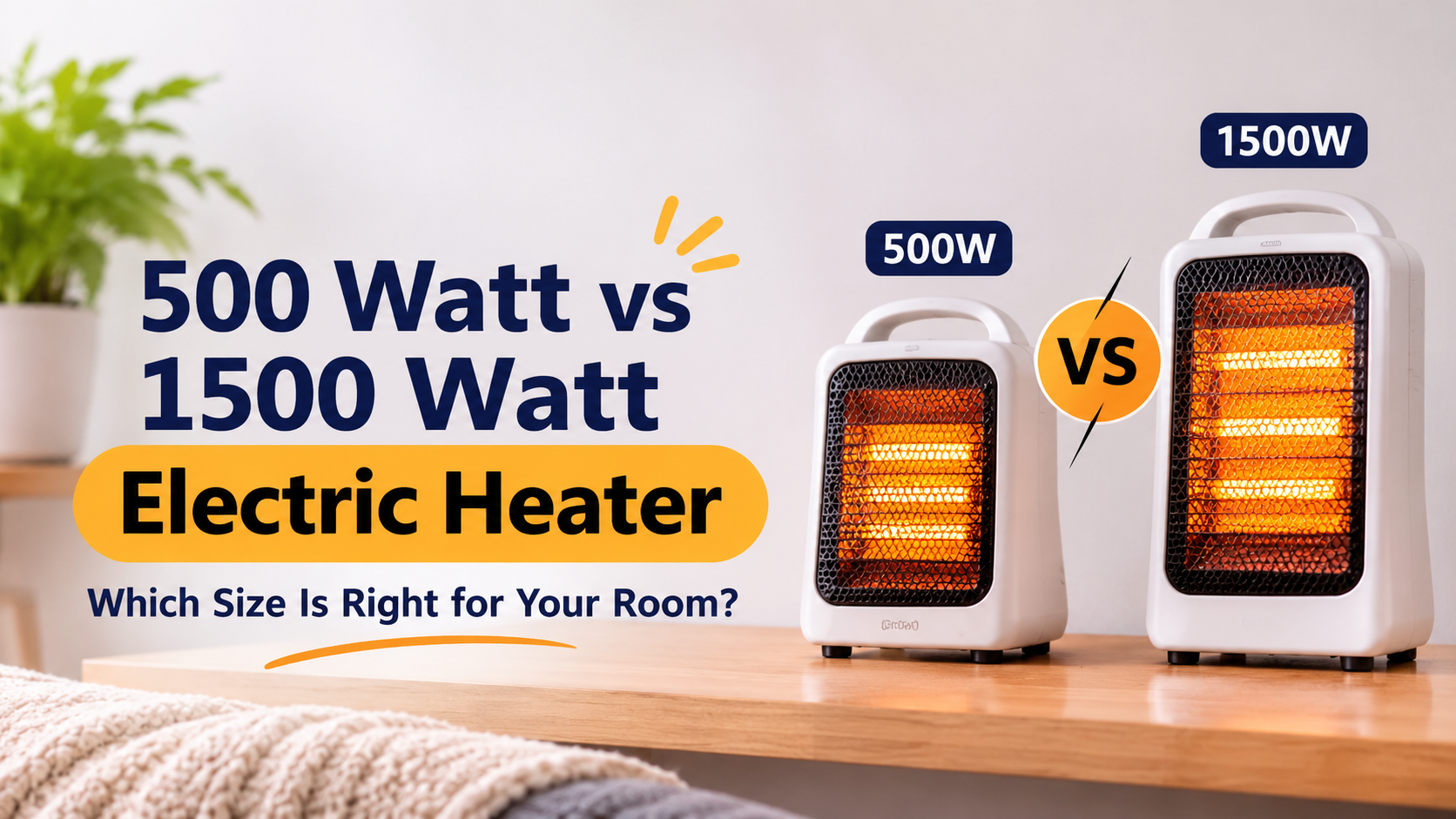
- Match wattage to room size. A 1500 W heater is often too much for a tiny room, where 750–1000 W may be enough.
- Look for an adjustable thermostat so the heater cycles off when the room is warm.
- Choose multiple power settings (for example 750 W and 1500 W) for flexibility.
- Get a timer or programmable mode to avoid running it when you do not need it.
- Check for eco or energy-saving mode that adjusts power automatically.
- Make sure it has tip-over and overheat protection for safe operation.
- Consider oil-filled or ceramic models for steady heat in bedrooms and offices.
How to Measure Your Heater’s Exact Cost
- Plug the heater into a plug-in energy meter (often called a watt meter or kill-a-watt style meter).
- Run the heater normally for one full day or a few hours.
- Read the kWh used on the meter.
- Multiply the kWh by your electricity price per kWh.
This is the most accurate method because it includes the thermostat cycling and your real room conditions. Remember to plug the meter directly into the wall outlet and the heater into the meter, never through an extension cord.
Safety Reminder
Saving money should never come at the expense of safety. Keep heaters at least 3 feet (about 1 meter) away from curtains, beds and furniture, plug them directly into a wall outlet, never leave them running while you sleep or when you leave home, and avoid using them in wet areas. Choose models with tip-over and overheat protection.
Frequently Asked Questions
How much does it cost to run a 1500 W heater for 24 hours?
At full power for the whole day, a 1500 W heater uses 36 kWh. At 0.15 per kWh that would be about 5.40. In practice the thermostat will switch it off part of the time, so the real figure is usually lower.
Is it cheaper to leave a heater on low all day or on high for a short time?
Electric resistance heaters convert electricity to heat the same way at any setting, so the total energy depends on how much heat the room loses. Heating only when needed, with a thermostat and timer, is generally cheaper than heating all day.
Which portable heater is the cheapest to run?
At the same wattage, they all cost about the same per hour. The cheapest heater to run is the one with a lower wattage that fits your room, an accurate thermostat, and good heat retention, such as an oil-filled radiator, used only when needed.
Do heaters use more electricity when they first turn on?
Resistance heaters reach full power almost immediately, and they stay at that power until the thermostat switches off. There is no big extra cost at startup, but a heater that has to heat a cold room from scratch will run longer.
How many hours can I run a portable heater safely?
Many heaters are built for extended use, but it is best to follow the manufacturer’s guidance and never leave them unattended or on while sleeping unless the manual says it is designed for it.
Are small personal heaters worth it?
A small heater of 300–500 W near your desk or feet can be cheaper than heating the entire room, because you warm yourself rather than the air.
Final Thoughts
The cost per hour of a portable electric heater is easy to work out: divide the wattage by 1000, then multiply by your electricity price. A 1500-watt heater at 0.15 per kWh costs about 0.23 per hour at full power, and less when the thermostat cycles it off. The best way to keep your bill low is to heat only the room you use, pick a heater with the right wattage and a good thermostat, seal drafts, and run it only when needed. With a little planning, you can stay warm all winter without an unpleasant surprise on your electricity bill.