Portable Electric Heater Circuit Breaker Trips: Why It Happens and How to Fix It Safely
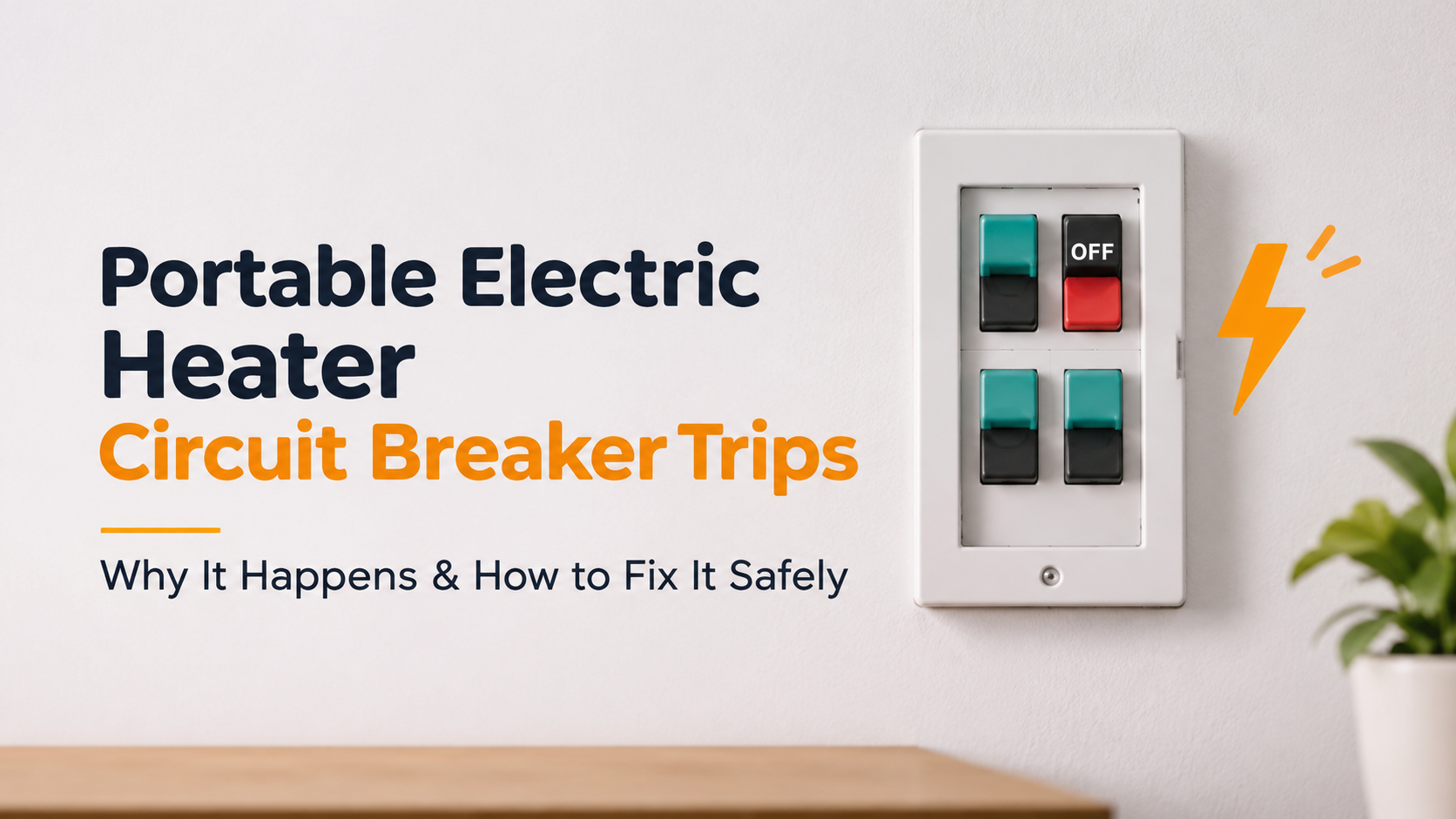
You turn on your portable electric heater, the room starts to warm up, and then everything goes dark. The circuit breaker has tripped again. It is frustrating, especially on a cold night, but it is also your electrical system doing exactly what it was built to do: protect your home. When a portable electric heater makes the circuit breaker trip, the cause is usually an overloaded circuit, but it can also point to a faulty heater, a damaged cord, or a wiring problem.
This guide explains why heaters trip breakers, how to work out which cause applies to you, what you can safely fix yourself, and when you must stop and call an electrician.
Quick Answer: Why Does a Portable Heater Trip the Breaker?
- Circuit overload: the heater plus other devices on the same circuit draw more current than the breaker allows (the most common cause).
- Extension cord or power strip that overheats under the heater’s high load.
- A fault inside the heater, such as a short circuit or damaged element.
- Damaged cord or plug causing a short or ground fault.
- Moisture or condensation triggering a GFCI or RCD outlet.
- A weak, old or loose breaker or outlet.
Why Heaters Draw So Much Power
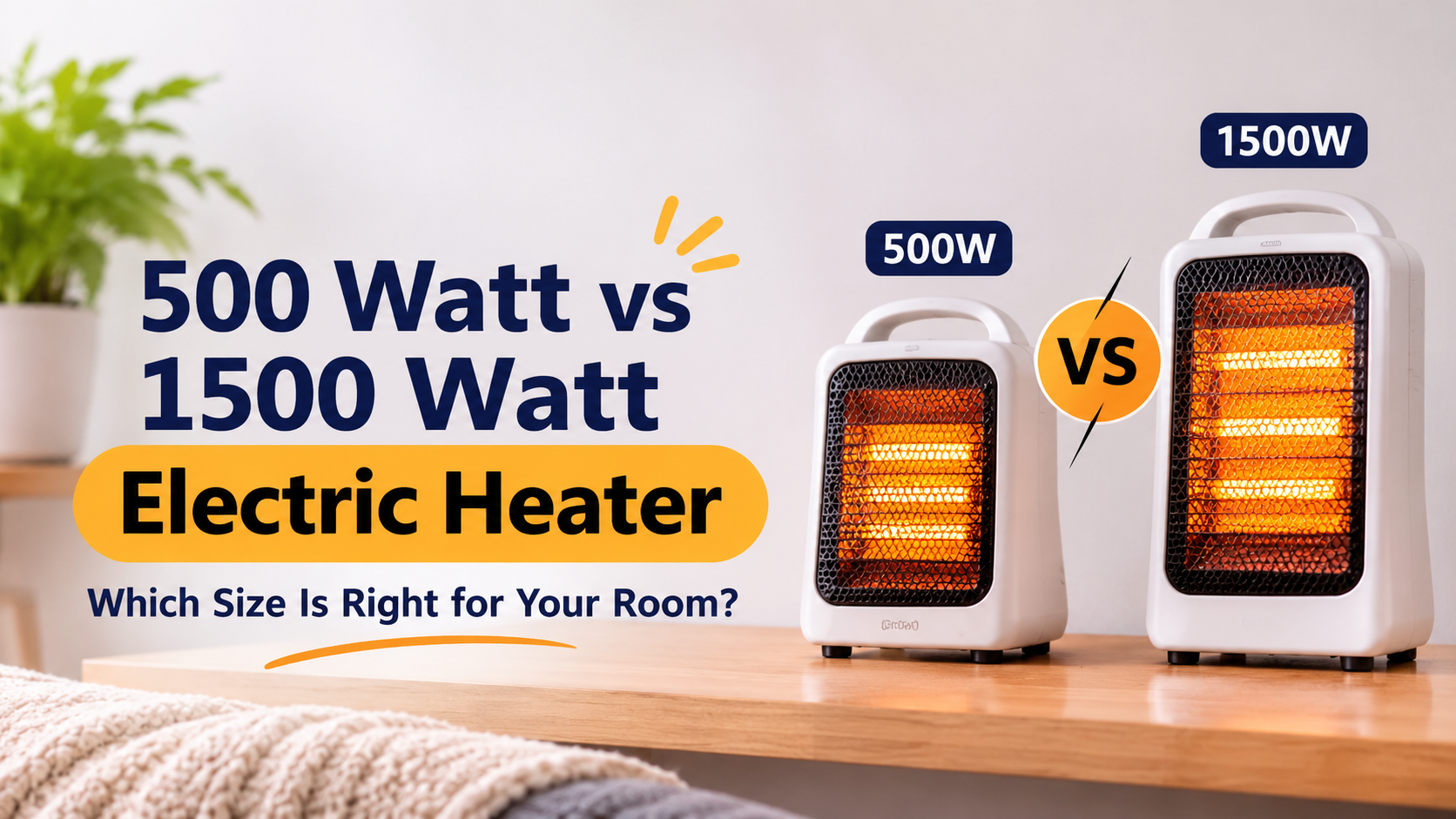
Heaters are among the most power-hungry devices in a home. A typical portable heater is rated at 1500 watts (1.5 kW) on its high setting, while a phone charger uses only about 10 watts and an LED bulb about 8 watts. Because the heating element converts electricity directly into heat, it draws steady, high current for as long as it is running.
You can estimate the current with a simple formula:
Amps = Watts ÷ Volts
1500 W ÷ 120 V = 12.5 A (typical US/Canada)
1500 W ÷ 230 V = about 6.5 A (typical UK/Europe/Asia)
On a standard 15-amp, 120-volt circuit, safety rules recommend loading a circuit to only about 80 percent for continuous use, which is 12 amps. A 1500-watt heater at 12.5 amps already exceeds that on its own, so any extra device on the same circuit can trip the breaker.
Main Causes of Circuit Breaker Trips With Portable Heaters
1. Overloaded Circuit
Many rooms share one breaker with other rooms, lights, TVs, chargers or a fridge. When the heater starts, the combined load can be too high, and the breaker trips within seconds or minutes. This is the most common reason, and it is not a fault in the heater.
2. Using an Extension Cord or Power Strip
Thin extension cords and most power strips are not rated for a continuous 1500-watt load. They overheat and add resistance, and the breaker may trip, or worse, the cord may melt. Always plug the heater straight into a wall outlet.
3. Heater Starting Up (Inrush Current)
Some heaters draw a short surge of extra current when they switch on, particularly those with fans. On a circuit that is already close to its limit, this surge alone can trip the breaker immediately.
4. Short Circuit Inside the Heater
Damaged wiring, a failed element, or dust and debris inside the unit can create a short circuit. In this case the breaker usually trips instantly, often with a loud pop, as soon as the heater is switched on or plugged in. A heater that does this must not be used again.
5. Damaged Power Cord or Plug
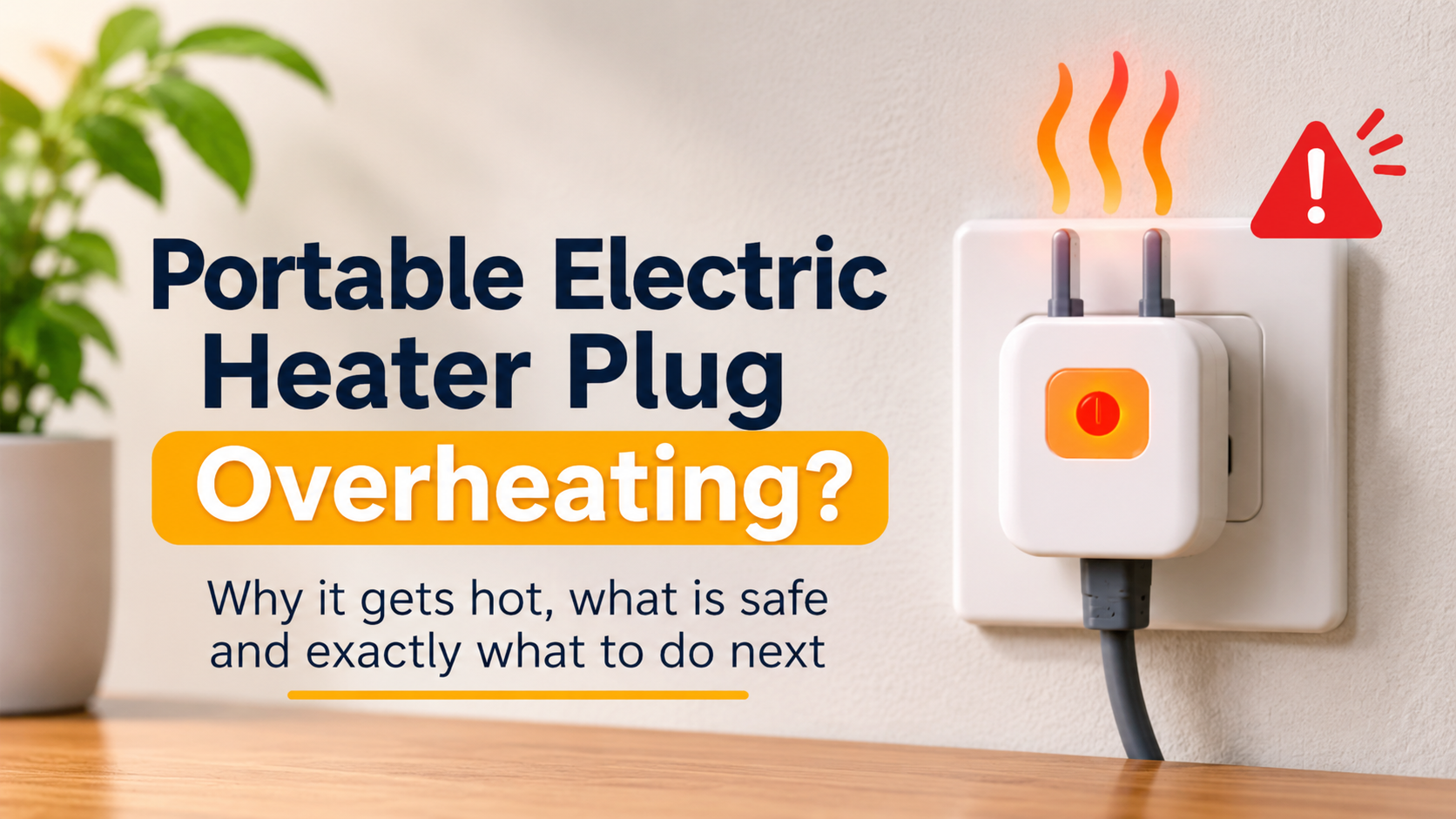
Cracked insulation, bent plug pins, or a cord that has been pinched under furniture can cause a short or ground fault. Warm or discolored plugs are a major warning sign.
6. Ground Fault and Moisture (GFCI/RCD Trips)
Outlets in bathrooms, kitchens, basements and garages often use GFCI or RCD protection, which trips when current leaks to ground. Damp air, condensation inside the heater, or a spill can cause this. A heater used in a damp room can trip it repeatedly.
7. Worn-Out or Weak Circuit Breaker
Breakers age. Repeated trips from high loads can weaken them so they trip at lower currents than they should. If the breaker trips even with only the heater plugged in on a low setting, it may need replacement.
8. Loose or Worn Wall Outlet
A loose plug connection causes arcing and heat, and can trip an arc-fault (AFCI) breaker. If the outlet feels hot or the plug is loose, stop using it.
9. Overheating Heater
Blocked vents, dust, or a failing thermostat can cause a heater to draw more current than normal, or overheat and short out internally.
How to Find the Cause: Step-by-Step Troubleshooting
- Unplug the heater and reset the breaker. Does it hold with nothing connected? If it trips with nothing connected, the breaker or house wiring is the problem. Call an electrician.
- Unplug everything else on that circuit (and anything in neighboring outlets of the same room).
- Plug in only the heater, directly into the wall outlet, on the low setting. If it holds, increase to high.
- If it only trips on high, the circuit cannot support the load. Use low or medium power, or move the heater to a circuit with fewer devices.
- If it trips instantly even on low, suspect a fault in the heater or cord. Stop using it.
- Try a different outlet on a different circuit. If it works there, the first circuit is overloaded or has a wiring issue.
- Inspect the cord and plug for heat damage, cuts or discoloration.
Symptom Guide Table
| What Happens | Likely Cause | What To Do |
|---|---|---|
| Trips after a few minutes on high | Overloaded circuit | Unplug other devices, use lower setting |
| Trips instantly when plugged in | Short in heater or cord | Stop using, replace heater |
| Only trips with extension cord | Cord overload | Plug directly into wall |
| GFCI/RCD outlet trips | Moisture / ground fault | Dry area, inspect heater |
| Trips with nothing plugged in | Faulty breaker or wiring | Call an electrician |
| Hot plug or burning smell | Loose outlet / damaged plug | Unplug now, get it inspected |
Safe Fixes You Can Try at Home
- Use a lower power setting. Many heaters have 750 W and 1500 W modes. Running at 750 W halves the current.
- Turn off other high-power devices such as kettles, microwaves, hair dryers and toasters while the heater runs.
- Move the heater to a circuit with fewer devices. Check your breaker panel labels to see which outlets share a breaker.
- Plug directly into the wall outlet and never use extension cords or power strips.
- Use a thermostat or timer so the heater cycles instead of running at full power continuously.
- Clean the vents to prevent overheating and extra current draw.
What You Should Never Do
- Do not tape down, jam or bypass the breaker switch.
- Do not replace a breaker with a higher-rated one without an electrician’s approval. The wiring may not handle it and this can cause a fire.
- Do not keep resetting a breaker again and again if it trips instantly.
- Do not use a heater with a damaged cord, melted plug or cracked housing.
- Do not use a heater in wet areas unless it is specifically rated for it.
When to Call a Licensed Electrician
- The breaker trips with nothing connected.
- The breaker panel, outlet, or wall plate feels hot or smells of burning.
- The outlet is loose, discolored, scorched, or crackles.
- The breaker trips on different devices and different outlets on the same circuit.
- Lights flicker or dim when the heater turns on.
- Your home has old wiring, aluminum wiring, or an old fuse box.
Choosing a Heater That Is Less Likely to Trip the Breaker
- Multiple power settings (for example 750 W, 1000 W and 1500 W).
- Adjustable thermostat so it cycles and does not run flat out.
- Lower-wattage models for small rooms. A 1500 W heater is often more than a small room needs.
- Tip-over and overheat protection as standard safety features.
- Thick, heavy-duty cord and a well-fitting plug.
- Recognized safety certification and a good warranty.
- Energy-efficient designs such as ceramic or oil-filled models with eco mode.
How to Prevent Future Breaker Trips
- Label your breaker panel so you know which outlets share a circuit.
- Dedicate one outlet or circuit to the heater when possible.
- Run only one high-wattage appliance per circuit at a time.
- Check your heater’s cord and plug at the start of every winter.
- Clean the heater’s vents regularly and store it dry.
- Have an electrician check your circuits if trips are frequent.
Frequently Asked Questions
Why does my heater trip the breaker only after a few minutes?
This usually means the circuit is near its limit. As the heater and other devices run, wires and the breaker warm up and the breaker trips due to sustained overload.
Is it normal for a 1500 W heater to trip a 15 A breaker?
It can happen if anything else is on the same circuit, because 1500 W is about 12.5 A. It is not a defect by itself, but it shows the circuit is overloaded.
Can a faulty heater trip the breaker even on low?
Yes. If it trips instantly on low with nothing else plugged in, the heater or its cord probably has a short circuit. Stop using it.
Can I use a heater with an extension cord if it is heavy-duty?
Heater makers and safety agencies advise against it. If it is absolutely necessary for a short time, the cord must be rated for the heater’s wattage, but a direct wall connection is always safest.
Why does my heater trip the GFCI outlet?
GFCI outlets detect small leaks of current to ground. Moisture, a damaged cord, or an internal fault can cause this. Move the heater to a dry location and inspect it. If the GFCI trips again, stop using the heater.
Do heaters trip breakers more in winter?
Yes, because several heaters, lights and appliances run at the same time, and damp or cold conditions can also increase trips on outdoor and garage circuits.
Final Thoughts
When a portable electric heater trips the circuit breaker, treat it as a useful warning rather than a nuisance. In most cases the circuit is simply overloaded, and the fix is to lower the heater’s power setting, switch off other devices, avoid extension cords, or move to a less crowded circuit. But if the breaker trips instantly, trips with nothing plugged in, or you notice heat, burning smells, or damaged cords, stop using the heater and have it or your wiring checked. A safe, properly rated heater on a properly loaded circuit will keep your home warm without any surprises.