
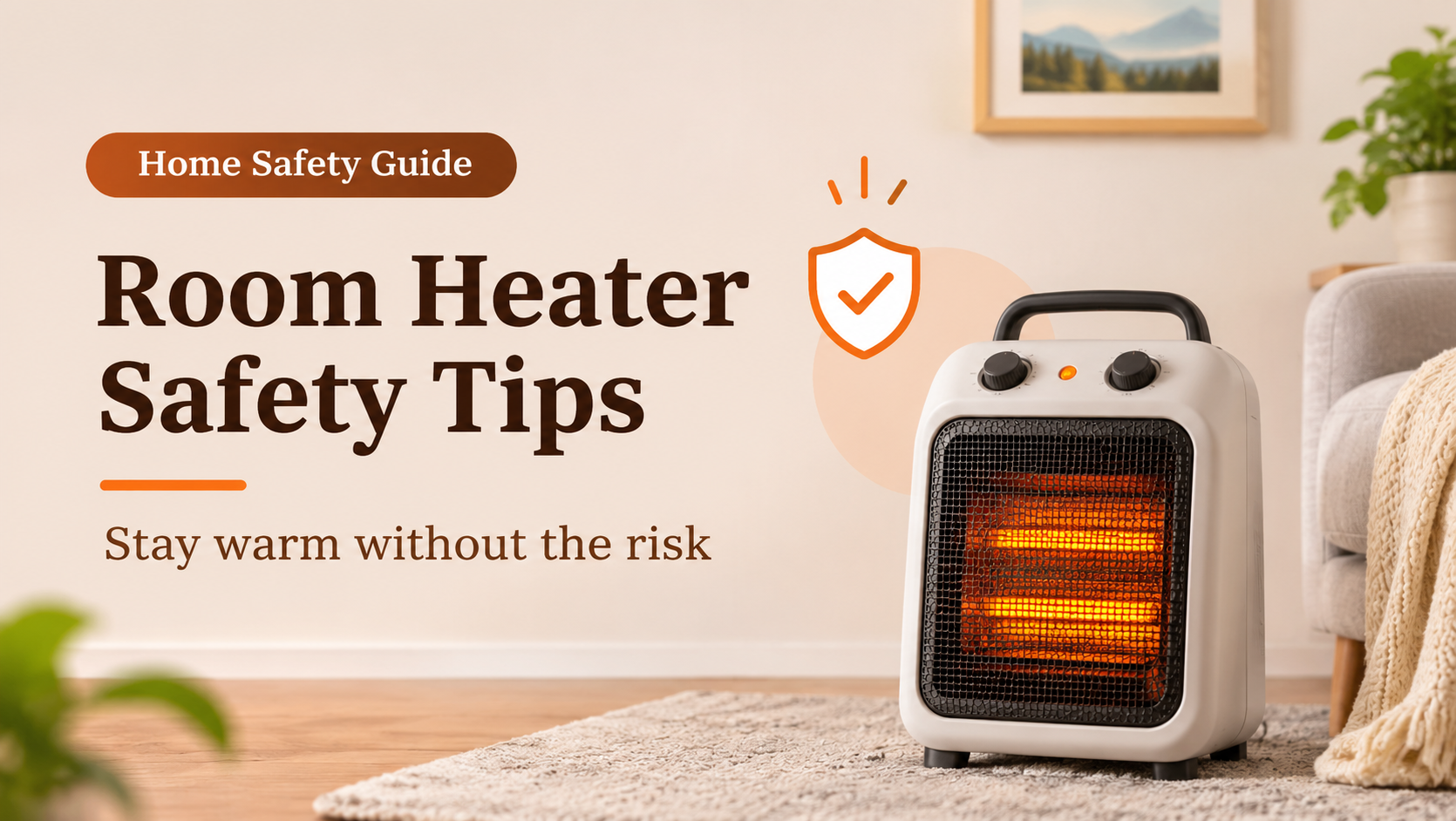

A room heater makes cold nights far more comfortable, but it is also one of the most common causes of home fires, burns, and carbon monoxide poisoning during winter. The good news is that almost all heater accidents are preventable with the right product, the right placement, and a few simple habits.
This guide covers the essential room heater safety tips, from choosing a safer model to using it correctly, maintaining it, and knowing what to do if something goes wrong.
Why Room Heater Safety Matters
Heaters combine high power or flame with fabric, furniture, children, and pets in small rooms. The main risks are:
- Fire: heaters placed too close to curtains, bedding, or furniture can ignite them.
- Burns: hot surfaces and elements can burn skin, especially for children and elderly people.
- Electrical hazards: overloaded sockets, damaged cords, and cheap plugs can overheat.
- Carbon monoxide (CO) poisoning: fuel-burning heaters release this invisible, odorless gas in poorly ventilated rooms.
- Oxygen depletion and air quality problems: unvented fuel heaters can reduce oxygen and release fumes.
Know the Common Types of Room Heaters

Oil-filled radiators and convector heaters generally have lower surface temperatures or enclosed elements, which makes them better suited to bedrooms and homes with children. Radiant bar heaters with exposed glowing elements deserve the most caution. Gas, kerosene, and other fuel-burning heaters need strict ventilation and carbon monoxide alarms.
Safety Features to Look for Before You Buy
- Tip-over protection: automatically cuts power if the heater falls or tilts.
- Overheat protection: shuts off the heater if internal temperature gets too high.
- Adjustable thermostat: maintains a set temperature and prevents constant full-power running.
- Cool-touch or protected housing: reduces the chance of burns.
- Safety guard or grille: prevents fingers or objects from reaching the element.
- Timer or auto shut-off: helpful if you fall asleep.
- Recognized safety certification: look for testing marks accepted in your country and buy from reputable sellers.
- Thick, heavy-duty power cord and quality plug: cheap thin cords can overheat.
- Correct power rating: match the heater wattage to your room size and your home wiring capacity.
Room Heater Safety Tips for Placement

- Keep a 3-foot (about 1 meter) clearance from curtains, bedding, furniture, clothes, paper, and anything flammable.
- Place it on a flat, hard, stable surface. Never put it on a bed, sofa, thick carpet, or an unstable table.
- Keep it away from high-traffic areas so no one trips over it or the cord.
- Do not cover or block the vents. Blocked airflow causes overheating.
- Keep heaters out of bathrooms unless the model is specifically rated for wet areas, and never use one near water.
- Point it away from your body to avoid prolonged skin exposure, which can cause burns or skin darkening.
Electrical Safety Tips
- Plug directly into a wall outlet. Avoid extension cords, multi-plugs, and power strips unless the heater maker specifically allows it and the cord is rated for the load.
- Do not share the outlet with other high-power appliances such as irons, kettles, or air conditioners.
- Inspect the cord and plug before each season and regularly. Stop using it if you see cracks, bare wire, melting, discoloration, or a loose plug.
- Do not run the cord under rugs or furniture where heat can build up unnoticed.
- Make sure your wiring is in good shape, with proper earthing and a suitable circuit breaker. Older homes may need an electrician to check capacity.
- Never use a heater with wet hands, and do not touch it while standing in water.
Safe Use Habits

- Never leave a heater running unattended. Switch it off and unplug it when leaving the room or the house.
- Do not sleep with a heater on unless it has reliable auto shut-off, thermostat, and tip-over protection. Preheat the room, then turn it off before bed whenever possible.
- Do not dry clothes, towels, or shoes on or near a heater.
- Never use a heater to warm a bed or cover it.
- Use only for room heating. Do not use heaters to cook, or as a replacement for central heating in unsafe ways.
- Give it breaks. Long, continuous operation at full power increases wear and overheating risk.
- Ventilate slightly. A small opening for fresh air helps maintain air quality, especially with fuel-burning units.
Safety With Children, Pets, and Elderly Family Members
- Keep children and pets out of the safe zone, or use a protective guard around the heater.
- Teach children never to touch or move a heater.
- Choose cool-touch models for homes with toddlers or pets.
- Older adults and people with reduced sensation may not feel burns quickly, so extra distance and supervision are important.
Extra Precautions for Gas, Kerosene, and Fuel-Burning Heaters
- Only use heaters designed for indoor use, and follow the manufacturer’s ventilation instructions.
- Install a working carbon monoxide alarm on every level of the home and near sleeping areas.
- Use only the correct fuel type, and never refill a hot heater.
- Store fuel outdoors in approved containers and away from ignition sources.
- Never use charcoal or open fire for indoor heating in closed rooms.
- If you feel headache, dizziness, nausea, or confusion, move to fresh air immediately and seek medical help.
Maintenance and Seasonal Care
- Clean dust from the grille and vents regularly with the heater unplugged and cool.
- Follow the manual for cleaning and servicing, and do not open the heater yourself.
- Store it in a dry place at the end of winter, preferably in its original box.
- Before the first use each season, run it briefly in an open, ventilated space to check for odd smells, noise, or sparks.
- Replace old heaters that show repeated faults. Do not attempt amateur repairs.
Warning Signs to Stop Using Your Heater Immediately
- Burning or melting smell, or smoke.
- Sparks or flickering power.
- Hot, discolored, or deformed plug or cord.
- Frequent tripping of the circuit breaker.
- Unusual noises or an element that glows unevenly.
- The heater feels extremely hot on the outside or smells persistently of fumes.
Switch it off, unplug it if it is safe to do so, let it cool, and have it inspected or replaced.
What to Do in an Emergency
- Small electrical fire: switch off power at the main switch if you can do it safely, and use a suitable fire extinguisher. Never use water on an electrical fire.
- Larger fire: leave the house immediately, close doors behind you, and call emergency services.
- Burns: cool the burn under running cool water for several minutes and seek medical care for serious burns.
- Suspected carbon monoxide exposure: go outdoors, ventilate, and get medical help right away.
Keep a smoke alarm and a fire extinguisher at home, and make sure everyone in the family knows how to use them.
Smart Tips for Staying Warm Safely
- Close doors and windows, and seal drafts so the heater works less.
- Use warm blankets, thermal clothing, and rugs to reduce dependence on heaters.
- Heat only the room you are using.
- Choose a heater with a thermostat to save electricity and reduce risk.
- Pre-warm the bedroom, then turn the heater off before sleeping.
Frequently Asked Questions
Is it safe to sleep with a room heater on?
It is safest not to. If you must, use a model with tip-over protection, overheat protection, a thermostat, and a timer, keep it well away from bedding, and make sure the room has some ventilation.
Can I use an extension cord with a room heater?
Plugging directly into a wall socket is strongly recommended. Heaters draw a lot of power, and ordinary extension cords and power strips can overheat.
How far should a heater be from the wall and furniture?
Keep at least 3 feet (about 1 meter) from anything flammable, and follow the clearance given in the manual.
Which type of heater is the safest?
Oil-filled and enclosed-element convector heaters with safety features are often considered safer for bedrooms and homes with children, but any heater can be dangerous if misused.
Can a room heater cause carbon monoxide poisoning?
Fuel-burning heaters can. Electric heaters do not produce carbon monoxide.
Why does my heater smell when I first use it?
New heaters can give off a light smell from dust and protective coatings. It should fade quickly. A strong burning or chemical smell is a warning sign.
Is it safe to leave a heater on all day?
It is not recommended. Running it continuously increases wear, energy cost, and the chance of overheating.
Final Thoughts
A room heater is safe when you choose a quality model with proper safety features, place it carefully, keep flammable items away, and never leave it unattended. Respect the electrical limits of your home, maintain the heater, and install smoke and carbon monoxide alarms. With these habits, you can enjoy a warm, comfortable home all winter without unnecessary risk.
Disclaimer: This article is for general information only. Always follow the manufacturer’s instructions for your specific heater and consult a qualified electrician or professional if you are unsure about your equipment or wiring.