





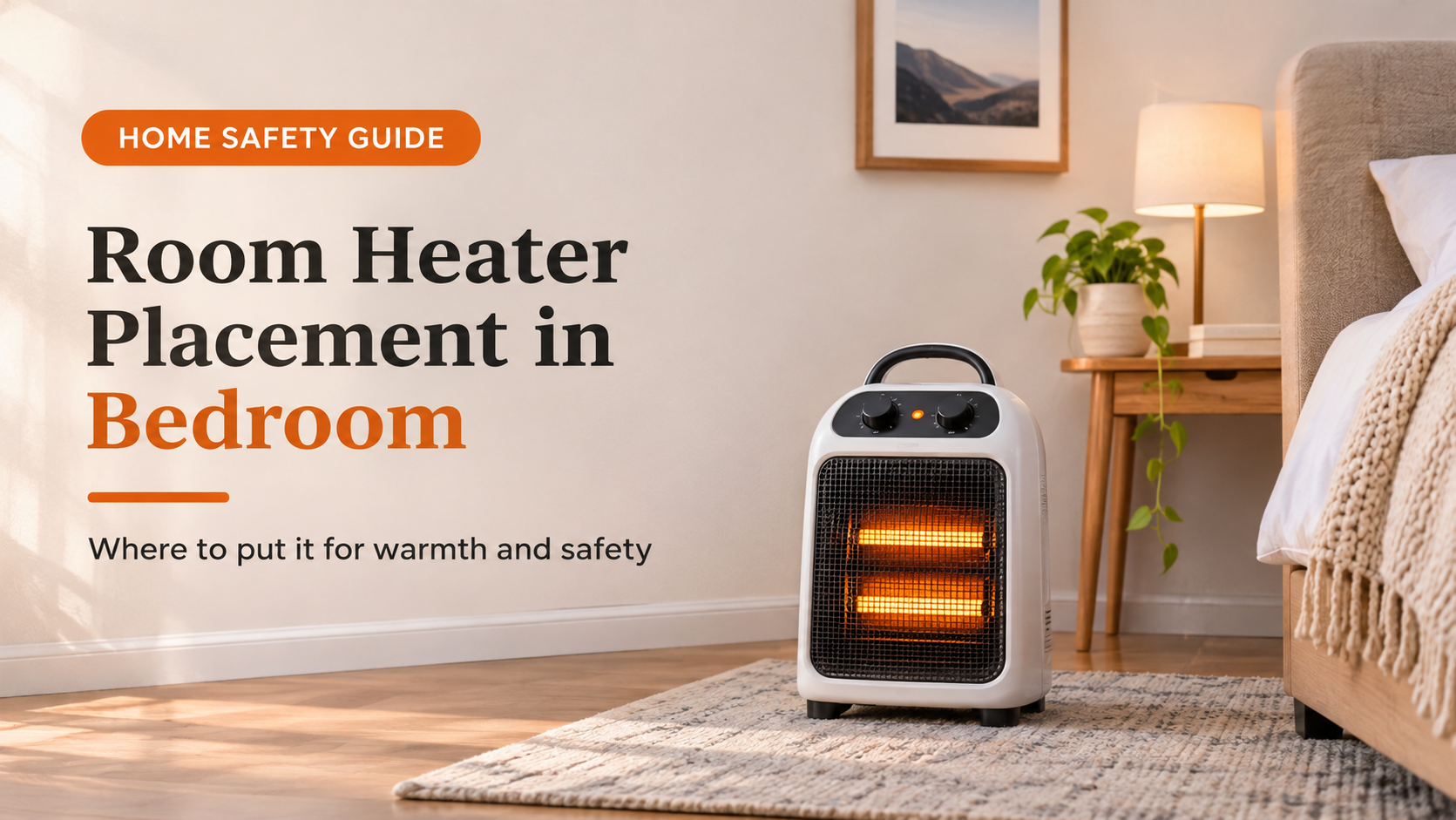

Where you put your room heater matters almost as much as which heater you buy. A well-placed heater warms the bedroom evenly, uses less electricity, and keeps you safe. A poorly placed one can leave cold spots, waste power, and become a serious fire hazard, especially near a bed or curtains.
This guide explains the best room heater placement in a bedroom, the safe distances to keep, how placement changes with heater type and room layout, and the mistakes to avoid.
Why Heater Placement in the Bedroom Matters
- Safety: bedrooms contain flammable items such as bedding, curtains, clothes, and wardrobes, and people may be asleep or unaware if something goes wrong.
- Comfort: warm air rises and cold air sinks, so position affects how evenly the room heats.
- Energy use: a heater placed where heat is blocked or drafts steal it runs longer and costs more.
- Heater life: blocked vents, dust, and cramped spaces lead to overheating and early failure.
Quick Placement Rules at a Glance
- Keep the heater at least 3 feet (about 1 meter) from the bed, bedding, curtains, and furniture.
- Place it on a flat, hard, stable floor surface.
- Plug it directly into a wall socket close by, with no extension cord.
- Do not block doorways or walking paths.
- Aim airflow across the room, not at the bed or at fabric.
- Never place it on the bed, sofa, or a wobbly table.
The Ideal Spot for a Bedroom Heater

The best location is usually on an open floor area that is a safe distance from the bed and soft furnishings, close to a wall socket, and out of the main walkway. Many people choose a spot toward the middle of a side wall or near the far end of the room from the bed, so warm air spreads across the room while the bed stays outside the heater’s safety zone.
Safe Distances to Keep
- Bed and bedding: at least 3 feet (1 meter). Blankets that slide off the bed can reach a heater easily.
- Curtains and drapes: at least 3 feet. Curtains move with drafts and catch fire quickly.
- Furniture and wardrobes: at least 3 feet from wood, upholstery, and clothes.
- Walls: follow the manual. Many heaters need several inches to a foot of space behind and beside them for airflow.
- Doorways: keep exits clear so you can leave quickly in an emergency.
- Children and pets: keep them outside the safety zone or use a protective guard.
Placement by Type of Heater

Oil-Filled Radiator
These give steady, gentle warmth and have no exposed element, which makes them a popular bedroom choice. They are heavy and stay hot after switching off, so choose a permanent spot, use the wheels carefully, and wait until it cools before moving it.
Fan or Ceramic Heater
These heat quickly but blow hot air in one direction. Aim the airflow along the room instead of toward the bed, and keep curtains and blankets out of the airflow path. A stable base is especially important.
Convector Heater
Convectors warm the air by natural circulation. They work well near a cold wall or under a window, as long as curtains hang well clear and the vents stay open.
Radiant or Bar Heater
The glowing element can ignite objects at a distance, so these are the least suitable for bedrooms. If you must use one, place it with extra clearance, never near bedding, and never leave it running while you sleep.
Gas, Kerosene, and Other Fuel Heaters
Fuel-burning heaters are generally not recommended for bedrooms because of carbon monoxide and oxygen risks. If a vented model is used, follow the maker’s instructions exactly and install a carbon monoxide alarm.
Placement for Different Bedroom Situations
Small Bedrooms
In a small room, the 3-foot rule is hard to follow. Choose a smaller, low-wattage heater with a thermostat, place it in the corner farthest from the bed that is not behind furniture, and preheat the room before bed instead of running it all night.
Large Bedrooms
Place the heater near the area where you spend the most time, such as a seating corner, and keep it away from the bed. A second smaller heater is rarely needed if the first has the right wattage for the room size.
Rooms With Cold Windows
Cold air falls from windows, so a convector or oil-filled heater placed on the floor several feet from the window can counter the draft. Keep curtains tucked or tied back and never let them hang near the heater.
Children’s Bedrooms
Use cool-touch models, place the heater out of reach behind a guard, and teach kids never to touch it. Preheat the room instead of leaving it on overnight.
Bedrooms for Elderly Family Members
Older adults may feel heat less and react slowly to a problem. Place the heater further from the bed and walking path, and choose a model with a thermostat, timer, and tip-over switch.
Bedrooms With an Air Conditioner
If you use a split AC in heating mode, a room heater may not be needed. If you use both, avoid placing the heater under the AC unit’s airflow, which can confuse sensors and waste energy.
Airflow and Heat Distribution Tips
- Keep the bedroom door closed to hold heat in.
- Seal gaps around windows and doors with draft strips.
- Use rugs and thermal curtains to reduce heat loss, while keeping fabric away from the heater.
- Run a ceiling fan on low and in reverse (clockwise) if available, to push warm air down gently.
- Avoid placing the heater in a tight corner or behind furniture, which traps heat and blocks airflow.
- Leave a small ventilation opening, especially with fuel-burning models.
Cord and Socket Placement
- Position the heater so the cord reaches the wall socket without stretching or tension.
- Do not run the cord under rugs, carpets, or furniture.
- Avoid stepping areas where people might trip over the cord at night.
- Use a dedicated socket and avoid sharing it with other heavy appliances.
- If the plug or socket gets hot, stop using the heater and have the wiring checked by an electrician.
Sleeping Safely With a Bedroom Heater

The safest approach is to warm the bedroom before bedtime, then switch the heater off before you sleep. If you rely on a heater overnight, choose one with tip-over protection, overheat protection, a thermostat, and a timer, and keep a strong safety distance. Make sure smoke alarms are working, and consider a carbon monoxide alarm if any fuel-burning appliance is in the home.
Common Heater Placement Mistakes
- Placing the heater right next to or at the foot of the bed.
- Putting it under or beside curtains.
- Using it on the bed, a pillow, or a soft carpet.
- Drying clothes or towels over the heater.
- Pushing it into a corner or against furniture.
- Using extension cords or power strips.
- Pointing it directly at your skin for long periods.
- Leaving it running all night in a closed room.
Warning Signs Your Heater Is in the Wrong Place
- Nearby furniture, curtains, or walls feel hot or look discolored.
- The heater keeps switching off from overheating.
- Some parts of the room stay cold while others feel stuffy.
- A burning smell or visible smoke appears.
- The plug or cord feels hot.
Turn off the heater, let it cool, and move it to a safer spot. If problems continue, stop using it and have it inspected.
Frequently Asked Questions
Where is the best place to put a heater in a bedroom?
Place it on a flat floor surface, at least 3 feet from the bed, curtains, and furniture, close to a wall socket, and away from walkways.
Should a room heater face the bed?
No. Point the airflow across the room, not directly at the bed, to avoid overheating bedding and dry air on your skin.
Is it safe to keep a heater next to the bed?
It is not recommended. Bedding can shift and touch the heater. Keep it at least 3 feet away.
Can I put a heater under a window?
Yes, with some types such as convector and oil-filled heaters, as long as curtains are tied back and well clear of the heater.
How many feet away should a heater be from the wall?
It depends on the model. Follow the manual, and leave extra space for airflow, commonly several inches to a foot.
Should I run a heater all night?
It is safer to preheat the room and switch the heater off before sleeping. If you need it overnight, use a model with full safety features and a thermostat.
Where should I place a heater in a small bedroom?
Use a compact heater in the corner farthest from the bed that is not behind furniture, and preheat instead of running it overnight.
Final Thoughts
The best room heater placement in a bedroom is simple: an open, flat floor space, a safe distance from the bed, curtains, and furniture, close to a wall socket, and out of the way of walkways. Choose a heater type that suits your room, warm the room before bed, and never leave it running unsafely. With the right placement, your bedroom stays cozy, comfortable, and safe all winter.
Disclaimer: This article is for general information only. Always follow the manufacturer’s instructions for your specific heater and consult a qualified electrician or professional if you are unsure about your equipment or wiring.