


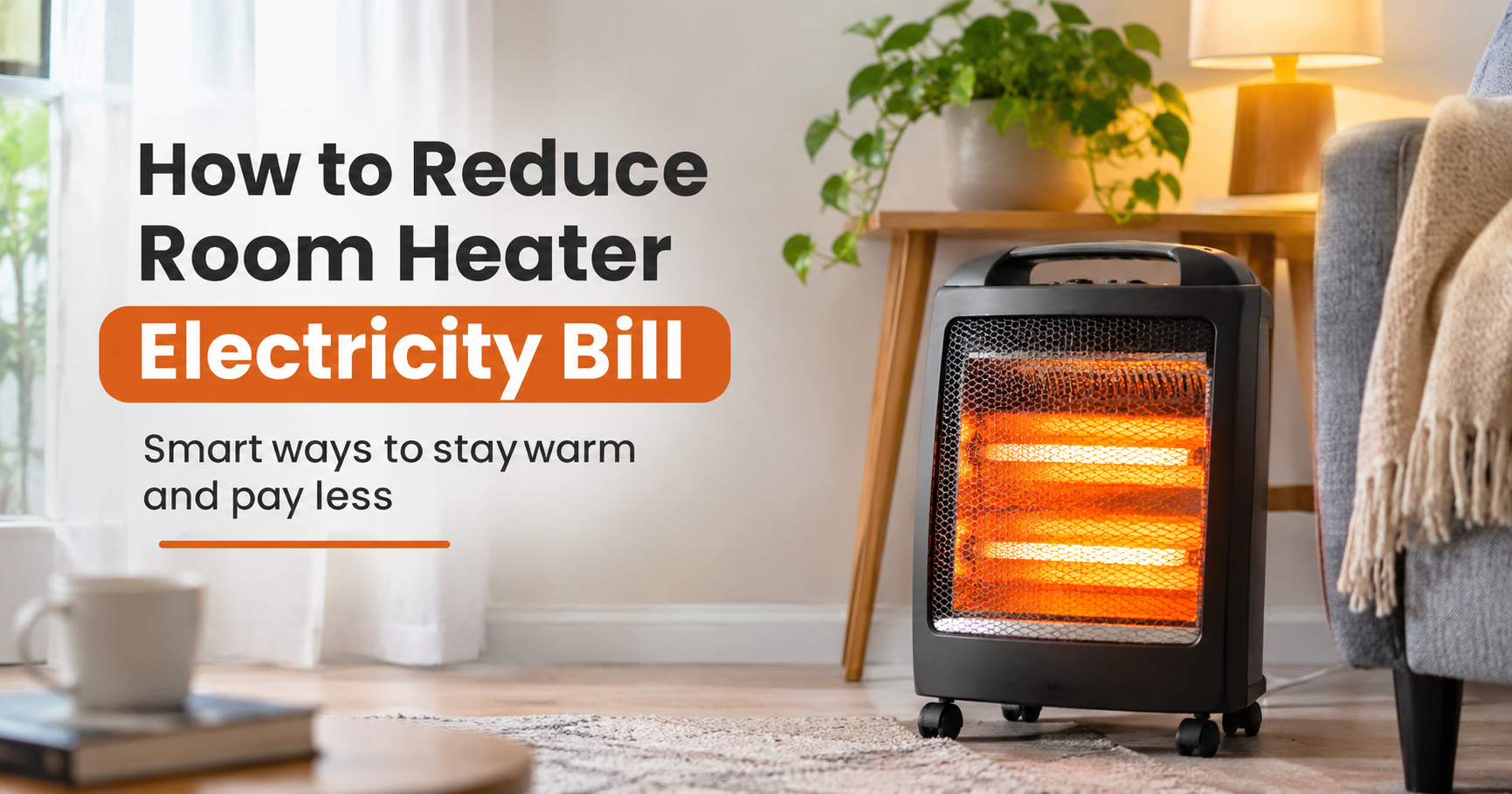
How to Reduce Room Heater Electricity Bill: 15 Proven Ways to Save This Winter
Winter brings cold mornings, chilly nights and, a few weeks later, an electricity bill that makes you wonder whether your room heater is secretly running a factory. If your bill jumps every time the temperature drops, you are not alone. A room heater is one of the most power-hungry appliances in a home, and small habits decide whether it costs you a little or a lot.
The good news is that you do not have to sit in the cold to save money. In this guide you will learn exactly how a heater’s cost is calculated, where your warmth is leaking away, and 15 practical ways to cut your heating bill, many of them free. You will also find a simple buying guide for choosing a more efficient heater if it is time to replace your old one.
Quick Takeaways
- Heater cost = power (kW) × hours used × your electricity rate. Cutting hours is the fastest way to cut the bill.
- Almost every plug-in electric heater turns 1 unit of electricity into about 1 unit of heat. The difference between models is how well they control and spread that heat.
- Stopping heat leaks (windows, door gaps, floors) often saves more than buying a new heater.
- A correctly sized heater with a thermostat and timer beats a bigger heater that runs non-stop.
- If you use a heater for many hours daily, an inverter air conditioner or heat pump can deliver the same warmth for a fraction of the electricity.
How Your Room Heater Electricity Bill Is Calculated
Before you can cut a bill, you need to know what creates it. Electricity is billed in units called kilowatt-hours (kWh). One kWh is the energy used by a 1,000-watt appliance running for one hour. Your heater’s power rating is printed on its label, usually between 500 W and 2,000 W.
Here is the key idea: a heater’s cost depends mostly on how many hours it runs at full power. That is why the next chart matters so much.
Typical Heater Wattage and Cost per Hour
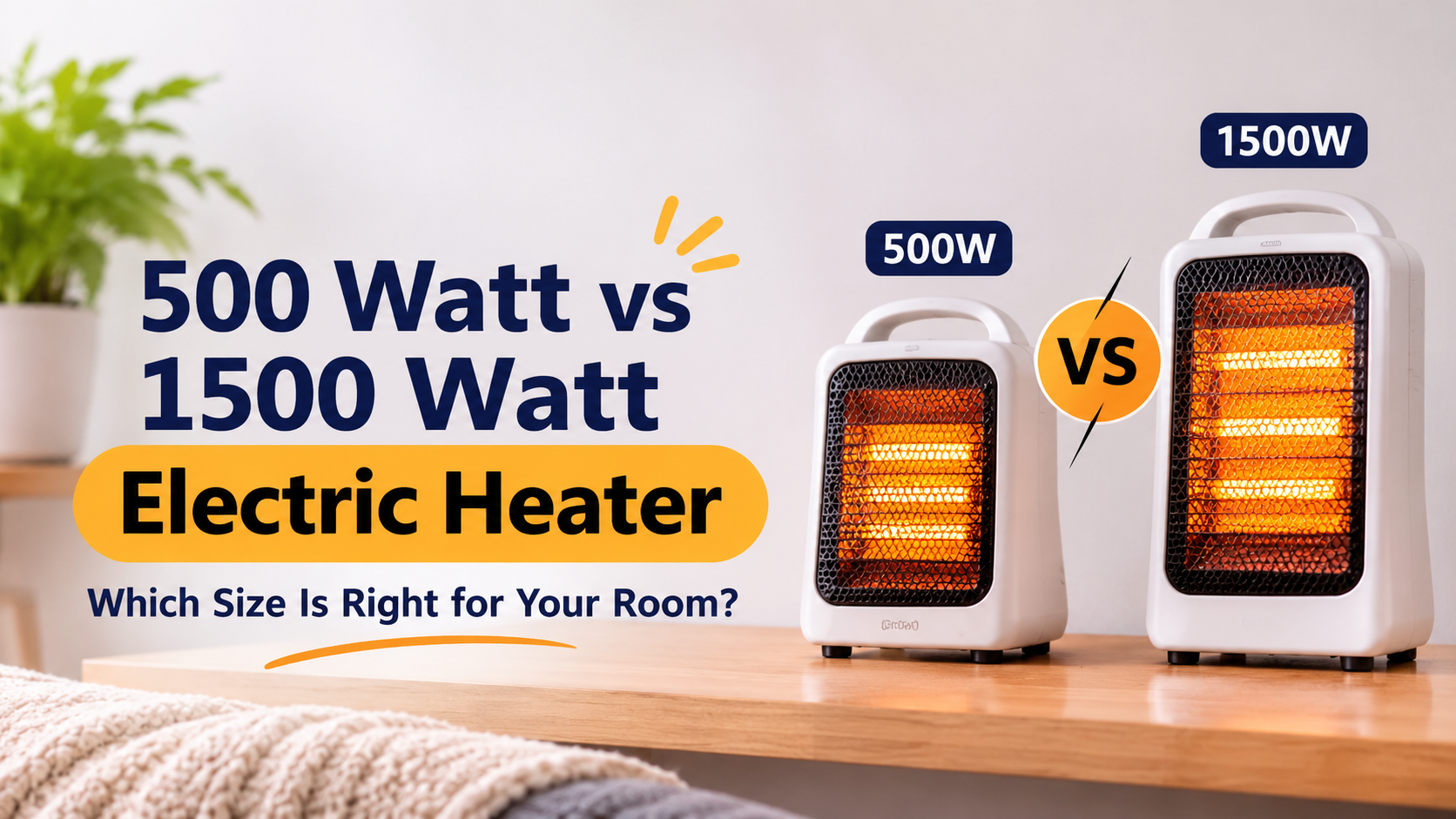
| Heater Power | Energy Used per Hour | Cost per Hour at $0.15/kWh | Typical Use |
|---|---|---|---|
| 500 W | 0.5 kWh | $0.075 | Small desk or personal heater |
| 1,000 W | 1.0 kWh | $0.15 | Small bedroom on low setting |
| 1,500 W | 1.5 kWh | $0.225 | Medium room, most common size |
| 2,000 W | 2.0 kWh | $0.30 | Large room or very cold weather |
Why Is Your Room Heater Bill So High?
If your bill feels unreasonable, one or more of these causes is usually behind it:
- Long running hours. Leaving a heater on all night or while you are out is the number one bill-raiser.
- A room that cannot hold heat. Gaps around windows and doors, thin curtains and bare floors let warmth escape as fast as the heater makes it.
- The wrong heater size. An undersized heater runs forever without reaching the temperature you want, while an oversized one wastes power if it has no good thermostat.
- High thermostat settings. Every extra degree takes more energy, especially when it is very cold outside.
- Poor placement and a dusty unit. Heat blocked by furniture or a clogged fan heater loses effectiveness.
- Heating the whole room for one person. It is often unnecessary to warm all the air when you only need to keep yourself comfortable.
15 Proven Ways to Reduce Room Heater Electricity Bill
A. Use Your Heater Smarter
1. Lower the Thermostat by 1–2°C
For most people, 18°C to 21°C feels comfortable indoors when dressed for winter. Lowering your setting by just one degree is often estimated to reduce heating energy by roughly 5–10%, although the exact figure depends on your room and the outside temperature. Try going down one degree every few days until you find the lowest setting you are happy with.
2. Use a Timer or Smart Plug
A timer stops the heater from running when nobody needs it. Set it to warm the room 30 minutes before you wake up or return home, and let it switch off automatically after you fall asleep. If your heater has no timer, a simple plug-in timer or smart plug does the same job. Always check the plug’s maximum load first: it must be rated for the heater’s wattage.
3. Heat the Person, Not the Whole Room
If you are sitting at a desk or watching TV, a small targeted heater near your legs and feet can keep you comfortable at a much lower power than warming the entire room. Pair it with a blanket or a warm throw over your lap.
4. Choose the Right Heater Size
A common rule of thumb is about 10 watts per square foot (roughly 100 watts per square metre) for a reasonably insulated room with a normal ceiling height. A 120 sq ft (about 11 m²) bedroom therefore needs around 1,200 W. Poorly insulated rooms may need a bit more. Pick a heater slightly above the requirement and use its thermostat so it cycles off once the room is warm.
5. Close the Door and Heat Only the Room You Use
Heating an open hallway or a connected room means heating a larger volume of air. Keep doors and windows closed in the room you are warming, and avoid heating rooms that are empty.
6. Preheat Briefly, Then Switch to a Lower Setting
Run the heater on high for a short time to bring the room to temperature, then drop to a medium or low setting to maintain it. Holding a warm room takes far less power than raising a cold one.
B. Stop Heat From Escaping
7. Seal Drafts Around Doors and Windows
Run your hand along door edges, window frames and the gap under the door on a cold day. If you feel cold air, seal it. Weather-stripping tape, a door draft stopper (even a rolled towel works in a pinch) and a bit of sealant around frames are cheap and quick, and they pay for themselves within a single winter.
8. Use Thick or Thermal Curtains
Glass loses heat much faster than a wall. Heavy, lined or thermal curtains create an insulating layer of air against the window. Close them at dusk and open them in the daytime to let in free sunlight. Clear window insulation film is a low-cost upgrade for single-pane windows.
9. Cover Bare Floors With Rugs
Cold floors make a room feel colder than it is, which tempts you to raise the heater setting. A thick rug or foam floor mats keep your feet warmer and reduce heat loss to the ground, especially on tile or concrete.
10. Let the Sun Do Some Work
Open curtains on sunny windows during the day to collect natural warmth, then close them before sunset to trap it. It costs nothing and can delay the time you need to turn on the heater.
C. Choose and Maintain the Right Heater
11. Know Which Heater Type Suits Your Use
Most electric room heaters are close to 100% efficient at turning electricity into heat, so one is not magically cheaper to run than another at the same wattage. The real differences are in how they distribute heat, how well they hold temperature and how many hours you must run them. Here is a simple comparison:
| Heater Type | Best For | Strengths | Watch Out For |
|---|---|---|---|
| Oil-filled radiator | Bedrooms, long steady heating | Silent, keeps radiating after switching off, good thermostat control | Slow to warm up, heavy |
| Fan heater | Quick short bursts in small rooms | Fast, cheap, portable | Noisy, dries the air, poor for long use |
| Ceramic heater | Small to medium rooms | Quick heating, safe surface, compact | Needs a good thermostat to avoid waste |
| Convector heater | Medium rooms, background heat | Even warmth, quiet | Takes time to heat the room |
| Infrared / radiant heater | Heating a person or a small spot | Instant warmth on the body, no need to heat all the air | Heat is directional, poor for whole-room use |
| Inverter AC / heat pump | Rooms heated many hours daily | Delivers 2–4 units of heat per unit of electricity | Higher purchase cost, needs installation |
12. Look for a Built-In Thermostat and Multiple Power Settings
A heater without a thermostat runs at full power until you switch it off, wasting electricity once the room is warm. Choose a model with an adjustable thermostat, a low/medium/high selector and an eco mode. These features let the heater cycle on and off instead of burning energy continuously.
13. Keep the Heater Clean and Well Placed
Dust on the heating element, fan or vents reduces airflow and can create a burning smell. Unplug the heater, let it cool and wipe it down gently once a month. Place it on a flat, hard floor with free space around it, and keep it away from curtains, sofas and beds. A blocked heater cannot spread warmth properly and creates a fire risk.
D. Build Warm Habits
14. Follow a Heating Schedule
Most households only need heat for a few short windows each day. Heating during those periods and layering up for the rest costs far less than heating around the clock.
15. Layer Up and Use Low-Cost Warmth
Wear thermal innerwear, warm socks and a light cap, and use a blanket or hot water bottle while resting. These add warmth directly to your body for pennies, so the room itself can stay a degree or two cooler. Warm drinks and regular movement also help you feel warmer without touching the thermostat.
Common Mistakes That Waste Heater Electricity
- Leaving the heater on while sleeping under heavy blankets with the room already warm.
- Using a fan heater for many continuous hours when an oil-filled or convector heater would hold the temperature more economically.
- Buying the highest wattage available “just in case”.
- Heating a room with an open window or a door left ajar.
- Ignoring a faulty thermostat that never switches the heater off.
- Using the heater to dry clothes, which is unsafe and uses a lot of power.
Safety Rules While You Save
- Plug heaters directly into a wall socket, not a cheap extension cord or multi-plug adaptor.
- Keep the heater at least one metre away from curtains, bedding and furniture.
- Choose a model with tip-over and overheat protection.
- Never cover the heater or leave it running unattended for long periods.
- Replace any heater with a damaged cable, a burning smell or a loose plug.
Buying Guide: Choosing an Energy-Efficient Room Heater
If your current heater is old, noisy or lacks controls, upgrading to a better-designed model can make your home more comfortable and give you better control over how much energy you use. Check these points before you buy:
| Feature | What to Look For | Why It Matters |
|---|---|---|
| Adjustable thermostat | Precise dial or digital temperature control | Stops the heater from running at full power all the time |
| Timer | Programmable on/off, ideally 24 hours | Prevents wasted hours of operation |
| Power settings | Two or three wattage levels | Lets you lower the draw once the room is warm |
| Right wattage | About 100 W per square metre of room | Avoids both under and over-sizing |
| Safety features | Tip-over switch, overheat cut-off, cool-touch body | Protects children, pets and your home |
| Build and noise | Quiet operation, sturdy wheels or handle | Better comfort for bedrooms and offices |
| Warranty and certification | At least 1–2 years, recognised safety marks | Reliable performance and after-sales support |
Useful Low-Cost Accessories
- Programmable plug-in timer or smart plug for automatic switching.
- Door draft stopper and weather-stripping tape for sealing gaps.
- Thermal curtains or window insulation film to protect against heat loss.
- Room thermometer to find your ideal comfortable temperature without guessing.
- Thick rug or foam floor mats for cold floors.
Estimated Savings at a Glance
Savings depend on your room, weather and habits, but these examples show how each habit can improve your bill (illustrative, based on a 1,500 W heater at $0.15 per kWh).
| Action | How It Helps | Example Effect per Month |
|---|---|---|
| Cut usage from 8 to 5 hours a day | Less running time | About $54 down to $34 (save around $20) |
| Use a thermostat so the heater runs about half the time | Heater cycles off when warm | Roughly half the full-power cost |
| Lower the setting by 1°C | Less heat needed to maintain temperature | Often around 5–10% less energy |
| Seal drafts and use thermal curtains | Heat stays in the room | Heater runs fewer hours for the same comfort |
| Switch to inverter AC / heat pump | More heat per unit of electricity | Can use about one-third of the electricity |
Frequently Asked Questions
Which room heater uses the least electricity?
For the same heat output, ordinary electric heaters such as oil-filled, ceramic, fan and convector models use about the same electricity. A heater with a good thermostat and a low power setting uses less overall because it switches off or reduces power once the room is warm. Inverter air conditioners and heat pumps use the least electricity for the heat they deliver.
Is it cheaper to leave a heater on all day or turn it on and off?
For electric room heaters, it is usually cheaper to heat only when needed. Because the heater has no stored energy, leaving it on all day just means paying for heat you are not using. Use a thermostat to maintain comfort when you are in the room and switch it off when you leave.
How many hours can I safely run a room heater?
Quality heaters with proper safety features can run for several hours, but they should not be left unattended for very long periods or covered. Always follow the manufacturer’s instructions, and use a model with tip-over and overheat protection.
Does an oil-filled radiator save electricity?
An oil-filled radiator uses the same electricity per hour as another heater of the same wattage, but it keeps radiating warmth after the element switches off and gives steady, quiet heat. Used with a thermostat in a closed room, it can be an economical choice for bedrooms and long evenings.
What is the best temperature to set a room heater?
Most people feel comfortable between 18°C and 21°C when dressed warmly. Start at the lower end and increase only if needed. Babies, elderly people and those with health conditions may need warmer rooms, so adjust for comfort and safety.
Can a room heater damage electrical wiring if used all night?
Heaters draw a lot of current, so old or overloaded wiring can overheat. Plug the heater directly into a good-quality wall socket, avoid sharing the circuit with other high-power appliances, and have an electrician inspect any warm plugs or sockets.
Final Thoughts
Reducing your room heater electricity bill is not about suffering through the cold. It is about heating smarter: understand how your heater’s cost is calculated, keep warmth inside the room, choose a properly sized heater with a thermostat and timer, and rely on blankets and warm clothing for the rest. Start with the free changes today, such as lowering the thermostat a degree, closing doors and using a schedule. Then add low-cost upgrades like draft stoppers and thermal curtains. Together, these habits can keep your home warm and your bill under control all winter long.