







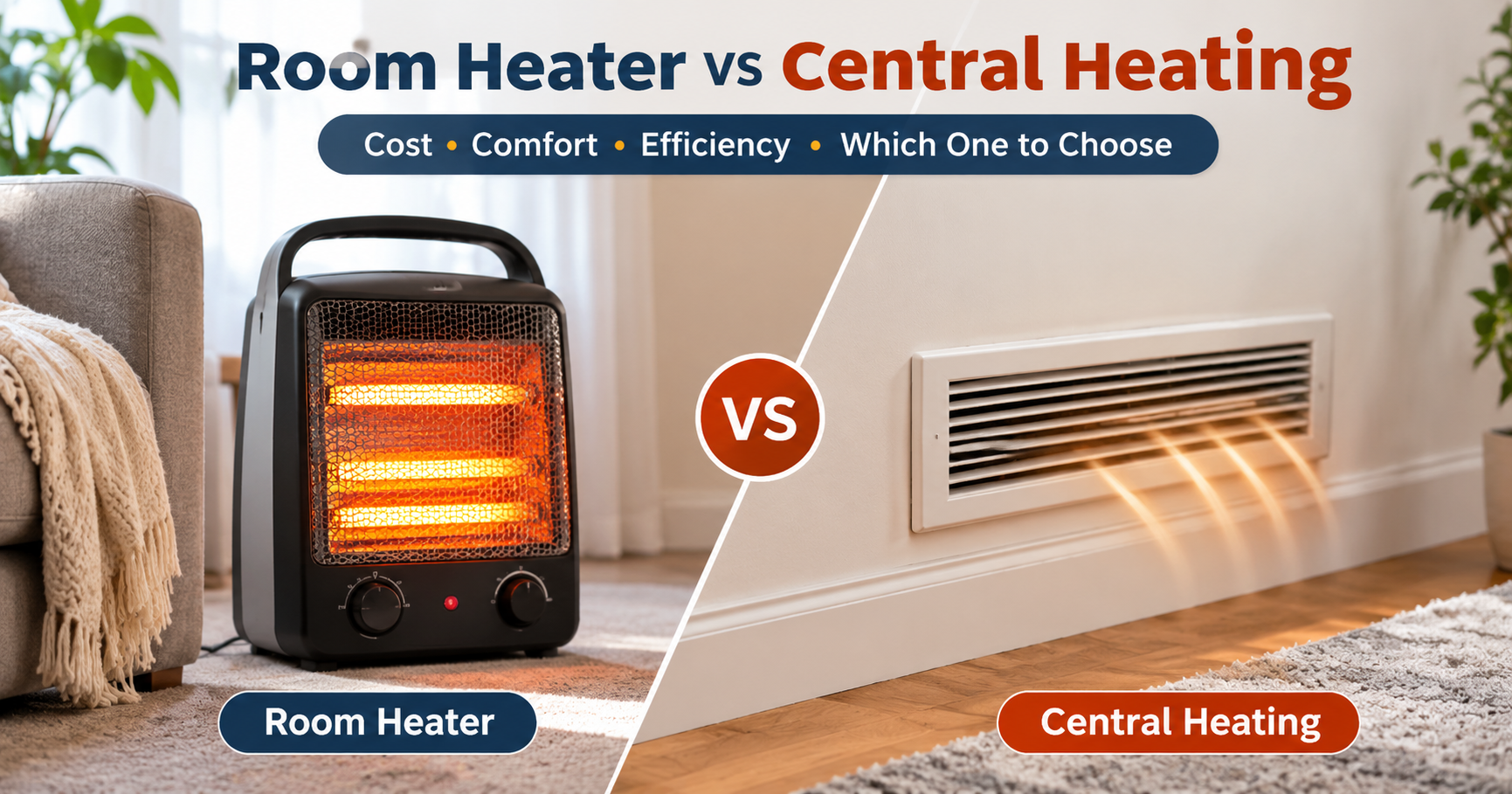
When winter arrives, every homeowner and renter faces the same question: room heater vs central heating, which one is better? A plug-in room heater is cheap, portable, and ready in seconds. Central heating warms the entire home evenly but costs far more to install. The right answer depends on your climate, home size, budget, and how you actually live. This guide compares both options on cost, efficiency, comfort, safety, and convenience so you can decide with confidence.
Table of Contents
- What is a room heater?
- What is central heating?
- Room heater vs central heating: side-by-side
- Running cost comparison
- Energy efficiency explained
- Comfort and heat distribution
- Installation and upfront cost
- Safety and air quality
- Which option should you choose?
- Smart ways to combine both
- Buying guide for room heaters
- Frequently asked questions
- Conclusion
What Is a Room Heater?
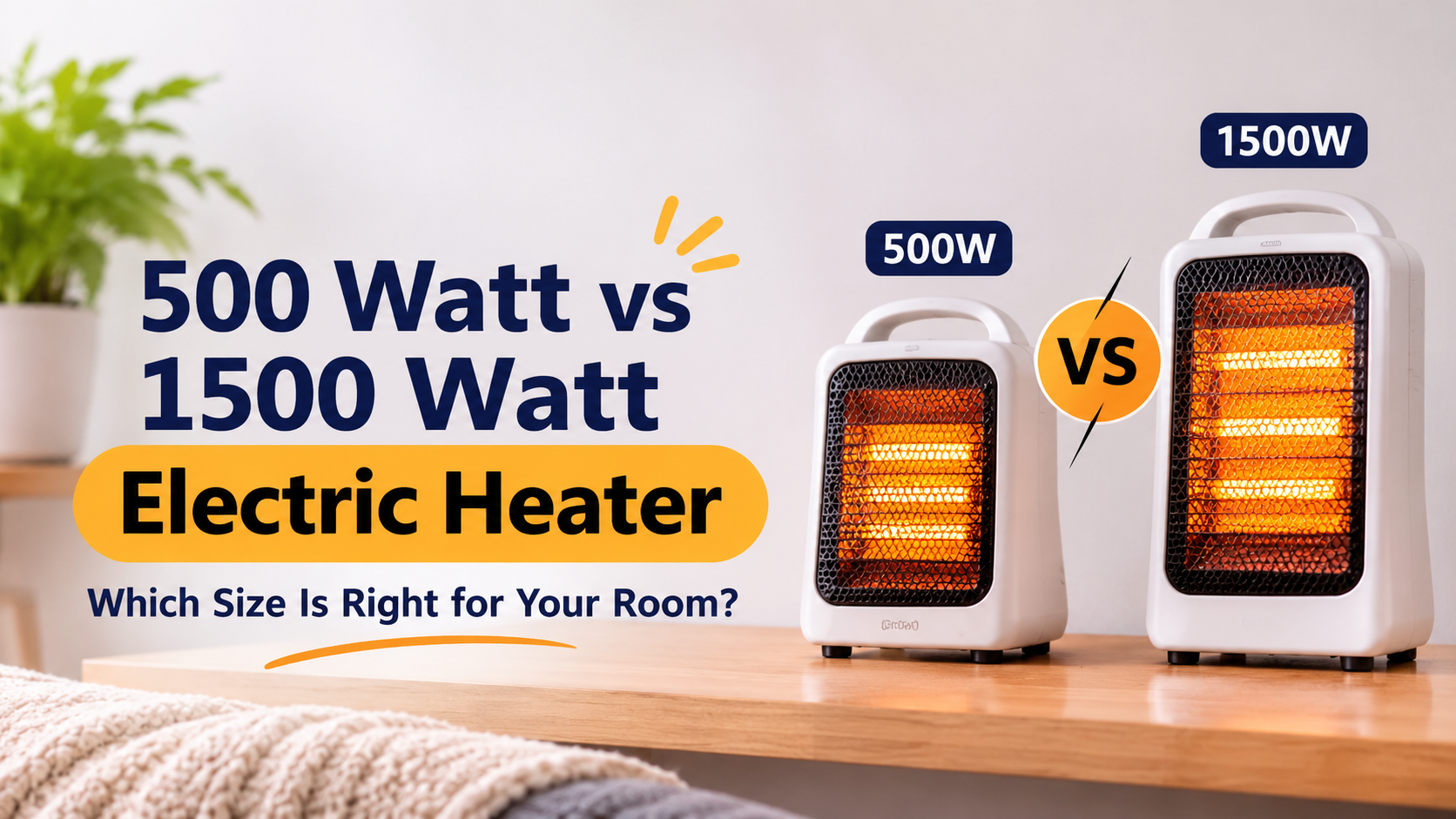
A room heater (also called a space heater) is a standalone appliance that warms one room or one area. Most run on electricity, and some use gas, kerosene, or propane. The common electric types are fan heaters, ceramic heaters, oil-filled radiators, infrared heaters, halogen heaters, and convection panels. Their power usually ranges from 400W to 2000W, and you simply plug them into a wall socket.
Advantages of Room Heaters
- Low purchase price and no installation
- Portable, so you can move them between rooms
- Heat only the space you are using
- Fast warm-up, especially fan and radiant models
- Ideal for renters and small apartments
Disadvantages of Room Heaters
- Electricity is usually the most expensive way to make heat
- Heats one room only, so other rooms stay cold
- Higher fire and burn risk if used incorrectly
- Can overload circuits when several run at once
What Is Central Heating?
Central heating produces heat in one place, such as a gas boiler, furnace, heat pump, or electric boiler, and distributes it through the building. Distribution may use hot-water radiators, underfloor heating, or forced-air ducts and vents. A thermostat controls the whole system, and many modern setups allow separate zones.
Advantages of Central Heating
- Even, whole-home warmth with one thermostat
- Often lower cost per unit of heat, especially with natural gas or a heat pump
- Works with smart thermostats and scheduling
- Can add value to a home
- No loose cables or hot surfaces in living areas
Disadvantages of Central Heating
- High installation cost
- Needs professional installation and yearly servicing
- Heats unused rooms unless zoned
- Repairs can be expensive
- Not practical for many rentals
Room Heater vs Central Heating: Side-by-Side
| Factor | Room Heater | Central Heating |
|---|---|---|
| Upfront cost | Very low | High |
| Installation | None | Professional required |
| Heating coverage | Single room | Entire home |
| Cost per kWh of heat | Higher (electric) | Lower (gas / heat pump) |
| Comfort | Uneven across home | Even and consistent |
| Portability | Excellent | None |
| Maintenance | Minimal | Annual service advised |
| Best for | Small spaces, renters, short use | Whole homes, cold regions |
Running Cost Comparison
Running cost is where most people make mistakes. The key is to compare the price of one unit of heat, not just the wattage on the label. Electricity usually costs much more per kWh than natural gas, so an electric room heater is expensive to run even though it converts nearly 100% of power into heat.
Using example prices, gas central heating and a heat pump produce heat at roughly one-third of the cost of a standard electric room heater. Your local energy rates will change these numbers, so check your latest bill and plug your own prices into the same logic.
However, the cheapest heat per kWh does not always mean the lowest bill. Central heating warms the entire home, while a room heater warms only what you need. The graphic below shows an illustrative daily comparison.
If you spend most of your time in one room, a room heater can be cheaper than heating the whole house. But once you need heat in three or four rooms, the total cost of multiple room heaters quickly climbs above central heating.
Energy Efficiency Explained
Efficiency is often misunderstood, so here are the simple facts:
- Electric room heaters are close to 100% efficient at converting electricity into heat, but electricity is costly.
- Modern condensing gas boilers and furnaces reach roughly 90% efficiency or higher, and gas is typically cheaper per unit of energy.
- Heat pumps move heat instead of creating it, delivering about 2 to 4 units of heat per unit of electricity, which makes them the most efficient electric option for whole-home heating.
- Insulation matters most: no heating system performs well in a leaky house.
Comfort and Heat Distribution
Central heating gives you a steady temperature in every room, which is better for families, older adults, and people working from home. Room heaters create hot and cold zones. Fan heaters warm the air fast but cool quickly after switching off, while oil-filled and infrared models feel more comfortable over time. If you want one warm room and don’t mind a cooler hallway, a room heater is perfectly fine. If you dislike walking from a warm room into a cold one, central heating wins.
Installation and Upfront Cost
A quality room heater typically costs between $30 and $300 and works the moment you plug it in. Central heating is a major project: a new boiler, furnace, or heat pump system can run from several thousand to well over ten thousand dollars depending on your country, home size, and whether pipes or ducts must be added. If you already have a working central system, the question changes from “should I install it” to “should I supplement it”.
Renters, students, and people in short-term housing almost always benefit from room heaters, since a central system is not realistic.
Safety and Air Quality
- Portable heaters are a leading cause of home heating fires when placed near fabric or plugged into extension cords. Always plug into a wall socket, and keep items at least one metre away.
- Choose heaters with tip-over and overheat protection.
- Gas and kerosene room heaters need ventilation and a carbon monoxide alarm.
- Central systems with combustion should be serviced yearly, and ducted systems benefit from clean filters.
- Fan heaters can circulate dust, which may bother people with allergies.
Which Option Should You Choose?
Pick a room heater if:
- You rent or move often.
- You live in a mild climate with short winters.
- You mostly stay in one or two rooms.
- You need a low-cost solution right now.
Pick central heating if:
- You own your home and plan to stay.
- Winters are long and cold.
- You heat many rooms for many hours each day.
- You want consistent comfort and smart scheduling.
Smart Ways to Combine Both
You do not always need to choose. A smart hybrid approach can lower costs and improve comfort:
- Set central heating to a lower base temperature (about 18–19°C or 64–66°F) and use a room heater in the room you occupy.
- Use a small heater in a home office instead of heating the entire house during the workday.
- Heat a bathroom or nursery briefly with a safe, wall-mounted or low-wattage heater.
- Add a smart thermostat and heating zones to avoid heating empty rooms.
- Improve insulation and seal draughts before spending on any new equipment.
Buying Guide for Room Heaters
If a room heater suits you, check these points before buying:
- Right wattage: About 100 watts per square metre (10 watts per square foot) is a practical starting point.
- Thermostat and timer: They prevent wasted power and keep temperatures steady.
- Multiple power settings: Allow you to lower consumption on mild days.
- Safety protection: Tip-over switch and overheat cut-off are essential.
- Type: Oil-filled for long, quiet heating; ceramic fan for quick bursts; infrared for direct spot warmth.
- Noise level and size: Important for bedrooms and offices.
- Warranty: Choose products with clear after-sales support.
Frequently Asked Questions
Is a room heater cheaper than central heating?
It can be cheaper if you heat only one room for a few hours. For several rooms or long hours, central heating, especially gas or a heat pump, is usually cheaper overall.
Is central heating worth the investment?
For homeowners in cold climates, yes. It improves comfort, can reduce long-term running cost, and often adds property value. In mild climates or short-term homes, the payback may be too slow.
Can I use a room heater instead of central heating?
You can, but it is usually not economical for whole-home heating. It works best as a supplement or for small spaces.
What is the cheapest way to heat a home?
Good insulation first, then an efficient system such as a heat pump or a modern gas boiler where gas is affordable, plus a programmable thermostat and zoning.
Are electric room heaters safe to leave on overnight?
Only models with proper safety features, and even then it is safer to use a timer or thermostat and keep the area clear. Never use extension cords with high-wattage heaters.
Conclusion
The debate of room heater vs central heating does not have a single winner. Room heaters win on low upfront cost, flexibility, and targeted heating. Central heating wins on whole-home comfort, lower cost per unit of heat, and long-term value. Look at your climate, home size, rental status, and daily habits, then choose the system that fits. For many families, the best solution is a mix: efficient central heating at a modest temperature, with a safe, thermostat-controlled room heater for the spaces where extra warmth matters most.