

Portable Electric Heater Thermostat Problems: Causes, Easy Fixes & When to Replace
A portable electric heater is supposed to be simple: set the temperature, and the room stays warm. But when the thermostat misbehaves, the heater may blow cold air, shut off too early, run non-stop, or never switch on at all. These are the most common portable electric heater thermostat problems, and most of them can be diagnosed in minutes without special tools.
In this guide you will learn how a heater thermostat works, the warning signs of a faulty one, step-by-step fixes, safety rules, and what to look for if you decide to buy a new heater.
Quick Answer: What Causes Most Thermostat Problems?
- Dust and dirt around the temperature sensor (the number one cause).
- Poor heater placement that confuses the sensor.
- A worn or stuck thermostat dial or switch.
- A tripped tip-over or overheat safety cut-off that looks like a thermostat fault.
- An old, failed thermostat component that must be replaced.
How a Portable Heater Thermostat Works
Inside the heater, a thermostat measures the air temperature. When the room is colder than your set value, it closes an electrical circuit and the heating element turns on. When the room reaches the set value, it opens the circuit and the element turns off. This repeating on/off pattern is called cycling, and it keeps the temperature steady while saving electricity.
There are two main types:
- Mechanical (bimetal) thermostats: a metal strip bends with heat and clicks the switch. Common in budget heaters with a simple dial.
- Digital (electronic) thermostats: a small sensor (thermistor) sends readings to a control board. Common in models with a display and remote.
Common Portable Electric Heater Thermostat Problems and Fixes
1. Heater Turns Off Too Early or Shuts Off Repeatedly
Likely causes: dust on the sensor, heater placed too close to a wall or furniture, or the overheat protection triggering.
Fix: Unplug the heater, let it cool, and clean the vents and sensor area with a soft brush or vacuum. Keep at least 3 feet (about 1 meter) of clear space around it. Then test again on a flat, hard floor.
2. Heater Runs Constantly and Never Reaches the Set Temperature
Likely causes: a stuck thermostat contact, a miscalibrated sensor, or a room that is simply too large or poorly insulated for the heater’s wattage.
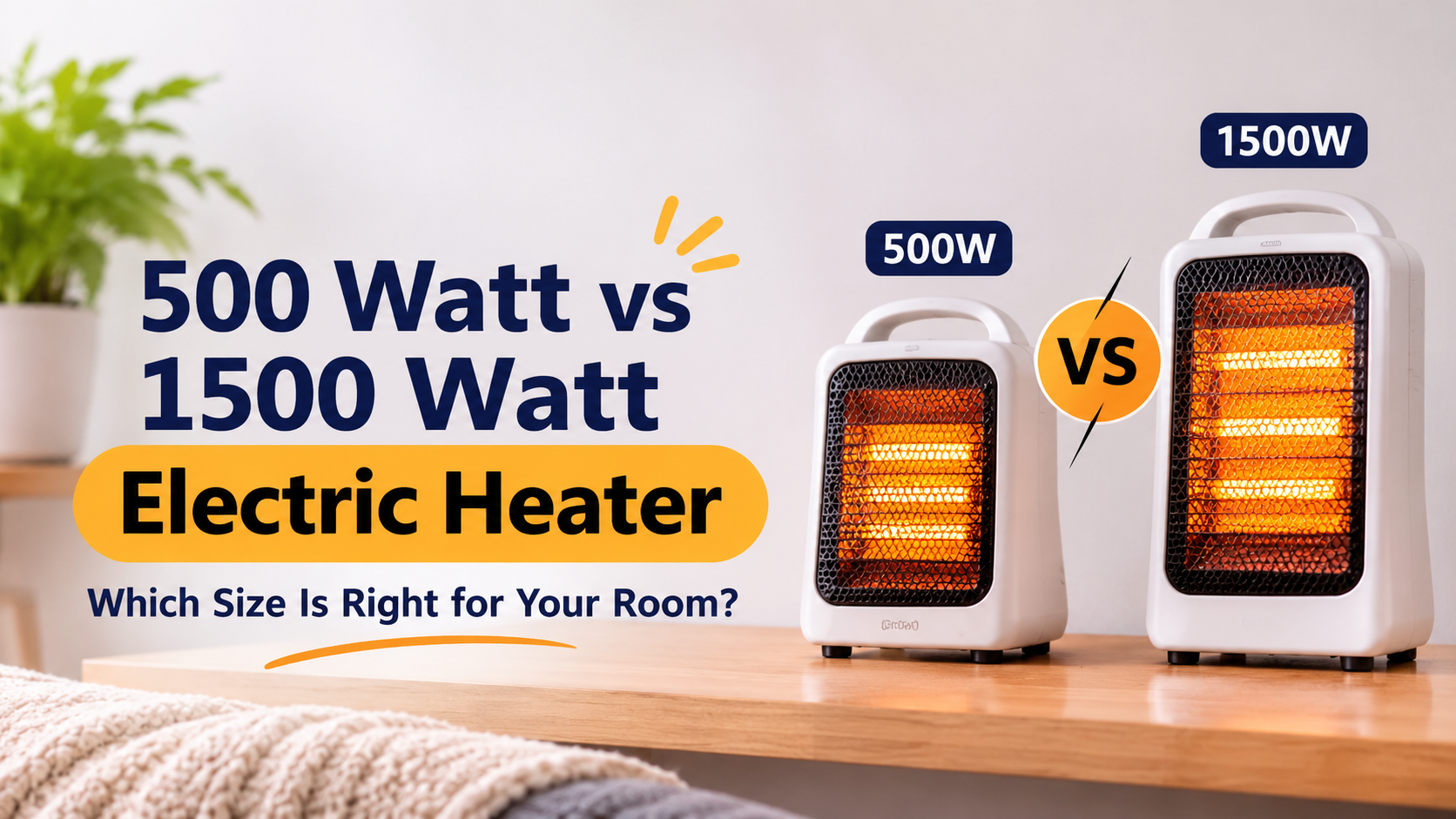
Fix: Turn the dial to its lowest setting; you should hear a click as it switches off. If there is no click, the thermostat is likely stuck and needs replacement. If it clicks fine, check that the heater’s power (usually 1500W for small rooms) suits your room size.
3. Heater Blows Cold Air
Likely causes: thermostat set lower than the room temperature, fan-only mode selected, a tripped safety switch, or a failed heating element.
Fix: Raise the set temperature well above the room temperature, check the mode, and confirm the tip-over switch is not stuck. If the fan runs but no heat comes out after these checks, the element or thermostat has probably failed.
4. Heater Won’t Turn On at All
Likely causes: power problem, damaged cord, tripped safety switch, or a dead thermostat.
Fix: Test the wall outlet with another device, plug the heater directly into the wall (never an extension strip), and inspect the cord for burns or cuts. Press the reset button if your model has one. If it still shows no response, stop using it.
5. Inaccurate Temperature Reading
If the display says 25°C but the room feels cold, compare it with a separate room thermometer placed at the same height. A difference of 2–3°C is normal near a heater, but a bigger gap suggests a faulty or dirty sensor. Move the heater away from drafts, windows, and direct sunlight, and clean the sensor.
6. Thermostat Dial Is Loose, Stuck, or Doesn’t Click
A loose or non-clicking dial often means the internal shaft or switch is worn out. This is a common failure in older mechanical heaters and usually cannot be repaired safely at home. Replace the heater.
7. Digital Display Errors or Frozen Controls
Unplug the heater for 10 minutes to reset the control board, then plug it back in. If error codes return, the sensor or board is likely faulty. If the remote is not responding, replace its batteries first.
8. Burning Smell or Sparks Near the Thermostat
A light dusty smell on first use is normal. But a strong burning smell, buzzing, smoke, or sparks is a danger sign. Unplug immediately and do not use the heater again until a qualified technician inspects it.
Symptom Quick-Reference Table
| Symptom | Most Likely Cause | First Action |
|---|---|---|
| Shuts off early | Dust / overheat protection | Clean vents, add clearance |
| Never stops heating | Stuck thermostat contact | Test low setting for click |
| Cold air only | Wrong mode / failed element | Check mode and set temp |
| No power | Outlet, cord, safety switch | Test outlet, inspect cord |
| Wrong temperature | Dirty or drifted sensor | Compare with room thermometer |
| Burning smell / sparks | Electrical fault | Unplug, stop using |
Safety Rules You Should Never Ignore
- Plug the heater directly into a wall socket; avoid extension cords and power strips.
- Keep curtains, bedding, clothes, and paper at least 3 feet away.
- Never leave a heater running while you sleep or when you leave home.
- Do not use it in a bathroom or any damp area unless it is specifically rated for it.
- Do not tape, jam, or bypass a thermostat or safety switch.
- Choose a model with tip-over and overheat protection.
Repair or Replace?
Try repair or cleaning when the problem is dust, placement, or a simple reset. Replace the heater when the dial is broken, the heater has a burnt smell, the cord is damaged, or the heater is more than 5–7 years old. Replacement thermostats for budget heaters often cost almost as much as a new unit, and DIY electrical repairs can void warranties and create fire risk.
What to Look for in a New Heater With a Reliable Thermostat
- Adjustable digital thermostat for more accurate temperature control.
- Tip-over and overheat protection built in as standard.
- Correct wattage: roughly 10 watts per square foot of room area is a common rule of thumb.
- Timer and eco mode to save electricity.
- Safety certification from a recognized testing body.
- Warranty of at least 1–2 years and easy-to-clean vents.
How to Prevent Thermostat Problems
- Clean the vents and sensor area every 2–4 weeks during heavy use.
- Store the heater covered and dry in the off-season.
- Place it on a flat, hard, stable surface away from drafts.
- Do not move or shake it while it is hot.
- Never use it in dusty or high-humidity areas.
Frequently Asked Questions
Why does my portable heater keep turning on and off?
Normal cycling is expected as the room reaches the set temperature. Very frequent switching (every few seconds) usually points to a dirty sensor, a very small room, or placement too close to the thermostat’s sensing area.
Can I replace the thermostat in a portable heater myself?
It is possible for experienced people, but it is generally not recommended. Wiring errors can cause overheating or fire. Using a qualified technician or replacing the unit is safer.
How do I test if the thermostat is bad?
Turn the dial to the lowest and highest settings. A healthy mechanical thermostat clicks and the heating stops at the lowest setting. A multimeter can test continuity, but only do this with the heater unplugged and if you know how.
Why is my heater fan working but no heat is coming out?
The fan is powered separately from the element. This usually means the thermostat is open, the element has failed, or the overheat protection has tripped.
Is it safe to use a heater with a faulty thermostat?
No. A faulty thermostat can cause overheating and increase fire risk. Stop using the heater until it has been fixed or replaced.
How long does a portable heater thermostat last?
Most last 5–10 years with normal use, but dust, heavy daily use, and power surges can shorten that.
Final Thoughts
Most portable electric heater thermostat problems come down to dirt, placement, or normal wear. Start with the easy checks: unplug, clean, reposition, and test again. If the heater still behaves strangely, smells of burning, or has a broken dial, do not take risks. Replace it with a modern model that has an accurate digital thermostat and proper safety protection. A few minutes of regular maintenance will keep your room warm, your electricity bill lower, and your home safe all winter.