

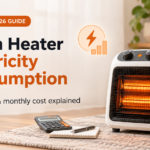
Portable electric heaters are fast, convenient and easy to move from room to room. They are also some of the most power-hungry appliances in a home, and their effect on your electricity bill can come as an unpleasant surprise. If you are wondering how much electricity a space heater uses, how much it really costs to run, or how to keep the bill under control, you are in the right place.
In this complete guide to portable electric heater power consumption, you will learn how watts and kilowatt-hours work, how to calculate your exact running cost, what a heater really uses in daily life, how room size affects the wattage you need and the best ways to cut consumption without freezing.
Understanding Watts, Kilowatts and kWh
Three simple terms explain nearly everything about heater energy use.
- Watt (W): the rate at which a device uses power at any moment. A heater labelled 1500W uses power at a rate of 1500 watts while its element is on.
- Kilowatt (kW): 1000 watts. A 1500W heater is a 1.5 kW heater.
- Kilowatt-hour (kWh): the amount of energy used when 1 kW runs for one hour. This is the unit your electricity bill is based on, often called a “unit” of electricity.
How Many Watts Does a Portable Heater Use?
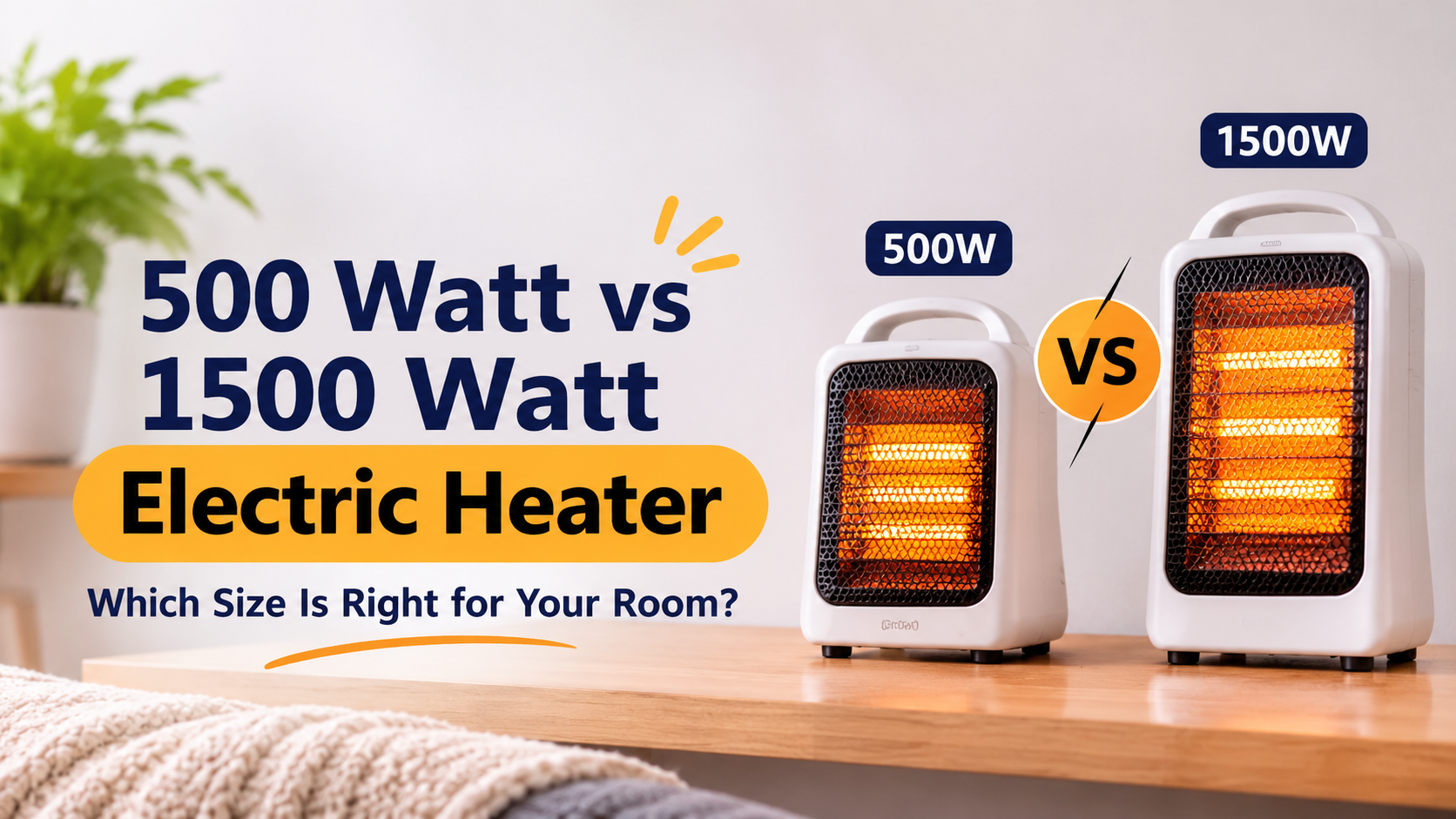
Most portable electric heaters fall between about 500W and 2000W. In regions with 120V mains, 1500W is the common maximum for plug-in heaters. Where the supply is 220 to 240V, higher ratings such as 2000W and above are more common.
| Heater Size | Typical Use | Energy Per Hour at Full Power |
|---|---|---|
| 400 to 600W | Desk, under-desk, small bathroom or tiny room | 0.4 to 0.6 kWh |
| 750 to 1000W | Small bedroom or home office | 0.75 to 1 kWh |
| 1500W | Medium room, standard plug-in maximum at 120V | 1.5 kWh |
| 2000W and above | Larger rooms on higher-voltage supplies | 2 kWh or more |
Many heaters have two or three settings, for example 750W and 1500W. The low setting uses roughly half the power of the high setting, which means about half the heat as well.
How to Calculate Your Heater’s Running Cost
You only need three numbers: the heater’s power in kilowatts, the hours it runs and your electricity rate per kWh (found on your bill).
Cost Per Hour and Per 8 Hours at Different Rates
The table below shows the cost of running a heater continuously at full power. It uses three example electricity prices so you can find the one closest to your own.
| Heater | At $0.10 per kWh | At $0.15 per kWh | At $0.25 per kWh |
|---|---|---|---|
| 600W, 1 hour | $0.06 | $0.09 | $0.15 |
| 1000W, 1 hour | $0.10 | $0.15 | $0.25 |
| 1500W, 1 hour | $0.15 | $0.23 | $0.38 |
| 2000W, 1 hour | $0.20 | $0.30 | $0.50 |
| 600W, 8 hours | $0.48 | $0.72 | $1.20 |
| 1000W, 8 hours | $0.80 | $1.20 | $2.00 |
| 1500W, 8 hours | $1.20 | $1.80 | $3.00 |
| 2000W, 8 hours | $1.60 | $2.40 | $4.00 |
What Does a Month Cost?
If a 1500W heater ran at full power for 8 hours every day for 30 days, it would use 360 kWh. At $0.15 per kWh that is about $54 a month. At $0.10 it would be $36, and at $0.25 it would be $90. In real life, thermostat cycling means the figure is usually lower, often by a third to a half, depending on the room and weather.
Why Real Consumption Is Often Lower Than the Label
The wattage on the label is the power used while the heating element is switched on. Once the room reaches your chosen temperature, the thermostat switches the element off and on to hold it there. During those off periods, the heater uses almost no energy.
That is why a well-sized heater in a well-insulated room can cost far less to run than the full-power figures suggest, while a heater in a draughty room with the door open can run flat out all day.
Is a Higher-Wattage Heater Less Efficient?
No. Electric resistance heaters, including fan, oil-filled, ceramic, panel and infrared models, turn almost all the electricity they use into heat. A 1000W heater and a 1500W heater are equally efficient. The 1500W model simply produces 50 percent more heat per hour and uses 50 percent more energy per hour when running. Choose wattage based on how much heat you need, not on a belief that one type is more efficient.
How Many Watts Do You Need for Your Room?
Choosing the right wattage keeps you warm without wasting energy. As a rough guide, allow about 10 watts per square foot of floor space (around 100 watts per square metre) when the heater is your main source of warmth.
If the heater is only topping up central heating, or the room is small and well insulated, you can often use a smaller unit. In a large, draughty or poorly insulated space, you will need more power or a different solution altogether.
Power Consumption by Heater Type
Because all electric resistance heaters are equally efficient at turning power into heat, the difference between types is how and where the heat is delivered.
| Type | How It Heats | Energy Insight |
|---|---|---|
| Fan / ceramic heater | Blows warm air | Heats quickly but stops warming when switched off |
| Oil-filled radiator | Heats oil, radiates and convects | Slow start, then holds heat while cycling |
| Panel / convection heater | Gentle warm airflow | Even heat in enclosed rooms |
| Infrared / radiant heater | Warms people and objects directly | Good for spot heating, so you can use less power |
If you want genuinely lower energy use for the same warmth, a heat pump air conditioner or mini-split, where available, can deliver two to four units of heat for every unit of electricity it uses. It costs more to buy and install, but it is far cheaper to run than resistance heating for long hours.
How Heater Wattage Compares With Other Appliances
| Appliance | Typical Power |
|---|---|
| LED light bulb | 5 to 10W |
| Laptop | 30 to 100W |
| Television | 50 to 150W |
| Microwave oven | 700 to 1200W |
| Hair dryer | 1200 to 1800W |
| Portable electric heater | 500 to 2000W |
A heater uses as much power as several kitchen appliances combined, and unlike a kettle or microwave, it can run for hours at a time. That is why it stands out on the bill.
How to Measure Your Heater’s Actual Consumption
- Check the label or manual for the rated wattage, usually printed on the back or base.
- Use a plug-in energy monitor (a watt meter). Plug it into the wall, plug the heater into it and read the real power and the kWh used over time.
- Run it for a day or a week with your normal habits to see the real kWh, including thermostat cycling.
- Multiply kWh by your rate to get the actual cost.
A meter is the best way to replace guesswork with facts, and it works for any appliance in your home.
Standby Power: Does a Switched-Off Heater Use Electricity?
Basic heaters with mechanical dials use no power when turned off at the control. Digital models, remote-controlled heaters and smart heaters can draw a very small standby load for their display and electronics, typically only a watt or two. It is minor, but you can unplug the heater when it is not in use for the season.
12 Ways to Reduce Heater Power Consumption
- Use the thermostat. Set a comfortable temperature (many people choose around 18 to 21 °C or 64 to 70 °F) instead of leaving the heater on high.
- Use a timer. Warm the room before you use it, then let the timer switch off when you are done.
- Heat only the room you are in. Close the door and avoid trying to warm the whole house with one heater.
- Stop draughts. Seal gaps around doors and windows with draught excluders or weatherstripping.
- Use thick curtains at night to hold heat in, but keep them well away from the heater.
- Choose the right size. An oversized heater wastes energy, while an undersized one runs constantly.
- Use the low setting once the room has warmed up.
- Use spot heating with a small or infrared heater if you are sitting still at a desk.
- Wear warmer clothing, use blankets and keep your feet off cold floors.
- Keep the heater clean. Dust-free vents and filters help it work as designed.
- Place the heater sensibly. Keep it clear of furniture so heat can circulate, and use it on a hard, flat surface.
- Avoid running it in empty rooms. Switch off when you leave, and never leave a heater unattended.
Power Consumption and Electrical Safety
Wattage also determines how much current the heater draws from the wall. You can find the current by dividing watts by volts. A 1500W heater draws about 12.5 amps at 120V and about 6.5 amps at 230V. High current is why heaters should always be plugged directly into a wall outlet and not into an extension lead or power strip, and why they should not share a circuit with other high-power appliances.
Running a Heater on an Inverter, UPS or Generator
Heaters are heavy loads. A typical home battery backup or small UPS cannot run one for long, if at all. An inverter or generator must be rated comfortably above the heater’s wattage, so a 1500W heater needs a unit with a continuous rating well above 1500W, and a battery that can supply that power for the hours you need. As a rough example, running a 1500W heater for four hours needs about 6 kWh of stored energy. For many setups, a lower-wattage heater or a different heating method is a better choice.
How to Choose an Energy-Smart Portable Heater
1. Pick the Right Wattage for the Room
Check the room size guide above. Buying more power than you need increases both your bill and electrical load.
2. Look for an Adjustable Thermostat
A good thermostat is the single most important feature for keeping consumption in check, because it stops the heater from running when the room is warm enough.
3. Choose Multiple Power Settings
Settings such as 750W and 1500W, or three levels, let you choose the lowest power that keeps you comfortable.
4. Add a Timer or Programmable Schedule
Timers and schedules prevent heaters from running when you do not need them.
5. Consider an Eco or Smart Mode
Eco modes hold a set temperature using the lowest power, and some smart heaters adjust automatically.
6. Match the Type to How You Will Use It
Choose oil-filled or panel heaters for steady, long periods of use, ceramic fan heaters for quick bursts, and infrared heaters for spot heating at a desk.
7. Do Not Compromise on Safety
- Overheat protection and tip-over protection
- Recognised safety certification such as UL, ETL, CE or UKCA
- A sturdy cord and well-fitting plug
Common Mistakes That Drive Up Heater Costs
- Leaving the heater on high all day instead of using the thermostat
- Heating a large, draughty room with a small heater
- Leaving doors and windows open while the heater runs
- Buying a heater that is much bigger than the room needs
- Heating empty rooms
- Believing a low-wattage heater is automatically “cheaper per degree”
- Not checking the real kWh with a plug-in meter
Frequently Asked Questions
How much electricity does a 1500W space heater use?
It uses 1.5 kWh for every hour it runs at full power. Over eight hours at full power that is 12 kWh. With thermostat cycling, the real figure is usually lower.
How much does it cost to run a 1500W heater for 24 hours?
At full power for 24 hours it would use 36 kWh. At $0.15 per kWh that is $5.40. In practice, a thermostat means the heater will not run at full power for the whole day.
How much does it cost to run a space heater per hour?
Multiply the heater’s power in kW by your rate per kWh. A 1500W heater at $0.15 per kWh costs about 23 cents per hour at full power.
Is a 1000W heater cheaper to run than a 1500W heater?
It uses less electricity per hour, but it also produces less heat. In a small room it may be enough and cost less. In a larger room it may run constantly and not warm the room properly.
Do heaters use more electricity when they are first switched on?
The heater draws its rated power as soon as it is on, and it runs continuously until the room reaches the set temperature. After that it cycles, so the first period of warm-up uses the most.
Is it cheaper to leave a heater on all day at a low setting?
Not usually. Electric resistance heaters convert power to heat at the same efficiency whatever the setting, so keeping a room warm when nobody is there wastes energy. Use a timer or thermostat to heat when you need it.
Which type of portable heater uses the least electricity?
For the same wattage, they all use the same electricity per hour. You save energy by choosing the right size, using a thermostat, heating only occupied spaces and, where practical, using spot heating or a heat pump.
How do I find out how much my heater really uses?
Use a plug-in energy monitor and run the heater for a day or more. It shows the real kWh, which you multiply by your electricity rate.
Can I run a space heater on solar or a battery backup?
It is possible with a large enough inverter and battery or solar array, but heaters use a lot of power. Check the continuous rating of your system and consider a lower-wattage heater.
Final Thoughts
Portable electric heater power consumption is easy to understand once you know the formula: kilowatts times hours times your electricity rate. A 1500W heater costs roughly 23 cents an hour at $0.15 per kWh when running at full power, and the thermostat usually brings the real cost down. The best savings come from choosing the right size, heating only the space you use, sealing draughts and using timers and thermostats wisely.
Before you buy, work out the room size, decide which settings and controls you need and make sure the heater is safe and certified. Then keep an eye on your usage with a simple plug-in meter. A smart, well-sized heater keeps you warm without surprising you at the end of the month.
Disclaimer: Costs and consumption figures are examples for illustration. Real values depend on your heater, home, climate and local electricity rates. Always follow your heater’s manual and local safety regulations.