









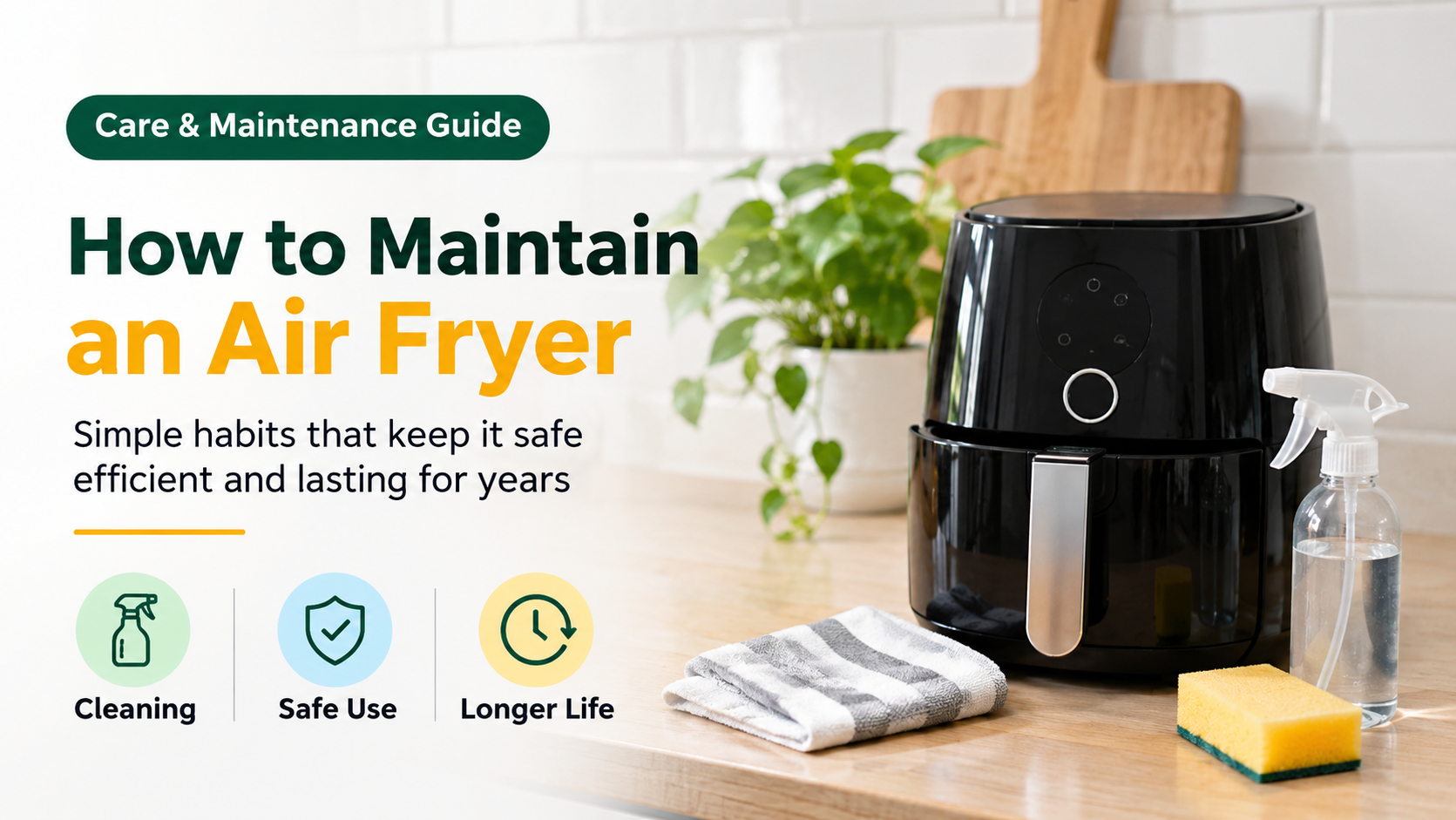
How to Maintain an Air Fryer: A Complete Care Guide

A few simple habits protect your investment and keep your food tasting great.
An air fryer is one of the hardest-working appliances in a modern kitchen. It heats up quickly, cooks everything from fries to chicken to cakes and is used several times a week in many homes. Like any appliance that works that hard, it needs a little care to stay safe and perform well.
The good news is that maintaining an air fryer is simple. You do not need special tools or technical skills. This guide covers everything: how to clean it, how to use it so it lasts, how to place and store it, what to inspect regularly, how to spot problems early and when it is time to replace it.
In this guide
- Quick answer
- Why maintenance matters
- The 6 pillars of air fryer care
- Cleaning routine
- Using your air fryer the right way
- Protecting the non-stick coating
- Placement and ventilation
- Inspection checklist
- Storage tips
- Troubleshooting common problems
- When to repair or replace
- Frequently asked questions
Quick Answer
To maintain an air fryer, clean the basket and tray after every use, deep clean the interior and heating area regularly, avoid overfilling, use soft tools on the non-stick coating, give the unit plenty of ventilation, inspect the cord and parts monthly and store it clean and dry. Always follow your manual.
Safety first
Always unplug the air fryer and let it cool completely before cleaning or inspecting it. Never submerge the main unit in water, never use it with a damaged cord or plug and never attempt to repair electrical parts yourself.
Why Air Fryer Maintenance Matters
- Safety. Grease buildup, damaged cords and blocked vents increase the risk of smoke and overheating.
- Better cooking results. A clean element and fan circulate heat evenly for crisp, consistent food.
- Longer lifespan. Gentle care protects the coating, handle and moving parts.
- Better taste. Old grease and crumbs affect flavor.
- Lower costs. A well-kept appliance does not need to be replaced as often.
The 6 Pillars of Air Fryer Care

1. Clean It Regularly
Cleaning is the single most important part of maintenance. A simple routine prevents most problems.
| When | What to do | Time |
|---|---|---|
| After every use | Wash basket and tray in warm soapy water; wipe crumbs from the chamber; dry parts | 5 to 10 minutes |
| Weekly | Wipe interior walls and exterior with a barely damp cloth; glance at the element and fan | 10 to 15 minutes |
| Monthly | Deep clean basket and tray; gently clean the heating element, fan guard and vents; wipe rails | 20 to 30 minutes |
Always let the unit cool and unplug it before cleaning. Use a soft sponge, a soft brush and a barely damp cloth. Never pour or spray water onto the heating element, fan or electrical parts, and make sure everything is fully dry before you plug it back in.
2. Use Your Air Fryer the Right Way
Good habits during cooking reduce mess and wear.
- Do not overfill the basket. Crowded food cooks unevenly, drips more and can block airflow.
- Use a light amount of oil. A thin coating on the food is enough. Too much oil causes smoke and sticky buildup.
- Preheat when the recipe or model recommends it. This improves browning and reduces sticking.
- Pat food dry. Excess moisture creates steam and splatter.
- Weigh down light foods. Items such as loose herbs, paper or foil can fly into the heating element or fan.
- Do not use it empty for long periods and never leave it running unattended.
- Use only air fryer-safe liners and cookware and keep them clear of the element.
- Do not exceed the recommended capacity or temperature.
3. Protect the Non-Stick Coating
The coating on the basket and tray is what makes cleaning easy and food release smoothly. Once it is scratched or flaking, it cannot be repaired.
- Use silicone, wooden or plastic utensils instead of metal.
- Avoid steel wool, abrasive pads and harsh cleaners.
- Let the basket cool before washing. Putting a very hot basket into cold water can warp it.
- Do not stack heavy items on the basket or drop it.
- Check your manual before using aerosol cooking sprays. Some can leave a sticky film.
- Hand wash if recommended. Even dishwasher-safe baskets often last longer when washed by hand.
If the coating is flaking
Stop using the basket and contact the manufacturer for a replacement. Flaking coating can end up in food and cannot be repaired.
4. Give It Space: Placement and Ventilation
Air fryers push hot air out of vents, usually at the back or sides. If those vents are blocked, the unit can overheat and the plastic and electronics wear faster.

- Place it on a flat, stable, heat-resistant surface.
- Leave open space around it, especially behind and above.
- Do not use it directly under cabinets or next to walls, curtains or flammable items.
- Avoid placing it near the edge of the counter or near water.
- Plug it directly into a wall socket rather than a long extension cord or multi-plug if your manual advises it.
5. Inspect It Regularly
A short monthly check lets you catch small problems before they become expensive or unsafe.

If you find a damaged cord or plug, a cracked housing, a wobbling basket that does not seat properly or a heating or fan problem you cannot fix by cleaning, stop using the air fryer and contact the manufacturer.
6. Store It Properly
- Clean and dry everything first. Moisture causes odors and can cause corrosion.
- Let it cool completely before putting it away.
- Coil the cord loosely. Tight bends can damage the wires inside.
- Store it upright on a stable shelf or counter, away from moisture and direct heat.
- Keep the basket in place or stored safely so it does not get scratched or bent.
- Do not stack heavy items on top of it.
Troubleshooting Common Problems
| Problem | Possible cause | What to do |
|---|---|---|
| Smoke when cooking | Grease on the element, tray or chamber; too much oil | Unplug, clean thoroughly, use less oil |
| Burning smell | Food or grease burning on hot surfaces | Deep clean; if smell persists with a clean unit, stop using it |
| Basket will not close | Overfilled basket, debris in the track or poor seating | Remove food, clean the rails and re-seat the basket |
| Uneven cooking | Overfilled basket or dirty fan and element | Cook in batches, shake or flip food, clean the fan area |
| Food sticking | Residue buildup or worn coating | Deep clean; replace the basket if the coating is worn |
| Loud or rattling fan | Dirt, loose parts or a damaged fan | Clean the fan area; contact the manufacturer if noise continues |
| Will not turn on | Basket not seated, power issue or fault | Check the basket, plug and socket; contact support if it still fails |
When to Repair or Replace Your Air Fryer
Most air fryers last for several years with good care, though lifespan depends on the model and how often it is used. Consider replacing the unit if:
- The heating or fan stops working properly.
- The power cord, plug or housing is damaged.
- The non-stick coating is peeling and a replacement basket is unavailable.
- You see smoke, sparks or smell burning even when the unit is clean.
- Repair costs approach the cost of a new air fryer.
Check your warranty first, and contact the manufacturer before attempting any repair. Never open the housing or touch internal electrical parts yourself.
What to Look for When Buying an Air Fryer
If it is time for a new air fryer, choose one designed to be easy to look after.
- Removable, dishwasher-safe basket and tray.
- Durable non-stick coating that resists scratches.
- Sturdy build with a solid handle and smooth sliding drawer.
- Appropriate size for your household so you do not overfill it.
- Good ventilation design and safety features such as auto shut-off.
- Clear warranty and spare parts from the manufacturer.
- Easy-to-use controls without deep crevices where grease collects.
Frequently Asked Questions
How do I make my air fryer last longer?
Clean it regularly, avoid overfilling the basket, use soft tools to protect the non-stick coating, give the unit proper ventilation and never run it with damaged parts. Following the manual and storing the air fryer dry and clean also helps it last for years.
How often should I maintain my air fryer?
Wash the basket and tray after every use, wipe the interior weekly and do a deeper clean and inspection monthly. A quick look at the cord, plug and coating every month catches problems early.
Do air fryers need regular servicing?
Home air fryers generally do not need professional servicing. Maintenance is mostly cleaning, careful use and inspection. If the unit shows signs of electrical or heating problems, contact the manufacturer rather than attempting repairs yourself.
Can I use cooking spray in my air fryer?
Some manufacturers advise against aerosol cooking sprays on non-stick coatings, because additives can leave a sticky buildup. Many people prefer to brush or mist a small amount of oil onto the food using a refillable sprayer. Check your manual for guidance.
Where should I place my air fryer?
Use a flat, stable, heat-resistant countertop with open space around the unit, especially behind it where hot air is released. Keep it away from walls, curtains, flammable items and areas under cabinets, and follow the clearance advice in your manual.
Should I preheat my air fryer?
It depends on the model and recipe. Many recipes benefit from a short preheat for better browning and less sticking, while some models do not need it. Follow the guidance for your specific air fryer.
How do I store an air fryer?
Make sure it is completely clean, dry and cool, then store it on a stable surface or shelf. Loosely coil the cord without tight bends, and keep the basket in place or stored carefully so it does not get scratched or warped.
When should I replace my air fryer?
Consider replacement if the heating or fan fails, the cord or plug is damaged, the coating is flaking, the housing is cracked or repairs cost close to the price of a new unit. If you notice smoke, sparking or burning smells with a clean unit, stop using it immediately.
Final Thoughts
Maintaining an air fryer does not take much time, and the payoff is big: safer cooking, better-tasting food and an appliance that lasts. Clean it after every use, give it a deeper clean each month, use it sensibly, protect the coating, keep the vents clear and inspect it from time to time. Follow your manual, and your air fryer will keep working hard for you for years to come.
Save this guide, set a monthly reminder and enjoy your air fryer with confidence.