
You turn on your heater, the room begins to warm up, and then it clicks off. A few minutes later it may restart, or it may stay off. If your room heater keeps shutting off, it can be annoying and a little worrying. The reason is often simple: a safety feature doing its job, a dirty vent, or a setting you can change in seconds.
This guide explains why heaters shut themselves off, how to tell normal behavior from a real fault, nine common causes with fixes, safety advice and what to look for in a new heater.
Why Heaters Switch Themselves Off
Every modern heater includes safety and control systems that turn it off automatically. These protect your home from fire, so a shut-off is often a warning rather than a defect. The causes fall into three families: safety cut-offs, control settings, and the power supply.
Is It Normal or a Problem?
A heater cycling on and off as the room reaches temperature is normal. A heater that shuts off within minutes while the room is still cold is not. The pattern tells you a lot.
9 Reasons Your Room Heater Keeps Shutting Off
1. Normal thermostat cycling
Why it happens: Not every shut-off is a fault. When the room reaches the set temperature, the thermostat cuts power, then restarts when the air cools. In a small, well-insulated room this can look like frequent switching.
How to fix it: Raise the thermostat setting and see whether the heater runs longer. If it only switches off once the room feels warm, the heater is working correctly.
2. Overheat protection from blocked vents
Why it happens: Heaters have a thermal cut-off that switches the unit off when it gets too hot. Dust, a covered grille, or a heater placed too close to furniture or walls traps heat and triggers it.
How to fix it: Unplug, let it cool for 30 minutes, then clean the vents. Keep at least 3 feet of free space on all sides and never cover the heater.
3. Dirty filter or weak fan
Why it happens: Fan heaters rely on airflow to carry heat away from the element. A clogged filter or a slow, noisy fan causes the element to overheat quickly and shut down.
How to fix it: Clean or replace the filter and vacuum the air inlet. If the fan is slow, grinds or struggles, the motor needs professional repair.
4. Tip-over switch on an unstable surface
Why it happens: A heater on carpet, a wobbly table or a sloping floor can trigger its tilt sensor repeatedly and cut the power.
How to fix it: Place the heater on a flat, hard, level surface and check that nothing presses against the base switch.
5. Timer, eco mode or auto shut-off
Why it happens: Many modern heaters include timers, eco modes, sleep modes and automatic shut-off after a set period. Children or pets may also activate a setting by accident.
How to fix it: Check the display and manual. Cancel the timer, turn off eco or sleep mode, and make sure the child-lock is not active.
6. Faulty thermostat or temperature sensor
Why it happens: A thermostat that reads the temperature wrongly may think the room is already hot, switching the heater off after only a short run.
How to fix it: Turn the thermostat to maximum in a cold room. If the heater still stops within minutes, the sensor or thermostat likely needs replacement.
7. Loose plug, worn socket or damaged cord
Why it happens: A poor electrical connection can break contact intermittently, especially as the plug warms up. The heater appears to shut off for no reason, then restarts.
How to fix it: Check whether the plug or socket feels hot or loose. Try another wall socket. Replace any cord with cracks, burns or exposed wire through a qualified technician.
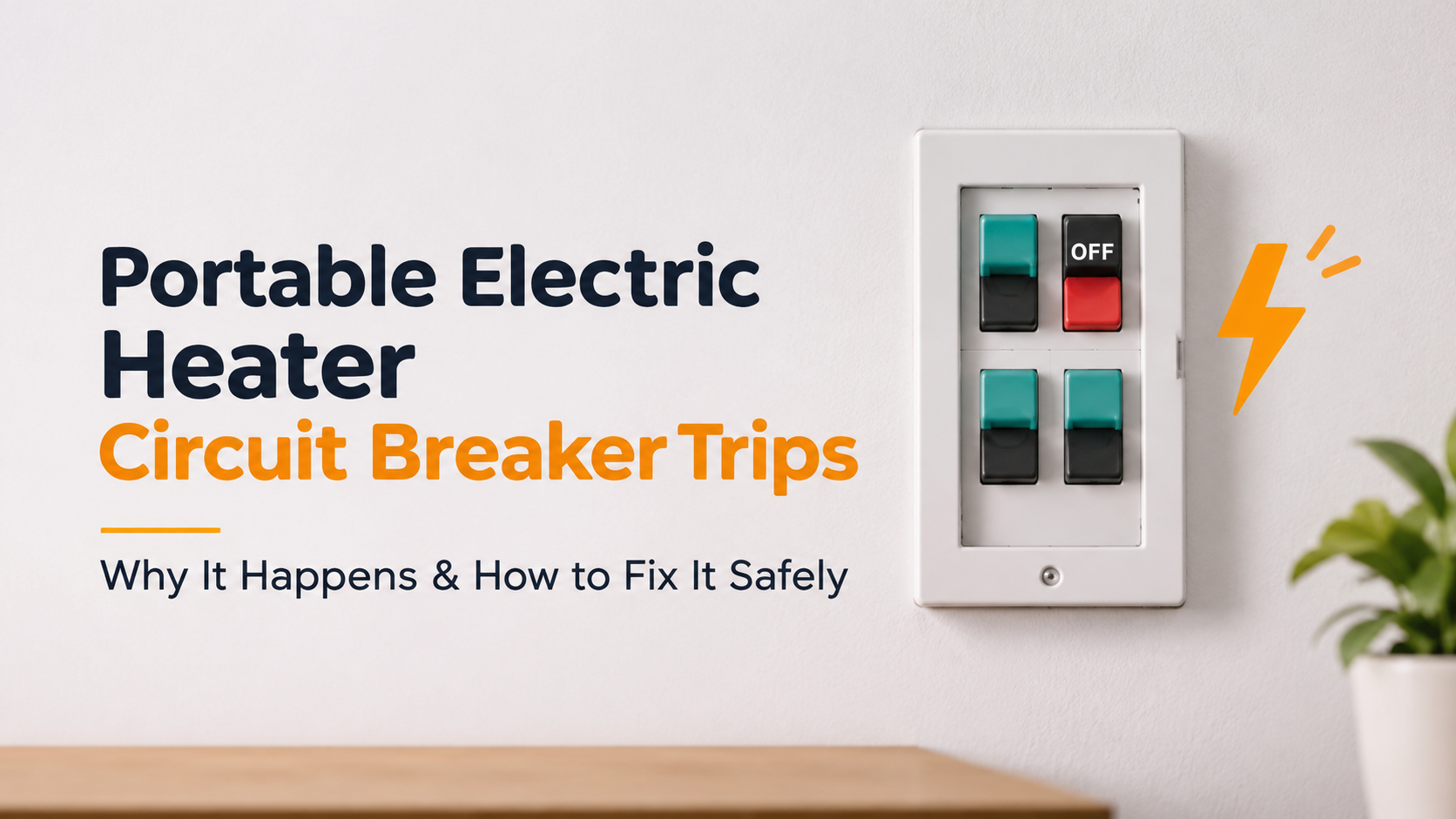
8. Overloaded circuit, breaker trips or extension cord
Why it happens: Heaters draw heavy current. Running one with an air conditioner, geyser, iron or microwave on the same circuit trips the breaker. Thin extension cords overheat and cut power.
How to fix it: Plug directly into a wall socket and avoid sharing the circuit with other high-power appliances. Do not use multi-plugs.
9. Aging element or failing thermal fuse
Why it happens: As heaters age, internal parts weaken. A degrading element, brittle wiring or a failing thermal fuse can cause random shut-offs that get worse over time.
How to fix it: If cleaning and settings do not help and the heater is older than 5 to 7 years, replacement is usually safer and cheaper than repair.
Quick Symptom Diagnosis Table
| Symptom | Likely Cause | What to Do |
|---|---|---|
| Shuts off within 1 to 5 minutes | Overheat protection, tip-over switch, loose plug | Clean vents, level the heater, check the plug |
| Runs 15 to 60 minutes, then stops | Dust, weak fan, hot environment | Clean filter and fan area, give it space |
| Turns off when room warms | Normal thermostat cycling | No action needed, adjust the setting if desired |
| Turns off at the same time daily | Timer or auto shut-off | Cancel timer, check eco and sleep modes |
| Breaker trips along with it | Overloaded circuit or short circuit | Use a dedicated socket, call an electrician if it repeats |
| Plug or cord feels hot | Poor contact or damaged cord | Stop using it and have it inspected |
Step-by-Step Fix
- Observe the pattern. Note how long the heater runs and whether the room is warm when it stops.
- Unplug and cool down. Wait 30 minutes so overheat protection resets.
- Clean the vents and filter. Remove dust with a vacuum and a soft brush.
- Check the placement. Use a flat, hard surface with 3 feet of free space.
- Review settings. Cancel timers, turn off eco and sleep modes, and raise the thermostat.
- Inspect the plug and socket. Look for heat marks, a loose fit and a damaged cord.
- Plug into a different wall socket. Avoid extension cords and shared circuits.
- Test again for 30 minutes. If it still shuts off early, contact a technician or the manufacturer.
Repair or Replace?
Replace the heater if it is more than 5 to 7 years old, has a damaged cord, shows burn marks, smells of burning, or if repair would cost more than half the price of a new one. Repair is reasonable for newer units under warranty or when the fault is a thermostat, switch or fan.
What to Look for When Buying a New Room Heater
- Overheat and tip-over protection for safe, automatic shut-off when needed.
- Accurate adjustable thermostat for steady heating without constant cycling.
- Correct wattage: about 1000 W for small rooms, 1500 W for medium rooms, 2000 W for large rooms.
- Easy-clean filter and vents to prevent overheating.
- Good build and a thick power cord with a snug plug.
- Clear timer and mode controls so you always know what is set.
- Quiet fan and a strong warranty.
How to Prevent Unwanted Shut-Offs
- Clean vents and filters regularly, as dust is the biggest cause.
- Never cover the heater or dry clothes on it.
- Choose a heater that matches your room size.
- Use a wall socket on a circuit that is not overloaded.
- Replace old heaters before they become unreliable.
Frequently Asked Questions
Why does my heater turn off after a few minutes?
The most common reasons are overheat protection from dust or blocked vents, a tip-over switch on an uneven surface, or a loose plug. Clean the unit and check placement first.
Is it normal for a heater to turn on and off?
Yes, when it is the thermostat maintaining the set temperature. It becomes a problem when the heater shuts off while the room is still cold.
Why does my heater shut off and then restart by itself?
This is typical of overheat protection or a thermostat. The heater cools, the safety switch resets, and it starts again. Frequent repeats mean you should clean it and check airflow.
Can a dirty filter make a heater shut off?
Yes. A clogged filter restricts airflow, the element overheats, and the thermal cut-off switches the unit off to protect it.
Is it safe to keep using a heater that shuts off?
Only after the cause is found. If it is dust or a timer, yes. If the plug is hot, there is a burning smell or the breaker trips, stop using it and get it checked.
Should I replace the heater or repair it?
Replace older units, units with damaged cords and any that repeatedly trip safety features. Repair newer or in-warranty heaters if the fault is simple.
Conclusion
When your room heater keeps shutting off, first work out whether it is normal thermostat cycling or an early shut-off. Cleaning the vents, placing the heater on a flat surface, checking timers and eco settings, and using a good wall socket resolve most cases. If the heater still shuts off within minutes, or you notice heat, smell or sparks at the plug, stop using it and get professional help or replace it. A correctly sized heater with solid safety features and regular care will keep you warm all season.