




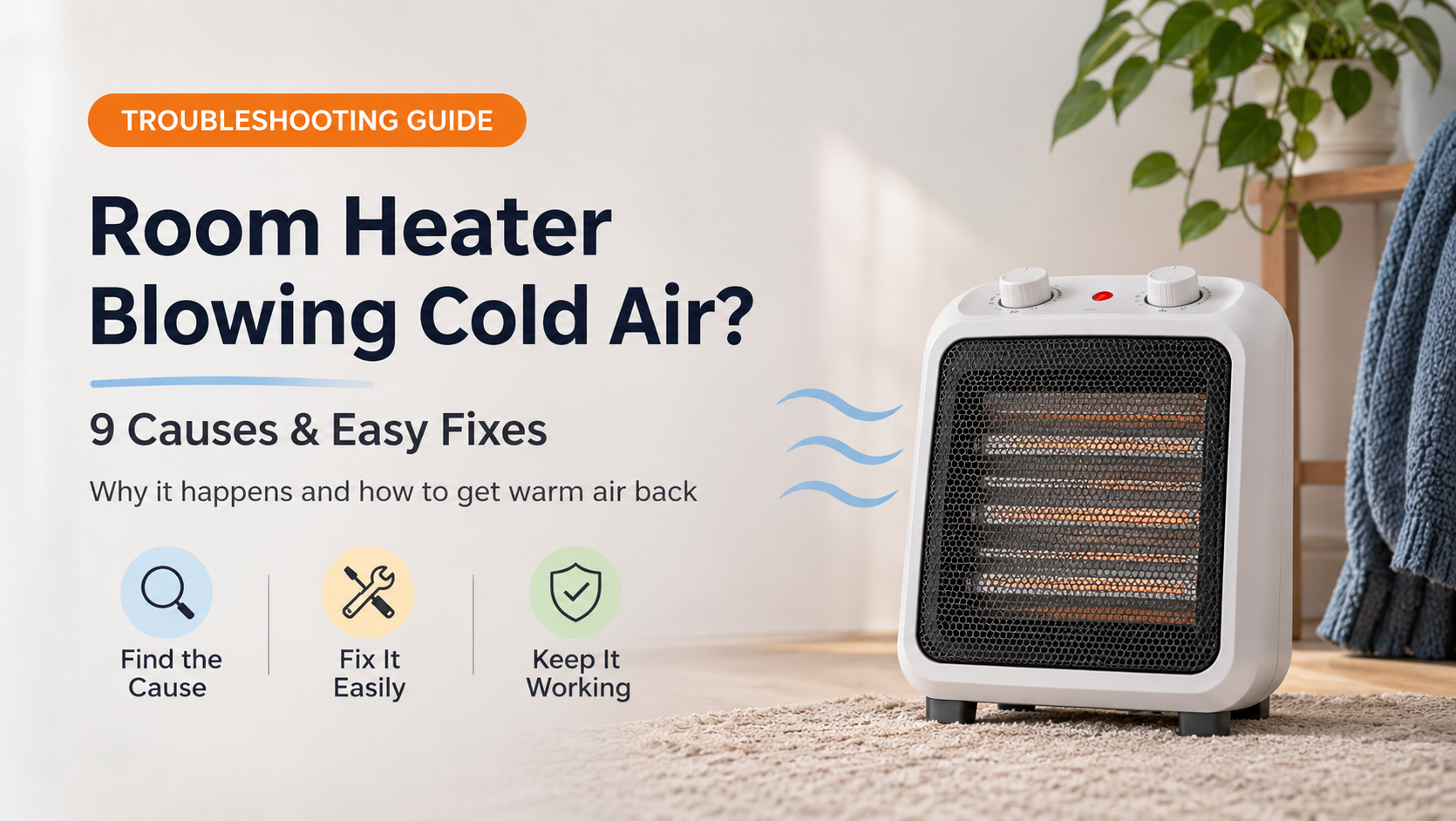
You switch on your heater, hear the fan running, and feel nothing but cold air. A room heater blowing cold air is confusing, because the unit seems to be working. The reason is simple: the fan and the heating element are separate parts, and one can work while the other fails.
This guide explains why heaters blow cold air, nine common causes with fixes, how to tell normal behavior from a fault, safety advice, and what to look for in a replacement.
How a Heater Makes Warm Air
A fan draws room air in and pushes it across a heating element. The element heats the air, the thermostat controls how long that happens, and warm air leaves through the grille. If the element or its controls fail, the fan keeps spinning and you feel cold air.
9 Reasons Your Room Heater Blows Cold Air
1. Heater set to fan-only, low or eco mode
Why it happens: Many heaters have a fan-only setting that circulates air without heating it. Eco and low modes can also deliver barely warm air, which feels cold in a large room.
How to fix it: Set the selector to heat or high, and the thermostat to maximum. Cancel any eco, sleep or timer mode and check the display.
2. Thermostat set too low or room already at target
Why it happens: If the thermostat thinks the room is warm enough, the element stays off while the fan keeps running, so only room-temperature air comes out.
How to fix it: Turn the thermostat to its highest setting. If heat begins at once, the heater is fine and only needed a higher setting.
3. Burnt-out or failed heating element
Why it happens: The element is the part that produces heat. A broken coil, burnt quartz tube or degraded ceramic plate leaves the fan working but the air cold. This is a leading cause in older heaters.
How to fix it: If the fan runs on high heat for more than 10 minutes and the air never warms, the element has likely failed. Element replacement should be done by a technician, or the heater replaced.
4. Tripped thermal fuse or overheat protection
Why it happens: When a heater overheats, the safety system cuts power to the element but may let the fan continue to cool the unit. You then get cold air, which is a warning sign rather than a defect.
How to fix it: Unplug, wait 30 minutes and clean the vents. Press the reset button if your model has one. If the thermal fuse has blown, it needs professional replacement.
5. Clogged filter or dusty vents
Why it happens: Dust blocks airflow and traps heat around the element. The heater overheats, cuts the element off, and sends out cool air or only weak warmth.
How to fix it: Clean the grille and filter with a vacuum and soft brush. Let the heater cool and dry fully before use.
6. Faulty thermostat or temperature sensor
Why it happens: A faulty sensor can read the room as warmer than it is, switching the element off while the fan runs. Repeated cold-air episodes after a short warm period point to this.
How to fix it: Test on the highest setting in a cold room. If heating still stops within a few minutes, the thermostat or sensor needs replacement.
7. Loose wiring, bad connector or control board fault
Why it happens: Vibration and age loosen internal connectors. On digital heaters, a failing relay or control board can power the fan but not the element.
How to fix it: If cleaning and settings do not help, avoid opening the case. A technician can test connectors, relays and the board safely.
8. Low voltage, extension cord or overloaded circuit
Why it happens: The fan needs little power, but the element needs a lot. Thin extension cords, shared sockets and weak mains voltage can run the fan while starving the element.
How to fix it: Plug directly into a wall socket and avoid sharing the circuit with an air conditioner, geyser or iron.
9. Wrong heater type, room too large or draughts
Why it happens: Oil-filled radiators have no fan and warm slowly. Ceramic heaters have a short start-up delay. A small heater in a large, draughty room will feel cold even when it works.
How to fix it: Wait the expected warm-up time, close doors and windows, and match the wattage to the room size (see the sizing table).
Is Cold Air Always a Problem?
Not always. Some heaters take a little time to warm up, and different types behave differently. Judge by the heater type and how long it has been running.
| Heater Type | Typical Warm-Up | Cold Air Is Normal When |
|---|---|---|
| Fan heater | Within seconds | Never for long, as it should warm quickly |
| Ceramic (PTC) heater | 10 to 30 seconds | Only in the first moments after switching on |
| Oil-filled radiator | 20 to 30 minutes | Always, as it has no fan and heats the fins first |
| Halogen or quartz heater | Almost instant | Never, as it gives direct radiant heat |
| Convector heater | A few minutes | During the first minutes while the element warms |
Quick Symptom Diagnosis Table
| Symptom | Likely Cause | What to Do |
|---|---|---|
| Fan runs, air cold from the start | Fan-only mode, thermostat or failed element | Check mode and thermostat, then see a technician |
| Warm at first, then cold | Overheat protection or thermostat | Clean vents, cool down, check reset button |
| Only slightly warm | Dust, undersized heater or weak power | Clean filter, use wall socket, check room size |
| Cold air with burning smell | Burnt element or wiring | Stop using and have it inspected |
| Cold air only on low setting | Low or eco mode | Switch to high heat |
Step-by-Step Fix
- Check the mode. Select heat or high, and cancel eco, sleep or fan-only mode.
- Raise the thermostat. Turn it to maximum in a cold room.
- Wait the correct warm-up time. Oil heaters need much longer than fan heaters.
- Unplug and cool down. Wait 30 minutes so overheat protection can reset.
- Clean the vents and filter. Remove dust gently with a vacuum and soft brush.
- Test the power source. Plug directly into a wall socket, not an extension cord.
- Run for 10 minutes on high. If the air is still cold, suspect the element, thermostat or fuse.
- Call a technician or the manufacturer. Especially if the heater is still under warranty.
DIY Fix or Professional Repair?
| You Can Do It Yourself | Leave to a Professional |
|---|---|
| Changing mode and thermostat settings | Replacing the heating element |
| Cleaning vents and filter | Replacing the thermal fuse or thermostat |
| Pressing the reset button | Repairing wiring or the control board |
| Testing another wall socket | Any burning smell or sparks |
Which Heater Size Do You Need?
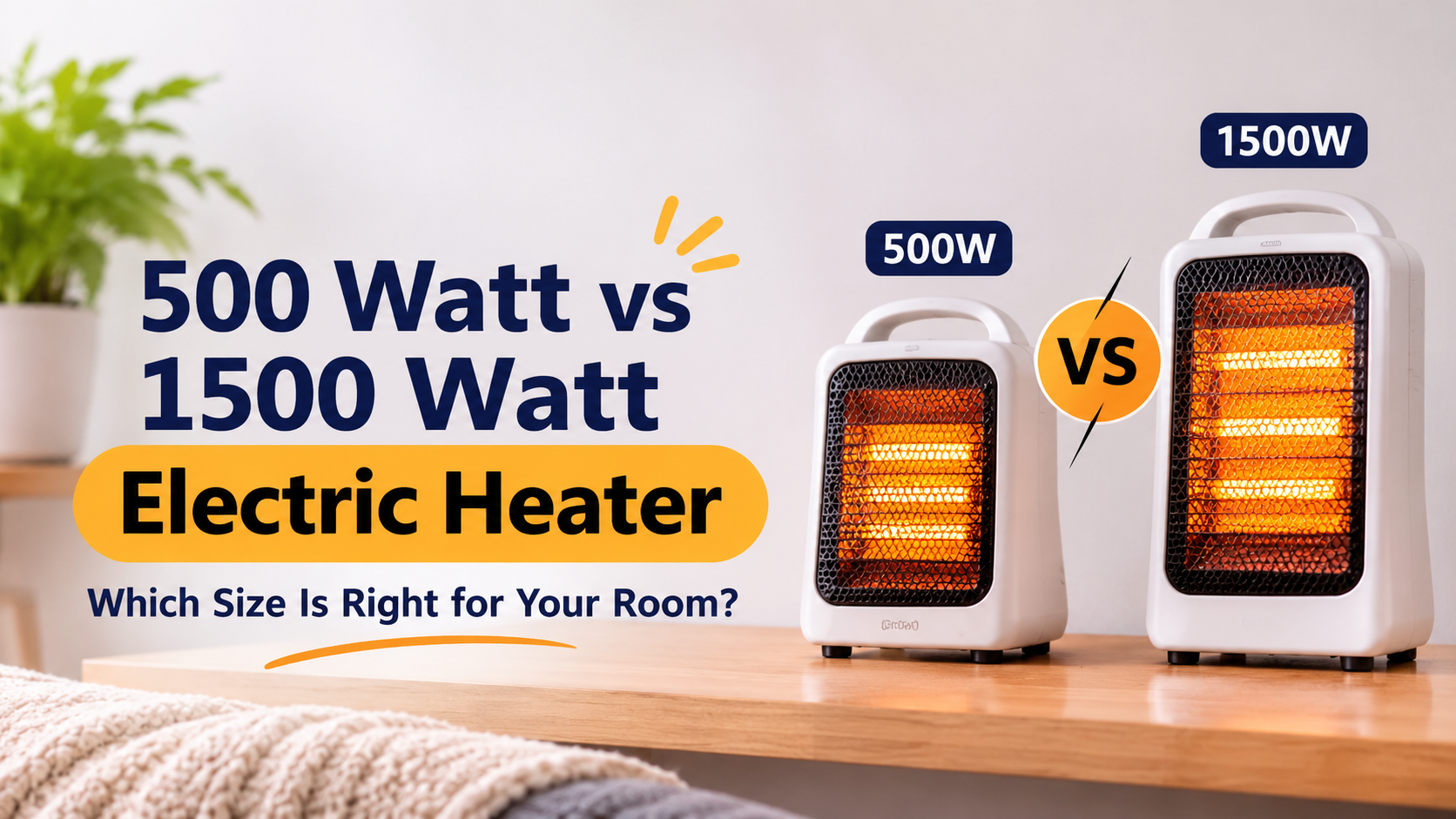
A heater that is too small for the room will feel cold even if it works perfectly. As a guide, plan for about 10 watts per square foot of floor area.
| Room Size | Recommended Power |
|---|---|
| Up to 100 sq ft | 1000 W |
| 100 to 150 sq ft | 1500 W |
| 150 to 250 sq ft | 2000 W |
| Above 250 sq ft | 2500 W or more, or use two heaters |
Repair or Replace?
Replace the heater if it is more than 5 to 7 years old, the element has failed, the cord or casing is damaged, or repair would cost more than half the price of a new unit. Repair makes sense for newer heaters, heaters under warranty, or simple faults like a thermostat or a fuse.
What to Look for When Buying a New Room Heater
- Heater type that suits your use: fan or ceramic for fast heat, oil-filled for steady heat, convector for whole-room warmth.
- Correct wattage for your room size.
- Adjustable thermostat and clear mode selector with a visible heat indicator.
- Tip-over and overheat protection for safety.
- Easy-clean filter and vents to prevent overheating.
- Good build quality and a strong warranty for peace of mind.
How to Prevent Cold-Air Problems
- Clean vents and filters regularly, as dust is the biggest cause of overheating.
- Choose the right size heater for the room.
- Use a direct wall socket, not a long extension cord.
- Close doors, windows and draught gaps for better heat retention.
- Test your heater before the first cold night.
Frequently Asked Questions
Why is my heater blowing cold air but the fan works?
The fan and heating element are separate. If the element, thermostat or thermal fuse fails, or the mode is wrong, the fan will still blow air without heat.
Why does my heater blow cold air after a few minutes?
This is often overheat protection from dust or blocked vents, or a faulty thermostat. Clean the heater, let it cool and check airflow.
Is it normal for a heater to blow cold air at start-up?
For a few seconds with ceramic or convector heaters, yes. After about 10 minutes on high, cold air means a fault.
Can a dirty filter cause a heater to blow cold air?
Yes. Blocked airflow causes overheating, which can switch off the element while the fan keeps running.
Does an oil-filled heater blow air?
No. Oil-filled radiators have no fan. They warm the fins slowly and release heat by convection, so they feel cool at first.
Is it worth repairing a heater that blows cold air?
For a newer heater or one under warranty, yes. For an older unit with a failed element, replacement is often cheaper and safer.
Conclusion
When your room heater is blowing cold air, start with the simple checks: mode, thermostat, warm-up time, cleaning and the power source. These resolve most cases. If the fan runs but the heater still gives cold air after 10 minutes on high, the element, thermal fuse or thermostat has likely failed, and a technician or replacement is the safest route. Choose a correctly sized heater with reliable safety features, and keep it clean to enjoy steady warm air all winter.