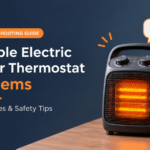
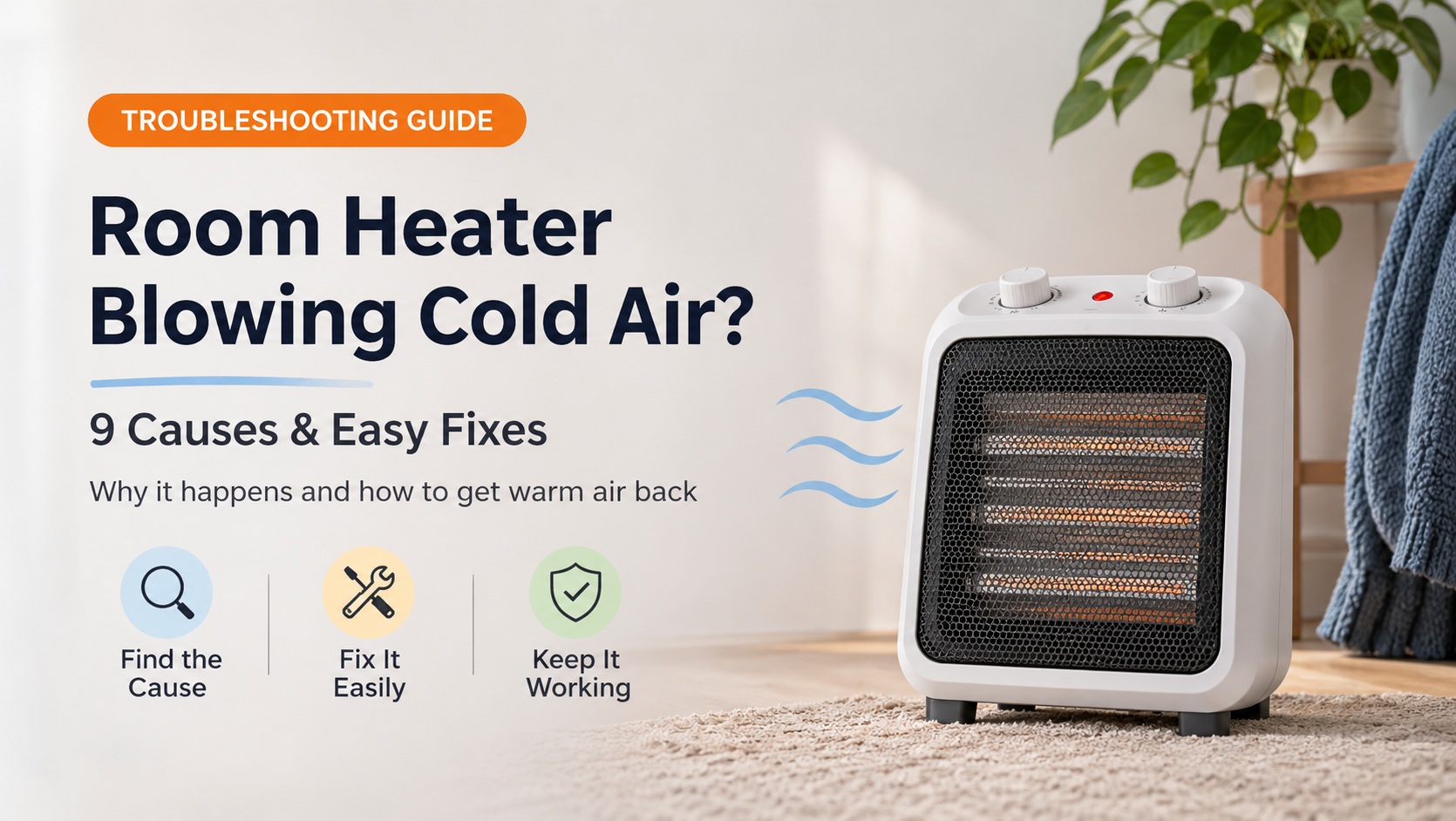
When the cold sets in, a heater that ignores its thermostat is more than annoying. Maybe it runs nonstop, shuts off every few minutes, or refuses to turn on at all. If your room heater thermostat is not working, the problem could be something simple like a tripped safety switch, or something more serious like a faulty control or heating element.
This guide explains how a heater thermostat works, the eight most common reasons it seems to fail, what you can safely check yourself, when to stop and call a professional, and what to look for in a safer replacement.
Safety First
Always switch the heater off, unplug it and let it cool before checking or cleaning it. Never open sealed housings, bypass a thermostat or safety cut-off, or use a heater with a damaged cord, plug or burning smell. If in doubt, stop using it and contact the manufacturer or a qualified technician.
Quick Answer
A room heater thermostat that seems not to work is usually caused by power problems, a tripped tip-over or overheat switch, dusty vents, wrong settings, poor placement, a faulty thermostat or sensor, or a failed heating element. Check the outlet, surface, settings and vents first. If the heater still misbehaves, stop using it and have it inspected or replaced.
Table of Contents
- How a room heater thermostat works
- Symptoms and what they usually mean
- 8 causes of a heater thermostat not working
- Safe checks you can do at home
- DIY or professional help?
- Types of heaters and their thermostats
- Repair or replace?
- Choosing a safer heater
- Heater safety rules
- Frequently asked questions
How a Room Heater Thermostat Works
A thermostat is a temperature-controlled switch. It senses the air around the heater, compares it with the temperature you chose, and then switches the heating element on or off to stay near that level. Basic heaters use a simple mechanical thermostat with a dial. Many newer heaters use a digital sensor and control board with a display, timer and extra modes.
Heaters also include safety devices such as a tip-over switch and an overheat cut-off. These are separate from the thermostat but can make the heater look as if the thermostat has failed.
Symptoms and What They Usually Mean
| Symptom | Likely causes | What you can safely check |
|---|---|---|
| Heater will not turn on at all | No power, tripped breaker, tip-over switch, overheat cut-out, damaged cord | Outlet, breaker, level surface, vents; let it cool, then reset |
| Heater runs but never switches off | Stuck or faulty thermostat, setting too high, room too large for the heater | Lower the setting, compare with a room thermometer, check heater size |
| Heater switches on and off every few minutes | Poor placement, dust on vents or sensor, drafts, overheat protection | Clean vents, move it away from drafts and walls, give it clearance |
| Heater runs but the room stays cold | Low setting, eco mode, failed element, undersized heater, cold or drafty room | Set to maximum, check the fan, close doors and windows |
| Display shows an error code | Sensor or control board fault | Check the manual for the code; unplug and reset; contact support |
| Dial has no click or feels loose | Worn or broken mechanical thermostat | Stop using it and have it inspected or replaced |
8 Causes of a Heater Thermostat Not Working
Cause 1: A power supply problem
Many apparent thermostat faults are really a lack of proper power. A faulty outlet, a tripped breaker, a damaged plug or an unsuitable extension cord can stop a heater from working or make it behave strangely.
What to check:
- Plug the heater directly into a wall outlet, not an extension cord or power strip, unless the heater’s manual specifically allows it.
- Test the outlet with another device such as a lamp.
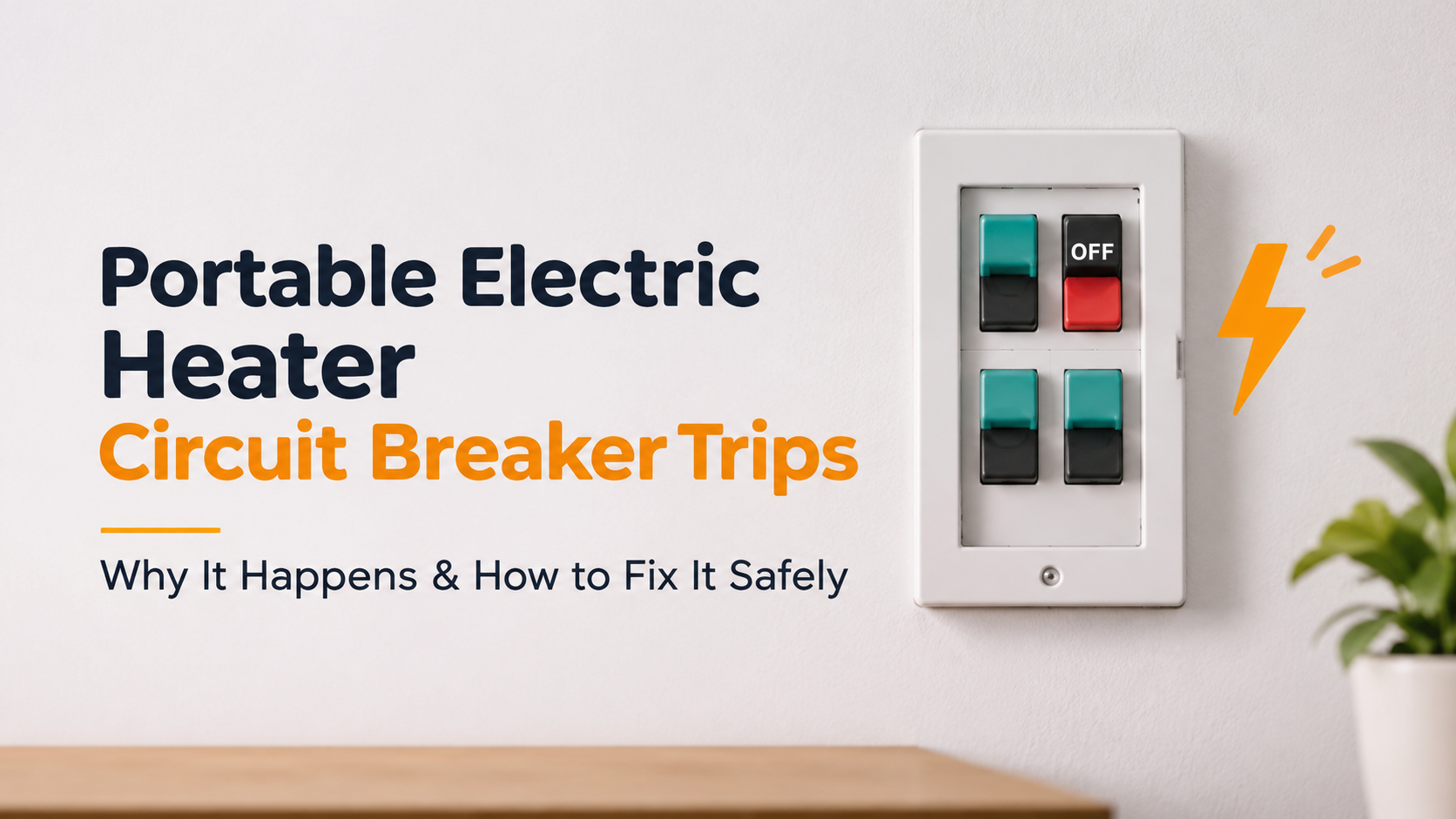
- Check the breaker panel. If it keeps tripping, stop using the heater and contact an electrician.
Cause 2: The tip-over switch has been tripped
Most modern heaters have a safety switch that cuts power if the unit is tilted or knocked over. If it sits on thick carpet or an uneven surface, it may stay switched off.
What to check:
- Place the heater on a flat, hard, stable surface.
- Switch off, unplug, then plug back in and restart.
- Check that the base is not blocked by dust, fluff or debris.
Cause 3: Overheat protection has triggered
If the heater gets too hot because of blocked vents or poor airflow, it shuts itself off to prevent fire or damage. It may restart after cooling or need a manual reset.
What to check:
- Unplug and let it cool for 15-30 minutes.
- Clear anything blocking the front and back, including curtains, bedding or furniture.
- Clean the vents, then restart. If it trips repeatedly, stop using it.
Cause 4: Dust and blocked vents
Dust inside the grill or around the sensor can change how the unit reads and moves air. This causes uneven heating, short cycling or overheating.
What to check:
- With the heater unplugged and cool, vacuum the vents and grills using a soft brush attachment.
- Wipe the outside with a dry or slightly damp cloth. Do not let water enter the unit.
- Do not open sealed housings unless the manual allows it.
Cause 5: Wrong settings or modes
A low dial setting, eco mode, timer or child lock can make the thermostat seem broken. Digital models may also be set in a different temperature unit.
What to check:
- Turn the dial up to the highest setting and see whether the heater starts.
- Check for eco, timer, sleep or lock modes in the manual.
- Confirm the display unit is set to the one you expect, Celsius or Fahrenheit.
Cause 6: Poor placement
A heater near a cold window, door or draft may cycle off too early or too late because the sensor sees a different temperature from the rest of the room. Placing it too close to a wall can also trigger overheat protection.
What to check:
- Keep the heater away from drafts and keep at least 1 meter (3 feet) of clear space around it.
- Place it on the floor in a central spot, rather than behind furniture.
- Avoid placing the heater directly next to your room thermometer.
Cause 7: A faulty thermostat or sensor
Thermostats can wear out. A mechanical one may stick or lose accuracy, while a digital sensor or control board can fail. The heater may stay on constantly, never turn on or cycle strangely.
What to check:
- Check whether turning the dial produces a click and a change in behavior.
- Compare the heater’s reading with a separate room thermometer.
- If the thermostat is faulty, do not bypass it. Contact the manufacturer or replace the heater.
Cause 8: A failed heating element or wiring problem
If the heater does not warm even at maximum, the problem may be the element, the fan or the wiring rather than the thermostat. This is a safety risk.
What to check:
- Stop using it if there is any burning smell, discoloration, sparks or damaged cable.
- Do not open or repair the heater yourself unless you are qualified.
- Contact the manufacturer or a qualified technician, or replace the heater.
Safe Checks You Can Do at Home
Follow these steps in order. They involve no tools and no opening of the heater.
- Check the basics: power, outlet, breaker and plug. Make sure the plug is fully inserted and does not feel hot.
- Read the manual to see how the modes, timer and reset work for your model.
- Run a maximum-setting test: if the heater warms at maximum but not at lower settings, the thermostat or setting is the likely issue.
- Compare the temperature with a separate thermometer placed away from the heater, at about the same height, for 20-30 minutes.
- Note any pattern such as how long it runs before turning off, any error codes and any unusual smells or sounds.
DIY or Professional Help?
| Situation | DIY or professional? |
|---|---|
| Heater off because of a tripped tip-over switch or overheat cut-out | DIY: let it cool, clean the vents and place it on a flat surface |
| Thermostat set too low, wrong mode or timer on | DIY: adjust the settings and read the manual |
| Dusty vents and grills | DIY: unplugged and cool, vacuum and wipe gently |
| Heater heats at maximum but ignores the dial | Professional or replace: likely a faulty thermostat |
| Burning smell, sparks, melted plug or exposed wires | Stop using it. Do not repair it yourself |
| Heater is old, damaged or the cord is frayed | Replace it with a new, certified heater |
| Wall or hard-wired heater problems | Qualified electrician only |
Do Not Bypass Safety Devices
Never tape, jump or disable a thermostat, tip-over switch or overheat protection. These parts exist to prevent fires and serious injury.
Types of Heaters and Their Thermostats
| Heater type | How the thermostat is usually done | Good to know |
|---|---|---|
| Fan heater (ceramic or coil) | Simple dial or digital controls with a thermostat and overheat cut-off | Fast heating; dust can clog the vents and affect airflow |
| Oil-filled radiator | Mechanical or digital thermostat controlling the element | Slow to heat but holds warmth; keep it upright |
| Convector heater | Thermostat senses room air as it flows through the unit | Needs clear space around it for good airflow |
| Infrared or radiant heater | Often basic switches, sometimes with a thermostat or timer | Heats objects and people rather than the air, so room thermostats may not suit it |
| Wall or baseboard heater | Built-in or separate wall thermostat | Wiring faults should always be checked by a qualified electrician |
Repair or Replace?
For portable space heaters, replacement is often the safest and most economical option. Consider replacing if:
- The heater is more than several years old or has been repaired before.
- The cord, plug, housing or controls show signs of damage, discoloration or melting.
- It repeatedly overheats, trips the breaker or smells of burning.
- The thermostat is faulty and the manufacturer does not offer a repair or part.
- The cost of a repair is close to the cost of a new heater.
Check whether your heater is still under warranty. If so, contact the manufacturer or seller before attempting any repair.
Choosing a Safer Heater
If you decide to replace your heater, these features matter more than extra functions.
- Adjustable thermostat with a clear dial or digital display, so the heater can hold the temperature you choose.
- Tip-over and overheat protection built in as standard.
- Recognized safety certification marks that apply in your country.
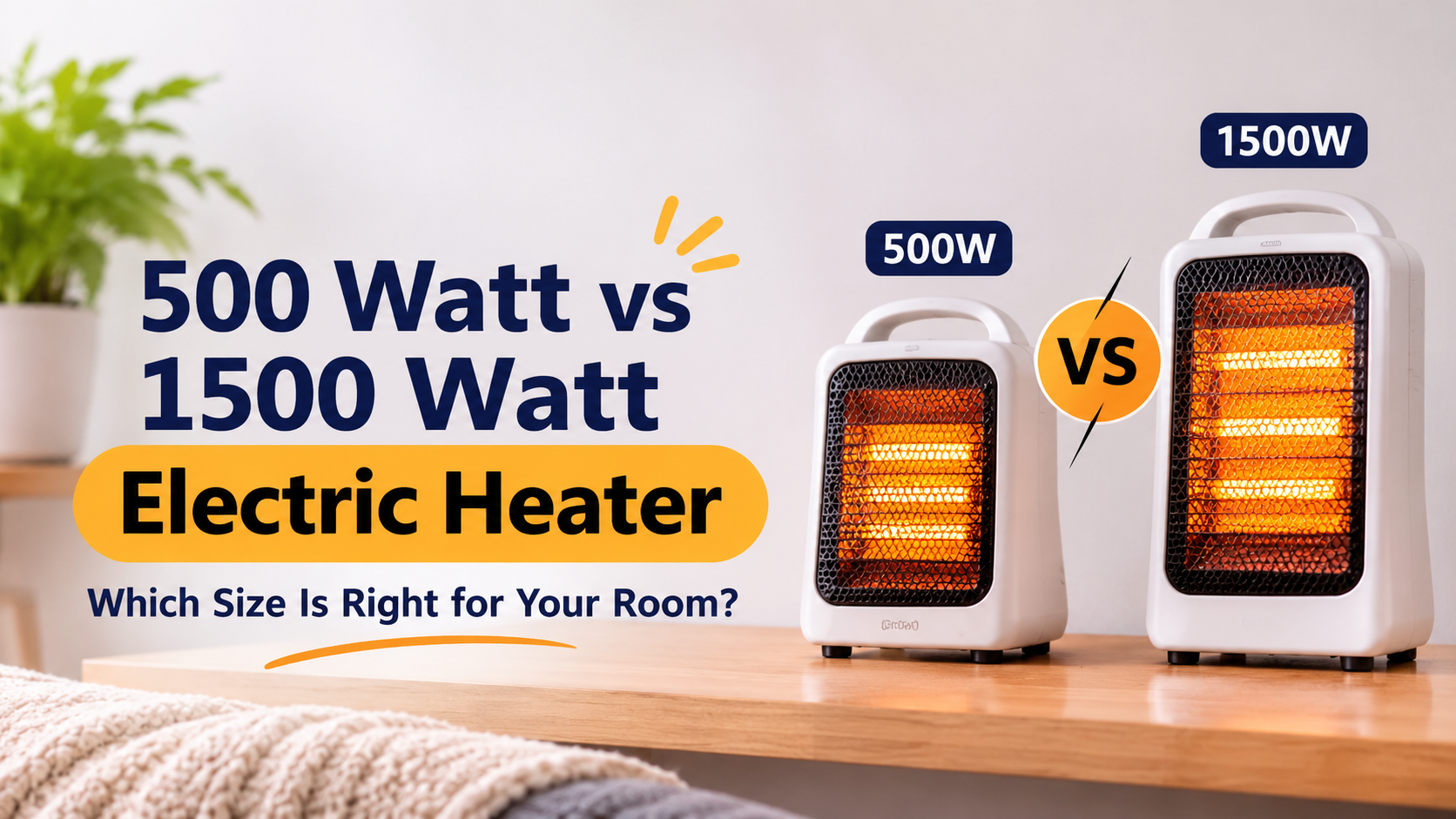
- Right size and wattage for the room, about 10 watts per square foot (100 watts per square meter) as a rough guide.
- Timer and auto shut-off for added convenience and safety.
- Cool-touch housing and a stable base, especially in homes with children or pets.
- Easy-to-clean vents or filters to reduce dust problems.
- Quiet operation and the right type for the room, such as an oil-filled or convector model for steady heat, or a fan heater for quick warm-ups.
Heater Safety Rules
- Keep heaters at least 1 meter (3 feet) from curtains, bedding, furniture and anything flammable.
- Plug directly into a wall outlet and avoid extension cords or power strips unless the manual specifically permits them.
- Never leave a heater running unattended or while sleeping unless it is designed for it and has automatic shut-off.
- Place the heater on a flat, hard surface and never cover it or dry clothes on it.
- Test smoke alarms and, where relevant, carbon monoxide detectors regularly. Fuel-burning heaters need proper ventilation.
- Inspect the cord and plug regularly, and replace the heater if they look damaged.
Frequently Asked Questions
Why is my room heater thermostat not working?
Common causes include power problems, a tripped tip-over or overheat switch, dusty vents, wrong settings, poor placement, a faulty thermostat or sensor, or a failed heating element. Start with the simple checks first.
How do I know if my heater thermostat is bad?
Signs include a heater that never switches off or on, one that cycles too often, a dial with no click, a display that is clearly wrong, or temperature readings that do not match a separate thermometer. A technician should confirm it.
Can I fix a heater thermostat myself?
You can safely check power, settings, placement and dust. Replacing internal parts or repairing wiring should be left to qualified people or the manufacturer.
Is it safe to bypass the thermostat?
No. The thermostat and safety cut-offs help prevent overheating. Bypassing them can cause fires and injuries.
Why does my heater keep turning on and off?
This is often called short cycling. Dust, poor placement, drafts, an overheated unit or a faulty thermostat can all cause it.
Is it worth repairing an old heater?
For small portable heaters, replacement is often more practical and safer than repair, especially if the cord, plug or housing is damaged or the heater is many years old. Check the warranty first.
What size heater do I need for my room?
A common rule of thumb is about 10 watts per square foot (roughly 100 watts per square meter), so a 1,500-watt heater suits around 150 square feet (14 square meters). Poor insulation needs more power.
When should I stop using my heater?
Stop immediately if you smell burning, see sparks, notice a hot or melted plug or cord, or the heater repeatedly trips the breaker. Unplug it safely and get it checked or replaced.
Final Thoughts
When a room heater thermostat is not working, the cause is often something simple, such as a tripped safety switch, dusty vents, a wrong setting or poor placement. Work through the safe checks, avoid shortcuts and never bypass safety devices.
If the heater still does not behave properly, or you notice any sign of damage or burning, stop using it. A qualified technician can inspect it, and for most portable heaters, a new certified model is the safest solution.