




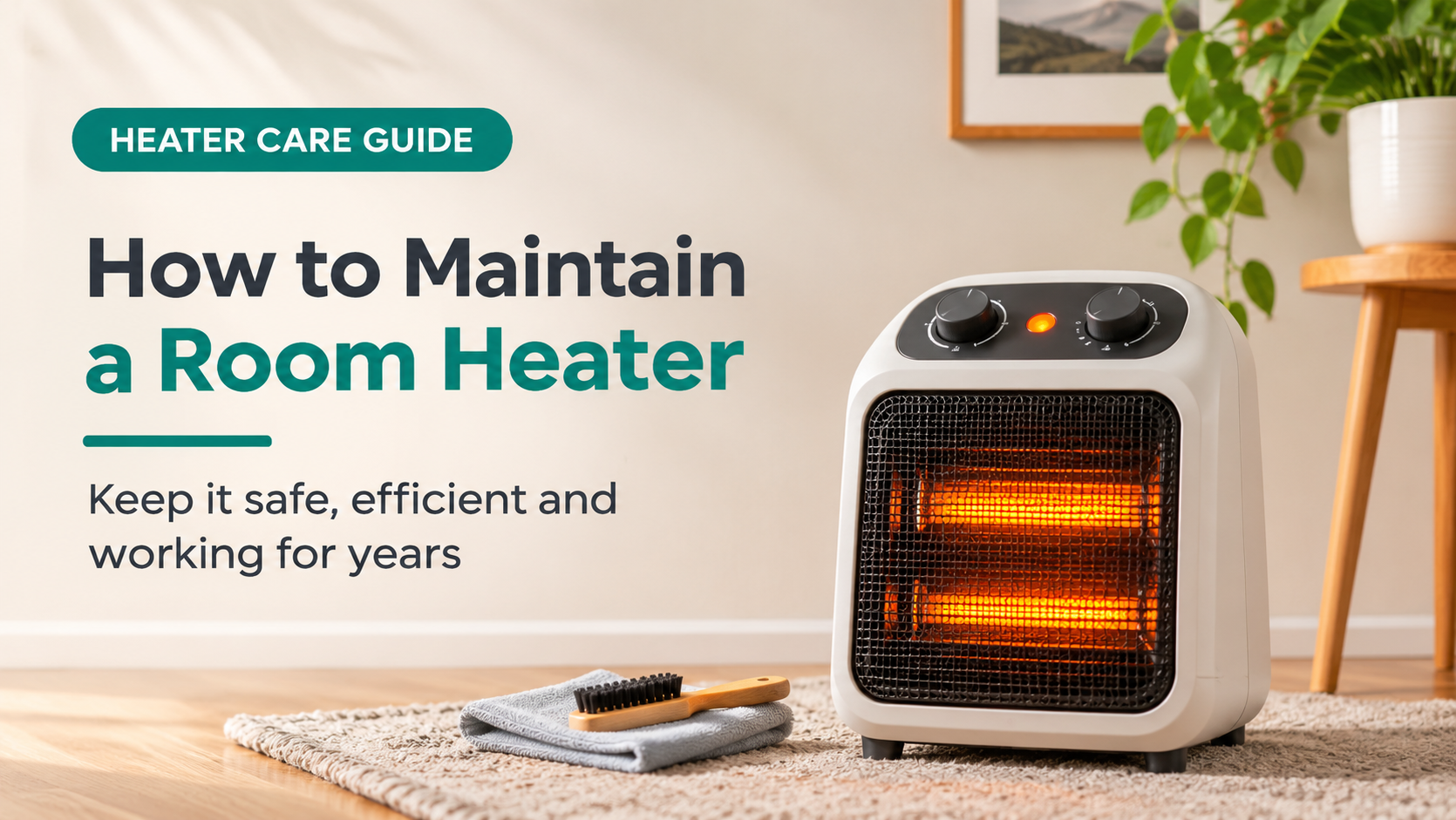
A room heater is easy to forget about until the first cold night, when it smells odd, trips the breaker or barely warms the room. A little regular care prevents most of these problems. Knowing how to maintain a room heater keeps it safe, helps it work efficiently and can add years to its life.
This guide gives you a practical maintenance routine: what to check before, during and after the heating season, how to clean and inspect your heater, how to store it, a simple schedule, and the warning signs that mean it is time to replace it.
Safety First
Always switch off, unplug and let the heater cool before cleaning or inspecting it. Never use liquids inside the unit, never open sealed casings unless the manual allows it, and never use a heater with a damaged cord, plug or housing.
Quick Answer
To maintain a room heater, clean the vents and filter regularly, inspect the cord, plug and casing, test the controls, keep clear space around it, plug directly into a wall outlet and store it clean and dry after the season. Do a full check before each heating season and stop using it if you notice damage, burning smells or overheating.
Table of Contents
- Why heater maintenance matters
- The seasonal maintenance cycle
- Maintenance schedule
- What to check on your heater
- Cleaning your heater
- Maintenance by heater type
- Inspection checklist
- Using your heater safely
- Storing your heater
- Warning signs and what to do
- When to replace your heater
- Frequently asked questions
Why Heater Maintenance Matters
Heaters work hard and often run for hours at a time. Dust blocks airflow, cords wear, plugs loosen and safety features can fail silently. Without maintenance, you risk poor heating, higher energy costs, unpleasant smells and, in the worst case, overheating or fire.
Maintenance is mostly simple: keep it clean, check it regularly, use it sensibly and store it well. Most tasks take only a few minutes.
The Seasonal Maintenance Cycle
Think of heater care in three stages: before the season, during the season and after the season.
Maintenance Schedule
A schedule makes maintenance a habit. Adjust it to how often you use the heater and how dusty your home is.
What to Check on Your Heater
Cleaning Your Heater
Dust is the most common cause of heater problems, so cleaning is the most important maintenance task.
- Unplug and cool the heater for at least 30 minutes.
- Vacuum the vents and grills with a soft brush attachment, including the rear intake.
- Brush gently between fins and around the grill with a soft brush.
- Clean or replace the filter if your heater has one, following the manual. Let it dry completely.
- Wipe the casing with a dry or slightly damp, well-wrung cloth, avoiding vents, controls and the plug.
- Let it dry fully before plugging in.
- Run a short test in a ventilated room.
Avoid
Do not spray liquids into the heater, use aerosol cleaners, polish, solvents or metal tools, or clean it while it is warm or plugged in.
Maintenance by Heater Type
| Heater type | Maintenance focus | Special care |
|---|---|---|
| Fan heater (ceramic or coil) | Vents, fan area, filter and casing | Keep dust out of the intake; do not open the casing |
| Oil-filled radiator | Fins, casing, wheels and base | Keep upright; never open the oil reservoir; stop using it if oil leaks |
| Convector heater | Bottom intake, top outlet and panel | Keep airflow slots clear of dust and objects |
| Infrared or radiant heater | Grill, reflector and front guard | Dust only when cool; avoid touching heating tubes |
| Panel or wall heater | Front panel, vents and surrounding wall | Hard-wired heaters need a qualified electrician for faults |
| Tower heater | Rear intake, filter and oscillating base | Do not force the oscillating mechanism |
Inspection Checklist
Once a month, and before the season starts, look over these items with the heater unplugged and cool.
| Check | Do this | Replace or get help if |
|---|---|---|
| Cord | Run your eyes along it for cuts, kinks and discoloration | Frayed, cracked, pinched or discolored |
| Plug | Check it fits snugly and feels cool after use | Loose, bent, melted or hot to touch |
| Wall outlet | Look for scorch marks or looseness | Discolored, warm or loose; call an electrician |
| Casing | Look for cracks, warping or melted areas | Cracked or deformed, or exposed internal parts |
| Controls | Test the dial, display, timer and modes | Dial stuck, display faulty or modes not working |
| Safety features | Follow the manual’s instructions for testing | Tip-over or overheat protection seems faulty |
Using Your Heater Safely
- Keep at least 1 meter (3 feet) of clear space around the heater, away from curtains, bedding and furniture.
- Plug directly into a wall outlet. Avoid extension cords and power strips unless the manual allows them.
- Place it on a flat, hard, stable surface.
- Never cover the heater or dry clothes on it.
- Do not leave it running unattended or while you sleep, unless it is designed for that and has proper safety features.
- Choose the right size for the room, and use the thermostat and timer to avoid overheating or overuse.
- Keep children and pets away from hot surfaces.
- Install working smoke alarms, and carbon monoxide alarms if you use fuel-burning heaters.
Storing Your Heater
How you store your heater over the warm months affects how well it works next winter.
Warning Signs and What to Do
| Sign | What it may mean | What to do |
|---|---|---|
| Burning or plastic smell | Dust burning off, or overheating or damaged parts | Switch off and unplug; clean if it is dust; stop using it if strong or persistent |
| Heater cuts out repeatedly | Blocked vents, overheat protection or thermostat fault | Clean vents and check placement; stop using it if it continues |
| Rattling or loud fan noise | Debris near the fan or a loose part | Unplug and check the vents; get it inspected if it continues |
| Plug or cord feels hot | Loose connection, damaged cord or overloaded outlet | Stop using it; replace the heater or cord and have the outlet checked |
| Heater will not turn on | Power problem, tip-over switch or fault | Check the outlet, level surface and reset; see the manual |
| Uneven or weak heat | Blocked airflow, undersized heater or thermostat problem | Clean vents, check room size, compare with a thermometer |
| Oil leak (oil-filled heater) | Seal or casing failure | Stop using it immediately and replace it |
When to Replace Your Heater
Heaters are not meant to last forever. Replace your heater if:
- The cord, plug or casing is cracked, frayed, melted or discolored.
- It overheats, trips the breaker or smells strongly of burning.
- Safety features or controls no longer work properly.
- It leaks oil (for oil-filled heaters).
- It no longer heats well even after cleaning.
- Repair would cost almost as much as a new, certified heater.
When shopping for a new heater, look for recognized safety certification, tip-over and overheat protection, a suitable size for your room, an adjustable thermostat, a timer, easy-to-clean vents or filters and a clear manual with a good warranty.
Make It a Habit
- Keep your manual, receipt and serial number in one place.
- Set a reminder on your phone for the start and end of each heating season.
- Clean the vents while you vacuum the room.
- Teach everyone in the home the basic safety rules.
- Replace worn-out heaters instead of repairing them yourself.
Frequently Asked Questions
How often should I clean my room heater?
Give the vents a quick dust once a week during use, vacuum them thoroughly every month, and do a full clean before and after the heating season. Clean more often if you have pets or a dusty home.
How do I store a room heater for summer?
Unplug it, let it cool, clean it and let it dry completely. Wrap the cord loosely, cover the heater or place it in its original box, and store it upright in a cool, dry place away from chemicals and moisture.
How long does a room heater last?
This varies by type and use, but many portable heaters last several years with proper care. Replace yours if it shows damage, repeated overheating, burning smells or other faults, regardless of age.
Can I repair a room heater myself?
You can clean the vents and check the outside safely. Internal repairs, wiring and replacement of parts should only be done by qualified people or the manufacturer.
Should I test the safety features of my heater?
Follow the manual’s instructions. Do not tamper with or bypass tip-over or overheat protection. If you think a safety feature is not working, stop using the heater.
Is it safe to leave a heater plugged in when not in use?
It is better to unplug it when you are not using it, especially if you are away, and to keep the cord tidy and undamaged.
What is the best way to improve heater efficiency?
Choose the right size for the room, keep vents clean, seal drafts, close doors, use the thermostat and timer, and place the heater in a suitable position with clear space around it.
When should I replace my room heater?
Replace it if the cord, plug or casing is damaged, if it overheats, smells strongly, trips the breaker, or if a repair costs close to the price of a new certified heater.
Final Thoughts
Maintaining a room heater takes very little time and makes a big difference. Clean the vents, inspect the cord and plug, test the controls, use the heater safely and store it properly at the end of the season. These habits help your heater work efficiently, last longer and stay safe.
If you notice damage, a burning smell, repeated cut-outs or any other sign of trouble, stop using the heater and have it checked, or replace it with a certified model.