


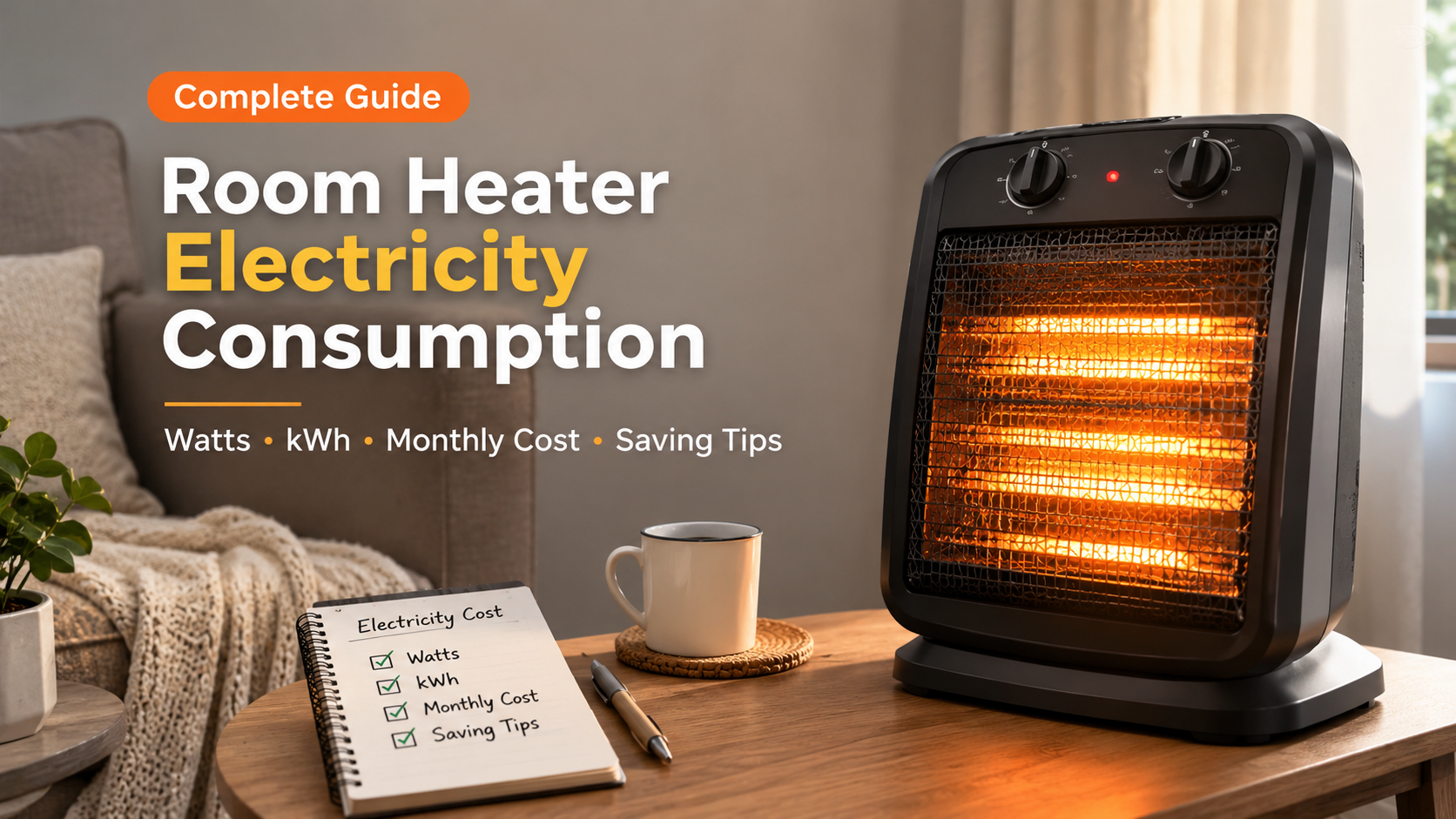
Room heater electricity consumption is one of the biggest reasons household power bills jump in winter. A heater feels small, but most models draw between 1,000 and 2,000 watts, which is more than a refrigerator, a TV, and several lights combined. In this guide you will learn exactly how much power a room heater uses, how to calculate your own running cost, which heater types are most efficient, and how to cut your bill without freezing.
Table of Contents
- How much electricity does a room heater use?
- Power consumption by heater type
- How to calculate heater electricity cost
- Real running cost examples
- Which heater is the most energy efficient?
- How to reduce room heater electricity consumption
- Buying guide: what to check before you purchase
- Safety tips
- Frequently asked questions
- Conclusion
How Much Electricity Does a Room Heater Use?
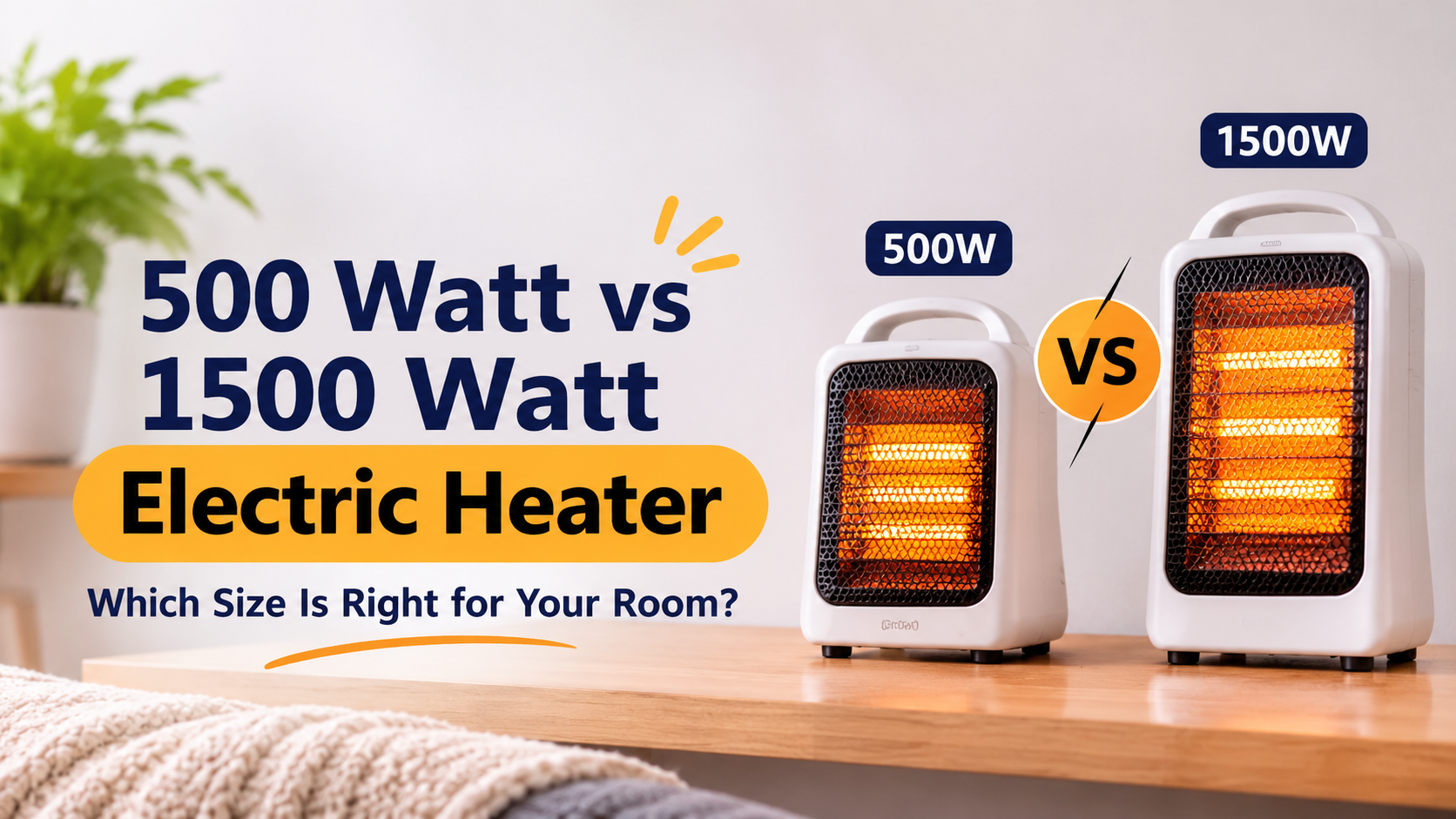
Electric heaters convert almost 100% of the electricity they draw into heat. That means a 1500W heater really does consume 1500 watts while it is heating. The power rating printed on the label (in watts) is the maximum draw. Many heaters have two or three power settings, such as 750W, 1250W, and 2000W, so your actual consumption depends on the setting you pick and how often the thermostat switches the element on and off.
Electricity is billed in kilowatt-hours (kWh). One kWh equals using 1,000 watts for one hour. So a 2000W heater uses 2 kWh each hour, and a 500W heater uses 0.5 kWh each hour.
Power Consumption by Heater Type
Different designs draw different amounts of power. The chart below shows typical maximum wattage for the most common room heaters.
Remember that wattage alone does not tell you how warm the room will feel. A 1500W oil-filled radiator and a 1500W fan heater use the same power, but they deliver heat very differently.
Comparison Table
| Heater Type | Typical Power | Best For | Heating Style |
|---|---|---|---|
| Fan / ceramic heater | 1000–2000W | Quick heat in small rooms | Blows warm air |
| Oil-filled radiator | 800–2500W | Bedrooms, long hours | Slow, steady, silent heat |
| Halogen heater | 400–1200W | Spot heating | Radiant, instant |
| Infrared / quartz | 400–1500W | Heating people, not air | Radiant |
| Convection heater | 1000–2000W | Medium rooms | Natural air circulation |
| Micathermic panel | 1000–1500W | Quiet living areas | Convection + radiant |
How to Calculate Heater Electricity Cost
You only need three numbers: the heater wattage, the hours of use, and your electricity rate per kWh (found on your bill).
Step 1: kWh = (Watts × Hours) ÷ 1000
Step 2: Cost = kWh × Rate per kWh
Example: 1500W × 6 hours ÷ 1000 = 9 kWh. At $0.15 per kWh, the cost is $1.35 for that day.
To estimate a month, multiply the daily cost by 30. If your bill shows prices in another currency, just use your local rate in the same formula.
Real Running Cost Examples
The graphic below assumes the heater runs non-stop for 8 hours a day at $0.15 per kWh. This is the worst-case scenario, because a thermostat will turn the element off once the room is warm.
In real life, a heater with a thermostat in a reasonably insulated room often runs only half of the time. That can turn a $54 monthly estimate for a 1500W heater into about $27–$38.
Which Heater Is the Most Energy Efficient?
Here is something many buyers miss: all electric resistance heaters are nearly 100% efficient at turning electricity into heat. A 1500W ceramic heater and a 1500W oil heater produce the same amount of heat energy per hour. The real difference is how the heat is delivered and how long the heater needs to run.
- Oil-filled radiators keep releasing heat after the element switches off, so the thermostat can cut power more often. Great for bedrooms and all-night use.
- Infrared and halogen heaters warm you directly, so you feel comfortable at a lower room temperature. Great for short, spot heating.
- Fan and ceramic heaters heat small spaces fast but stop feeling warm as soon as they switch off.
- Inverter air conditioners (heat pumps) can deliver 2–4 units of heat for every unit of electricity, making them far more efficient than any plug-in heater if you heat a room for many hours.
How to Reduce Room Heater Electricity Consumption
1. Use a Thermostat and Set It Wisely
A built-in thermostat stops the heater once the target temperature is reached. Setting it to 20–22°C (68–72°F) instead of 26°C can reduce usage noticeably.
2. Heat Only the Room You Are Using
Close doors and windows, and avoid heating empty rooms. A small room needs far less energy than an open-plan space.
3. Improve Insulation
Draught strips, thick curtains, and rugs hold heat in. Even small gaps under a door can make a heater work much harder.
4. Choose the Right Size
A common rule of thumb is about 10 watts per square foot of floor area (roughly 100 watts per square metre). A 150 sq ft room is well served by a 1500W heater. An oversized heater wastes power and an undersized one runs constantly.
5. Use a Timer
Pre-heat the room 30 minutes before bedtime or before you wake up, rather than leaving it on all night at full power.
6. Wear Layers
Warm clothes and a blanket let you lower the thermostat by a few degrees, which saves electricity at no cost.
Buying Guide: What to Check Before You Purchase
If you plan to buy a new heater, compare these features before deciding. They matter more than the brand name.
- Adjustable power settings: Multiple wattage levels let you use only as much power as you need.
- Adjustable thermostat: Essential for saving electricity.
- Timer or programmable mode: Prevents wasted energy.
- Safety features: Tip-over protection and overheat cut-off are must-haves.
- Room size rating: Match the heater to your room area.
- Noise level: Oil-filled and panel heaters are quiet; fan heaters are louder.
- Warranty and after-sales support: Heating elements are used heavily every winter.
Safety Tips When Using a Room Heater
- Plug the heater directly into a wall socket. Avoid extension cords and multi-plugs, as 1500W+ loads can overheat them.
- Keep curtains, bedding, and furniture at least one metre away.
- Never dry clothes on a heater.
- Do not leave a heater running while you sleep unless it has proper overheat and tip-over protection.
- Check the cable and plug regularly for damage or heat marks.
Frequently Asked Questions
How many units does a room heater use per hour?
A 1000W heater uses 1 unit (1 kWh) per hour, a 1500W heater uses 1.5 units, and a 2000W heater uses 2 units, when running at full power.
Does a room heater use a lot of electricity?
Yes, compared with most household appliances. Heaters are among the highest power-consuming devices at home, so usage time and thermostat control matter a lot.
Is it cheaper to leave a heater on all night?
Usually no. Leaving it on continuously costs more than pre-heating with a timer. A thermostat helps, but it still uses more than short, planned heating.
Which uses less electricity: oil heater or fan heater?
At the same wattage they use the same power while on. The oil heater often costs less over many hours because it cycles off more and keeps radiating warmth afterward.
How can I check my heater’s actual consumption?
Use a plug-in energy meter. It shows real-time watts and total kWh, so you can see your true running cost.
Conclusion
Room heater electricity consumption depends on three things: the wattage, the hours of use, and how well your room holds heat. Use the formula kWh = (Watts × Hours) ÷ 1000 to know your cost before winter arrives, choose a heater with a thermostat and timer, and keep the room well insulated. With these habits you can stay warm and cut your heating bill significantly.