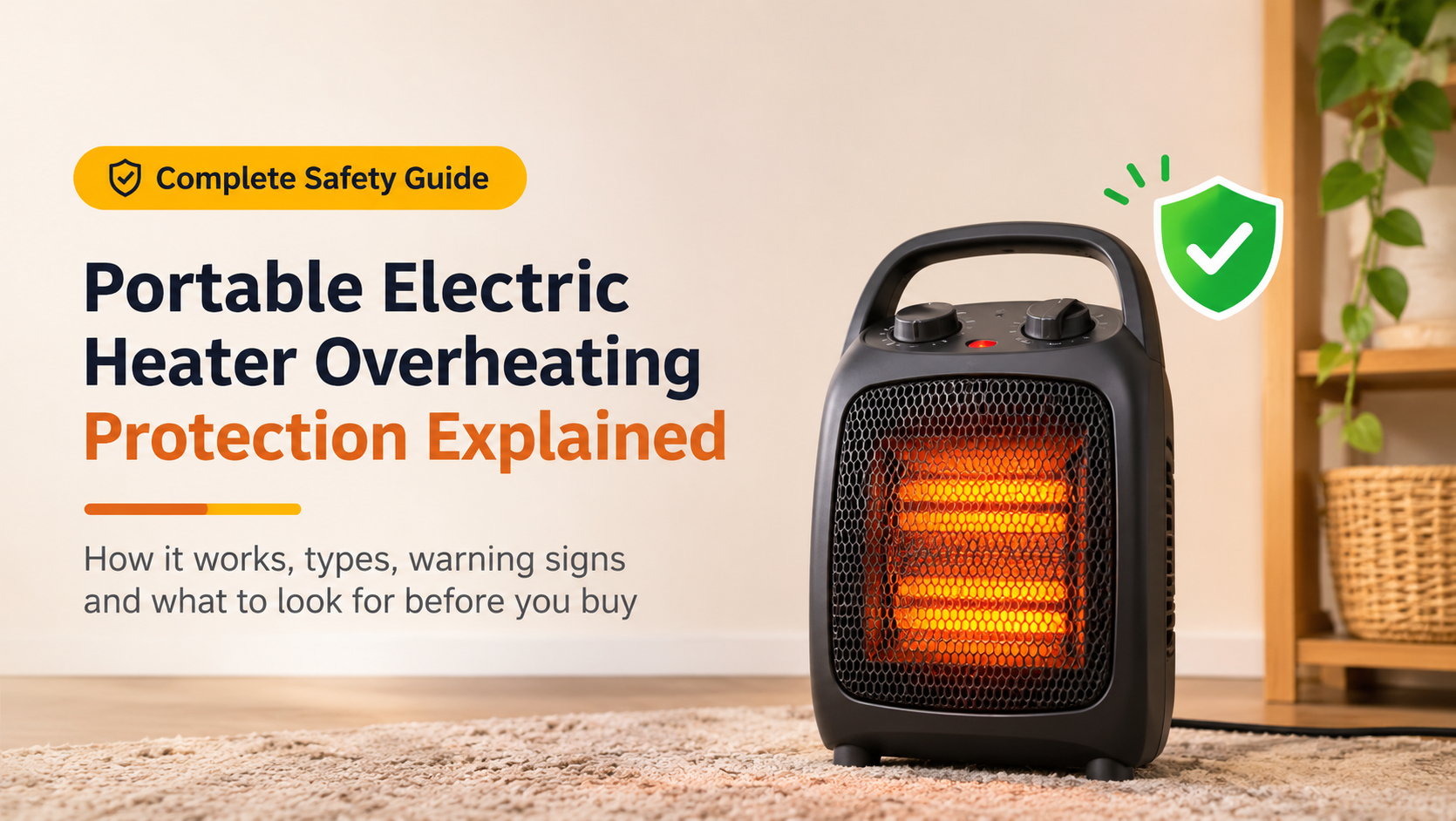
A portable electric heater turns nearly all the power it draws into heat, which is exactly what makes it useful and exactly what makes it risky. Space heaters are linked to thousands of house fires every year, and a large share of them involve heaters placed too close to flammable items or heaters with failed safety parts. That is why portable electric heater overheating protection is the single most important safety feature to understand before you buy or use one.
In this guide you will learn what overheating protection is, how it works inside the heater, the different types, why it sometimes switches your heater off, how to tell whether it is working, and what to look for when choosing a safer model.
What Is Overheating Protection in a Portable Heater?
Overheating protection is a built-in safety system that monitors the temperature inside a heater and cuts power when it climbs above a safe limit. It works without any input from you. The goal is simple: if airflow is blocked, a fan fails, or a part malfunctions, the heater shuts itself down before the housing, wiring or nearby objects can ignite.
Why Portable Heaters Overheat in the First Place
Heaters are designed to run hot, but only within a controlled range. Overheating usually happens because heat cannot escape or because a control part has failed. Common triggers include:
- Blocked air intake or outlet from dust, pet hair, lint or a cover placed on the unit
- Clogged or missing filter that restricts airflow
- Fan motor failure in fan-forced models, so heat builds up around the element
- Placement too close to furniture, walls or fabrics, which traps heat
- Faulty thermostat that does not switch the element off
- Loose plug, worn socket or damaged cord that creates extra heat at the connection
- Overloaded circuit or extension lead that heats the cable and plug
How Overheating Protection Works
Quality heaters do not rely on one safeguard. They use several layers, each acting as a backup for the one before it.
Layer 1: The Thermostat
The thermostat is the everyday control. It switches the heating element on and off to hold the room at the temperature you set. It is not strictly a safety device, but it keeps normal operation well below dangerous levels.
Layer 2: The Overheat Cut-Out
This is the main overheating protection. A temperature sensor or bimetal switch monitors the inside of the heater. If the temperature passes the safe limit, for example when the vents are blocked, it cuts power. Most of these devices reset automatically once the heater has cooled, which is why a heater may restart by itself after a break.
Layer 3: The Thermal Fuse
The thermal fuse is the last line of defence. It contains a small link designed to melt at a fixed temperature. Once it melts, the circuit is permanently broken and the heater will not work again. It only activates if the earlier layers have failed.
Extra Safeguard: The Tip-Over Switch
A tilt sensor turns the heater off if it falls or tilts beyond a safe angle. It is separate from the overheating system but works hand in hand with it, because a heater lying against a rug or curtain would heat up very quickly.
Types of Overheating Protection Compared
| Type | Resets Itself? | Typical Use | Key Point |
|---|---|---|---|
| Bimetal thermostat | Yes | Basic fan and oil-filled heaters | Simple and reliable but less precise |
| Thermal fuse | No | Backup in most certified heaters | Permanent shutdown once blown |
| Electronic sensor (thermistor) | Yes | Digital, smart and premium heaters | Accurate, depends on circuit board |
| Tip-over switch | Yes, when upright | Nearly all modern heaters | Prevents fires from fallen units |
What Overheating Looks Like in Real Use
The chart below shows how the protection layers respond when airflow is blocked. As temperature rises, the overheat cut-out trips first and the heater cools and restarts. If the blockage remains, it will trip again and again. The thermal fuse only blows if the cut-out fails to act.
Signs Your Overheating Protection Is Working
- The heater shuts off when vents are covered or dusty, then restarts after cooling
- The unit switches off immediately if it is tilted or knocked over
- An indicator light changes colour or flashes to show a fault (on models with one)
- The housing stays warm rather than painfully hot during normal use
Warning Signs the Protection May Be Failing
Safety components wear out like anything else. Stop using the heater and have it checked, or replace it, if you notice any of these:
- A strong burning smell or visible smoke
- Housing, plug or cord that becomes too hot to touch comfortably
- Melted, discoloured or deformed plastic
- Sparks, crackling or buzzing noises
- The heater never shuts off even in a warm room
- The heater is completely dead after tripping, which may indicate a blown thermal fuse
Do Not Test the Protection by Blocking the Heater
It might seem sensible to cover a heater on purpose to check whether it shuts off. Please do not. Deliberately blocking airflow stresses the safety parts and can cause the very overheating you want to avoid. Instead, rely on the heater’s certification, inspect it regularly and watch for the warning signs above.
The 3-Foot Rule: Placement Matters
Overheating protection is a safety net, not a licence to place the heater anywhere. Keeping combustible items well away reduces the chance of heat build-up and ensures the protection rarely has to act.
How to Keep Overheating Protection Working Properly
- Clean the vents and grills monthly by unplugging the heater, letting it cool, and using a vacuum with a soft brush.
- Wash or replace the filter if your model has one.
- Use a flat, hard surface. Soft carpet can tilt the unit and interfere with the tilt switch.
- Plug straight into a wall outlet. Avoid extension leads and cheap power strips.
- Inspect the cord and plug before each heating season for cracks, scorch marks or loose pins.
- Never cover the heater or use it to dry clothes.
- Do not leave it running unattended or while you sleep, unless the model is specifically designed for it and you follow its manual.
How to Choose a Heater With Reliable Overheating Protection
1. Check Safety Certification
Look for a recognised safety mark such as UL or ETL in North America, CE or UKCA in Europe and the UK, or the equivalent approval in your country. In the United States, portable heaters are commonly tested against the UL 1278 standard, which covers overheating and tip-over behaviour. Be cautious with unbranded heaters that show no certification.
2. Look for Multiple Protections
Choose a heater that lists overheat protection, tip-over protection and, ideally, a thermal fuse or second independent cut-out. Product descriptions that mention only a vague “safety feature” are not enough.
3. Prefer Cool-Touch or Enclosed Elements
Oil-filled radiators and models with cool-touch housing run at lower surface temperatures, which helps in homes with children or pets.
4. Match the Heater to the Room
A heater that is too small runs constantly and wears out sooner. As a rough guide, allow about 10 watts per square foot of floor space.
5. Choose Easy-to-Clean Designs
Accessible grills and removable filters make it easier to keep airflow clear, which is the biggest factor in avoiding overheat shutdowns.
Which Heater Type Suits You?
| Heater Type | Surface Heat | Overheat Risk Factor | Best For |
|---|---|---|---|
| Ceramic fan heater | Medium | Dust and fan failure | Quick heat in small rooms |
| Oil-filled radiator | Medium, no exposed element | Lower, but slow to cool | Bedrooms and steady warmth |
| Infrared heater | High near the element | Close contact with objects | Spot heating a person |
| Convection panel heater | Low to medium | Blocked vents | Larger rooms |
Common Mistakes to Avoid
- Plugging a heater into an extension lead or power strip
- Placing it on a bed, sofa or thick rug
- Draping towels or clothing over it
- Resetting a tripping heater again and again without finding the cause
- Using a heater with a damaged cord, cracked casing or melted plug
- Buying an uncertified heater only because it is cheap
Frequently Asked Questions
What is overheating protection in a portable electric heater?
It is an automatic safety system that shuts the heater off when internal temperature becomes unsafe, usually using a sensor, bimetal switch and a backup thermal fuse.
Why does my heater turn off by itself?
The most common reason is overheat protection triggered by blocked vents, dust or poor airflow. A tip-over switch, timer or thermostat can also cause shut-offs.
Will the heater turn back on after overheat protection trips?
Many models restart automatically after cooling, while others need to be switched on again by hand. If it never restarts, the thermal fuse may have blown.
Can I reset or replace a blown thermal fuse myself?
It is not recommended. A blown thermal fuse signals a serious fault, and replacing it incorrectly can create a fire risk. Replace the heater or have a qualified technician inspect it.
Is a heater with overheat protection safe to leave on all night?
Overheating protection reduces risk but does not remove it. Follow the manufacturer’s instructions, keep the heater away from bedding, and avoid running it unattended unless the manual explicitly allows it.
How do I know if a heater has overheating protection?
Check the product description, the manual and the label for overheat protection, thermal cut-off or thermal fuse, along with a recognised safety certification mark.
How often should I clean my heater?
Clean the vents and filter at least once a month during heavy use, and before storing it for the season.
Final Thoughts
Overheating protection is the quiet safety system that makes portable electric heaters safe enough for everyday use. Understanding how its layers work, keeping airflow clear and respecting placement rules helps it do its job with minimal intervention. When you shop for a new heater, prioritise certified models with several independent protections, and retire any heater that shows burning smells, damaged parts or repeated shut-offs.
A little care and the right heater keep your home warm and your family safe.
Disclaimer: This article is for general information only. Always follow your heater’s manual and local safety regulations, and consult a qualified electrician or the manufacturer for faults.