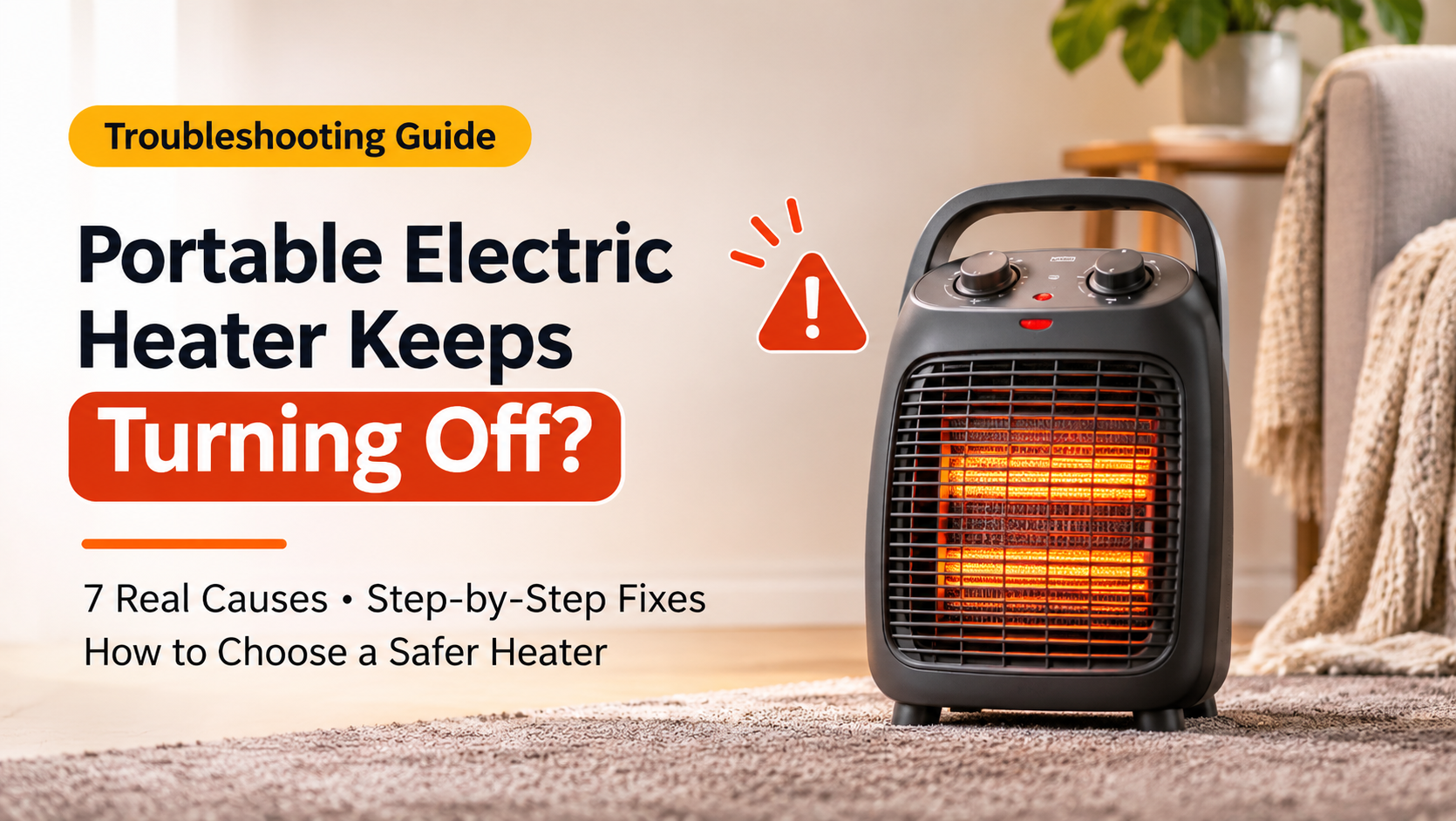
There is nothing more annoying than settling in on a freezing evening, only for your portable electric heater to click off after a few minutes. If your portable electric heater keeps turning off, you are not alone, and in most cases the cause is simple and fixable at home. Modern heaters are packed with safety features, and those features shut the unit down the moment something looks risky.
In this complete guide, you will learn the seven most common reasons a space heater cuts out, how to diagnose each one step by step, when a repair is not worth it, and what to look for in a replacement so the problem does not come back.
Quick Answer: Why Does My Heater Keep Shutting Off?
The 7 Most Common Causes (and How to Fix Each One)
1. Overheat Protection Is Being Triggered
Every certified portable heater has a thermal cut-off. If internal temperature rises too high, the heater switches off to prevent fire or damage. After cooling, some models restart on their own, while others need to be switched on again manually.
What usually triggers it:
- Dust, pet hair and lint blocking the air intake or the heating element
- Furniture, curtains or bedding placed too close
- A dirty or clogged filter (on models that have one)
- A failing internal fan that no longer moves enough air
How to fix it: Unplug the heater and let it cool for at least 30 minutes. Vacuum the grills with a soft brush attachment, check that the fan spins freely, and keep at least three feet (about one metre) of clear space on all sides.
2. The Tip-Over Safety Switch Is Activated
Nearly all modern heaters include a tilt sensor that cuts the power if the unit falls over. On carpet, an uneven floor or a slightly tilted base, the switch can trigger even when the heater has not fallen.
How to fix it: Place the heater on a flat, hard, stable surface. Check underneath for debris stuck near the switch button and make sure the base is not cracked or bent.
3. An Overloaded Circuit or Tripped Breaker
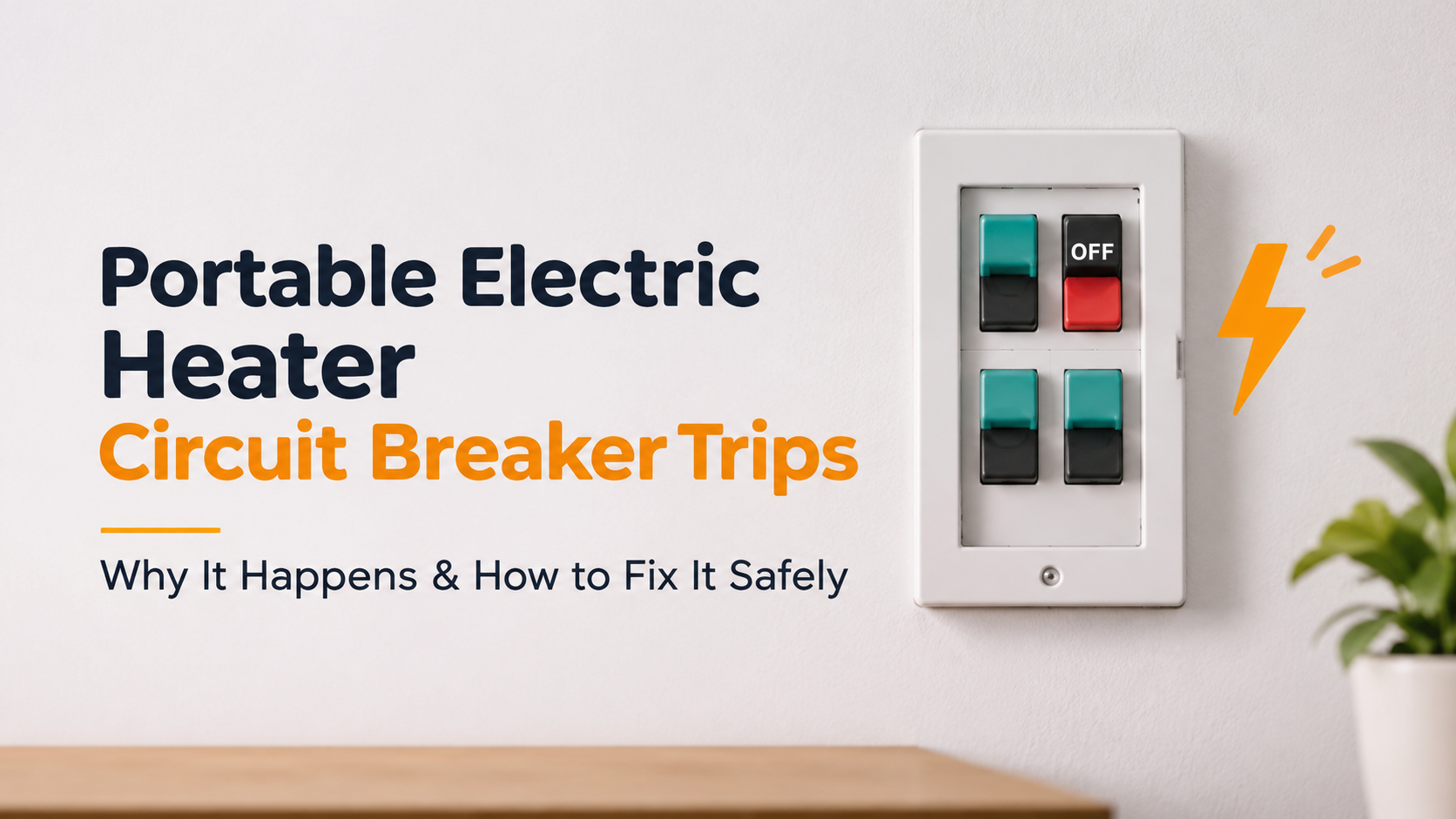
Portable heaters are among the most power-hungry appliances in a home. A standard 1500W model draws around 12.5 amps, which is close to the limit of a normal 15-amp household circuit. Add a TV, a hairdryer or a kettle on the same line and the breaker trips, so the heater appears to switch off.
How to fix it: Plug the heater into its own wall outlet and unplug other devices on that circuit. If you live in a region with 220-240V supply, the amps are lower, but the same rule applies: never share a heavy-load outlet.
4. Damaged Power Cord, Loose Plug or Worn Outlet
If the plug or cord gets noticeably warm, the heater may be losing power through a poor connection. A loose plug can briefly interrupt power and make the heater switch off and on.
How to check:
- Look for cracks, kinks, scorch marks or exposed wire along the cord
- Feel the plug after 10 minutes of use (it should be warm at most, never hot)
- Try a different wall outlet that is in good condition
- Make sure the plug fits snugly and does not wiggle
If the cord or plug is damaged, stop using the heater. These parts should be replaced only by a qualified technician or the manufacturer.
5. Faulty or Misjudged Thermostat
The thermostat measures the room temperature and cycles the heater on and off to maintain it. If the room is small or already warm, the heater will naturally switch off once it reaches the set temperature. That is normal, not a fault.
Test it: Turn the thermostat to the highest setting. If the heater now stays on continuously, the thermostat is working and the setting was simply too low. If it still cuts out within minutes, the thermostat sensor may be faulty or located too close to the heating element.
6. Timer, Eco Mode or Auto Shut-Off Features
Many heaters have an auto shut-off timer (for example 1, 2, 4 or 8 hours), an energy-saving eco mode, or a programmed schedule. If you or someone else activated one of these by accident, the heater will turn off exactly when programmed. Read the manual and reset the timer to continuous operation.
7. The Heater Is Old or Has Internal Failure
Heating elements, fans, relays and sensors wear out. Warning signs include a burning smell, buzzing or rattling sounds, flickering indicator lights, inconsistent heat and frequent cut-outs even after cleaning. Most budget heaters last roughly 3 to 5 years with regular use. Repair costs can quickly approach the price of a new unit, so replacement is usually the smarter and safer choice.
Step-by-Step Troubleshooting Checklist
- Unplug the heater and let it cool for 30 minutes.
- Inspect the cord and plug for damage, discoloration or heat marks.
- Move it to a flat, hard surface away from walls and furniture.
- Use a dedicated wall outlet with no other heavy devices on the circuit.
- Clean the vents, grills and filter (see the routine below).
- Check the settings: thermostat, timer, eco mode and tilt position.
- Run it for 20 minutes and watch whether it still cuts out.
- If the problem continues, stop using it and contact the manufacturer or replace the unit.
How to Clean Your Portable Heater the Right Way
Dust is the silent enemy of every space heater. Cleaning it once a month during heavy use prevents most overheating shut-offs and also improves efficiency.
- Always unplug and let the heater cool completely before cleaning.
- Use a vacuum with a soft brush to remove dust from vents and grills.
- Wipe the exterior with a dry or slightly damp cloth. Never spray liquid directly onto the unit.
- Let everything dry fully before plugging it back in.
Is It Safe to Keep Using a Heater That Turns Off by Itself?
If the shut-off is occasional and clearly linked to a known cause (such as a blocked vent or a timer), the heater is doing its job and you can fix the cause. But if it shuts off repeatedly for no clear reason, smells of burning, sparks, or has a hot plug or cord, stop using it immediately. Never bypass or disable a safety switch. These features exist to prevent fires.
How to Choose a Better Portable Heater (Buying Guide)
If your current heater is old or beyond repair, choosing a quality replacement saves frustration and keeps your home safer. Here are the features that matter most.
Essential Safety Features
- Overheat protection with automatic shut-off
- Tip-over protection that reliably cuts power
- Cool-touch housing, especially with kids or pets
- Safety certification from a recognised testing body (such as UL, ETL, CE or equivalent in your country)
Choose the Right Size
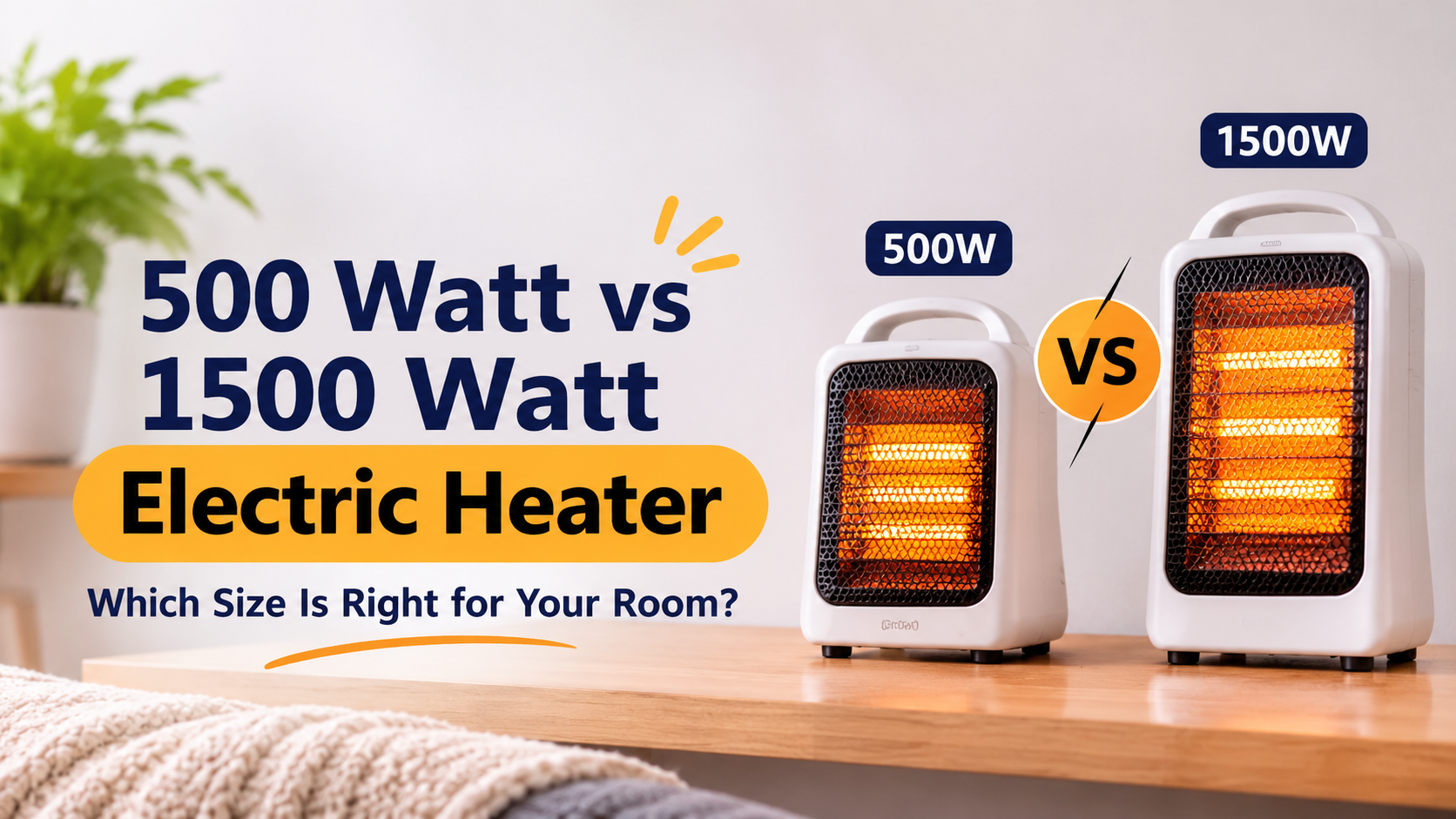
A general rule is about 10 watts of heating power per square foot of floor space. A 150 sq ft room needs around 1500W, while a small 70 sq ft room is comfortable with 600 to 750W. A heater that is too small runs nonstop and strains its parts, while one that is too large may cycle off often and waste energy.
Types of Portable Heaters Compared
| Type | Best For | Pros | Cons |
|---|---|---|---|
| Ceramic fan heater | Small to medium rooms | Fast heat, compact, affordable | Fan noise, collects dust |
| Oil-filled radiator | Bedrooms, long use | Silent, steady warmth | Slow to warm, heavy |
| Infrared / radiant | Spot heating a person | Instant warmth, quiet | Heats objects, not the air |
| Convection panel | Larger, enclosed rooms | Even heat, wall-mountable | Slower to heat up |
Helpful Extra Features
- Adjustable digital thermostat for precise temperature control
- Programmable timer and remote control
- Washable or easy-to-access filter
- Multiple power settings (for example 750W and 1500W)
- Carry handle and a long, heavy-duty cord
- Low noise rating for bedrooms and offices
Tips to Stop Your Heater From Turning Off in the Future
- Clean the vents and filter regularly, at least once a month in winter.
- Always plug directly into a wall outlet that is not shared with other high-wattage devices.
- Keep it on a flat, hard surface with three feet of free space around it.
- Match the heater size to your room instead of over- or under-sizing.
- Store it in a dry, dust-free place during the warm months, ideally covered.
- Inspect the cord and plug every season before first use.
Frequently Asked Questions
Why does my space heater turn off after a few minutes?
The most likely reason is overheat protection caused by blocked vents or dust, followed by an overloaded circuit or a tip-over switch triggering. Clean the unit, move it to a flat surface and use a dedicated outlet.
Why does my heater turn on and off repeatedly?
This is often the thermostat cycling to hold the set temperature. If it cycles very quickly (every few seconds), the thermostat may be faulty, the plug may be loose, or the heater may be too close to a wall or sensor.
Can a dirty filter make a heater shut off?
Yes. A clogged filter or vent restricts airflow, causing internal temperatures to rise and triggering the thermal cut-off. Regular cleaning solves this in most cases.
Does a heater trip the breaker because of the heater or the circuit?
It can be either. A heater drawing a large current, plus other devices on the same circuit, commonly trips the breaker. If it trips even when it is the only device, the heater may have an internal fault, or the circuit may have an issue that a licensed electrician should inspect.
Is it worth repairing a portable heater?
Usually not. Repairing cords, thermostats or heating elements can cost nearly as much as a new heater, and a repaired unit may no longer meet its original safety standards. Replacing it with a certified model is generally the safest choice.
How long does a portable electric heater last?
Most last around 3 to 5 years with regular use, though quality oil-filled and convection models can last longer with proper care.
Why does my heater smell like burning?
A light dusty smell at the start of the season is common as dust burns off. A strong, persistent or plastic-like smell is not normal. Unplug the heater and do not use it until it has been checked.
Final Thoughts
When a portable electric heater keeps turning off, it is almost always protecting you from something: overheating, a tilt, an overloaded circuit or a damaged cord. In many cases, a good cleaning, a better position and a dedicated outlet restore normal operation. If the problem continues after the checklist above, or if you notice burning smells, hot plugs or damaged cords, retire the heater and choose a modern, certified replacement sized correctly for your room.
Stay warm, and stay safe.
Disclaimer: This article is for general information only. For electrical faults or anything involving wiring, consult a licensed electrician or the heater manufacturer.