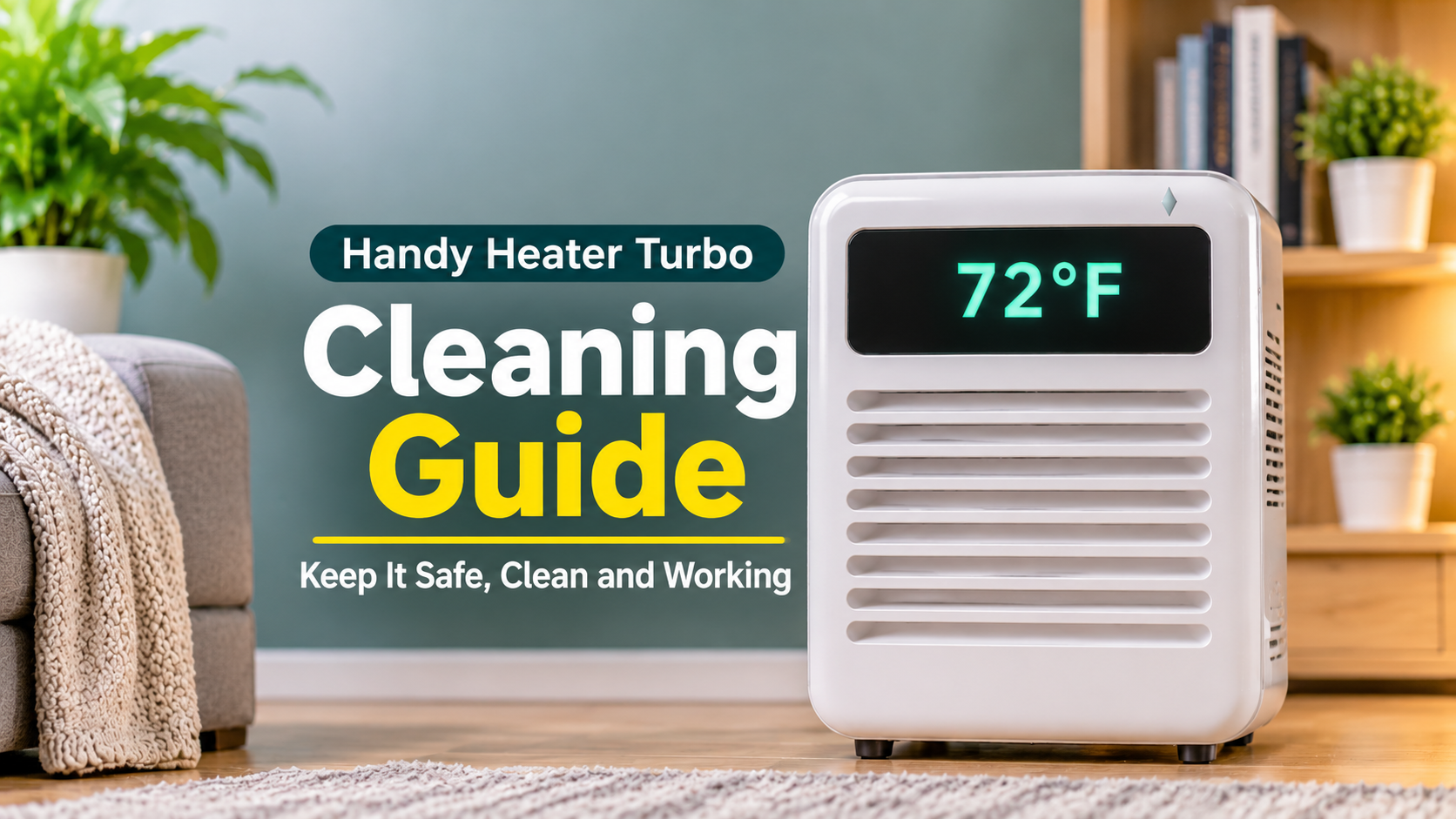



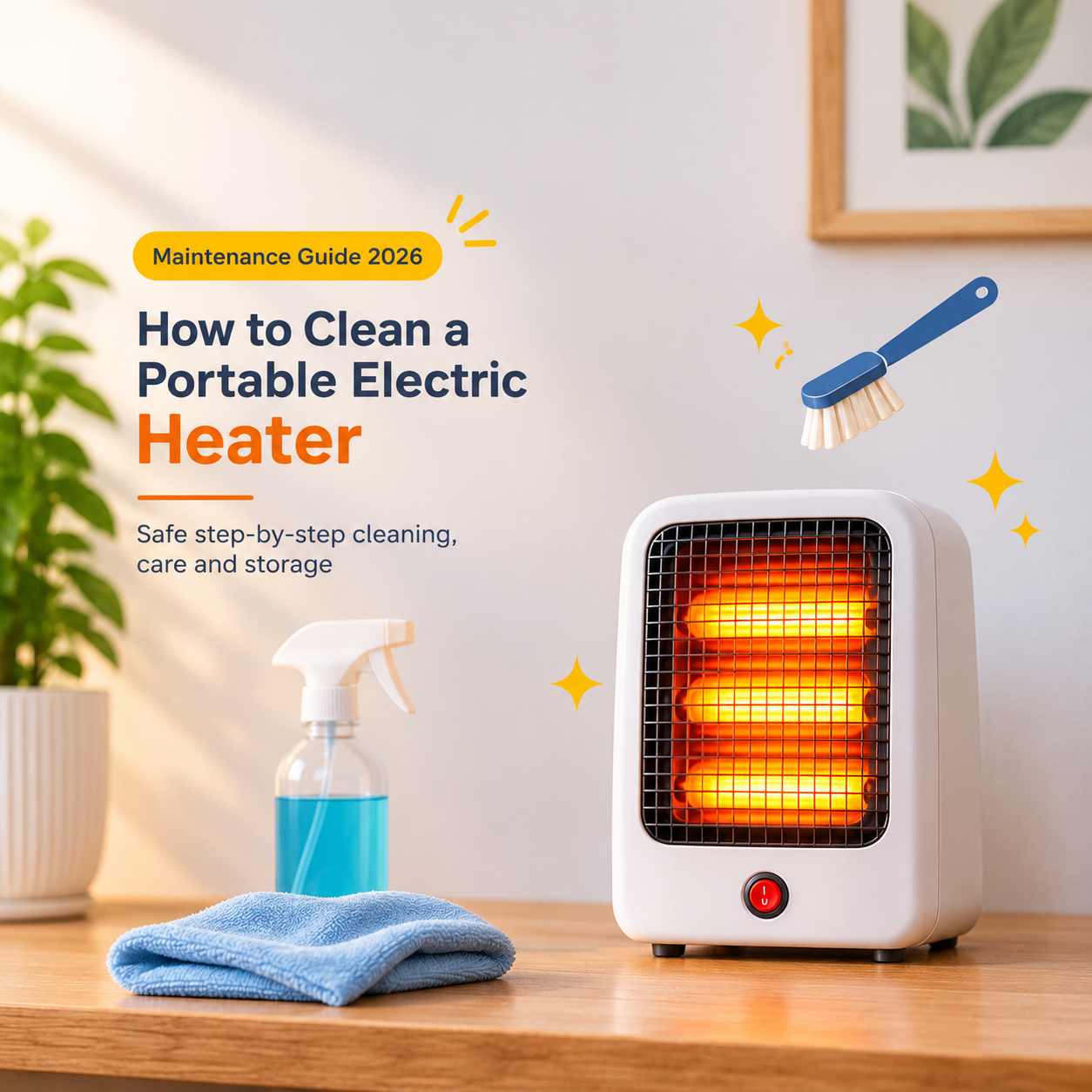
A portable heater spends most of the year in storage, then works hard when the cold arrives. During that time it collects dust, pet hair and lint, which can reduce performance, create a burning smell and increase safety risks. Knowing how to clean a portable electric heater properly takes only a few minutes and helps your heater last longer.
This guide covers what you need, a clear step-by-step method, cleaning tips for each heater type, a maintenance schedule, and storage advice.
Why Cleaning Your Heater Matters
- Safety: Dust and lint near a hot element can smolder and become a fire hazard.
- Performance: Blocked vents reduce airflow and can cause the heater to overheat and shut off.
- Air quality: A dirty heater can blow dust and odors around the room.
- Lifespan: Regular care prevents wear and helps components last longer.
- Energy use: A clean heater works more efficiently and does not need to run as long.
What You Need
| Tool | Use |
|---|---|
| Vacuum with brush attachment | Removes dust from vents and grilles |
| Soft brush or old paintbrush | Reaches between fins and slats |
| Microfiber cloth | Wipes the exterior without scratching |
| Mild dish soap and water | Gentle cleaner for the casing |
| Can of compressed air (optional) | Blows dust from tight areas, used in short bursts |
| Cotton swabs | Cleans controls and small crevices |
Safety First Before You Start
- Switch the heater off and unplug it from the wall.
- Wait until it has cooled completely, which can take 30 minutes or more.
- Read your manual for model-specific cleaning instructions.
- Work on a flat, dry surface in a well-lit area.
Step-by-Step: How to Clean a Portable Electric Heater
Step 1: Unplug and let it cool
Remove the plug from the outlet and give the heater plenty of time to cool. Never clean a hot or plugged-in heater.
Step 2: Remove dry dust first
Use a vacuum with a brush attachment on the vents, air intake and grille. A soft brush helps reach between slats. If you use compressed air, use short bursts and keep the can upright and at a distance.
Step 3: Wipe the exterior
Dampen a microfiber cloth with water and a drop of mild dish soap, then wring it until it is barely damp. Wipe the casing, handle and controls, taking care not to let liquid run into vents or switches. Use cotton swabs for small gaps.
Step 4: Clean the filter if your heater has one
Some models have a removable air filter. Remove it as the manual directs, rinse it gently, and let it air dry completely before putting it back. Do not use a damp filter.
Step 5: Dry, inspect and reconnect
Leave the heater to dry for at least an hour. Inspect the cord for fraying or heat marks and the plug for discoloration or bent prongs. Only plug it in when everything is completely dry.
Cleaning Tips by Heater Type
| Heater type | How to clean | Special note |
|---|---|---|
| Ceramic fan heater | Vacuum vents, brush the grille and fan intake, wipe the casing | Dust on the element creates burning smell |
| Oil-filled radiator | Wipe fins and casing with a damp cloth, dry thoroughly | Never open or drain the oil chamber |
| Infrared / quartz heater | Dust the reflector and guard gently when cool | Do not touch the quartz element with bare fingers |
| Convection / panel heater | Vacuum vents, wipe the panel | Keep the vent slots clear |
| Tower heater | Vacuum the intake and outlet slots, wipe the body | Check the oscillating base for debris |
Do and Don’t
How Often Should You Clean?
| When | What to do |
|---|---|
| Before first use each season | Full clean, inspect cord and plug |
| Every 2 to 4 weeks in heavy use | Quick dry dust of vents and grille |
| Monthly | Wipe exterior, check filter if fitted |
| End of season | Deep clean, dry fully, store |
| Any time it smells burnt or runs hot | Unplug, let it cool, inspect and clean |
Removing Stubborn Dust and Smells
- Pet hair: Use a lint roller or damp cloth after vacuuming, and clean more often in homes with pets.
- Sticky residue: Use a cloth with mild soapy water, then wipe with a clean damp cloth and dry.
- Burning smell at start-up: Run the heater briefly in a ventilated room after cleaning. If the smell lingers, unplug it and stop using it.
- Yellowing or marks: A soft cloth with mild soap is enough. Avoid abrasive pads.
How to Store Your Heater at the End of the Season
- Clean it fully and make sure it is completely dry.
- Loosely coil the cord without tight bends, and avoid wrapping it around the heater.
- Place it in its original box or a clean bag to keep dust out.
- Store it in a dry place away from moisture and extreme temperatures.
- Keep it in an upright position, as advised in the manual.
When to Stop Cleaning and Replace Your Heater
- The cord is frayed, cracked or discolored.
- The plug is warm or melted.
- The heater trips breakers or shuts off randomly.
- It smells of burning plastic or produces smoke or sparks.
- The casing is cracked or damaged.
Frequently Asked Questions
How often should I clean a portable electric heater?
Give it a quick dust every few weeks while in regular use, a fuller clean at the start and end of each season, and a clean whenever you notice dust or a burning smell.
Why does my heater smell like burning dust?
Dust that settled on the element or inside the heater can burn off when you first switch it on after storage. A short smell that fades is normal, but if it persists, smells of plastic or smoke, unplug it and have it inspected.
Can I wash a heater with water?
No. Never submerge a heater or spray liquid into it. Wipe the exterior with a barely damp cloth, and make sure the unit is completely dry before plugging it in.
Can I use compressed air or a hairdryer?
Compressed air in short bursts can help clear dust from vents. Avoid using a hairdryer or high heat. Always keep the heater unplugged while cleaning.
Do oil-filled radiators need to be drained or refilled?
No. They are sealed units that do not need topping up. Clean the outside only. If oil leaks, stop using the heater and replace it according to the manufacturer’s advice.
Final Thoughts
Learning how to clean a portable electric heater is simple and worthwhile. Unplug it, let it cool, remove dry dust, wipe gently with a barely damp cloth, dry everything completely and inspect it before use. A few minutes of care each season keeps your heater running safely, efficiently and quietly for years.
Disclosure: Some affiliate sites earn a commission from qualifying purchases at no extra cost to readers. Add your own disclosure text here as required. Always follow your heater manufacturer’s instructions for cleaning and maintenance.