








When the weather turns cold, two kinds of electric heaters dominate most shopping lists: the compact portable electric heater (usually a ceramic or fan model) and the classic oil-filled radiator. Both plug in and warm a room without installation, but they heat in very different ways. Choosing the wrong one can mean a noisy bedroom, slow warm-up or wasted electricity.
This guide compares them head to head on heating speed, noise, running cost, safety, portability and more, so you can pick the best option for your space.
How Each Heater Works
Portable electric heaters
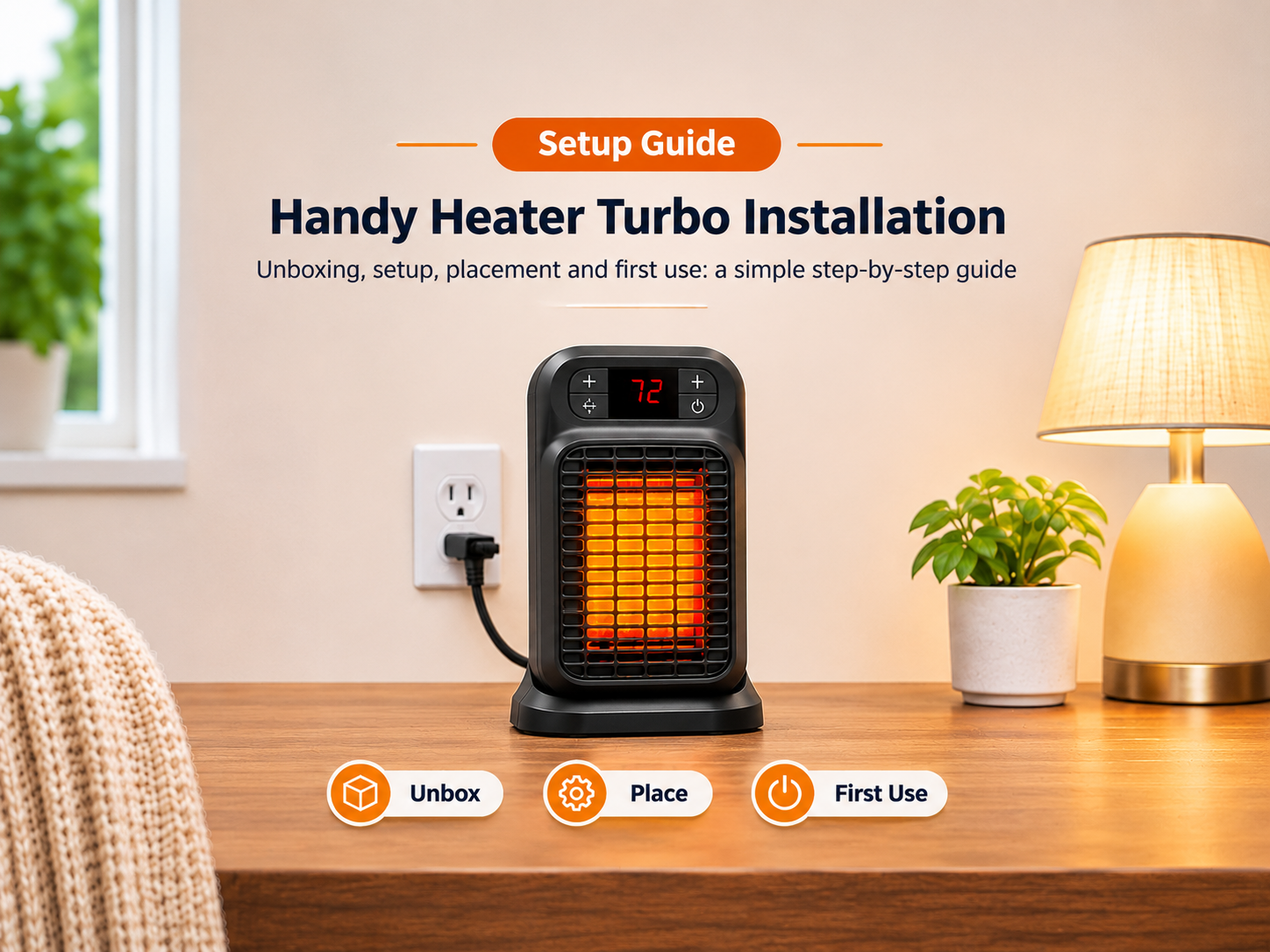
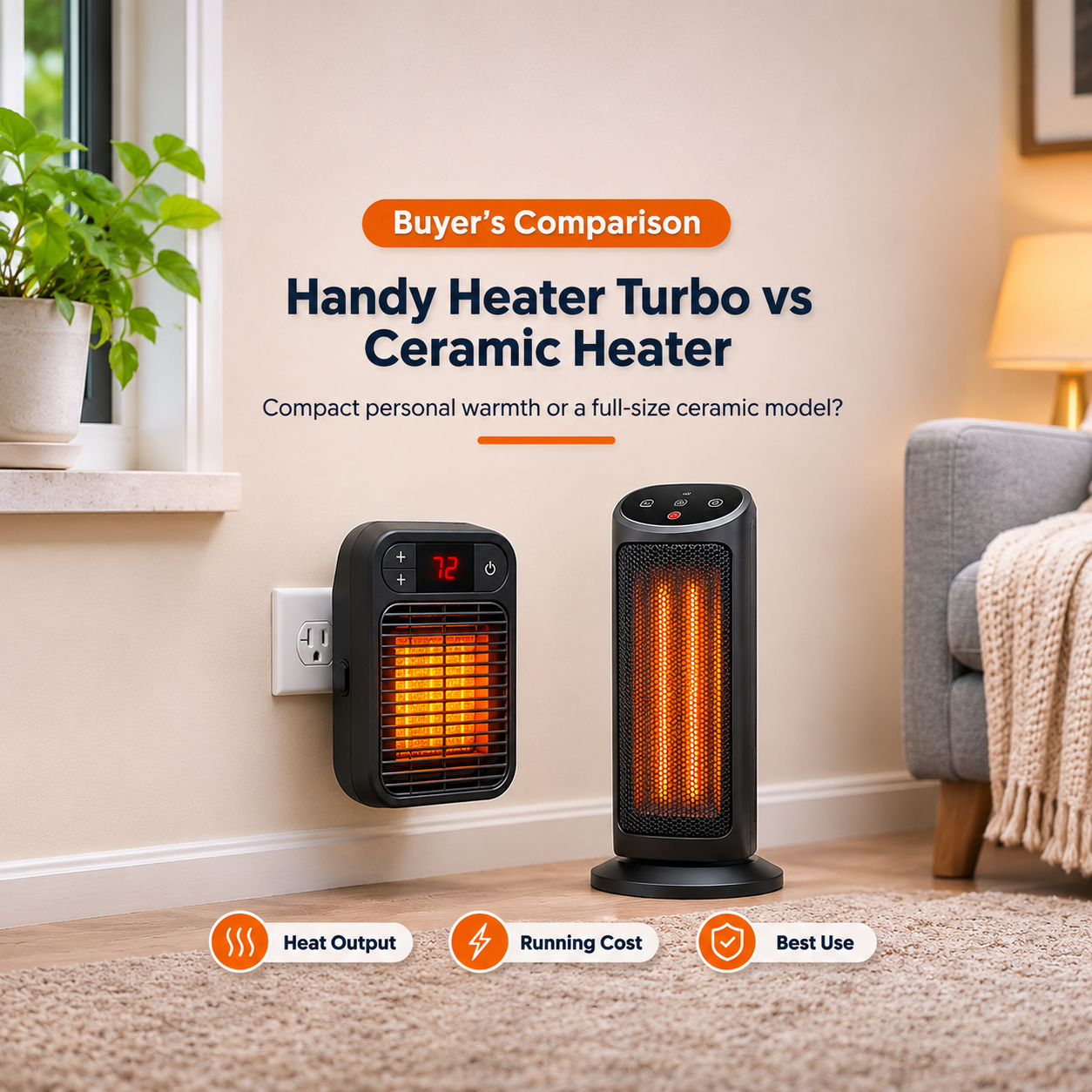
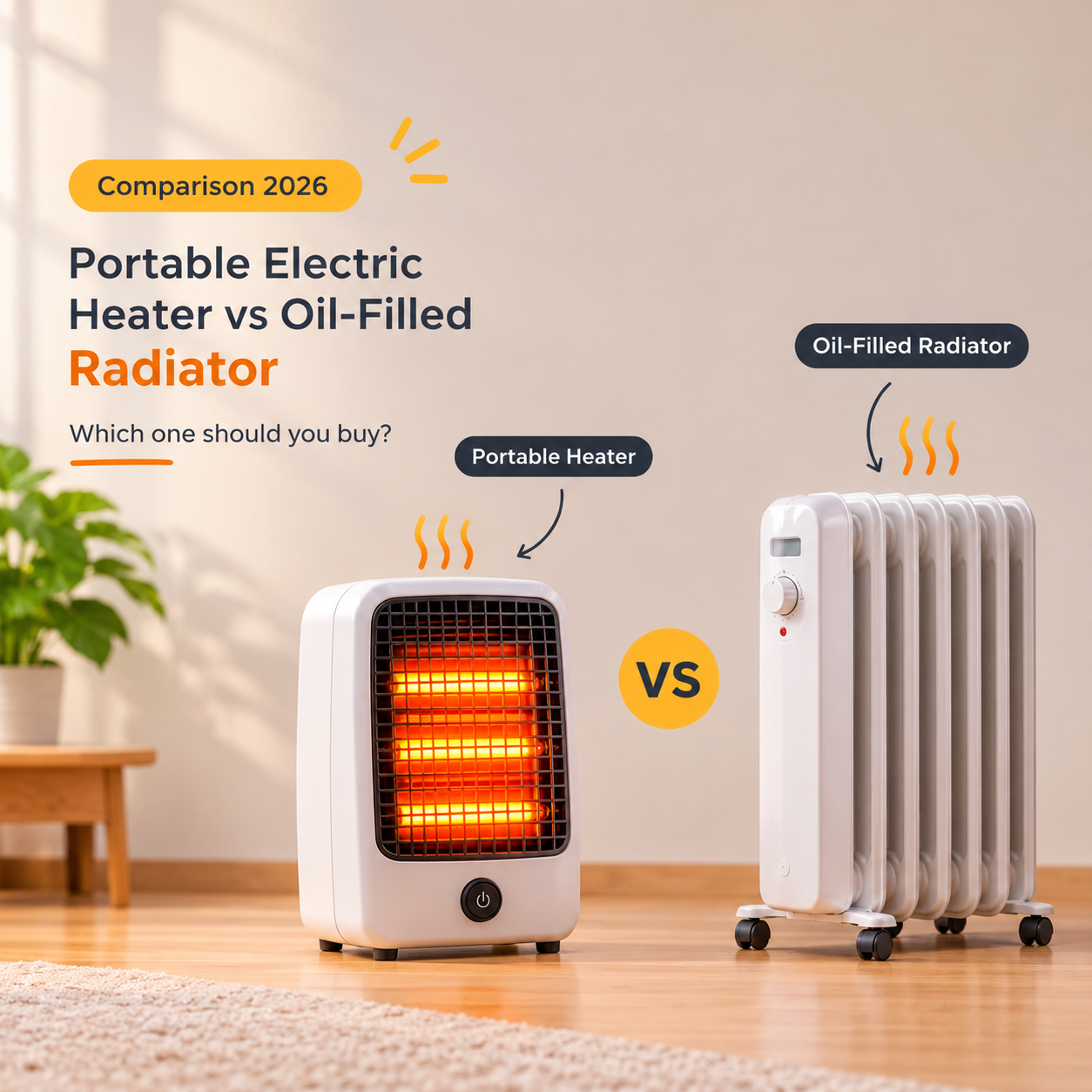
Most portable heaters are ceramic or fan models. A heating element warms up quickly and a fan pushes warm air into the room. Some portable heaters are infrared or radiant types that warm objects and people directly. They deliver heat almost immediately, but stop heating as soon as they switch off.
Oil-filled radiators
An oil-filled radiator contains sealed diathermic oil that is heated by an electric element. The oil warms the metal fins, which radiate heat into the room. The oil holds heat, so the radiator keeps warming the space even when the element cycles off. There is no fan, so it is nearly silent.
Side-by-Side Comparison
| Feature | Portable fan / ceramic heater | Oil-filled radiator |
|---|---|---|
| How it heats | Fan blows air over a hot element (ceramic, fan) or radiates heat (infrared) | Electric element warms sealed oil, which radiates heat through fins |
| Heat-up speed | Fast, often within minutes | Slower, may take 15 to 30 minutes |
| Heat after switching off | Cools quickly | Stays warm for a while |
| Noise | Fan noise on most models | Nearly silent, with occasional clicks |
| Weight and portability | Light and compact | Heavier, usually on wheels |
| Best room type | Small rooms, spot heating | Bedrooms, offices, longer use |
| Upfront cost | Often lower | Often higher |
| Maintenance | Dust on grille and fan | Wipe exterior, no refill needed |
Heating Speed
Portable fan and ceramic heaters win here. You feel warm air within a minute or two, which suits bathrooms, desks and rooms you only need warm for a short time. Oil-filled radiators need a longer warm-up, but once hot they provide gentle, even heat.
Noise Level
Oil-filled radiators are far quieter, making them the better choice for bedrooms, nurseries and offices. Fan heaters produce a constant hum or whirring, which some people find distracting, especially at night.
Energy Use and Running Cost
Both types convert nearly all electricity into heat, so at the same wattage they use the same energy at full power. What changes is behavior. A fan heater cools as soon as it switches off, so it may need to run more often. An oil-filled radiator keeps radiating after the element cycles off, so thermostat control can reduce actual runtime in a well-closed room.
| Power setting | Energy per hour at full power | Approx. cost per hour (example $0.16/kWh) |
|---|---|---|
| 500W-750W | 0.5-0.75 kWh | $0.08-$0.12 |
| 1000W | 1 kWh | $0.16 |
| 1500W | 1.5 kWh | $0.24 |
Cost examples assume $0.16 per kWh. Your electricity rate may differ, so adjust the figures for your area.
Safety
- Surface heat: Both can become hot. Oil-filled radiators have no glowing element, but their fins can still burn. Fan heaters have hot grilles and exposed elements on some models.
- Tip-over: Lightweight fan heaters tip more easily, while oil-filled radiators are heavy and stable.
- Fire risk: Both need a 3-foot clear zone around them. Never cover them or dry clothes on them.
- Children and pets: Use barriers with either type and avoid unattended use.
- Overnight use: Follow your manual. Many safety groups advise turning heaters off when sleeping.
Portability, Size and Storage
Portable fan and ceramic heaters are compact and light, so they are easy to move from room to room and store. Oil-filled radiators are heavier and bulkier, though most have wheels and a cord wrap. If you have limited storage or move your heater daily, a compact model is more convenient.
Maintenance and Lifespan
- Fan and ceramic heaters: Need regular dusting of grilles and vents, and fans can wear out over time.
- Oil-filled radiators: Need only exterior wiping, with no moving parts and no refilling. They often last many years with basic care.
Which Heater Is Better for Which Situation?
| Situation | Better choice | Why |
|---|---|---|
| Bedroom at night (pre-warm) | Oil-filled radiator | Silent, steady warmth |
| Home office | Oil-filled radiator or small ceramic | Quiet for calls and focus |
| Bathroom or small utility room | Compact ceramic heater | Quick heat for short periods |
| Under-desk or spot heating | Ceramic or infrared heater | Warms you directly |
| Living room | Oil-filled radiator or convection model | Even, comfortable heat |
| Rental or frequent moving | Portable ceramic heater | Light and easy to move |
Pros and Cons Summary
Portable fan or ceramic heater
- Pros: Fast heat, light, compact, usually cheaper.
- Cons: Noisier, cools quickly, can dry the air, needs regular dusting.
Oil-filled radiator
- Pros: Quiet, steady heat, keeps warming after switching off, no exposed element.
- Cons: Slow to warm, heavier, often higher upfront cost.
Buying Tips
- Match wattage to room size, roughly 10 watts per square foot as a starting point.
- Choose an adjustable thermostat and, ideally, a timer.
- Look for tip-over and overheat protection and an ETL or UL listing.
- Check the noise level if you will use it in a bedroom or office.
- Consider how often you will move it and how much storage you have.
Frequently Asked Questions
Which is cheaper to run, a portable heater or an oil-filled radiator?
At the same wattage, they cost about the same to run at full power, since nearly all electricity becomes heat. Real costs depend on how long they run and how well the thermostat cycles. Oil-filled radiators can feel more economical because they keep radiating warmth after the element cycles off.
Is an oil-filled radiator safer than a fan heater?
Oil-filled radiators have no glowing element and run quietly, which many people consider safer for bedrooms. Their surfaces can still be hot, so keep them away from fabric and children. Always follow safety guidance for any heater.
Which heats a room faster?
A fan or ceramic heater usually warms the air faster. Oil-filled radiators take longer but provide more even, lasting warmth once the room has heated.
Do oil-filled radiators need refilling?
No. The oil is sealed in the unit and does not need topping up or changing. If it leaks, stop using the heater and replace it according to the manufacturer’s advice.
Can I leave either type on overnight?
Safety groups usually advise turning heaters off when you sleep. Pre-warm the room instead. Only use a heater overnight if your manual explicitly allows it, and keep a clear zone around it.
Final Thoughts
There is no single winner in the portable electric heater vs oil-filled radiator debate. Fan and ceramic heaters shine when you need quick, flexible heat at a low price. Oil-filled radiators win when you want quiet, steady, long-lasting warmth. Think about your room, how long you will use the heater, how much noise you can tolerate and how often you will move it, and the right choice becomes clear. Whichever you pick, place it safely, keep it clear of fabric and follow the manual.
Disclosure: Some affiliate sites earn a commission from qualifying purchases at no extra cost to readers. Add your own disclosure text here as required. Scores and costs are general guides and vary by model, room and local electricity rates.