Handy Heater Turbo for Office: A Complete Guide to Staying Warm at Your Desk

Almost every office has the same argument: one person is wrapped in a jacket, another is fanning themselves, and the thermostat is locked away. If you are the one with cold hands, numb toes and a stiff neck by mid-morning, a small personal heater like the Handy Heater Turbo can look like a very easy fix.
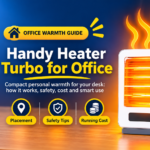
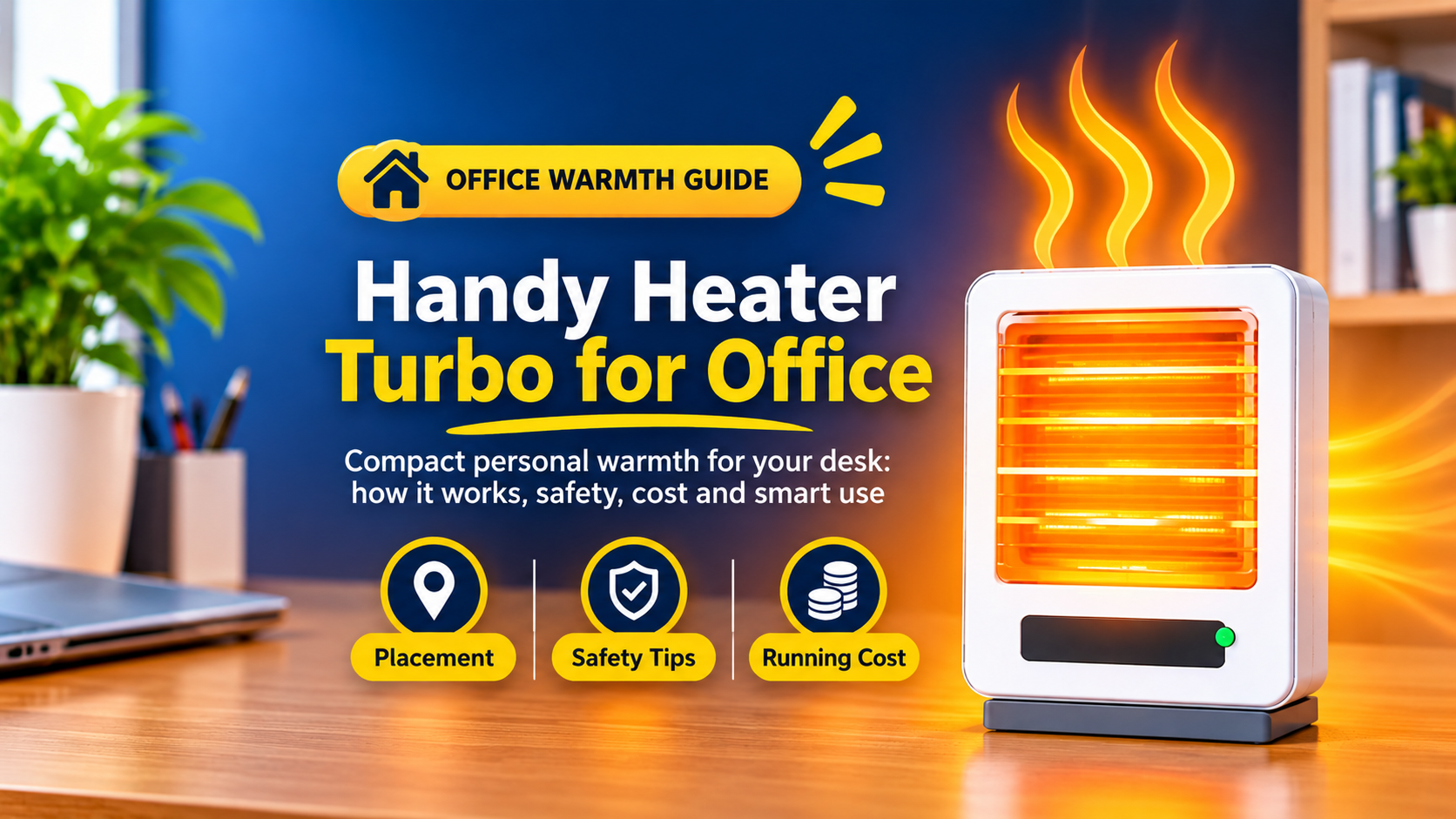
But an office is not a living room. Shared circuits, workplace rules, colleagues sitting a metre away and a lot of paper and cables all change how a heater should be chosen and used. This guide explains what the Handy Heater Turbo is, how it fits into an office routine, where to put it, what it realistically costs to run, and the safety habits that matter most. Read it before you plug anything in.
What Is the Handy Heater Turbo?
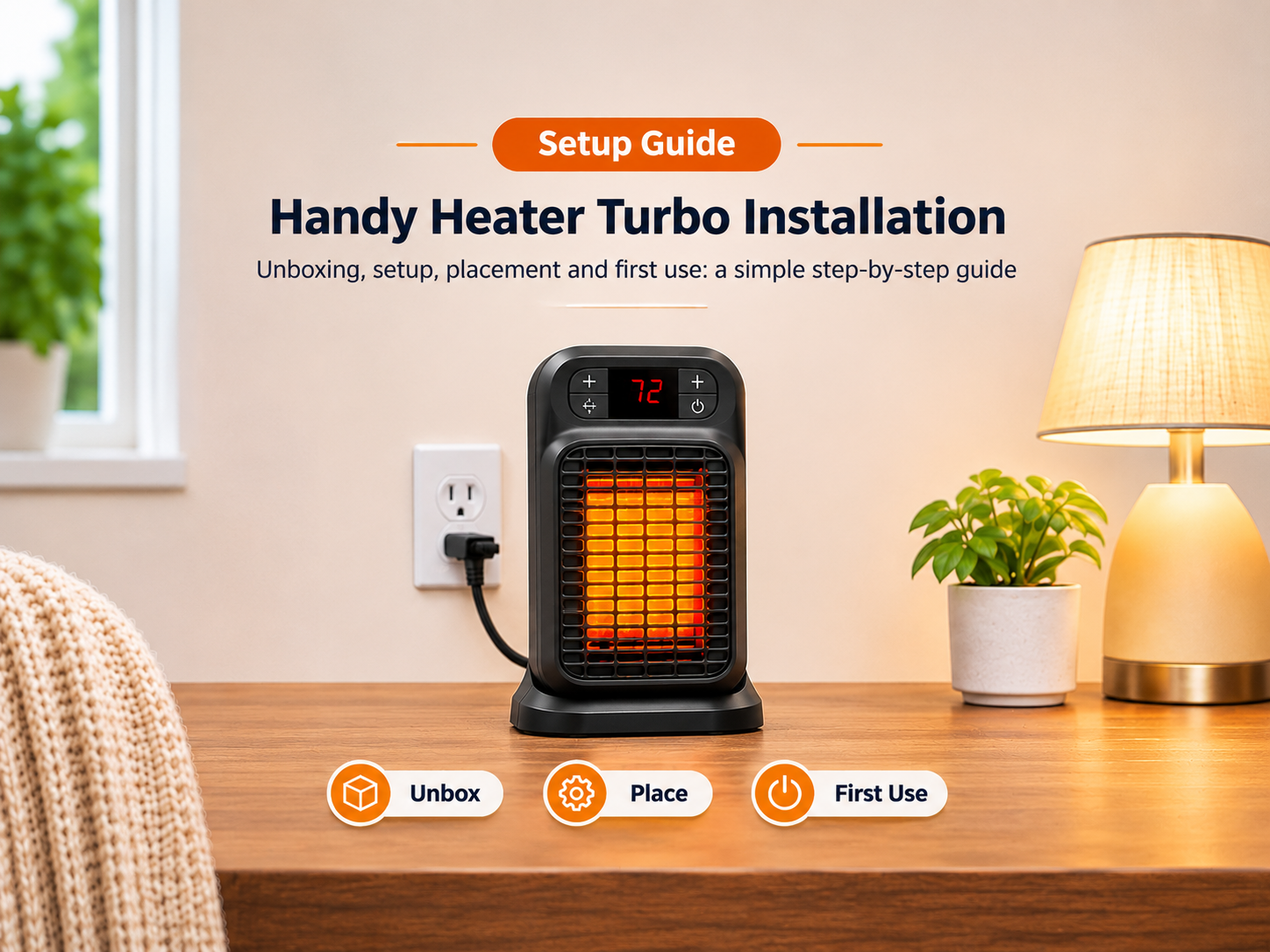
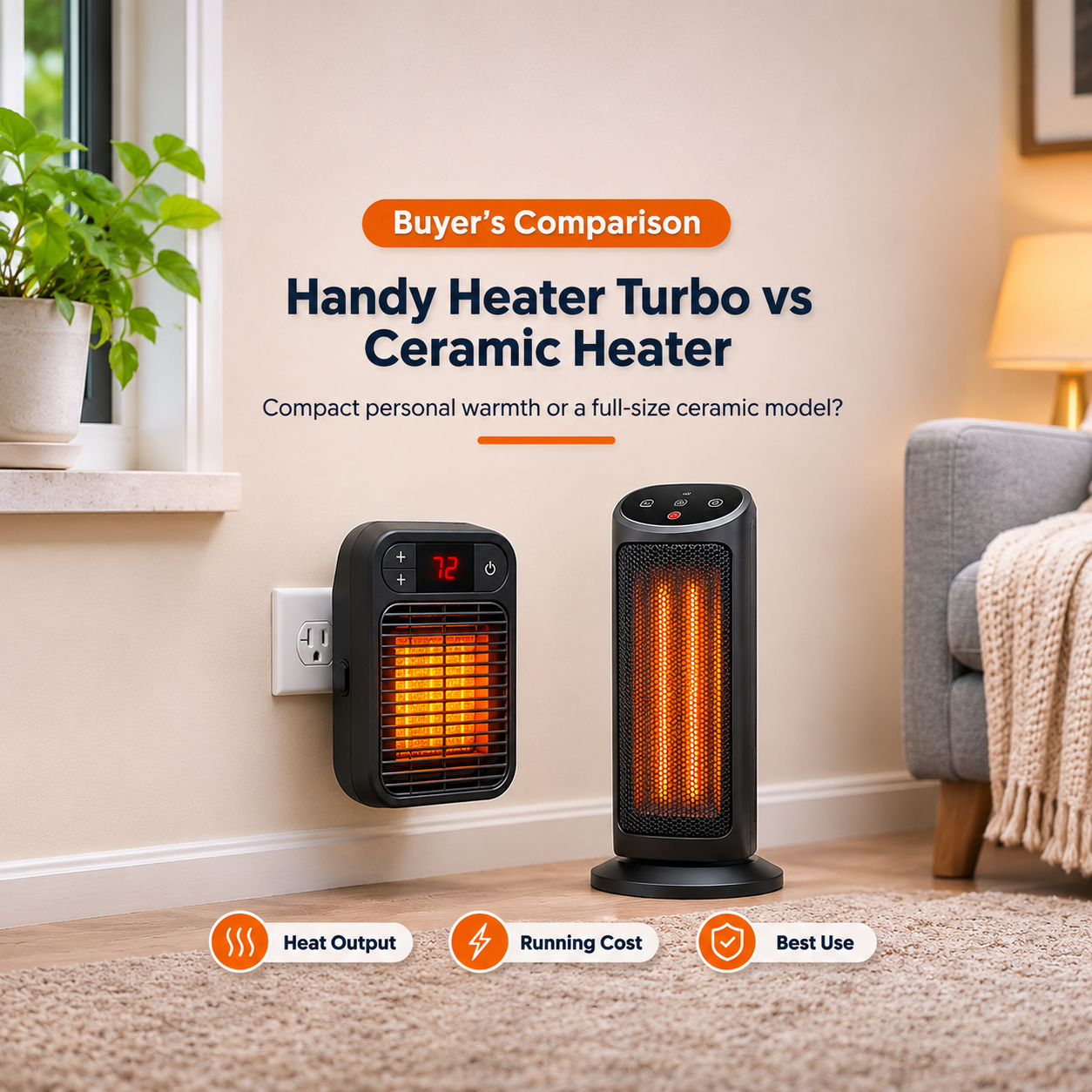
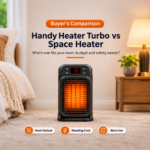
The Handy Heater Turbo is a compact, plug-in electric heater sold as a small personal heater for spaces such as bedrooms, bathrooms, home offices and desks. Heaters in this category generally warm the air with a heating element (often ceramic) and push it out with a small built-in fan, which is why they feel warm within a short time when you are sitting close to them.
The important point is the word personal. A heater this size is designed to warm you and the small area around you, not to heat an entire open-plan floor. Exact wattage, settings and features can vary between versions and sellers, so always read the rating label and the instruction leaflet on the product you actually receive.

Why Office Workers Look for a Personal Heater
Offices are usually heated and cooled to suit an average of many people, which means nobody is perfectly comfortable. Common reasons people look for a small heater include:
- Air conditioning that runs cold. Cooling set for summer clothes can feel chilly all year.
- A desk near a window, door or vent. Drafts can make one corner of a room several degrees colder than the rest.
- Sitting still for hours. Low movement means your body produces less heat.
- Early starts and late finishes. Many buildings are cooler before the heating has fully warmed the space.
- Thermostat disagreements. A personal heater lets you adjust your own spot without changing the setting for everyone.
Comfort also affects focus. Many workplace comfort studies suggest that people concentrate better and make fewer errors when they are not distracted by being too cold. A small heater is not a productivity hack, but staying comfortable certainly helps.
Handy Heater Turbo at a Glance
| Feature | What to Expect |
|---|---|
| Type | Compact plug-in electric fan heater for personal use |
| Best for | Desks, cubicles, small private offices and under-desk warmth |
| Coverage | One person or a very small area, not a large open floor |
| Heat-up feel | Quick warmth when you sit close, since it warms air directly near you |
| Footprint | Small enough for a desk corner or floor space beside your chair |
| Noise | A fan hum is normal; it may be noticeable in a very quiet office |
| Power source | Standard wall outlet; check the label for the exact wattage |
Pros and Cons for Office Use
Advantages
- Targeted warmth. You heat your own space instead of the whole room.
- Compact and easy to move. It can be stored in a drawer or bag-free corner and carried between spaces.
- Simple operation. Plug in, switch on and adjust, without installation.
- Lower cost than heating a large area. A small heater can use far less energy than a large space heater.
- Helpful for tired hands and feet. Keeping extremities warm makes typing and sitting for long periods more comfortable.
Limitations
- Not a whole-room solution. It will not noticeably warm a big open office.
- Fan noise. It may distract in quiet rooms or on calls.
- Dry air. Any electric heater can make the air feel drier, especially in sealed buildings.
- Workplace rules. Many employers restrict personal heaters for fire-safety and electrical-load reasons.
- Needs attention. Heaters should never be left running unattended.
Check Your Workplace Rules First
Before buying or bringing a heater to work, find out whether it is permitted. Many offices ban or limit personal heaters, and some require approved, tested equipment. Reasons include fire risk, the load on shared circuits, insurance conditions and the possibility of tripped breakers affecting other people.
Quick tip
Send a short message to your facilities manager or HR team asking whether a small personal heater is allowed and whether there are any approved models or outlet rules. Getting a yes in writing saves awkward conversations later.
Where to Place the Heater at Your Desk
Placement matters more than most people realise. The heater should sit on a flat, hard, stable surface (the floor is best), pointed at open space or toward your legs, with plenty of clearance around it.

- Keep at least 3 feet (about 90 cm) clear of paper, cardboard, curtains, bags, coats, plastic bins and furniture.
- Do not put it on a desk full of papers or on a soft surface such as carpet tiles stacked on a chair.
- Do not block the airflow. Vents on the back and front must stay open.
- Mind the walkway. Position it where colleagues will not trip over it or kick it.
- Avoid pointing it at a colleague or a shared partition that traps heat.
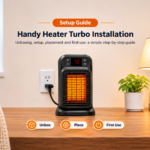
How to Use the Handy Heater Turbo in an Office: Step by Step
- Read the label and manual. Note the wattage, settings and any warnings.
- Inspect it. Check the plug, cord and body for cracks, scorch marks or loose parts.
- Choose the spot. Level floor, clear zone, direct wall outlet.
- Plug in directly. Avoid power strips and extension cords unless the manual says otherwise.
- Start on a low or medium setting if multiple settings are available, and increase only if needed.
- Give it a few minutes. Small heaters warm the nearby air quickly, but the whole space will not change much.
- Switch off and unplug when you go to a meeting, lunch or home.
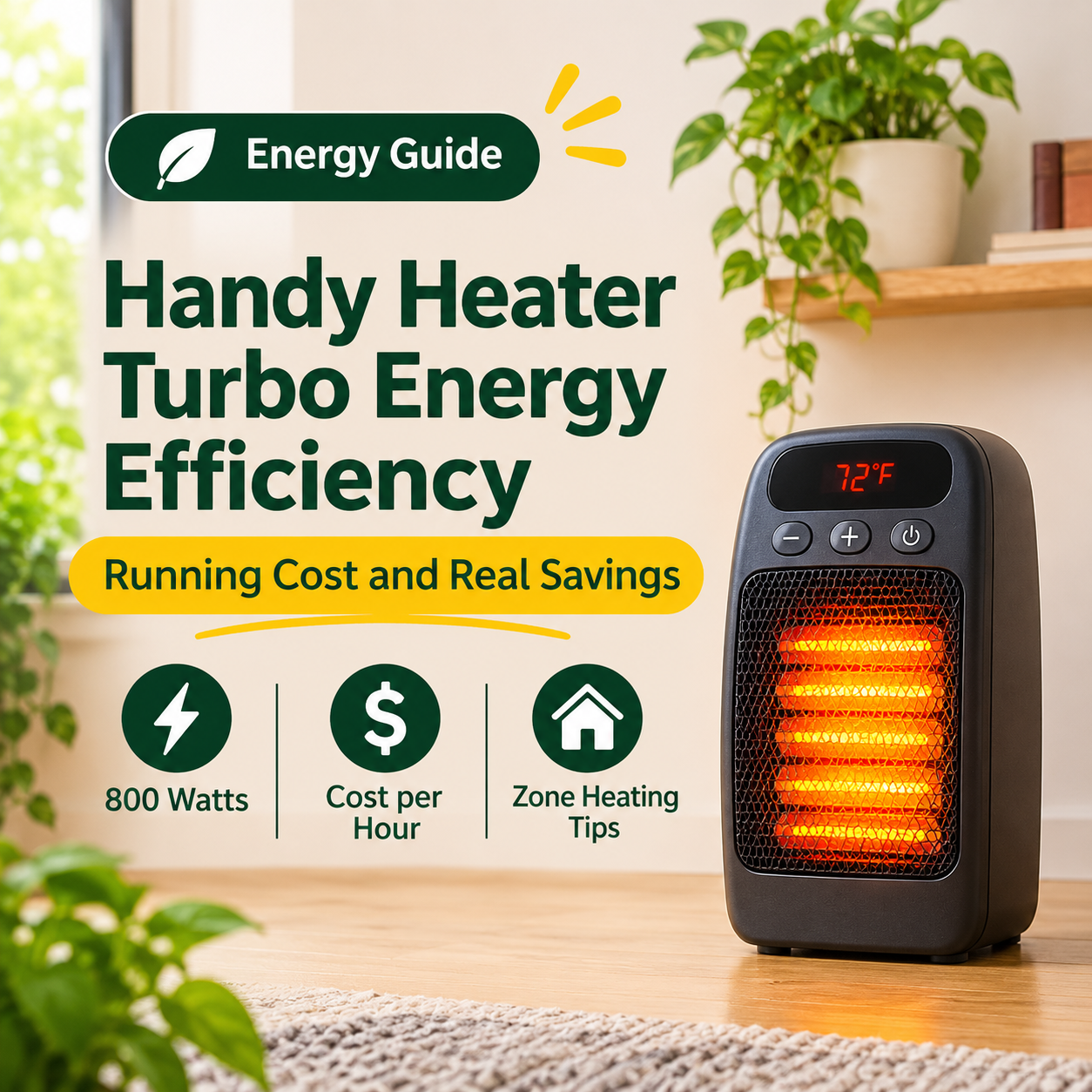
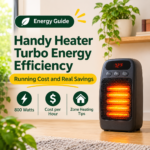
How Much Does It Cost to Run?
The running cost depends on the heater wattage and your electricity rate. The formula is simple:
Cost formula
Cost per hour = (watts ÷ 1,000) × price per kWh. Check the wattage on the rating label, and your price per kWh on the electricity bill.
As an example, at $0.15 per kWh and 8 hours of continuous use, here is what different heater sizes would cost:

| Heater Power | Energy in 8 Hours | Approx. Cost per Day | Approx. Cost for 22 Workdays |
|---|---|---|---|
| 400 W | 3.2 kWh | $0.48 | $10.56 |
| 750 W | 6.0 kWh | $0.90 | $19.80 |
| 1,500 W | 12.0 kWh | $1.80 | $39.60 |
Remember that these numbers assume the heater is on non-stop. In practice, heaters with a thermostat switch off when the air reaches your chosen temperature, and most people do not run them all day. If your employer pays the electricity bill, this is another reason to ask for permission first.
Office Heater Safety Checklist
Electric heaters are a common cause of avoidable fires and tripped circuits, and an office adds more things that can burn or overload. These habits make the biggest difference:

- Plug straight into the wall. Heaters draw a lot of current, and power strips or thin extension cords can overheat.
- Never leave it running unattended. Turn it off and unplug it whenever you leave your desk.
- Keep flammable items away. Paper, fabric, cardboard and cables are common office hazards.
- Never cover it. Do not drape a coat, scarf or blanket over a running heater, and do not use it to dry anything.
- Check the cord and plug regularly. If the plug feels hot or the cord looks damaged, stop using it.
- Do not share an outlet with other high-power devices such as kettles, microwaves or other heaters.
- Keep it away from water and damp areas.
- Make sure it is stable. Tip-over protection, where available, is helpful but should not replace sensible placement.
Warning signs to act on immediately
A burning smell, smoke, sparking, a hot or discoloured plug, a cracked housing or repeated breaker trips mean you should switch off, unplug (if safe) and stop using the heater until it has been checked or replaced.
Ways to Feel Warmer Without Turning the Heat Up
A heater works best as part of a few small changes. Try these as well:
- Layer your clothing. A thin base layer and a cardigan or fleece traps warm air efficiently.
- Keep your feet off cold floors. A small mat or insulating footrest helps.
- Block drafts. A draft stopper at the door or closing a gap near the window reduces cold air around your desk.
- Hold something warm. A hot drink keeps your hands comfortable between typing bursts.
- Move regularly. A short walk every hour improves circulation.
- Adjust nearby vents where you are allowed to, so cold air does not blow directly onto you.
Common Problems and Quick Fixes
| Problem | Likely Cause | What to Try |
|---|---|---|
| Heater turns off after a short time | Overheat protection triggered by blocked vents or dust | Unplug, let it cool, clear the vents and restart in a clear space |
| Weak warmth | Cold, drafty room or too far from you | Move it closer (within safe limits) and reduce drafts |
| Burning smell at first use | Dust or manufacturing residue on the element | Ventilate and watch briefly; if the smell persists or is strong, stop using it |
| Breaker keeps tripping | Circuit overloaded by other devices | Stop using it on that circuit and ask facilities for help |
| Loud fan or rattling | Dust buildup or loose part | Unplug, let it cool and clean the grille with a dry brush |
| Plug feels hot | Poor connection or heavy load | Stop using it immediately and have it inspected |
Cleaning and Basic Care
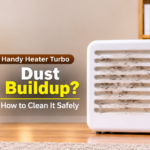
Dust is the main enemy of a small heater. Once a week (or more often in dusty offices), unplug the heater and wait until it is completely cool. Wipe the outside with a dry or slightly damp cloth, and use a soft brush or low-suction vacuum to clear the grille and vents. Never use water or sprays on the inside, and make sure it is fully dry before plugging in again. Store it in a clean, dry place when not in use.
Who Is the Handy Heater Turbo Right For?
A good fit if you:
- Have a private office, cubicle or desk where heaters are allowed
- Mainly want to warm your own feet, legs or hands
- Work in a space that is slightly cool rather than freezing
- Will follow basic safety habits every day
Probably not the right choice if you:
- Need to heat a large room or an entire open-plan floor
- Work in a building that bans personal heaters
- Share a small, crowded space full of paper and cables
- Might forget to switch it off when you leave
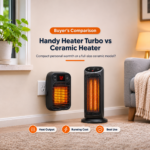
Alternatives to Consider
- Heated seat cushion or lap blanket: low power and often more acceptable to employers.
- Heated foot warmer or foot mat: targets cold feet specifically.
- Heated gloves or wrist warmers: useful for typing in cool rooms.
- Better clothing: thermal layers and warm socks cost less to run than any heater.
- Asking for a desk move: sometimes the easiest fix is a seat away from the draft.
Frequently Asked Questions
Can I use the Handy Heater Turbo in a shared office?
Only if your workplace allows personal heaters. Even then, be considerate: keep the noise low, avoid pointing it at colleagues and never leave it unattended.
Can I plug it into a power strip at work?
It is best not to. High-power heaters are generally designed to be plugged directly into a wall outlet, and the manual will tell you what is safe for your model.
Will it heat my whole office?
No. A compact personal heater is designed for a small area around you. For large rooms, building heating or a properly sized system is more suitable.
Is it safe to leave on while I am in a meeting?
No. Switch off and unplug any heater whenever you leave your desk, even for a few minutes.
Does it make the air dry?
Electric heaters can make air feel drier, particularly in sealed offices. Drinking water regularly and keeping the room ventilated can help.
How can I reduce the electricity it uses?
Use the lowest comfortable setting, run it only when needed, reduce drafts and dress in layers.
Final Verdict
The Handy Heater Turbo can be a practical way to stay comfortable at a chilly desk, especially if your goal is simply to warm your own feet, legs or hands. Its small size, simple use and targeted warmth make sense for personal spaces, but it is not a replacement for proper building heating, and it must be used with care.
Before you buy, confirm that your workplace allows it. After you buy, read the manual, plug it straight into the wall, keep a clear zone around it, and never leave it running when you walk away. Follow those simple habits and a small heater can make long office days a lot more comfortable.
Note: Product features and specifications can vary by version and seller. Always follow the manufacturer instructions and your workplace safety policies. This article is for general information only.