
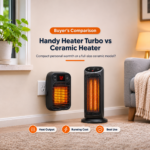
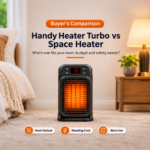
Handy Heater Turbo vs Space Heater: Which One Is Right for You?

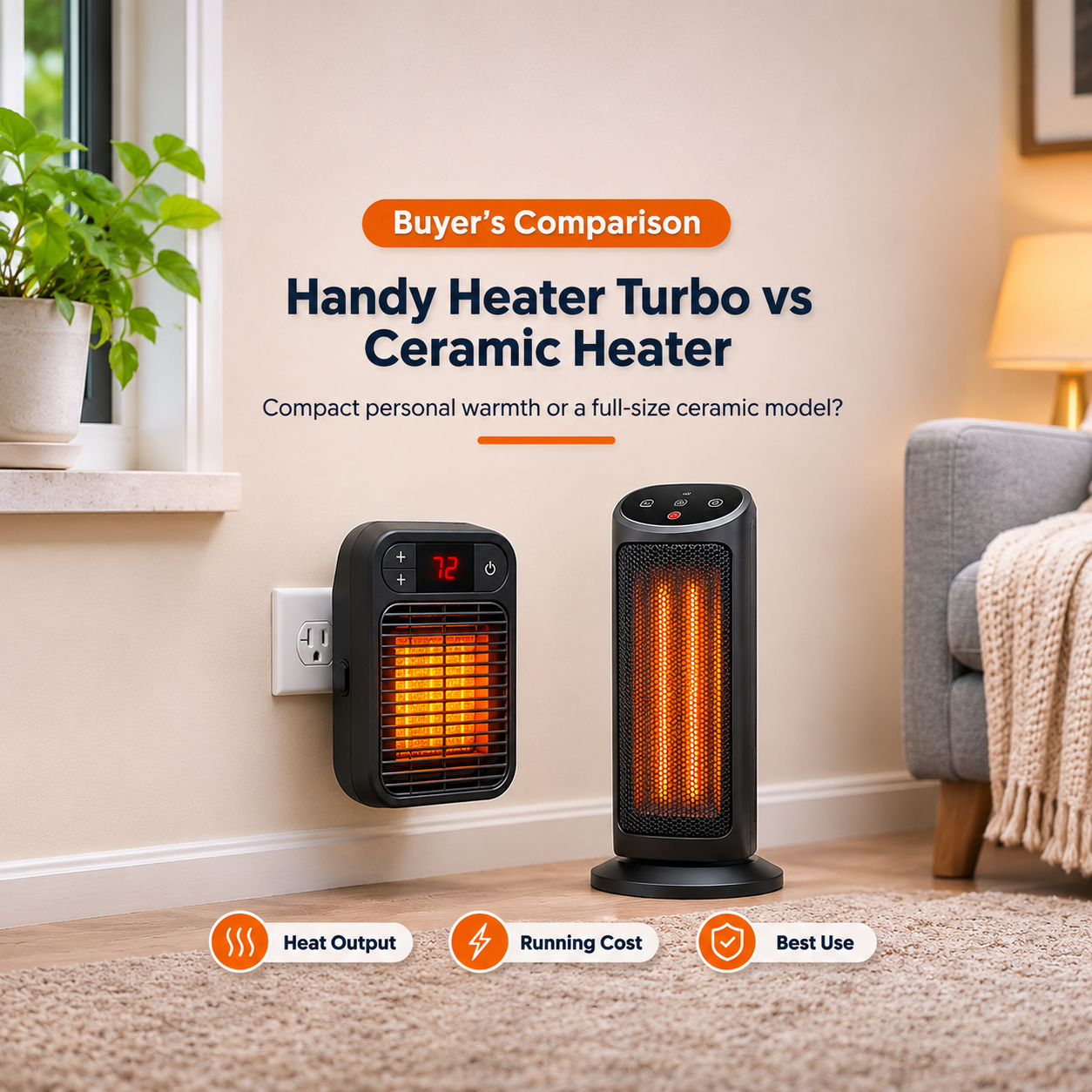
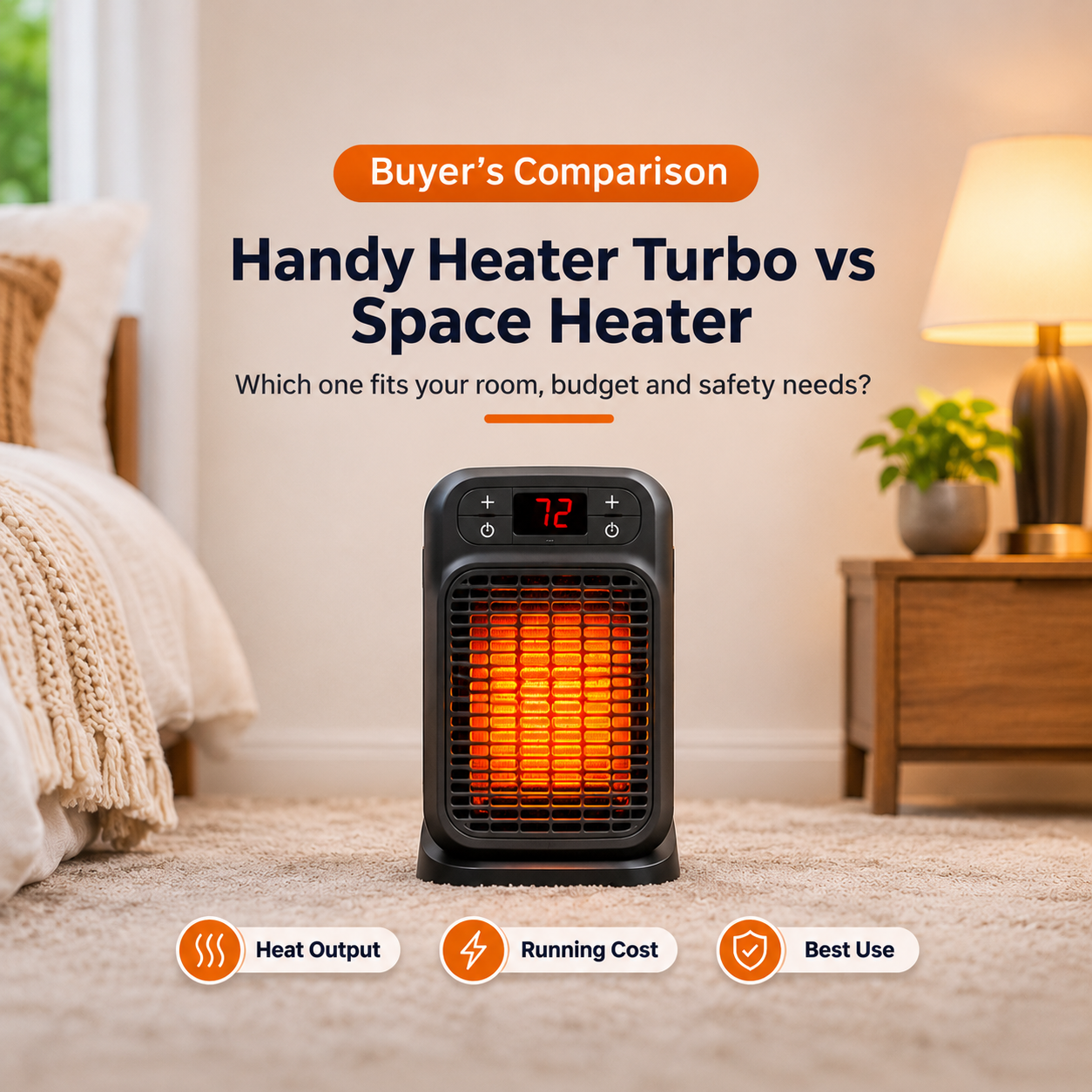
When the weather turns cold, two kinds of electric heaters tend to land in shopping carts: small, plug-in personal heaters such as the Handy Heater Turbo, and the larger, more traditional space heaters that are built to warm a whole room. They look similar on the surface, since both plug into the wall and both make heat, but they are designed for very different jobs.
This guide compares them side by side: heat output, coverage, running cost, safety, noise, portability and ideal use. By the end you will know which one suits your room, your budget and your daily routine.
Quick Answer
The short version
The Handy Heater Turbo is a good fit if you want personal, close-range warmth at a desk, bedside or small nook. A space heater is a better fit if you want to warm an entire small-to-medium room and are willing to use more power. Neither replaces central heating in a large or very cold space.

What Is the Handy Heater Turbo?
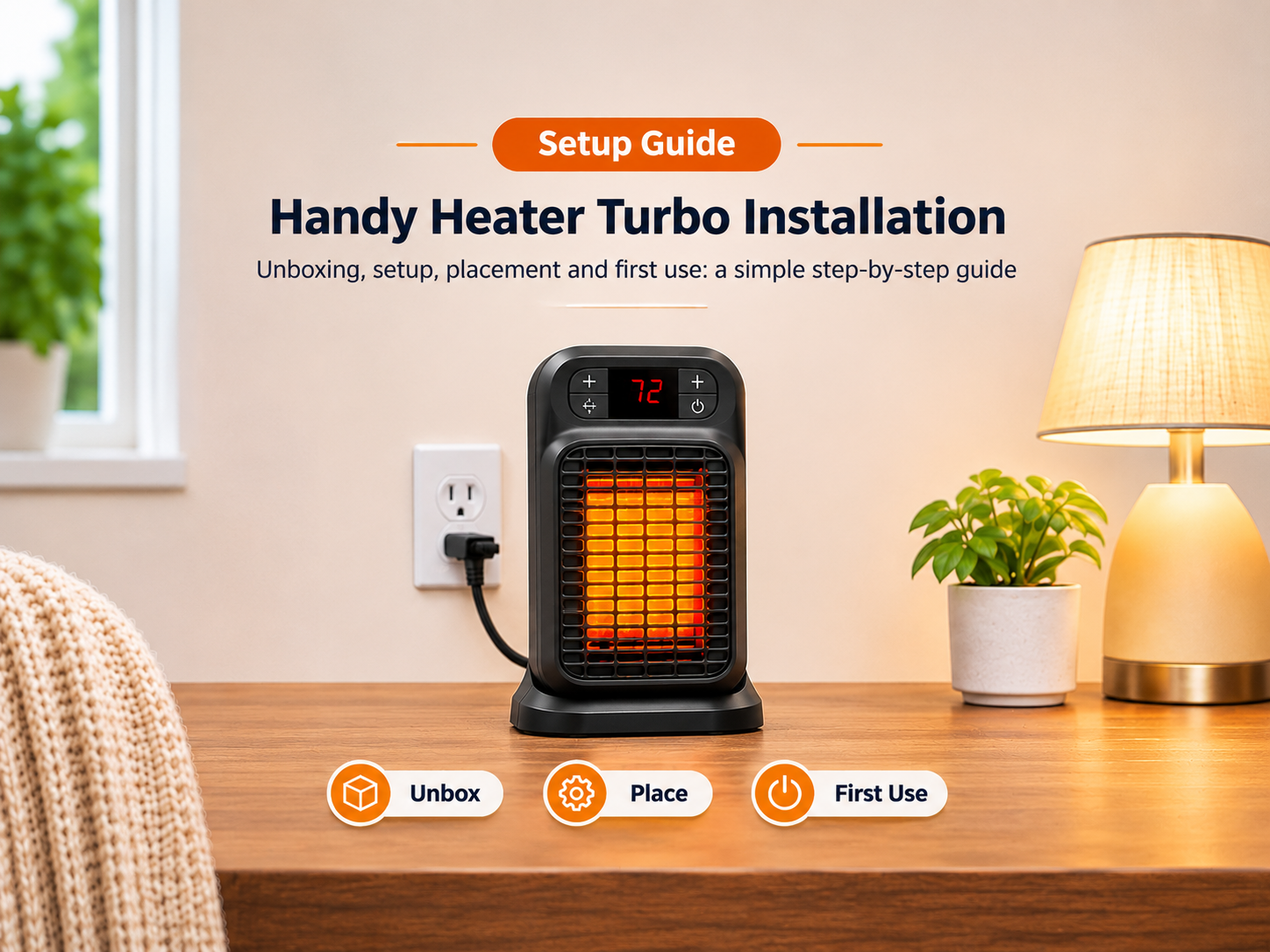
The Handy Heater Turbo is a compact plug-in electric heater marketed for personal use in small spaces. Heaters of this type usually have a heating element, often ceramic, and a small fan that pushes warm air forward. They are designed to warm you and the space immediately around you rather than an entire room.
Because specifications can vary between versions and sellers, always read the wattage and settings printed on the product label and in the instruction leaflet before use.
What Is a Space Heater?
“Space heater” is a broad term for any portable electric heater that warms a room instead of a whole building. Common types include:
- Ceramic fan heaters: quick heat and a fan, available in many sizes.
- Oil-filled radiators: slower to warm up but they hold heat and give quiet, steady warmth.
- Infrared or radiant heaters: warm people and objects directly rather than the air.
- Convection heaters: warm the air gradually and circulate it around a room.
Many full-size electric space heaters draw up to about 1,500 watts, which is the typical limit for a standard household outlet in many regions. That higher output is what lets them warm a larger area.
Handy Heater Turbo vs Space Heater: Side-by-Side Comparison
| Factor | Handy Heater Turbo | Typical Space Heater |
|---|---|---|
| Main purpose | Personal warmth at close range | Warming a room |
| Coverage | Small zone around you | Small to medium room, depending on size and power |
| Power draw | Lower (check the label for exact wattage) | Often higher, commonly up to 1,500 W |
| Running cost | Usually lower per hour | Usually higher per hour |
| Size and weight | Compact and light | Larger and heavier |
| Portability | Easy to carry and store | Portable, but bulkier |
| Heat-up feel | Quick when you sit close | Varies by type: fast (fan) or gradual (oil-filled) |
| Noise | Fan hum | Varies: fan types hum, oil-filled models are quiet |
| Safety extras | Varies by model | Many offer tip-over and overheat protection (check each model) |
| Best for | Desks, bedside, bathrooms, small corners | Bedrooms, living rooms, home offices |
Heating Power and Coverage
This is the most important difference. Heating power is measured in watts, and more watts generally means more heat. A compact personal heater simply does not have the output to change the temperature of a large room, but it can make the area around you feel noticeably warmer when you sit close.
A space heater has the capacity to raise the temperature of a whole small-to-medium room over time. How well it works still depends on room size, insulation, drafts and ceiling height, so a heater that suits a small bedroom may struggle in a large living area.

Electricity Consumption and Running Cost
Running cost follows a simple formula: (watts ÷ 1,000) × hours used × price per kWh. Because a compact personal heater typically uses less power than a full-size space heater, it usually costs less per hour to run.
That said, cost per hour is not the whole story. A small heater that you run all day in a cold room can cost more than a bigger heater with a thermostat that switches on and off. The example below assumes 4 hours of use per day for 30 days at $0.15 per kWh and continuous operation.

| Heater Power | Energy per Month (4 h/day) | Approx. Monthly Cost |
|---|---|---|
| 400 W | 48 kWh | $7.20 |
| 750 W | 90 kWh | $13.50 |
| 1,500 W | 180 kWh | $27.00 |
Money-saving idea
Match the heater to the job. If you only need to warm your own seat, a small heater avoids paying to heat empty parts of the room. If the whole room is cold, one properly sized space heater is usually more effective than several tiny ones.
Safety Comparison
Any electric heater can be dangerous if misused. Space heaters, in particular, are a well-known cause of home fires, mostly because of poor placement, damaged cords or use with extension cords. Smaller heaters are not automatically safer, since the risks of covering, tipping or leaving them unattended still apply.

- Plug directly into a wall outlet. Avoid power strips and extension cords unless the manual explicitly allows them.
- Keep 3 feet (about 90 cm) of clear space around the heater.
- Never leave it running unattended and never use it while you sleep unless the manual clearly says it is designed for that, and even then, use extra caution.
- Look for safety features such as tip-over shutoff, overheat protection and a thermostat, and verify that your specific model has them.
- Check the cord and plug regularly. Stop using the heater if either gets hot, discolored or damaged.
- Keep it away from water, including bathrooms, unless the product is specifically rated for such use.
Noise Level
Both fan-based heaters produce some hum. Compact fan heaters are often noticeable in a very quiet room because you sit close to them. Among space heaters, fan types are similar, while oil-filled radiators are generally quiet because they have no fan. If you are a light sleeper or take frequent calls, noise is worth thinking about.
Portability and Storage
The Handy Heater Turbo is easy to move from desk to bedside to bathroom, and it takes almost no storage space in summer. Space heaters are portable too, but they are heavier and bulkier, and oil-filled radiators can be awkward to carry. If you move between spaces during the day, compact size is a real advantage.
Pros and Cons Summary
Handy Heater Turbo
- Pros: compact, easy to use, lower power draw, targeted warmth, easy storage.
- Cons: limited coverage, will not heat a large room, fan noise, safety features depend on the model.
Space Heater
- Pros: warms a whole room, more output, many types to choose from, often thermostat and safety features.
- Cons: higher running cost, bulkier, takes more floor space, needs careful placement and a good outlet.
Which One Should You Choose?

Best use cases for the Handy Heater Turbo
- Warming your feet and legs under a desk, if your workplace allows it
- Adding a little warmth to a bedside area or reading corner
- Taking the chill off a small space for a short time
- Travel or temporary use in a small room
Best use cases for a space heater
- Heating a bedroom, home office or small living room
- Spending long periods in one room
- Coping with a room that is colder than the rest of the home
- Supplementing weak central heating
Buying Tips Before You Decide
- Measure your room. Larger rooms need more power.
- Decide who and what you are heating: you, or the whole room.
- Check the wattage label and compare it with your circuit.
- Look for a thermostat and safety shutoffs and verify them in the product details.
- Consider noise if you sleep or work near it.
- Read the manual and follow all manufacturer instructions.
Frequently Asked Questions
Is the Handy Heater Turbo better than a space heater?
Neither is better in every situation. It is a better fit for personal, close-range warmth, while a space heater is a better fit for warming an entire room.
Can the Handy Heater Turbo heat a whole room?
It is designed for personal use, so it is unlikely to heat a whole room, especially a large or drafty one.
Which one uses less electricity?
A lower-wattage compact heater usually uses less electricity per hour. Total cost depends on how long it runs and the size of the space.
Which one is safer?
Safety depends on the model and how it is used. Look for tip-over and overheat protection, plug directly into the wall and never leave a heater unattended.
Can I use either one all night?
Do not leave any heater running while you sleep unless the manufacturer says it is designed for that, and even then follow all safety instructions.
Can I use one with an extension cord?
It is best to avoid it. Heaters draw a lot of current, and the product manual will say what is allowed for your model.
Final Verdict
The Handy Heater Turbo and a traditional space heater solve different problems. If you just want to warm yourself at a desk, bedside or small corner, a compact personal heater is convenient, easy to store and usually cheaper to run. If you want to warm a whole room, a properly sized space heater gives you the output you need, at a higher running cost and with more attention to placement.
Start by deciding what you actually need to heat, then pick the smallest heater that does the job safely. Whichever one you choose, plug it into the wall, keep clear space around it and never leave it running unattended.
Note: Product features and specifications can vary by version and seller. Always follow the manufacturer instructions. This article is for general information only.