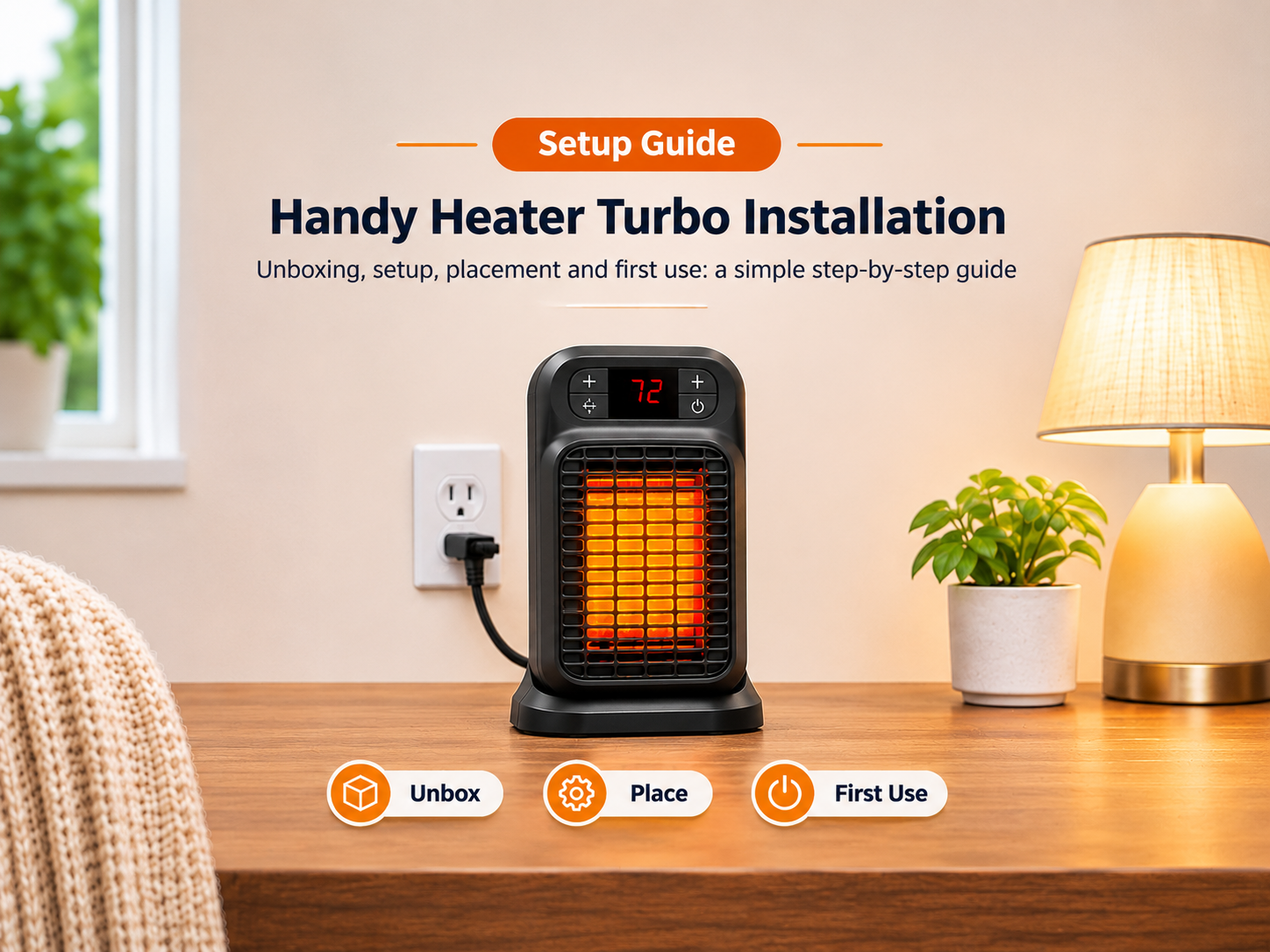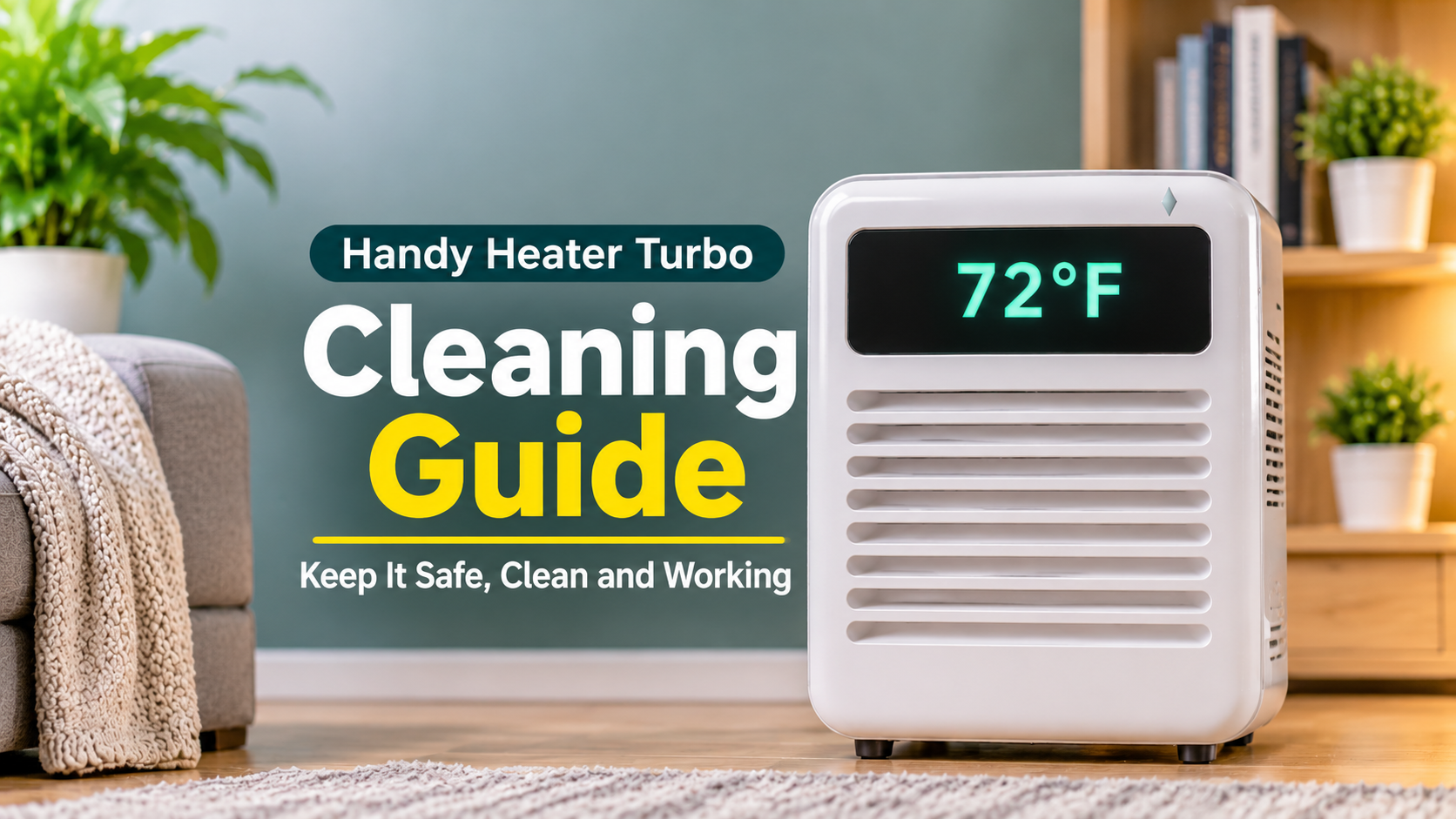







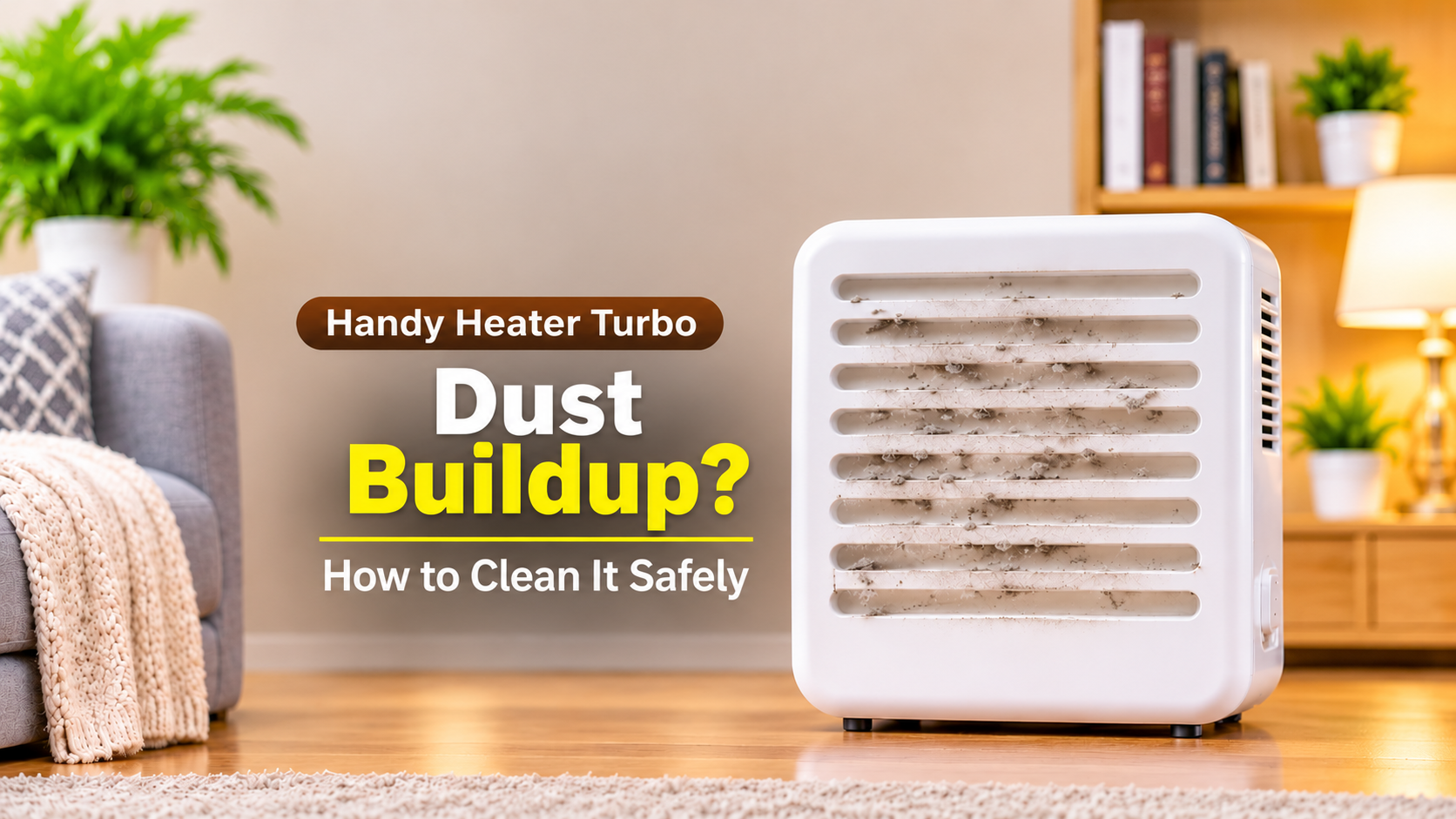
Handy Heater Turbo Dust Buildup: Causes, Risks and How to Clean It Safely
Dust is one of the most overlooked problems with any heater. A plug-in heater like the Handy Heater Turbo pulls room air through its vents and warms it, so over time dust, lint, and pet hair collect on and inside the vents. Left alone, this can reduce performance, cause odd smells, and even trigger safety shut-offs. This guide explains why dust builds up, what problems it causes, and the safe way to clean your heater.
Why Does Dust Build Up on the Handy Heater Turbo?
The Handy Heater Turbo (Turbo 800) is an 800-watt ceramic wall-outlet heater. It sits low on the wall, which is exactly where dust, carpet fibres, and pet hair tend to settle. Warm air rising from the unit also draws nearby particles toward the vents. Common causes include:
- Low outlet placement, close to floors and carpets
- Pets that shed hair
- Carpets, rugs, and curtains that release lint
- Long periods in storage between seasons
- Dry winter air that carries more static and dust
- Construction, cooking, or smoking in the home
Why Dust Buildup Is a Problem

Reduced Heating Performance
Dust restricts airflow, so less warm air leaves the heater. The room may heat slowly even though the heater is working.
Overheating and Auto Shut-Off
When heat cannot escape properly, the unit gets hotter than it should. The built-in safety features may then shut the heater off. If your heater keeps stopping after a few minutes, dust could be the cause.
Burning Smell
The first time you turn on a heater after storage, a light dusty or burning-dust smell is common as particles burn off. It should fade quickly. A strong or lasting smell is a warning sign.
Fire Risk
Dust and lint are flammable. Heavy buildup near a heating element increases the risk of overheating, so regular cleaning is an important safety step.
Shorter Lifespan
Running hotter and working harder can wear out components faster, which may shorten the life of a budget heater.
Signs Your Heater Needs Cleaning
- Visible dust, lint, or hair on the vents
- Weaker heat than before
- The heater shuts off sooner than usual
- A dusty or burning smell when running
- The casing feels hotter than normal
What You Need
- A soft, dry brush or an old, clean paintbrush
- A vacuum with a brush attachment
- A dry microfibre cloth
- Optional: a barely damp cloth for the outer case
- Optional: a can of compressed air
How to Clean the Handy Heater Turbo Safely

- Unplug the heater from the wall. Never clean a heater while it is plugged in.
- Let it cool completely. Wait at least 15 to 30 minutes.
- Brush the vents gently to loosen dust and lint.
- Vacuum the surface using the brush attachment on low suction. Move slowly across the vents.
- Use short bursts of compressed air if dust is stuck, holding the can upright and at a distance.
- Wipe the outer case with a dry cloth, or one that is barely damp. Do not let moisture enter the vents or the plug area.
- Let it dry fully before plugging it back in.
- Clean the outlet area around the heater and check that the plug is clean.
What Not to Do
- Do not use water, spray cleaners, or soaking.
- Do not submerge the heater or hold it under a tap.
- Do not open the casing or take the heater apart.
- Do not poke sharp objects into the vents.
- Do not use the heater while it is still damp.
- Do not use a hair dryer or heat source to dry it.
How Often Should You Clean It?
This depends on your home. Use the chart below as a general guide and clean more often if you notice dust building up quickly.

How to Prevent Dust Buildup
- Vacuum floors and carpets near the heater regularly.
- Keep curtains and furniture away from the front of the unit.
- Groom pets often to reduce loose hair.
- Do a quick vent wipe before each heating season.
- Store the heater in its original box or a clean bag in a dry place.
- Keep the area around the outlet clean.
Storing the Heater After Winter
Before putting it away, unplug it, let it cool, and clean it. Store it somewhere dry, away from dust, moisture, and extreme temperatures. When winter returns, give it another quick clean before the first use.
First Use After Storage: Is the Smell Normal?
A faint dusty smell during the first few minutes is common. If the smell is strong, chemical, or does not go away, unplug the heater, ventilate the room, and re-clean it. If the smell continues, stop using it and contact the seller.
When to Stop Using the Heater
- You smell burning that does not fade.
- You see smoke or sparks.
- The plug or outlet is very hot or discoloured.
- The vents are damaged or the casing is cracked.
Frequently Asked Questions
Can I use water to clean the Handy Heater Turbo?
No. Use dry tools. At most, wipe the outer case with a barely damp cloth, and keep moisture out of the vents.
Is it normal to smell dust when I turn it on?
A light smell for a few minutes can be normal, especially after storage. A strong, lasting smell is not.
Can dust make the heater stop working?
It can cause overheating and trigger the auto shut-off, which makes the heater turn off early.
Can I open the heater to clean inside?
No. Opening it is unsafe and may void the warranty. Clean only the outer vents.
How often should I clean it?
Every two to four weeks during heavy use is a good general guide, and more often in dusty homes or with pets.