
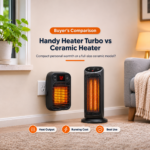
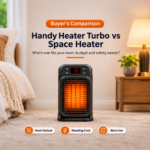

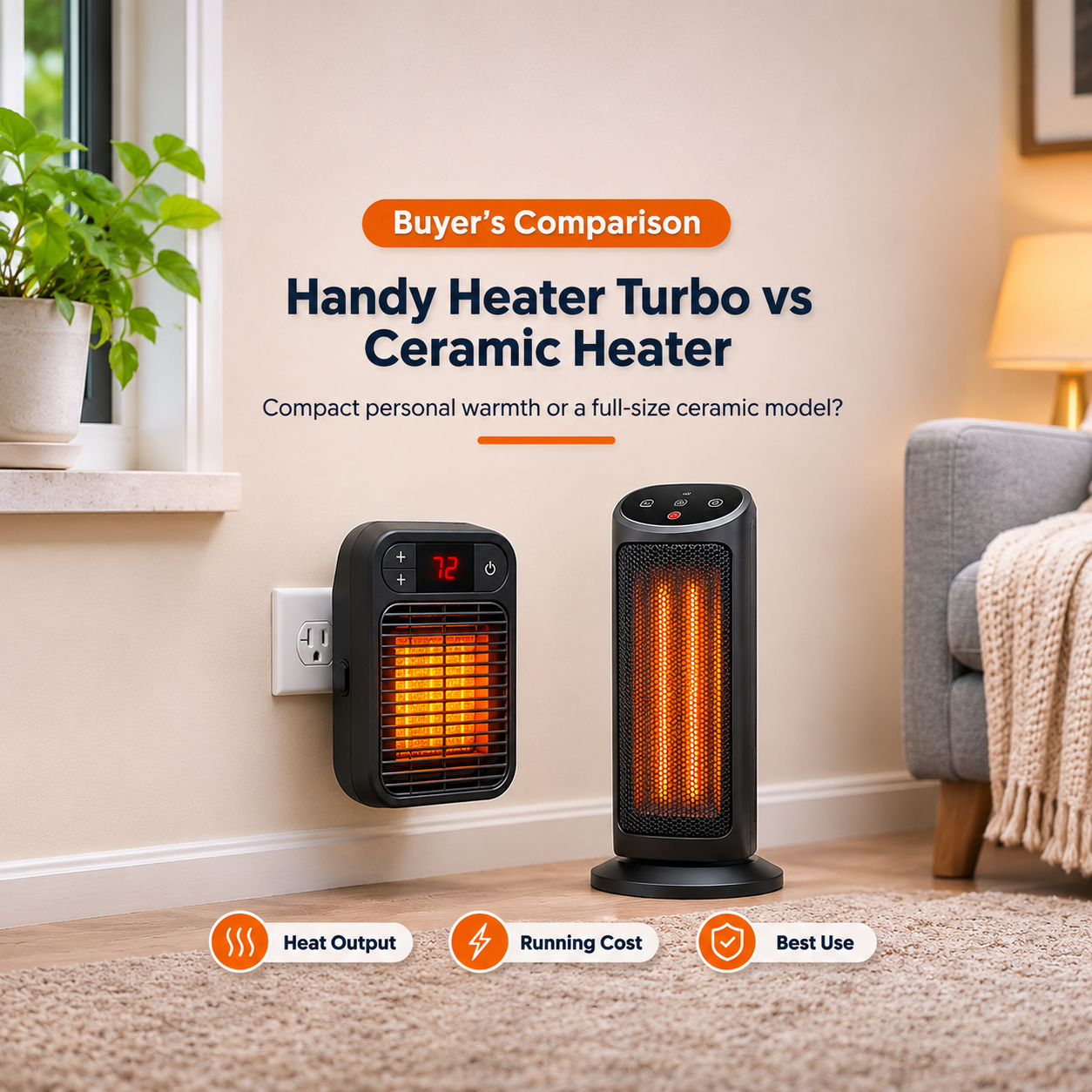
Handy Heater Turbo vs Ceramic Heater: Which One Should You Buy?

Ceramic heaters are among the most popular electric heaters because they warm up fast, they are fairly compact and they come in many shapes and sizes. The Handy Heater Turbo is a small plug-in heater aimed at personal warmth. So when people search for “Handy Heater Turbo vs ceramic heater,” what they usually want to know is whether a tiny personal heater is enough, or whether a regular, full-size ceramic heater is a smarter buy.
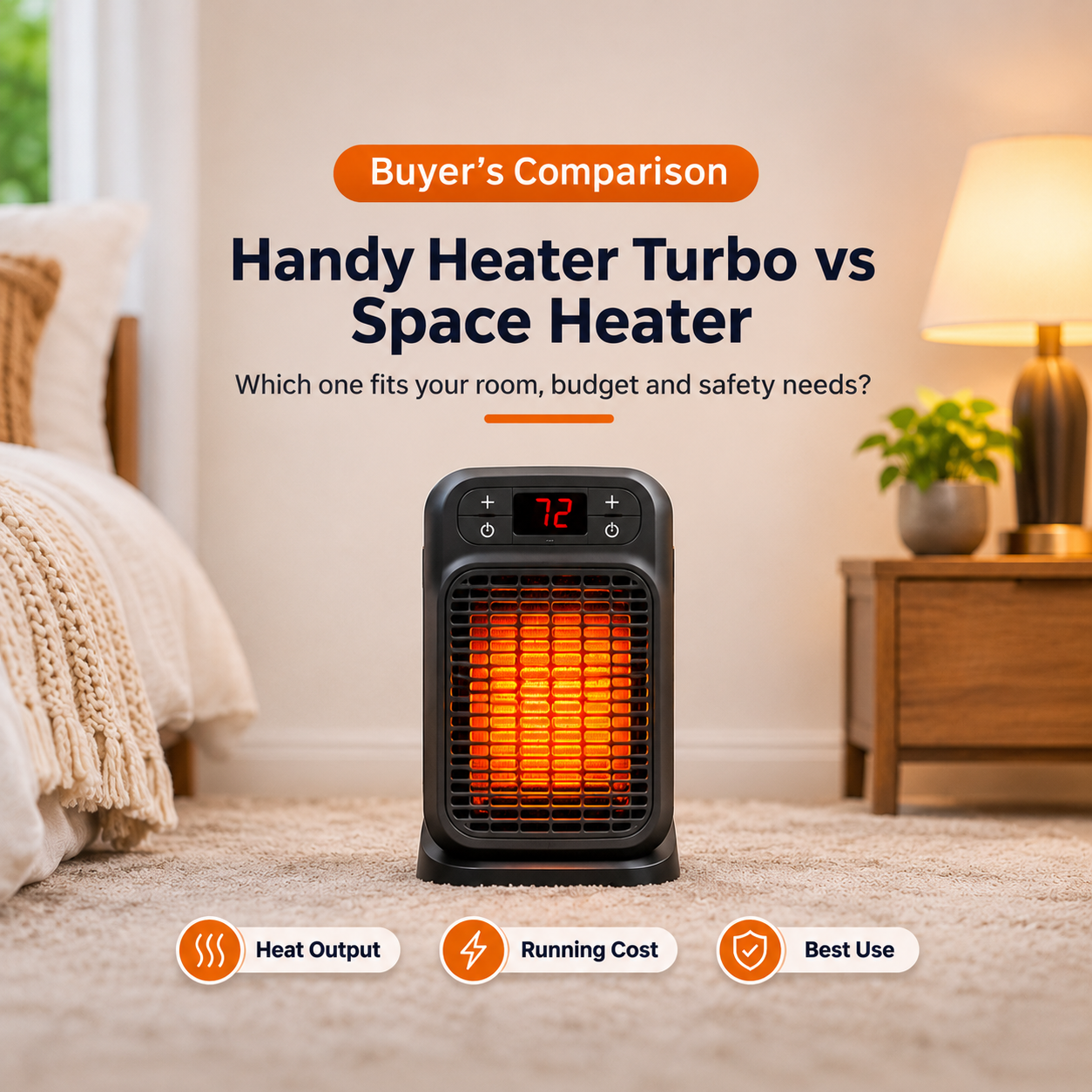
This guide compares the two on heat output, coverage, running cost, safety, noise, portability and ideal use, so you can pick the one that matches your room and your budget.
First, a Quick Clarification
“Ceramic heater” describes the type of heating element a heater uses, not its size. Compact personal heaters, tower heaters and larger box-style fan heaters can all use ceramic elements. Because product designs and specifications vary between versions and sellers, the Handy Heater Turbo may share technology with ceramic heaters. In this article, “ceramic heater” means a standard, full-size ceramic heater designed to warm a room, while the Handy Heater Turbo means the compact personal model. Always check the product label and manual for the exact specifications of whatever you buy.
The short version
Choose the Handy Heater Turbo for personal, close-range warmth at a desk, bedside or small nook. Choose a full-size ceramic heater if you want to warm a whole small-to-medium room and do not mind a higher power draw.

How Ceramic Heaters Work
Ceramic heaters pass electricity through a ceramic heating element, which gets hot. A fan then blows air across the hot surface and pushes warm air into the room. Many models use a self-regulating element designed to limit how hot it gets, which is one reason ceramic heaters have a good reputation for safety compared with older exposed-coil designs. Features differ by model, so always confirm the details of the specific heater you are considering.

What Is the Handy Heater Turbo?
The Handy Heater Turbo is a compact, plug-in electric heater marketed for personal use in small spaces. It is designed to warm you and the area immediately around you instead of a whole room. Its small size makes it easy to carry between a desk, a bedside table and a small bathroom, where permitted, and to store when you do not need it.
What Is a Full-Size Ceramic Heater?
A standard ceramic heater is built to raise the temperature of a room, not only the space around you. These models are available as tower units, box-style fan heaters and small desktop designs, and many include extras such as a thermostat, adjustable heat settings, an oscillation function, a timer or a remote. Many draw up to about 1,500 watts, the typical limit for a household outlet in many regions.
Handy Heater Turbo vs Ceramic Heater: Side-by-Side
| Factor | Handy Heater Turbo | Standard Ceramic Heater |
|---|---|---|
| Main purpose | Personal warmth at close range | Warming a room |
| Coverage | Small zone around you | Small to medium room, depending on insulation and size |
| Power draw | Lower (check the label) | Often higher, commonly up to 1,500 W |
| Running cost | Usually lower per hour | Usually higher per hour |
| Size and weight | Compact and light | Larger, tower or box form |
| Portability | Easy to carry and store | Portable, but bulkier |
| Features | Basic; varies by model | Often thermostat, settings, timer, remote or oscillation |
| Noise | Fan hum, noticeable at close range | Fan hum; varies by model and setting |
| Best for | Desks, bedside, small corners | Bedrooms, home offices, small living rooms |
Heat Output and Coverage
Heat output is measured in watts. More watts generally means more heat, which is why a full-size ceramic heater can warm a room while a compact personal heater mostly warms the space right in front of it. If you sit near the Handy Heater Turbo, you will feel the warmth quickly. If you sit across the room, you probably will not feel much.
Room conditions also matter a great deal. Drafts, poor insulation, big windows and high ceilings all make any heater work harder. A heater that is perfect for a snug bedroom may struggle in a large open living room.
Electricity Use and Running Cost
Use this formula to estimate cost: (watts ÷ 1,000) × hours used × price per kWh. A lower-wattage compact heater usually costs less per hour than a full-size ceramic heater. The example below assumes 4 hours of use per day for 30 days at $0.15 per kWh with continuous operation.

| Heater Power | Energy per Month (4 h/day) | Approx. Monthly Cost |
|---|---|---|
| 400 W | 48 kWh | $7.20 |
| 750 W | 90 kWh | $13.50 |
| 1,500 W | 180 kWh | $27.00 |
Cost tip
Cost per hour is not the whole story. A small heater that runs constantly in a cold room can cost more than a larger heater with a thermostat that cycles off once the room is warm. Match the heater to the job.
Safety Comparison
Ceramic heaters are generally considered a safer type of electric heater, since the element surface is designed to limit its temperature and many models add tip-over and overheat protection. But no electric heater is risk-free. Most heater fires come from poor placement, damaged cords, extension cords or leaving heaters unattended. A small heater needs the same care as a large one.

- Plug directly into a wall outlet. Avoid power strips and extension cords unless the manual says otherwise.
- Keep 3 feet (about 90 cm) clear of curtains, bedding, paper and furniture.
- Never leave a heater running unattended, and do not run one while sleeping unless the manufacturer clearly says it is designed for that.
- Check for safety features such as tip-over shutoff and overheat protection, and confirm your exact model has them.
- Inspect the cord and plug often, and stop using the heater if either gets hot or damaged.
- Keep it away from water, unless it is specifically rated for wet areas.
Noise, Portability and Convenience
Both rely on a fan, so some hum is normal. Because you sit close to a compact personal heater, you notice its noise more. A full-size ceramic heater may offer quieter settings or a timer, but it is heavier and takes more floor space. If you move around during the day, a compact heater is easier to carry. If you stay in one room for hours, a larger unit with a thermostat and timer is more convenient.
Pros and Cons
Handy Heater Turbo
- Pros: compact, light, easy to store, lower power draw, targeted warmth.
- Cons: limited coverage, fewer features, fan noise at close range, safety features vary by model.
Full-Size Ceramic Heater
- Pros: warms a whole room, more output, more features, many shapes and sizes.
- Cons: higher running cost, bulkier, needs careful placement and a good outlet.
Which One Should You Choose?

The Handy Heater Turbo is a good fit if you:
- Mainly want to warm yourself at a desk, bedside or reading corner
- Want something small that is easy to move and store
- Prefer a lower power draw and a simpler device
A full-size ceramic heater is a good fit if you:
- Need to warm a bedroom, home office or small living room
- Spend long periods in the same room
- Want a thermostat, timer, remote or oscillation
Buying Tips Before You Decide
- Measure the room or define the small area you really need to heat.
- Check the wattage label and make sure your outlet and circuit can handle it.
- Look for safety features like tip-over shutoff and overheat protection, and verify them in the product details.
- Consider noise if you work, sleep or take calls near the heater.
- Read the manual and follow every instruction.
Frequently Asked Questions
Is the Handy Heater Turbo a ceramic heater?
Compact personal heaters like this commonly use ceramic heating technology, but specifications can vary by version and seller. Check the product label and manual for the exact details.
Which heats faster, the Handy Heater Turbo or a ceramic heater?
Both warm up quickly. A compact heater feels warm fast when you sit close, while a full-size ceramic heater takes longer to change a whole room’s temperature.
Which uses less electricity?
A lower-wattage compact heater usually uses less per hour. Overall cost depends on how long it runs and the space you heat.
Can the Handy Heater Turbo heat a whole room?
It is built for personal use, so it is unlikely to heat a whole room, especially a large or drafty one.
Are ceramic heaters safer than other heaters?
They are often considered a safer type, but safety depends on the model and on how you use it. Follow placement and supervision rules for any heater.
Can I use either one with an extension cord?
It is best to avoid it. Heaters draw high current, and the manual will tell you what is allowed for your model.
Final Verdict
The Handy Heater Turbo and a standard ceramic heater are best for different jobs. If you want simple, portable warmth at your seat, the compact option is easy to live with and usually cheaper to run. If you want to warm a room, a properly sized ceramic heater gives you the output and features you need, at a higher running cost.
Decide what you actually need to heat, choose the smallest heater that does the job safely, and always follow the safety basics: plug into the wall, keep clear space around it and never leave it running unattended.
Note: Product features and specifications can vary by version and seller. Always follow the manufacturer instructions. This article is for general information only.