





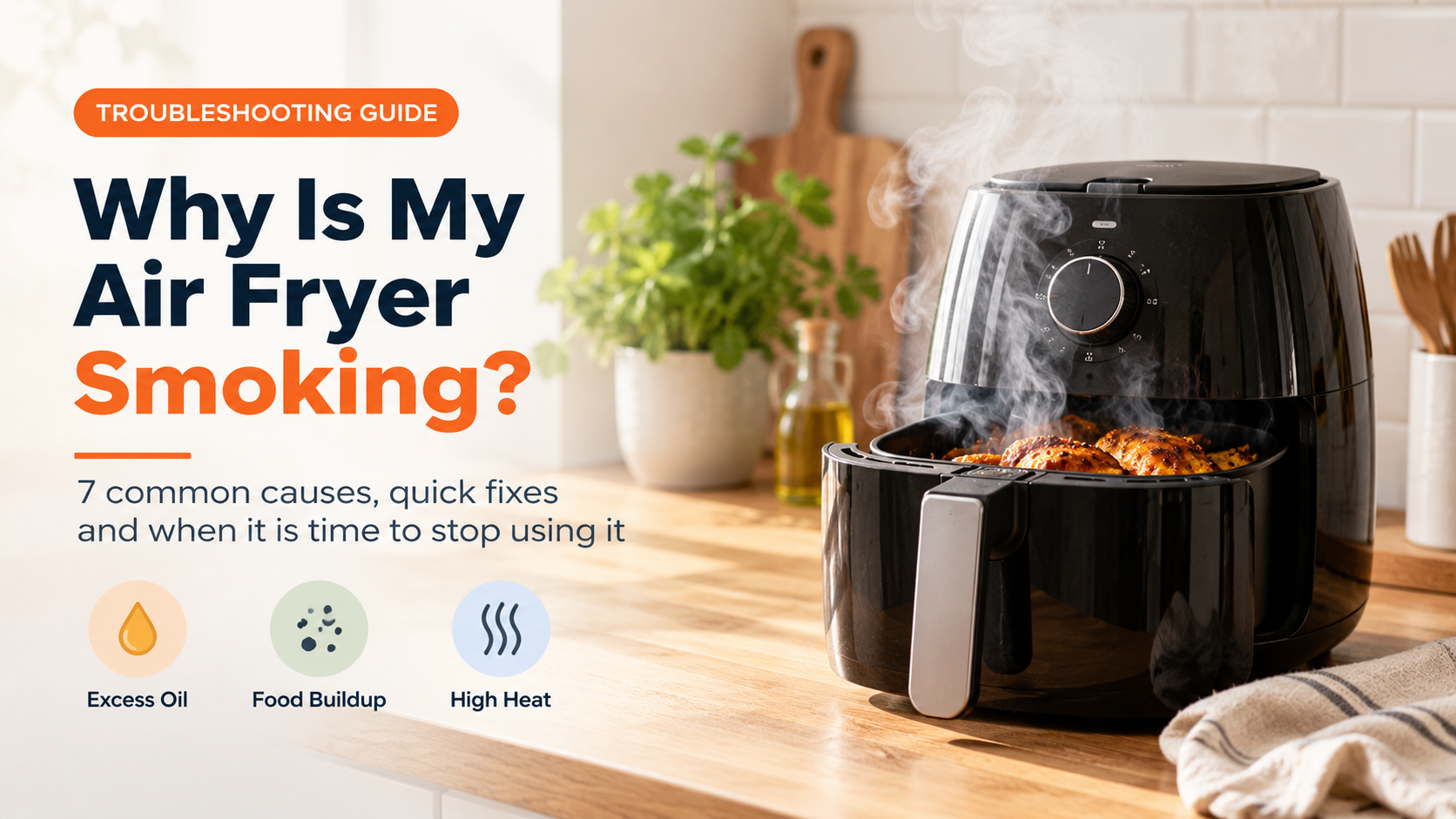
You put your favorite food in, set the timer, and a few minutes later a cloud of smoke rolls out of your air fryer. The smell fills the kitchen, the smoke alarm gets nervous and you start wondering whether something is broken or dangerous.
Take a breath. In most cases, an air fryer smoking is caused by something simple and fixable, usually grease, leftover food residue or the wrong kind of oil. In a few rare cases it points to a real fault. This guide explains every common cause, how to tell harmless smoke from dangerous smoke, exactly how to fix it and how to stop it from happening again.
Quick answer
Most of the time an air fryer smokes because of fat dripping into the hot drawer, old grease burning on the heating element, or cooking oil with a low smoke point. Drain the grease, clean the unit deeply and use the right oil. If you see black smoke, sparks or smell burning plastic or electrics, unplug it and stop using it.
How an air fryer works (and why it can smoke)
An air fryer is a small convection oven. A heating element sits above the food and a fan pushes very hot air around the basket, usually up to about 400°F (200°C). That intense, fast-moving heat gives you crispy results with little oil, but it also means any grease, crumbs or oil that land on hot surfaces can burn quickly and produce smoke.
Unlike a conventional oven, the cooking chamber is tiny. A small amount of smoke has nowhere to go, so it appears quickly and looks dramatic even when the cause is minor.
7 common reasons your air fryer is smoking
1. Fatty foods are dripping grease into the drawer
This is the most common cause. Bacon, sausages, burgers, chicken wings and marinated meats release a lot of fat. That fat collects at the bottom of the drawer, heats past its smoke point and turns into white smoke.
How to fix it:
- Pause the cooking and carefully pour off the grease when it builds up (use oven mitts).
- Place the food on the rack or basket so fat can drip away from it.
- Many manufacturers suggest adding a small amount of water to the bottom of the drawer when cooking very fatty foods, which helps keep the grease from smoking. Only do this if your manual allows it.
- Trim excess fat before cooking.
2. Old grease and food residue are burning
If the smoke starts a few minutes into cooking, even with lean food, old residue is probably to blame. Baked-on grease on the heating element, the walls of the chamber, the fan cover or the underside of the basket burns each time the unit heats up.
How to fix it: unplug and cool the unit, then clean the drawer, basket and tray with warm soapy water. Wipe the heating element and the inside of the chamber with a damp cloth or soft brush when fully cool. A little baking soda paste helps with stubborn spots.
3. The oil has a low smoke point
Every cooking fat has a smoke point, the temperature at which it starts to break down and smoke. Butter and unrefined oils smoke at lower temperatures than refined oils. Because an air fryer runs hot, the wrong oil can smoke even in a clean machine.
How to fix it: use refined oils such as avocado, peanut or refined olive oil for high-heat cooking. Save butter and extra virgin olive oil for lower temperatures or add them after cooking.
4. You are using too much oil, or the wrong kind of coating
Air frying needs very little oil. A light brush or a teaspoon or two is usually enough. Heavy oil, sugary marinades, honey glazes and barbecue sauces drip onto hot surfaces and burn quickly.
Aerosol cooking sprays are another issue. Many manufacturers warn that these sprays can damage non-stick coatings over time, leaving a sticky residue that burns and smokes. A pump-style oil sprayer or a silicone brush is safer.
How to fix it: pat food dry, use a light coating of oil, and add sugary sauces during the last few minutes of cooking.
5. Parchment paper, foil or liners are blocking airflow
Lightweight paper can lift in the fan’s airflow and touch the heating element, where it can scorch or even ignite. Foil or solid liners that cover the whole basket block the air and trap grease.
How to fix it:
- Use liners made for air fryers, with perforations, and always place food on top so it holds them down.
- Never preheat the unit with an empty liner inside.
- Do not cover the whole basket. Leave the edges open for airflow.
6. It is a brand-new air fryer
A faint smell and a little light smoke during the first uses can happen with a new unit. It is often caused by protective coatings or manufacturing residue burning off the heating element.
How to fix it: wash the removable parts first, then follow your manual’s burn-in instructions. Many suggest running the empty unit at a high temperature for about 10 to 15 minutes in a well-ventilated room. If the smell or smoke continues after a few cycles, contact the seller or manufacturer.
7. The basket is overcrowded
Packing too much food into the basket blocks airflow and lets food touch the hot surfaces. Small crumbs and oil then burn and smoke, and your food also cooks unevenly.
How to fix it: cook in a single layer, in batches if needed, and shake or flip the food halfway through.
White smoke vs. black smoke: what the color tells you
The color and smell of the smoke give you a good clue about the problem.
| What you see or smell | Likely cause | What to do |
|---|---|---|
| Thin white smoke, greasy smell | Fat dripping and burning, or old grease | Drain the drawer, clean deeply, use less oil |
| Thick white smoke from fatty food | Bacon, sausage or burger fat overheating | Pour off grease during cooking, consider adding a little water per the manual |
| Light smoke and a chemical smell from a new unit | Manufacturing residue burning off | Wash parts and run an empty burn-in cycle in a ventilated room |
| Dark or black smoke | Burned food, burned grease or a serious problem | Unplug, cool down, check for burned food, stop if it continues |
| Burning plastic or electrical smell, sparks | Electrical fault, melted part or damaged cord | Unplug immediately and stop using the unit |
| Smoke when empty and clean | Residue you cannot see, or a fault | Clean again; if it persists, contact the manufacturer |
Step-by-step: what to do right now if your air fryer is smoking
- Turn it off and unplug it. Do not leave it running to see what happens.
- Keep the drawer closed for a short time if you suspect a small flame, to limit oxygen. Never use water on a grease fire.
- Ventilate. Open windows and run an extractor fan.
- Let it cool completely before touching anything. Parts and grease stay very hot.
- Inspect. Look for pooled grease, burned crumbs, stuck liners or paper, and food touching the element.
- Clean thoroughly using the routine below.
- Test again with a simple, low-fat food and watch it closely.
How to deep clean an air fryer to stop smoke
Do a deeper clean once a month, or more often if you cook fatty food regularly:
- Soak the drawer and basket in hot soapy water for 15 to 20 minutes. Avoid steel wool and abrasive scrubbers that scratch non-stick coatings.
- Turn the unit upside down (when cool and unplugged) and gently wipe the heating element with a soft brush or damp cloth to remove baked-on grease.
- Clean the inside walls and the area around the fan.
- Wipe the outside and the vents.
- Let all parts dry completely before putting them back.
How to prevent your air fryer from smoking
- Clean after every use, especially after fatty food.
- Choose the right oil with a high smoke point and use only a little.
- Do not overcrowd the basket.
- Drain grease when cooking bacon, sausage or burgers.
- Add sweet sauces late in the cooking time.
- Use proper liners, and never preheat with a loose liner.
- Keep the unit away from walls so the vents can breathe, and leave several inches of space around it.
- Follow the manual’s temperature and capacity limits.
When smoke means a real problem
Most smoke is a cleaning or cooking issue, but some signs should never be ignored:
- Black smoke that keeps coming when the unit is clean and empty
- A burning plastic, rubber or electrical smell
- Sparks, popping sounds or flickering power
- A damaged, hot or melted power cord or plug
- Cracked, warped or melted housing or basket parts
- The unit turning off and on by itself
If you notice any of these, unplug the unit, do not use it again and contact the manufacturer or the seller. Do not attempt to open it or fix electrical parts yourself. If the unit is still under warranty, a repair or replacement may be available.
Does a smoking air fryer mean you need a new one?
Not usually. If smoke clears after a thorough clean and you use proper oil, your unit is fine. Consider replacing it if the non-stick coating is peeling or flaking, parts are cracked or warped, the cord is damaged, or it smokes even when clean and empty.
When you shop for a replacement, features that help reduce smoke and make cleaning easier include:
- Removable, dishwasher-safe basket and tray with a sturdy non-stick coating
- A deeper drip tray or a rack that keeps food above the grease
- Accurate temperature control with a clear display
- Adequate capacity for your household, so you do not overcrowd
- A heating element that is easy to reach for cleaning
- Safety features such as auto shut-off and cool-touch handles
- A good warranty and available spare parts
Useful accessories that reduce smoke
- Perforated parchment liners for air fryers that allow airflow
- A pump-style oil sprayer or silicone basting brush to control oil
- An oven-safe rack that lifts food above dripping fat
- A soft cleaning brush and non-scratch sponge for the basket and element
- A meat thermometer so you do not overcook fatty cuts
- Silicone tongs that will not scratch the coating
Frequently asked questions
Is it normal for an air fryer to smoke?
A little light smoke can happen with a new unit or with very fatty food, but regular smoke is a sign that something needs cleaning or adjusting. Heavy smoke every time is not normal.
Why is my air fryer smoking white smoke?
White smoke is most often grease or oil burning. Fat dripping into the drawer, old residue or oil with a low smoke point are the usual causes. Clean the unit, drain the drawer during cooking and use a high smoke point oil.
Why is my air fryer smoking black smoke?
Black smoke can mean burned food or heavily burned grease, but it can also point to an electrical or heating problem. Unplug it, let it cool and check for burned residue. If black smoke continues on a clean, empty unit, stop using it.
Why does my air fryer smoke when cooking bacon?
Bacon releases a lot of fat that pools in the drawer and smokes at high heat. Drain the fat during cooking, avoid overfilling the basket and, if your manual permits, add a small amount of water to the drawer.
Can I put water in my air fryer to stop the smoke?
Some manufacturers recommend a small amount of water in the drawer for very fatty foods. Others do not, so check your manual first. Never add water to a hot grease fire.
Why is my new air fryer smoking?
New units can smell or smoke slightly as protective coatings or manufacturing residue burn off. Wash the removable parts, then run an empty burn-in cycle as described in the manual, in a well-ventilated room.
Is a smoking air fryer dangerous?
Light white smoke from grease is usually not dangerous, but you should still stop cooking and deal with it. Black smoke, sparks or a burning electrical smell can be dangerous, so unplug the unit and stop using it.
How often should I clean my air fryer?
Wash the basket and drawer after each use and give the unit a deeper clean, including the heating element, about once a month or more often if you cook fatty or sticky food.
Final thoughts
A smoking air fryer is alarming, but it is rarely a disaster. The cause is usually grease, residue, the wrong oil or an overloaded basket, and all of these can be fixed in minutes. Make cleaning part of your routine, choose the right oil, drain fatty foods and keep an eye on the signs that mean a real fault.
With a little care, your air fryer will keep cooking crisp, delicious food without the smoke, the smell or the worry.