




You switch on your heater, and one corner of the room turns toasty while another feels like winter. Your head is warm but your feet are freezing. If you are dealing with room heater uneven heating, you are not alone. It is one of the most common heating complaints, and in most cases the heater itself is not broken.
This guide explains why heaters heat rooms unevenly, the eight most common causes, how different heater types behave, how to size and place a heater correctly, simple ways to improve circulation and the safety rules to follow while you do it.
Quick Answer
Uneven heating is usually caused by an undersized heater, poor placement, warm air rising, drafts, cold windows and walls, blocked airflow, open doors or the wrong heater type. Match the heater to the room size, give it clear space, seal drafts, circulate air gently with a fan and keep the room closed off.
Safety First
Keep heaters at least 1 meter (3 feet) from curtains, bedding and furniture. Plug them straight into a wall outlet, never cover them and never leave them running unattended unless they have appropriate automatic shut-off features. Follow the manufacturer’s instructions at all times.
Table of Contents
- Why rooms heat unevenly
- 8 causes of uneven heating
- How different heater types behave
- Choosing the right heater size
- Where is it cold and what to try
- 7 steps to heat a room evenly
- Improving insulation and airflow
- Choosing a better heater
- Safety rules
- Frequently asked questions
Why Rooms Heat Unevenly
Heat moves in three ways: by convection (moving air), by radiation (direct warmth) and by conduction (touching a warm surface). Most room heaters mainly warm the air, and warm air is lighter than cold air. It rises, spreads along the ceiling, cools near windows and outside walls, then sinks and flows back along the floor. This is why rooms often feel warm at the top and cold at the bottom.
If you add a heater that is too small, in a poor position, in a room that leaks heat, you end up with the uneven temperatures you feel.
8 Causes of Uneven Heating
Cause 1: The heater is too small for the room
A heater that is underpowered will warm the area right next to it, but never reach the far corners. This is one of the most common causes of uneven heating.
How to fix it:
- Use roughly 10 watts per square foot (100 watts per square meter) as a starting point for an average room.
- Consider a larger heater, or heat a smaller area, if the room is poorly insulated.
- Check the maximum power your socket and circuit can handle before choosing a bigger heater.
Cause 2: Poor placement of the heater
Heaters tucked in a corner, behind furniture or close to a wall can restrict the airflow. The heat is trapped around the unit instead of moving through the room.
How to fix it:
- Keep at least 1 meter (3 feet) of clear space around the heater.
- Place it on a flat, hard surface, away from curtains, beds and sofas.
- Experiment with placing it near the coldest part of the room, while keeping safe clearances.
Cause 3: Warm air naturally rises
Warm air is lighter than cold air, so it collects near the ceiling while cooler air sinks to the floor. In a high-ceilinged room, you can feel warm at head height but cold at your feet.
How to fix it:
- Run a ceiling fan on low speed, set to push air down (usually clockwise), to mix the air.
- Use an oscillating fan on a low setting to move air gently.
- Consider radiant or oil-filled heaters, which feel warmer at floor level.
Cause 4: Drafts and air leaks
Gaps around doors, windows, vents and sockets let cold air in and warm air out. Cold streams of air can create chilly spots no matter how powerful the heater is.
How to fix it:
- Fit door sweeps and draft stoppers.
- Seal window gaps with weatherstripping or caulk.
- Close fireplace dampers and unused vents when appropriate.
Cause 5: Cold windows and walls
Large glass areas and uninsulated outside walls absorb heat from the room and chill nearby air. This makes the area around them feel cold even when the thermometer reads fine.
How to fix it:
- Use thermal or lined curtains, and open them in the daytime to let sunlight in.
- Apply window insulation film in winter.
- Position furniture away from the coldest outer walls when possible.
Cause 6: Furniture and objects blocking airflow
Sofas, beds, curtains and clutter can block heat and trap it in one area. Curtains placed too close to a heater are also a fire hazard.
How to fix it:
- Keep furniture, curtains and bedding away from the heater and its vents.
- Arrange furniture to leave pathways for air to move.
- Avoid covering heaters with clothes or blankets.
Cause 7: Open doors and large or open-plan spaces
If your heater is trying to warm a large space or one connected to other rooms, much of the heat leaks away. The heater may seem weak, but it is simply working against the space.
How to fix it:
- Close doors to rooms you do not need to heat.
- Heat the area where you spend most time instead of the whole space.
- Use a second heater in another zone only if your circuit and the heaters’ safety instructions allow it.
Cause 8: The wrong type of heater for the room
Each heater type distributes heat differently. A radiant heater feels warm only in its direct path, while a convector heats the air gradually.
How to fix it:
- Choose a type that suits how you use the room, such as radiant for spot heating or oil-filled and convector for steady background warmth.
- Combine heating with circulation, using a fan in moderation.
- Read the heater’s manual for the recommended room size and placement.
How Different Heater Types Behave
The type of heater you use changes how the heat is distributed. Understanding this helps you pick the right unit and the right location.
| Heater type | How it heats | Uneven heating risk | Tips |
|---|---|---|---|
| Fan heater (ceramic or coil) | Blows warm air quickly into the room | Warm near the heater, cooler farther away; air rises to the ceiling | Use oscillation, place it away from walls and use a timer |
| Oil-filled radiator | Warms slowly and radiates heat from fins | Even once warmed up, but slow to start | Place it central or near the coldest wall and give it time |
| Convector heater | Warms air that rises and circulates | Warm air gathers at the ceiling | Use a fan or ceiling fan to circulate |
| Infrared or radiant heater | Heats people and objects in its direct path | Very warm in front, cool elsewhere | Best for spot heating; position it where you sit |
| Panel or wall heater | Gentle radiant and convected heat | Depends on wall position and room layout | Keep furniture and curtains clear of the panel |
Choosing the Right Heater Size
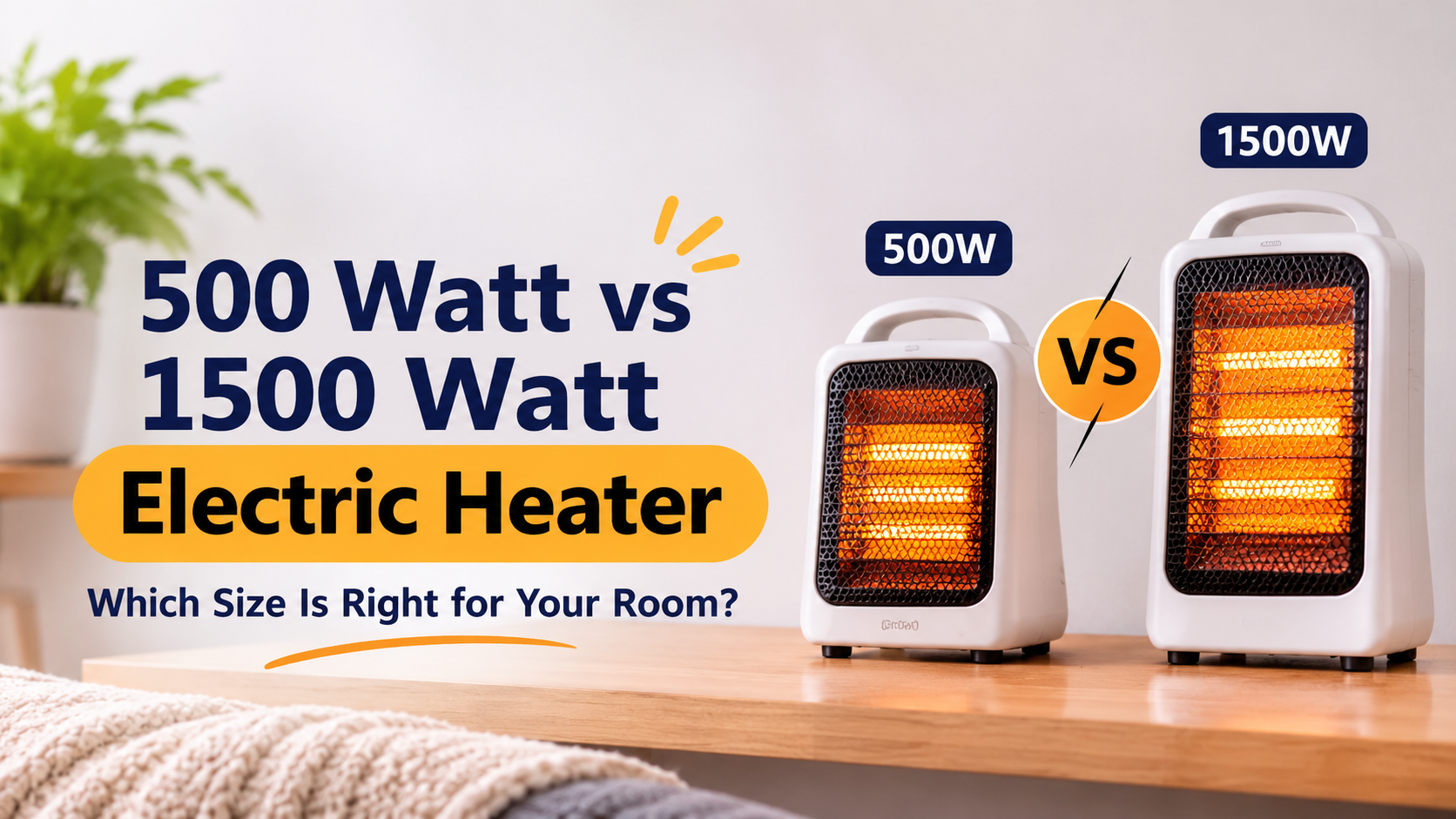
A reliable starting point is about 10 watts per square foot of floor area for an average, reasonably insulated room with standard ceiling height. Rooms with poor insulation, high ceilings or large windows need more heat.
| Room size | Rough heater power | Notes |
|---|---|---|
| 100 sq ft (9 m²) | About 1,000 W | Small bedroom or office |
| 150 sq ft (14 m²) | About 1,500 W | Average bedroom |
| 200 sq ft (19 m²) | About 2,000 W | May need a larger or second heating source |
| 250 sq ft (23 m²) | About 2,500 W | Check the maximum rating of your circuit and heater |
| 300 sq ft (28 m²) | About 3,000 W | Consider a fixed heating system or other solution |
Good to Know
Many portable heaters are limited to around 1,500 watts on a standard household circuit in some countries. For larger rooms, consider a fixed heating system or heating only the part of the room you use.
Where Is It Cold and What to Try
| Where it is cold | Likely reason | What to try |
|---|---|---|
| Far end of the room | Heater power too low for the distance, or poor airflow | Move the heater, add a fan for circulation, or use a more powerful unit |
| Near windows | Cold glass and drafts chill the air | Use thermal curtains or window film, and seal gaps |
| Floor level | Cold air sinks, floors lose heat | Add rugs, use a ceiling fan to push warm air down |
| Behind furniture | Airflow blocked | Rearrange furniture and keep vents clear |
| Near doors | Drafts and heat escaping | Use door sweeps and draft stoppers, and keep doors shut |
| Whole room feels cold | Undersized heater or poor insulation | Check wattage, insulation and the heater thermostat |
7 Steps to Heat a Room Evenly
Improving Insulation and Airflow
- Seal drafts: weatherstripping, door sweeps and caulk are low-cost and effective.
- Use thermal curtains and keep them clear of the heater.
- Add rugs or carpets on cold floors, which also feel warmer under your feet.
- Close doors and use draft stoppers to keep warm air in the room.
- Use a ceiling fan on low speed, pushing air down, to mix warm and cool air.
- Keep vents and radiator fins clear of dust and clutter.
- Open curtains in the daytime on sunny sides to let free heat in, and close them at dusk.
Choosing a Better Heater
If your current heater is simply not suited to your room, these features can help you choose a better one.
- Appropriate power for your room size, with some margin for poor insulation.
- Adjustable thermostat so the heater can hold a steady temperature.
- Oscillation or a wide heat spread for fan and tower heaters.
- Tip-over and overheat protection and recognized safety certification for your country.
- Timer and auto shut-off to save energy and improve safety.
- Type that matches how you use the room: radiant for spot heating, oil-filled or convector for steady warmth.
- Easy-to-clean vents or filters to maintain airflow.
- Quiet operation if it will be used in a bedroom or office.
Heater Safety Rules
- Keep at least 1 meter (3 feet) of clear space around every heater.
- Plug heaters directly into a wall outlet and avoid extension cords or power strips unless the manual allows them.
- Never dry clothes on or near a heater, and never cover it.
- Do not run multiple high-power heaters on the same circuit.
- Do not leave heaters running while you sleep or are away, unless they are designed for it and have proper safety features.
- Check cords, plugs and vents regularly, and replace the heater if anything is damaged.
- Install working smoke alarms, and carbon monoxide alarms where fuel-burning heaters are used.
Frequently Asked Questions
Why does my room heater only heat one side of the room?
Heat spreads by air movement and radiation. If the heater is underpowered, placed in a corner or blocked by furniture, it may only warm the area near it. Drafts, cold windows and open doors can also create cooler zones.
Where is the best place to put a room heater?
Place it on a flat, hard surface with at least 1 meter (3 feet) of clear space on all sides. Putting it near the coldest part of the room, such as under a window or near an outside wall, can help counter cold air, as long as curtains and flammable items stay clear.
Will a fan help spread the heat?
Yes. A ceiling fan on low or a small oscillating fan can mix warm and cold air and reduce hot and cold spots. Use low speeds to avoid creating a draft.
Does a bigger heater fix uneven heating?
Not always. A heater that is too small is a common cause, but placement, drafts, insulation and airflow matter just as much. A bigger heater in a leaky room just wastes energy.
Why is my floor cold even though the heater is on?
Warm air rises and cold air collects near the floor. Uninsulated floors, drafts and large windows make this worse. Rugs, draft stoppers and a ceiling fan can help.
Is it safe to use two heaters in one room?
It can be, but only if the total power does not overload the circuit and each heater is plugged directly into a suitable wall outlet. Check the manuals and electrical ratings, or ask an electrician.
Is an oil-filled heater better for even heating?
Oil-filled heaters warm up slowly but give steady, gentle heat that is often more even and quiet. Their performance still depends on room size, placement and drafts.
How can I tell how uneven my room really is?
Place two thermometers in the room, one near the floor and one near head height, or one near the heater and one at the far end. Compare readings after 30-60 minutes of heating.
Final Thoughts
Uneven heating is rarely a sign that your heater is faulty. It usually comes from a mix of heater size, placement, heat loss and the natural movement of warm air. The most effective solution combines the right-sized heater in a good position, a few draft-proofing measures and gentle air circulation.
Start with simple changes, such as closing doors, moving furniture away and using a ceiling fan on low. Then measure the temperature at floor and head height to see the difference. If your room still has cold spots, consider a larger or different type of heater, always following safety guidelines.