





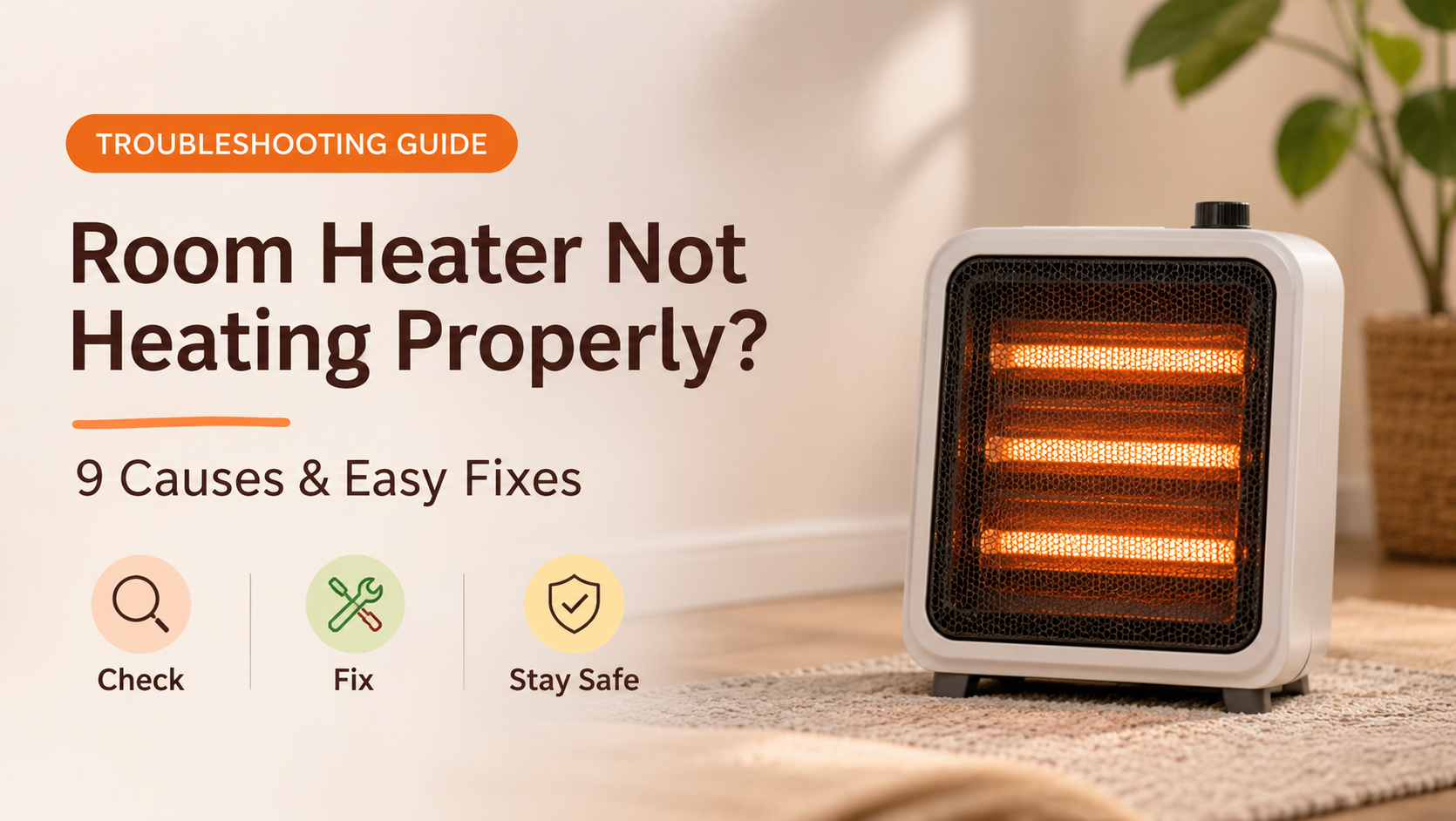
It is a cold evening, you switch on your room heater, and nothing much happens. The light is on and the fan hums, but the room stays chilly. If your room heater is not heating properly, you are not alone. It is one of the most common winter appliance complaints, and the good news is that many causes are simple and cheap to fix.
This guide explains how a room heater works, the nine most common reasons for poor heating, step-by-step fixes, safety rules, when to repair or replace, and what to look for in a new heater.
How a Room Heater Works
An electric room heater converts electricity into heat. Current flows through a resistive heating element (a metal coil, quartz tube, ceramic plate or oil-filled radiator), which gets hot. A fan, or natural convection, spreads that heat into the room. A thermostat controls temperature, and safety switches cut power if something goes wrong. When any one of these parts fails, performance drops.
9 Reasons Your Room Heater Is Not Heating Properly
1. Clogged air filter, vents or dust-covered element
Why it happens: Dust is the number one reason a heater loses power. It blocks airflow and coats the heating element, so heat cannot escape into the room.
How to fix it: Unplug the heater, let it cool, then clean the vents with a soft brush and vacuum. Wash or replace the filter if your model has one.
2. Faulty or badly set thermostat
Why it happens: If the thermostat reads the temperature wrongly, the heater cuts off early or never reaches full output.
How to fix it: Turn the dial to maximum and test again. If the heater still shuts off within minutes in a cold room, the thermostat sensor is likely faulty and needs replacement.
3. Burnt-out or weak heating element
Why it happens: Elements wear out after years of use. A broken coil or a degraded ceramic (PTC) plate produces little or no heat while the fan keeps running.
How to fix it: If the fan blows cold air, the element is the likely culprit. Replacing the element or the unit is the only fix, and a technician should do it.
4. Power supply problems
Why it happens: Loose plugs, damaged sockets, long thin extension cords and low voltage all reduce heater output. Heaters draw 1000 to 2000 watts, which is a heavy load.
How to fix it: Plug directly into a wall socket rated for the load. Never use a thin extension cord or a shared multi-plug.
5. Tipped-over or overheat safety switch triggered
Why it happens: Modern heaters shut down automatically if tilted or if they overheat. A switch stuck in the safe position makes the heater behave as if it is off or weak.
How to fix it: Place the heater on a flat, hard surface. Switch off, wait 15 to 30 minutes, then restart. Clean the vents to prevent repeat overheating.
6. Fan motor or blower failure
Why it happens: A slow or noisy fan cannot push warm air out, so the unit overheats, trips its cut-off and delivers weak heat.
How to fix it: Listen for grinding noise. Clean the fan area gently. A worn motor or bearing needs professional repair or replacement.
7. Room too big or poorly insulated
Why it happens: A small 1000 W heater cannot warm a large room with gaps under doors and single-glazed windows. The heater is fine; the room loses heat faster than it is produced.
How to fix it: Match the heater to the room (see the sizing table below), close doors and windows, and use curtains and draught stoppers.
8. Wrong mode or setting
Why it happens: Many heaters have low, high, eco and fan-only modes. Fan-only mode blows cold air, and eco mode may cycle on and off.
How to fix it: Check that the heat switch is on high and the mode selector is not on fan-only or timer.
9. Oil-filled radiator problems
Why it happens: Oil heaters heat slowly by design, and a leak, air pocket or failed internal thermostat can make heating uneven or very weak.
How to fix it: Give it 20 to 30 minutes to warm up. Never open a sealed oil radiator. If you see an oil leak, stop using it and replace it.
Step-by-Step Troubleshooting Checklist
- Test the socket. Plug in another appliance to confirm the socket works.
- Inspect the plug and cord. Look for discoloration, melting or cracks.
- Check settings. Make sure heat mode and the highest thermostat level are selected.
- Reposition the heater. Use a flat surface so the tip-over switch is not triggered.
- Clean the vents and filter. Remove dust and let the unit dry fully.
- Run it for 15 minutes. Feel the air from the outlet. Cold air with a working fan points to the element or thermostat.
- Call a technician or the manufacturer. Especially if the unit is under warranty.
Which Heater Size Do You Need?
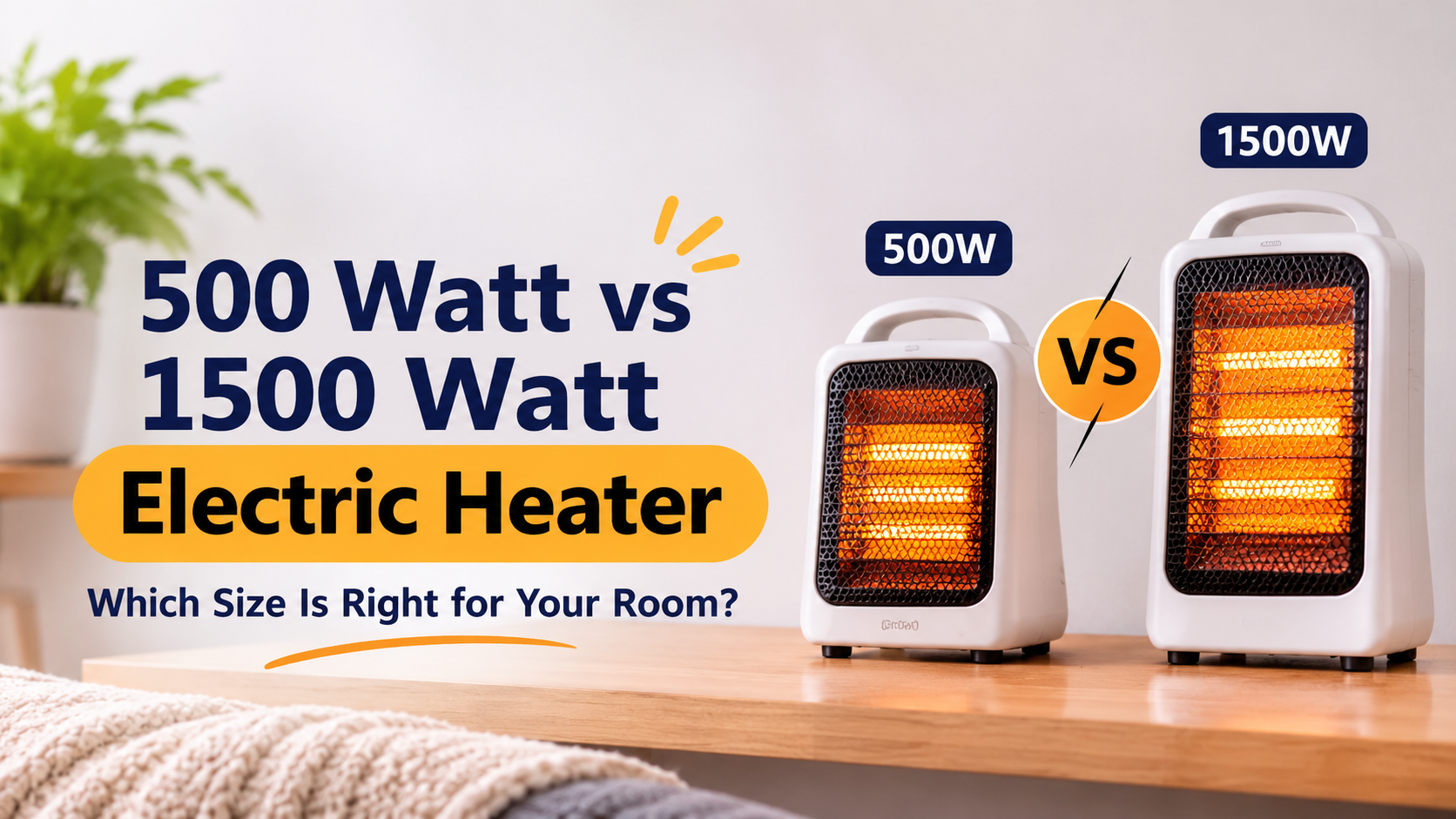
An undersized heater will always feel weak. As a rough guide, you need about 10 watts per square foot of floor area.
| Room Size | Recommended Power | Good Heater Types |
|---|---|---|
| Up to 100 sq ft (small bedroom) | 1000 W | Fan heater, ceramic heater |
| 100 to 150 sq ft | 1500 W | Ceramic, oil-filled radiator |
| 150 to 250 sq ft (living room) | 2000 W | Oil-filled radiator, convector |
| Above 250 sq ft | 2500 W or more, or two heaters | Convector, multiple units |
Different Heater Types and Common Problems
| Type | Strength | Common Problem |
|---|---|---|
| Fan heater | Heats quickly | Dust, fan failure, noise |
| Ceramic (PTC) heater | Safe, efficient | Weak output as plate ages |
| Oil-filled radiator | Steady, silent heat | Slow warm-up, oil leaks |
| Halogen or quartz heater | Instant radiant heat | Burnt tubes, limited area |
| Convector heater | Even room heating | Thermostat faults |
Repair or Replace?
Replace the heater if it is more than 5 to 7 years old, has a damaged cord or casing, smells of burning, or if repair would cost more than half the price of a new unit. Repair is sensible for newer heaters under warranty or when the fix is just cleaning, a fuse, or a simple thermostat part.
What to Look for When Buying a New Room Heater
- Adjustable thermostat for steady, energy-saving heat.
- Tip-over and overheat protection as standard safety features.
- Correct wattage for your room size.
- Multiple heat settings and a timer for flexible use.
- Quiet operation, especially for bedrooms and study rooms.
- Quality certification marks and a solid warranty period.
- Portability such as carry handle and compact design.
Tips to Keep Your Heater Working Like New
- Plug directly into a wall socket and avoid extension cords.
- Do not dry clothes on or close to the heater.
- Keep it away from curtains, beds and sofas.
- Turn it off when you leave the room or go to sleep, unless the model is designed for it.
- Seal draughts to help the heater work less.
Frequently Asked Questions
Why is my room heater running but blowing cold air?
The fan is working but the heating element or thermostat is not. Check the settings first, clean the unit, and if the air is still cold the element has probably failed.
Why does my heater turn off after a few minutes?
This is usually the overheat protection triggering because of blocked vents, dust or a weak fan. Clean the unit and give it space around it.
Can a dirty filter really stop a heater from heating?
Yes. Restricted airflow causes overheating and tripping, and dust acts as insulation on the element, lowering the heat delivered.
How long does a room heater last?
Most last 5 to 10 years with proper care. Heavy daily use and dusty rooms shorten that life.
Is it safe to repair a heater myself?
Cleaning and checking settings are safe. Opening the casing or touching wiring is not. Leave internal repairs to a qualified technician.
Why does my oil heater take so long to warm up?
Oil radiators heat the oil first, then the metal fins. Expect 20 to 30 minutes. Longer than that, with weak heat, can mean a fault.
Conclusion
When your room heater is not heating properly, start with the basics: power, settings, placement and cleaning. Those four steps solve most problems. If the fan runs but the air stays cold, or the unit trips repeatedly, the element, thermostat or fan motor needs professional attention, and an old or damaged heater is better replaced than repaired. Choose the right wattage for your room, look for strong safety features, and maintain your heater regularly so it keeps you warm all winter.