









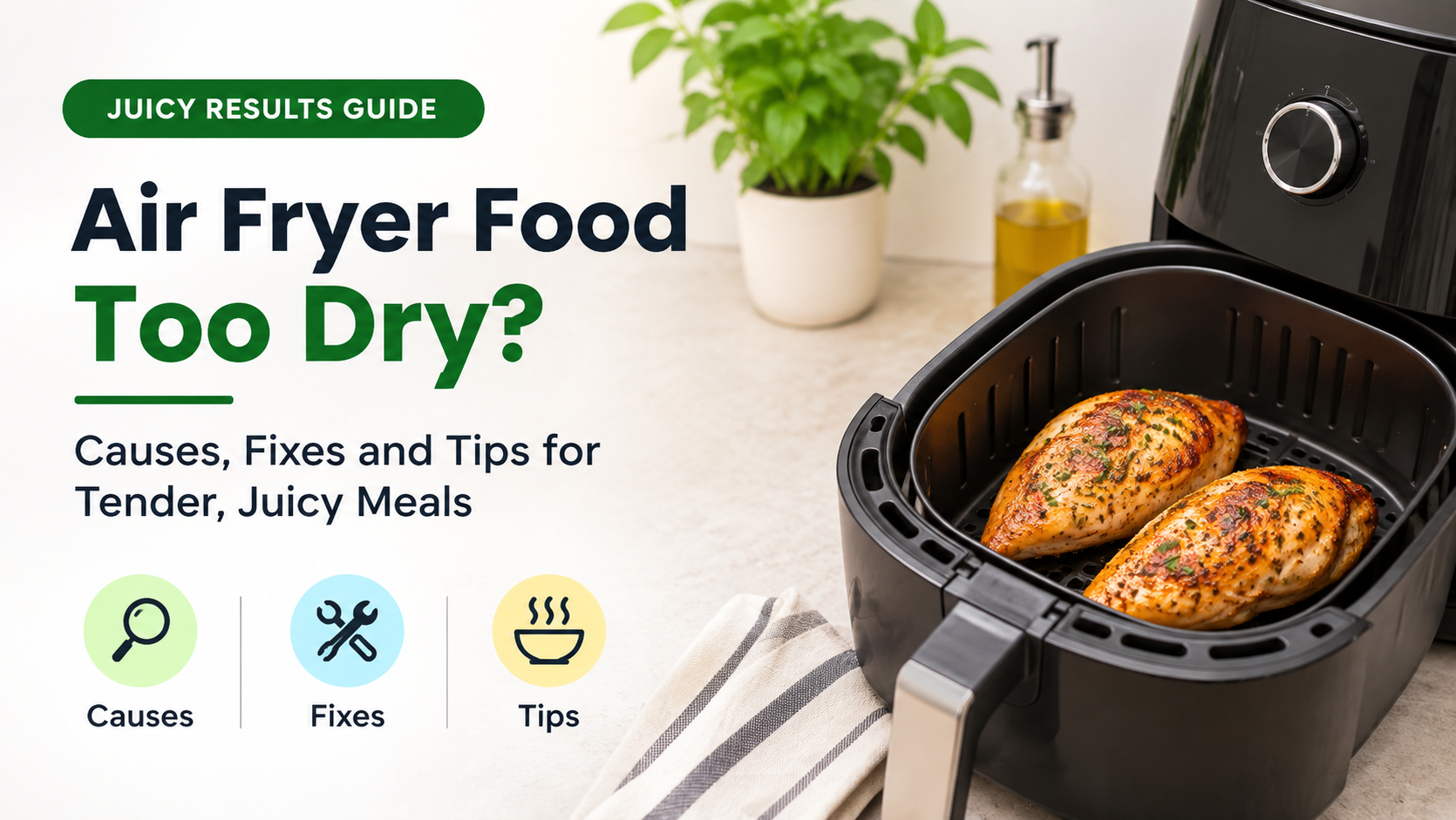
You bought an air fryer for quick, healthy meals. Then the chicken comes out like cardboard, the pork chop is tough and the salmon crumbles into dust. If your air fryer food is dry, take heart: the machine is rarely to blame. A few small changes to temperature, timing and preparation usually fix the problem.
This guide explains why air fryer food dries out, the exact steps that keep meat, fish and vegetables moist, safe internal temperatures, a cooking time chart and the features to look for in a better air fryer.
Quick Answer
Air fryer food turns dry from overcooking, too much heat, lean cuts, no oil or marinade, no resting time and cooking by guesswork. Lower the temperature to 170-190°C, brine or marinate lean meat, add a little oil, use a thermometer, and rest the food before cutting.
Table of Contents
- Why an air fryer can dry food out
- 8 reasons your air fryer food is dry (and fixes)
- Safe internal temperatures
- Time and temperature guide for juicy results
- Brining and marinating methods
- Food-specific tips
- The 7-step juicy checklist
- Choosing a better air fryer
- Frequently asked questions
Why an Air Fryer Can Dry Food Out
An air fryer works like a small, powerful convection oven. A fan blows hot air around the food at high speed, which is brilliant for crisp edges but also pulls moisture from the surface. The compact chamber makes this effect stronger than in a full-size oven, so food cooks faster and can lose water faster too.
The goal is to keep the benefits of rapid hot air while protecting the moisture inside. That comes down to choosing the right cut, preparing it well, using moderate heat and stopping the cooking at the right moment.
8 Reasons Your Air Fryer Food Is Dry
Reason 1: Cooking for too long
An air fryer cooks much faster than a conventional oven. Even a two-minute overshoot can change juicy chicken into dry, stringy meat, especially with smaller portions.
How to fix it:
- Set the timer 3-5 minutes shorter than a recipe written for an oven, then check.
- Use an instant-read thermometer rather than guessing by color.
- Remove food promptly. Leaving it in the hot basket keeps it cooking.
Reason 2: The temperature is too high
Very high heat sets the surface quickly, but the outside can dry before the center is done. Cooking thick cuts at 200°C or above is a common culprit.
How to fix it:
- Use 170-190°C for most meat and fish.
- For thick cuts, cook at 170-180°C so the center cooks gently.
- Finish with a short high-heat burst if you want extra browning.
Reason 3: The cut is too lean
Boneless, skinless chicken breast, pork loin, turkey cutlets and white fish contain little fat. With less fat to protect them, they dry out fast under circulating air.
How to fix it:
- Choose chicken thighs, drumsticks, pork shoulder chops or salmon when you want a forgiving cut.
- Leave the skin on poultry when possible.
- Cook lean cuts at a lower temperature and for a shorter time.
Reason 4: There is no oil or marinade protecting the surface
A bone-dry, unseasoned surface loses moisture quickly. A thin film of oil, a marinade or a coating creates a barrier that slows moisture loss and helps browning.
How to fix it:
- Brush or toss food with 1-2 teaspoons of oil.
- Marinate in yogurt, buttermilk, or an oil and acid mixture.
- Use a light flour or breadcrumb coating for lean meats and fish.
Reason 5: You skipped brining
Salt changes the protein structure and helps meat hold on to more of its own water. Without it, lean meat can turn out chalky.
How to fix it:
- Brine chicken breast and pork chops for 30-60 minutes.
- Use a dry brine if you want crispier skin.
- Pat the meat completely dry afterward so it can still brown.
Reason 6: You never rested the food
When meat comes off the heat, the juices are pushed toward the center. Cutting in right away lets them run onto the plate.
How to fix it:
- Rest chicken and pork for 5 minutes, and steaks for 5-10.
- Cover loosely with foil to keep warm.
- Slice against the grain for a more tender bite.
Reason 7: The portions are small or thin
Thin cutlets, small nuggets and tiny cubes lose moisture very quickly in fast moving air.
How to fix it:
- Cut ingredients into larger, even pieces.
- Pound thick chicken breast to an even thickness, or slice it into two thinner cutlets so it cooks evenly and quickly.
- Check thin items in half the recipe time.
Reason 8: Reheating the wrong way
Reheating leftovers at high heat for a long time dries them out because they have already lost some moisture once.
How to fix it:
- Reheat at 150-160°C for 3-6 minutes.
- Brush with a little oil, broth or sauce.
- Cover thick pieces loosely with foil and uncover for the final minute.
Safe Internal Temperatures
The most reliable way to avoid both undercooked and dry food is an instant-read thermometer. Insert it into the thickest part of the food, away from bone, and remove the food when it reaches the target temperature. Following recognized food safety guidance matters, especially for poultry and ground meat.
Good to Know
Chicken thighs and drumsticks are safe at 74°C (165°F) but many cooks take them to about 80-90°C (175-195°F) because the extra connective tissue breaks down and makes them more tender. Chicken breast does not benefit from this, so do not overcook it.
Time and Temperature Guide for Juicy Results
Use these values as a starting point. Air fryers vary in power and basket size, so check 2-3 minutes before the suggested time the first time you cook a recipe.
| Food | Temperature | Approx. time | Key tip for juiciness |
|---|---|---|---|
| Chicken breast | 180°C / 360°F | 12-18 min | Brine first, pull at 74°C / 165°F |
| Chicken thighs (bone-in) | 190°C / 375°F | 20-25 min | Skin side up, forgiving cut |
| Pork chops (1 inch) | 190°C / 375°F | 10-14 min | Rest 3 minutes after cooking |
| Salmon fillet | 190°C / 375°F | 7-10 min | Stop when it just flakes |
| Shrimp | 190°C / 375°F | 4-6 min | Pull as soon as they turn opaque |
| Burgers | 190°C / 375°F | 8-12 min | Do not press, make a center dimple |
| Meatballs | 190°C / 375°F | 8-10 min | Add breadcrumbs soaked in milk |
| Vegetables | 190°C / 375°F | 8-12 min | Coat lightly in oil, cut evenly |
Brining and Marinating Methods
Preparation is the biggest upgrade you can give lean foods. The table below shows the most practical options.
| Method | Best for | How to do it |
|---|---|---|
| Wet brine | Chicken breast, pork chops, turkey cutlets | 1 tablespoon salt per 1 cup water, 30-60 minutes in the fridge, then pat dry |
| Dry brine | Chicken, pork, steak | About ½ teaspoon fine salt per 450 g, rest uncovered in the fridge 1-12 hours |
| Yogurt or buttermilk marinade | Chicken, lamb | Coat for 2-8 hours, wipe off the excess before cooking |
| Oil and acid marinade | Fish, shrimp, vegetables | Marinate only 15-30 minutes, since acid can toughen seafood |
| Panade (milk + breadcrumbs) | Meatballs, meatloaf, burgers | Mix soaked breadcrumbs into the meat to hold moisture |
Food-Specific Tips
Chicken breast
Brine for 30 minutes, pat dry, coat with a teaspoon of oil and seasoning, and cook at 180°C. Flip halfway, check at 12 minutes and remove at 74°C. Rest for 5 minutes before slicing.
Pork chops
Choose chops at least 2.5 cm (1 inch) thick, preferably bone-in. Dry brine or marinate, cook at 190°C and rest for 3 minutes after reaching 63°C (145°F).
Fish and shrimp
Pat dry, brush lightly with oil and cook at 190°C for just a few minutes. Remove salmon when it first flakes with a fork. Shrimp are done when they turn opaque and curl loosely, not tightly.
Burgers and meatballs
Use meat with 15-20 percent fat, avoid overworking it, and press a small dimple in the center of each patty. Meatballs stay softer with a panade of milk-soaked breadcrumbs.
Vegetables
Cut into larger pieces, coat with oil, and cook at 180-190°C. Dense vegetables such as potatoes and carrots take longer, while zucchini and asparagus need only a few minutes.
Baked goods and reheated pizza
Lower the temperature by about 20°C compared with an oven recipe, and watch the time closely. For leftover pizza, reheat at 160°C for 3-4 minutes to melt the cheese without drying the crust.
The 7-Step Juicy Checklist
Run through this routine for any meat, fish or vegetable that tends to come out dry.
Common Mistakes to Avoid
- Trusting recipe times blindly. Appliances differ, so verify with a thermometer.
- Cooking straight from the fridge in a very hot basket. Let thick cuts sit out for 15-20 minutes so they cook more evenly.
- Using only lean meat for every recipe. Mix in thighs, fattier cuts or fish like salmon.
- Adding sugary glazes too early. They burn before the meat is done, so brush them on in the last 2 minutes.
- Cutting into food immediately. Resting is part of cooking.
- Overfilling or underfilling the basket. A single layer with small gaps cooks evenly.
Is Your Air Fryer Making Food Dry?
Sometimes the appliance does contribute. If your food keeps drying out even after correcting your technique, consider these points.
- Cooking area size: Larger oven-style models give food more distance from the heating element and fan.
- Temperature control: A precise thermostat with small temperature steps helps with delicate foods.
- Fan speed or modes: Some models offer gentler modes for roasting and reheating.
- Capacity: A basket sized for your household avoids repeated overcooking of batches.
- Built-in probe: A temperature probe takes the guesswork out of meat.
- Accessories: Silicone liners, racks and covered dishes designed for air fryers can help with moisture.
- Easy cleaning: A clean basket and element give consistent heat.
Pro Tip
Test your machine with two bone-in chicken thighs, a teaspoon of oil and seasoning at 190°C for 22 minutes. If they are not juicy, your unit may run hotter than its dial suggests, so use an oven thermometer or reduce the temperature by 10-15°C.
Frequently Asked Questions
Why does my air fryer chicken always come out dry?
Chicken breast is lean and cooks fast in an air fryer. Cook it at 180°C, use a thermometer, pull it at 74°C (165°F), brine it beforehand and let it rest for 5 minutes. Thighs are much more forgiving.
Does an air fryer dry out food more than an oven?
It can. The fan moves hot air quickly, which speeds up both cooking and surface moisture loss. Foods cook faster than in a conventional oven, so lower the temperature a little and check early.
Can I add water to an air fryer to keep food moist?
Some manufacturers allow a small amount of water in the drawer under the basket to reduce smoke from fatty foods, but not all models are designed for it. Check your manual before trying it. A safer approach is brining, marinating and oil.
How do I stop leftovers drying out when I reheat them?
Reheat at a lower temperature, around 150-160°C, for a few minutes. Brush with a little oil or a spoon of sauce, and cover loosely with foil for larger pieces.
Is foil safe in an air fryer?
Small pieces are generally fine when they do not block airflow or touch the heating element, but check your manufacturer instructions. Avoid acidic foods like tomato or lemon against aluminum foil.
Why are my vegetables dry and shriveled?
Small, thin pieces cook very quickly. Cut them larger, coat with oil, lower the temperature to about 180-190°C and shorten the time. Delicate veg like zucchini and asparagus need only 6-10 minutes.
Why is air fryer fish dry?
Fish has little connective tissue, so it dries out in a couple of minutes of overcooking. Cook at 190°C for 7-10 minutes depending on thickness and remove it when it first flakes.
Does the size of the air fryer matter for dryness?
Yes. In small basket models the food sits very close to the heating element and fan, so it can dry out faster. Lowering the temperature or using an oven-style model can help.
Final Thoughts
Dry air fryer food is rarely a sign of a bad machine. It usually comes from cooking too long, too hot or without enough protection for lean ingredients. Pick forgiving cuts, brine or marinate, use a little oil, cook at moderate heat, check with a thermometer and rest your meat.
Apply even two or three of these tips and you will notice the difference immediately. Keep notes on timings for your own air fryer, and juicy, tender results will become routine.