Best Portable Electric Heater for Small Rooms: Complete Buyer’s Guide
A small room should be easy to heat, yet many people end up with a heater that is too loud, too powerful, too weak or simply unsafe for the space. Bedrooms, home offices, dorm rooms, nurseries, bathrooms and tiny studios all have different needs, and the best portable electric heater for small rooms is not always the biggest or most expensive one.
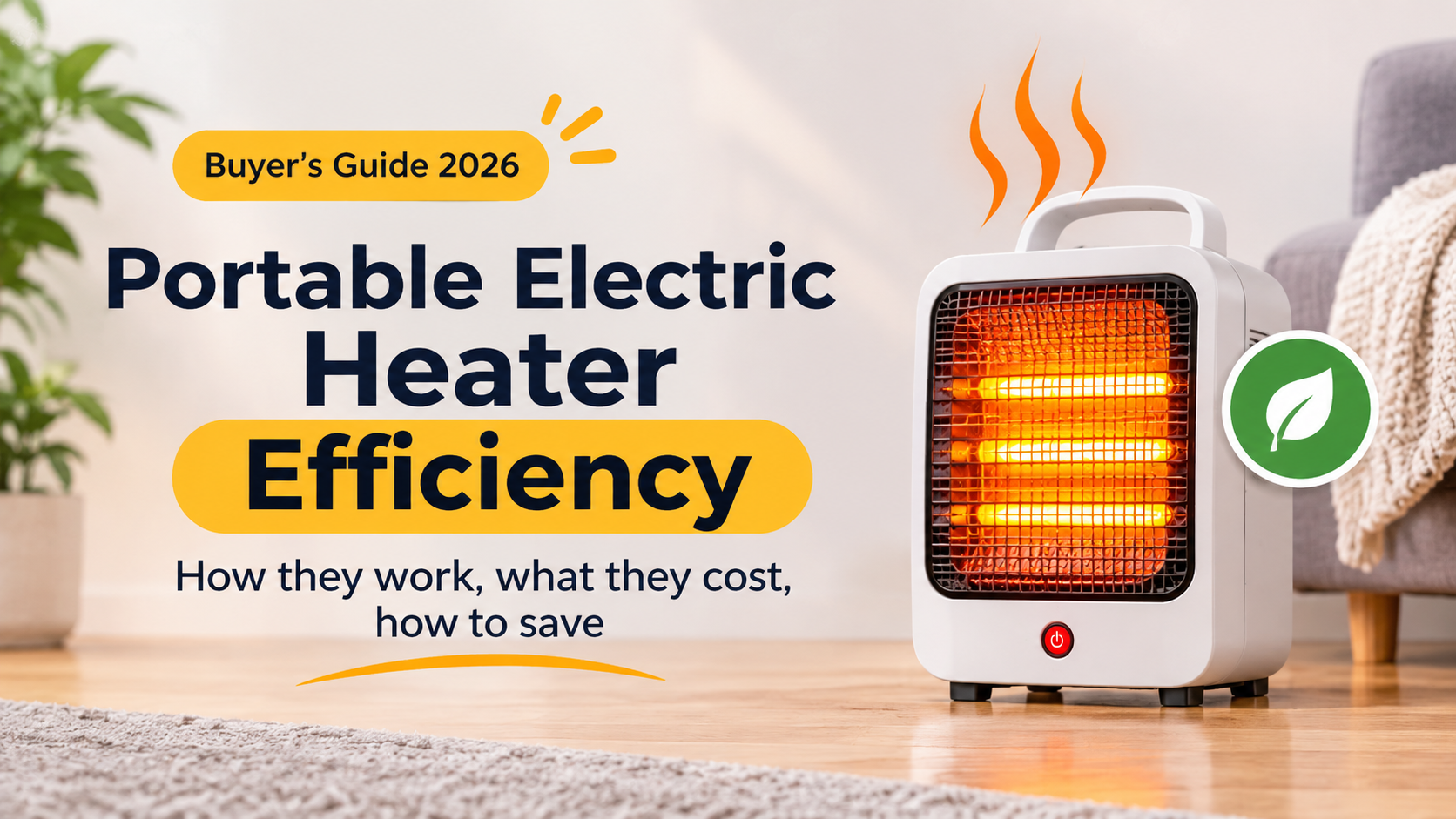
In this guide we explain how portable heaters work, which types suit small spaces, how many watts you really need, which safety features matter, what a heater costs to run and how to place it for the best results. Use it as a checklist before you buy.
Quick answer
For most small rooms between 50 and 150 square feet, a 500W to 1500W heater with an adjustable thermostat, tip-over protection and overheat protection is the right choice. Oil-filled radiators are best for quiet overnight warmth, ceramic heaters warm up fastest and infrared heaters are best for warming yourself at a desk.
Why Small Rooms Need a Different Kind of Heater
Small rooms warm up quickly, which is both an advantage and a trap. A heater that is far too powerful will overheat the room in minutes, switch on and off constantly and waste electricity. A heater that is too weak will run forever and never reach a comfortable temperature.
Small rooms also bring practical limits. Floor space is tight, furniture and curtains sit close to the heater, outlets may be few, and the room is often used for sleeping or working where noise matters. A good small-room heater is compact, quiet, safe at close range and easy to control.
How a Portable Electric Heater Works
Almost every portable electric heater uses resistance heating. Electricity passes through a heating element, the element gets hot and that heat is passed to the air or to nearby objects. Nearly all of the electricity becomes heat, so the efficiency of one electric heater is close to another. What changes between types is how the heat is delivered: through a fan, through hot oil, through a ceramic plate or through infrared radiation.
This means a 1500W ceramic heater and a 1500W oil-filled heater produce the same amount of heat per hour. The difference you feel is in speed, noise, comfort and how long the warmth lasts after you switch the heater off.
Types of Portable Electric Heaters for Small Rooms
1. Ceramic fan heaters
Ceramic heaters use a heated ceramic element and a small fan to push warm air into the room. They warm up quickly, are lightweight and often include thermostats, oscillation and timers. The trade-off is fan noise, which can be noticeable in a quiet bedroom or office.
- Best for: quickly warming a small room, short use, offices and bathrooms (if the model is rated for it).
- Watch out for: fan noise and dry-feeling air.
2. Oil-filled radiators
An oil-filled radiator heats sealed oil inside metal fins. The oil stays warm and releases heat steadily, even after the heating element cycles off. They are almost silent, which is why many people choose them for bedrooms.
- Best for: bedrooms, nurseries (with proper clearance and out of reach), long periods of use.
- Watch out for: slower warm-up and heavier weight, though most models have wheels.
3. Infrared (radiant) heaters
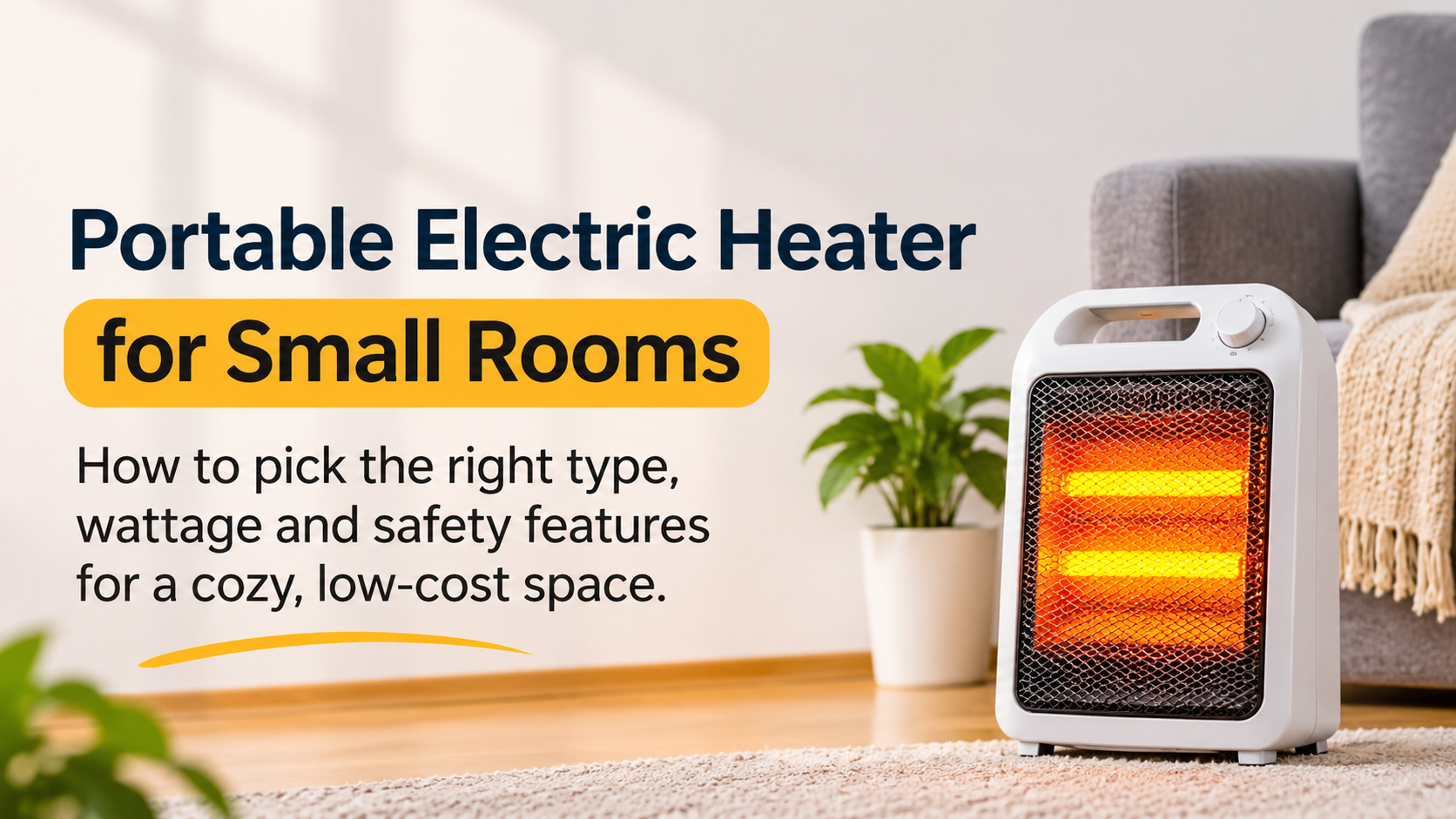
Infrared heaters warm people and objects directly rather than heating the air first. You feel the warmth almost immediately when you sit in front of one. That makes them an efficient choice for a desk, a reading chair or a small workspace.
- Best for: spot heating at a desk, workshop or seating area.
- Watch out for: warmth fades quickly when you move out of the heater’s line of sight.
4. Panel and convection heaters
Panel heaters are slim units that warm the air gently through convection. They are silent, take little floor space and often sit against a wall or on the floor. They suit rooms where steady background warmth matters more than fast heat.
- Best for: narrow spaces, quiet offices and bedrooms.
- Watch out for: slower, gentler heating than a fan heater.
Heater type comparison table
| Type | Heat speed | Noise | Best small-room use |
|---|---|---|---|
| Ceramic fan | Very fast | Low to moderate | Quick warm-up, home office |
| Oil-filled | Slow and steady | Near silent | Bedrooms, overnight use |
| Infrared | Instant on you | Silent | Desk, workshop, spot heat |
| Panel / convection | Gentle and even | Silent | Slim spaces, quiet rooms |
How Many Watts Does a Small Room Need?
Wattage decides how much heat the heater can produce. The simplest sizing rule is 10 watts for every square foot of floor area, based on an 8 foot ceiling and average insulation. Most portable plug-in heaters are limited to 1500W, which covers about 150 square feet.
| Room size | Typical example | Suggested wattage |
|---|---|---|
| Up to 50 sq ft | Small bathroom, closet office, desk area | 500W |
| 50 to 100 sq ft | Small bedroom, nursery, dorm room | 750W to 1000W |
| 100 to 150 sq ft | Standard small bedroom, home office | 1000W to 1500W |
Adjust upward if the room is drafty, has high ceilings, a cold outside wall or single-pane windows. If your room is at the top end of the range and needs extra power, choose a 1500W heater with multiple power settings so you can lower the output when the room warms up. If your room is larger than 150 square feet, one portable heater is rarely enough.
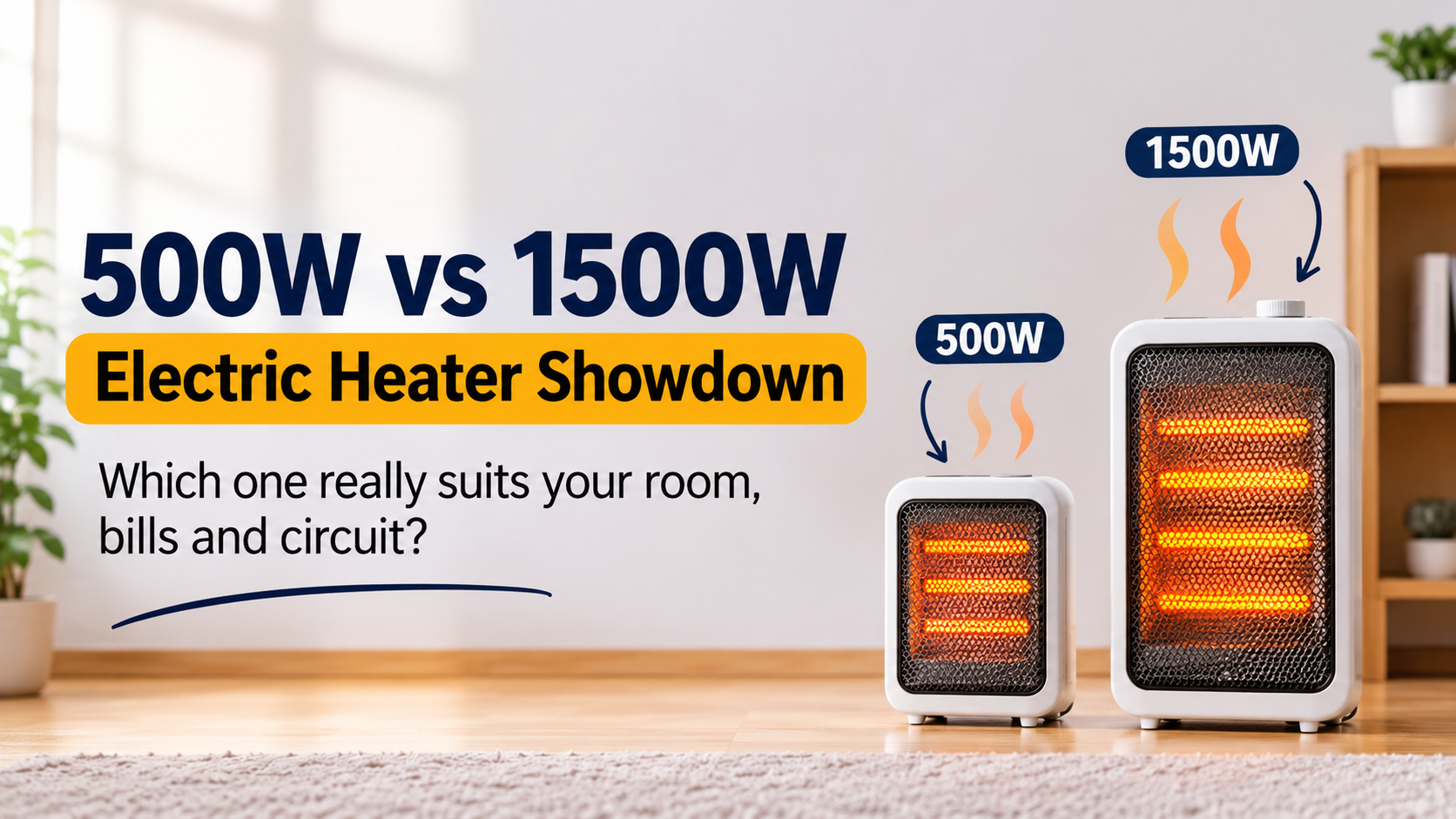
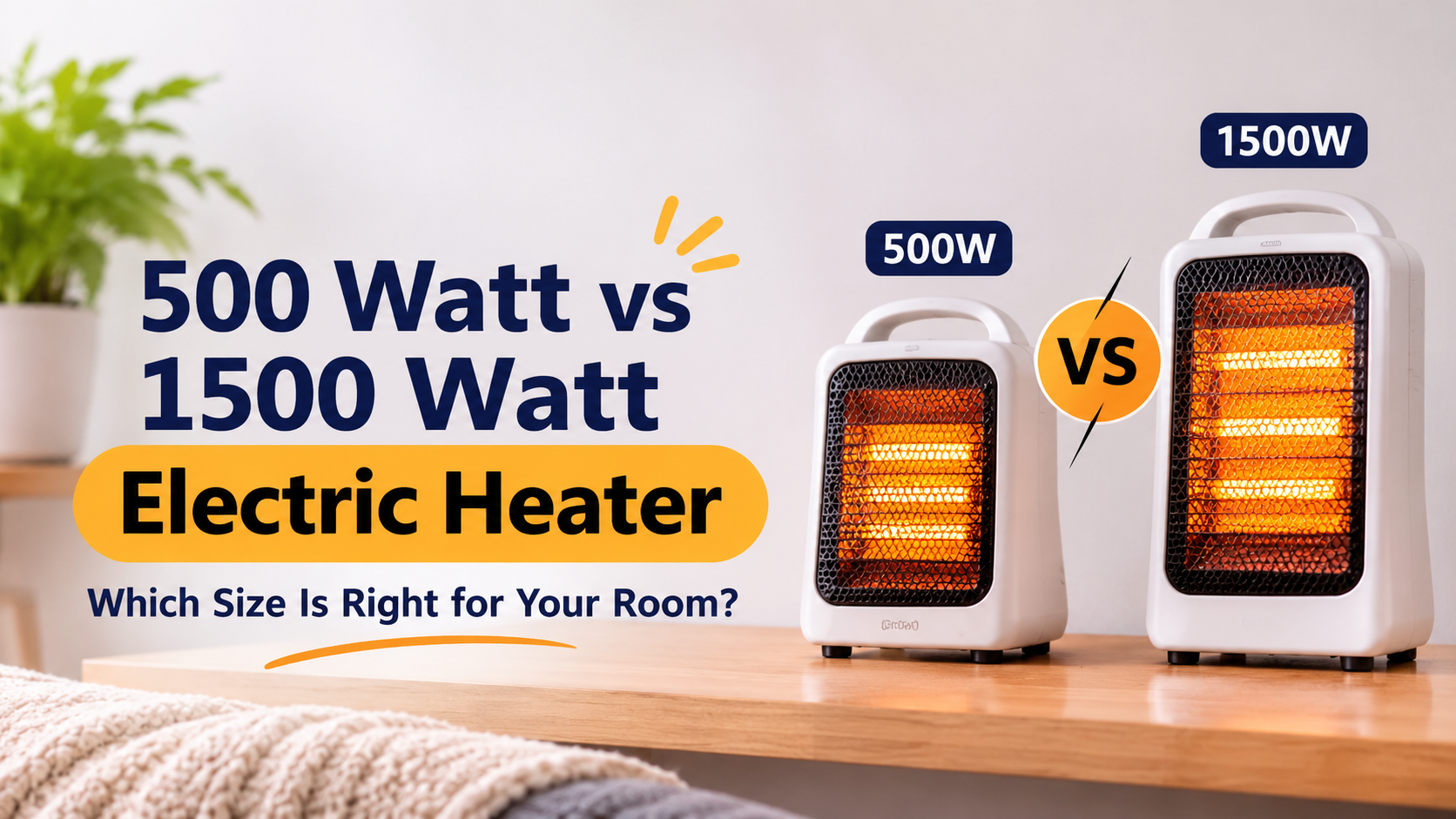
For more detail on this comparison, many buyers also wonder whether to choose 500W or 1500W. A 500W heater is great for personal warmth and tiny spaces, while a 1500W heater warms an entire small room faster and gives you more control through multiple settings.
Key Features to Look For
Safety features (non-negotiable)
- Tip-over protection: shuts the heater off if it falls over.
- Overheat protection: cuts power if internal temperature gets too high.
- Safety certification: look for a recognized mark such as UL, ETL, CE or the standard used in your country.
- Cool-touch housing: especially useful for children and pets.
- Cord and plug quality: a thick cord and a firm plug that does not get hot.
Comfort and control features
- Adjustable thermostat: keeps the room at your chosen temperature and saves power.
- Multiple heat settings: lets you drop from 1500W to 750W or 500W when needed.
- Timer and auto shut-off: stops the heater after a set time.
- Low noise level: important for bedrooms and offices.
- Remote control and digital display: convenient but not essential.
- Compact size and carry handle: helps in tight rooms.
Safety Rules for Using a Heater in a Small Room
A small room leaves less margin for error, so safe use matters even more. Follow these rules every time.
- Keep at least 3 feet of clear space around the heater on every side.
- Plug the heater directly into a wall outlet. Avoid extension cords and power strips.
- Place it on a flat, hard, stable surface, never on a bed, sofa or thick carpet.
- Do not cover the heater or dry clothes on it.
- Do not use a standard heater in a wet bathroom unless it is specifically rated for it.
- Keep children and pets away, and choose a cool-touch model if they are present.
- Make sure the room has a working smoke alarm.
- Turn the heater off when you leave the room or go to sleep, unless the model is designed and rated for overnight use.
- Inspect the cord and plug regularly. Stop using the heater if either is damaged or feels hot.
Myth check
Electric heaters do not use up the oxygen in a room, because they do not burn fuel. A stuffy feeling usually comes from dry air or poor ventilation, not a lack of oxygen. A small amount of fresh air each day is still a good idea.
How Much Does It Cost to Run a Small-Room Heater?
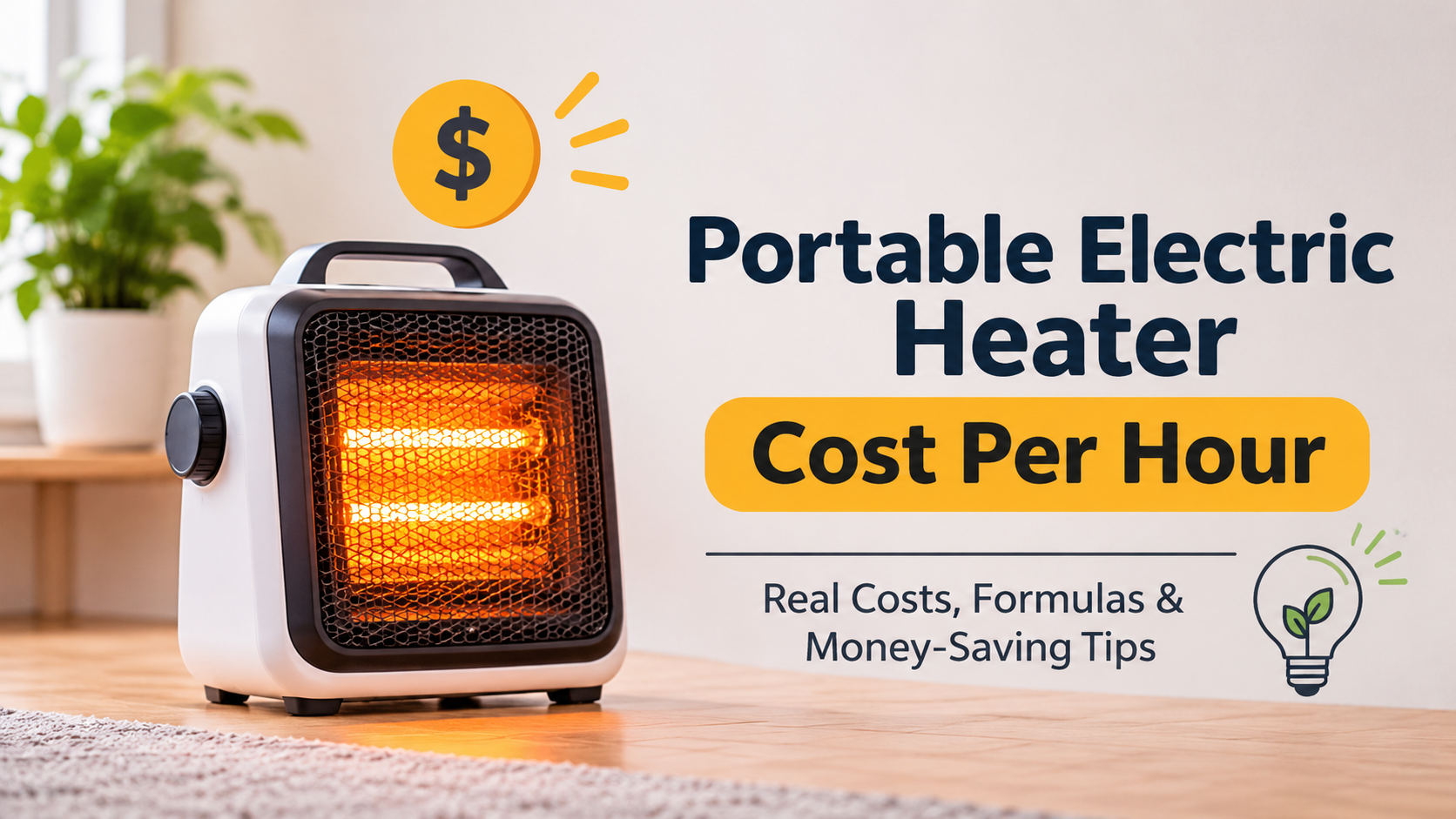
You can estimate the cost with a simple formula: kilowatts x hours x price per kWh. A 1500W heater is 1.5 kW, so running it for one hour at $0.16 per kWh costs about $0.24. A 500W heater costs about $0.08 per hour.
Those numbers assume the heater runs at full power the whole time. Heaters with thermostats switch on and off once the room is warm, so real costs are often lower, especially in a small, well-insulated room. Local electricity rates vary, so replace $0.16 with the rate on your own bill.
Ways to lower your heating cost
- Use the thermostat and set a sensible temperature instead of running on high.
- Close the door and seal gaps around windows and doors.
- Hang thick curtains, but keep them well away from the heater.
- Use a timer to warm the room before you arrive or go to bed.
- Use a smaller heater or spot heater when you only need to warm yourself.
- Place the heater away from drafts, but not blocked by furniture.
Best Heater Choice by Type of Small Room
| Room | Best heater type | Why |
|---|---|---|
| Bedroom | Oil-filled or panel | Quiet, steady warmth, gentle on sleep |
| Home office | Infrared or ceramic | Fast, spot warmth at the desk |
| Dorm room | Compact ceramic (check dorm rules) | Small, light and quick to heat |
| Nursery | Oil-filled or panel, placed out of reach | Silent, cool-touch options, ask a pediatrician about room temperature |
| Bathroom | Heater rated for bathroom use | Moisture protection is essential |
| Small studio | 1500W ceramic or oil-filled | Higher output for a combined living space |
Check any rules for your building or dorm first, because some rental properties restrict certain heater types.
Buying Checklist
- Measure your room in square feet and note the ceiling height.
- Choose the heater type that matches how you use the room.
- Pick the wattage using the 10 watts per square foot rule, then adjust for drafts.
- Make sure it has tip-over and overheat protection.
- Look for an adjustable thermostat and a timer.
- Check the noise level, especially for bedrooms and offices.
- Confirm a recognized safety certification.
- Check cord length and the warranty.
- Read customer reviews for durability and real-world noise.
Common Mistakes to Avoid
- Buying too powerful: a very large heater can overheat a tiny room and cycle constantly.
- Buying too weak: an undersized heater runs endlessly and never feels warm.
- Blocking the heater: furniture, bedding or curtains too close are a fire risk.
- Using extension cords: heaters draw high current and can overheat ordinary cords.
- Ignoring noise: a fan heater may be fine in an office but frustrating in a bedroom.
- Skipping the thermostat: without it, the heater keeps drawing full power.
- Leaving it unattended: switch it off when you leave the room.
Frequently Asked Questions
What is the best portable electric heater for a small room?
It depends on your use. Oil-filled heaters suit bedrooms thanks to silent operation, ceramic heaters warm a room fastest and infrared heaters are ideal for personal warmth at a desk. Whichever you choose, pick one with a thermostat, tip-over protection and overheat protection.
How many watts do I need for a small room?
A good guide is 10 watts per square foot. That means about 500W for 50 square feet, 1000W for 100 square feet and 1500W for 150 square feet.
Is it safe to leave a portable heater on overnight?
Only if the model is designed for it and includes tip-over and overheat protection, and you follow the clearance and plug rules. Oil-filled and panel heaters are usually preferred for overnight use. Always follow the manufacturer’s instructions.
Do electric heaters use a lot of electricity?
A 1500W heater uses 1.5 kWh for every hour at full power, so it can be costly over long periods. A thermostat, a timer and a correctly sized heater all help reduce the bill.
Are ceramic heaters better than oil-filled heaters?
Neither is better in every case. Ceramic heaters warm up faster but have a fan, while oil-filled heaters are slower but silent and keep releasing warmth after they cycle off.
Can I use a portable heater in a small bathroom?
Only use a heater that is clearly rated for bathroom use, and keep it far from water. Standard portable heaters are not designed for wet areas.
Should I use an extension cord with my heater?
No. Plug the heater directly into a wall outlet, because extension cords and power strips can overheat under the high current a heater draws.
How far should a heater be from the bed or curtains?
Keep at least 3 feet of clear space on every side, or follow the distance stated in the manufacturer’s manual if it is larger.
Final Verdict
The best portable electric heater for a small room is one that matches the room’s size, your daily use and your safety needs. Choose a silent oil-filled heater for a bedroom, a ceramic or infrared heater for a home office, and a compact, well-rated model for a tiny space. Size the wattage carefully, insist on tip-over and overheat protection, give the heater plenty of clear space and use the thermostat and timer to keep costs down.
Follow these steps and you will have a warm, comfortable small room without wasting electricity or taking safety risks.
Note: Figures in this article are estimates for general guidance. Actual heat output, coverage and running cost depend on your room, insulation, climate and local electricity rates. For wiring concerns, consult a licensed electrician.