Disclosure: This article may contain affiliate links in the product sections you add. If you buy through them, we may earn a small commission at no extra cost to you.
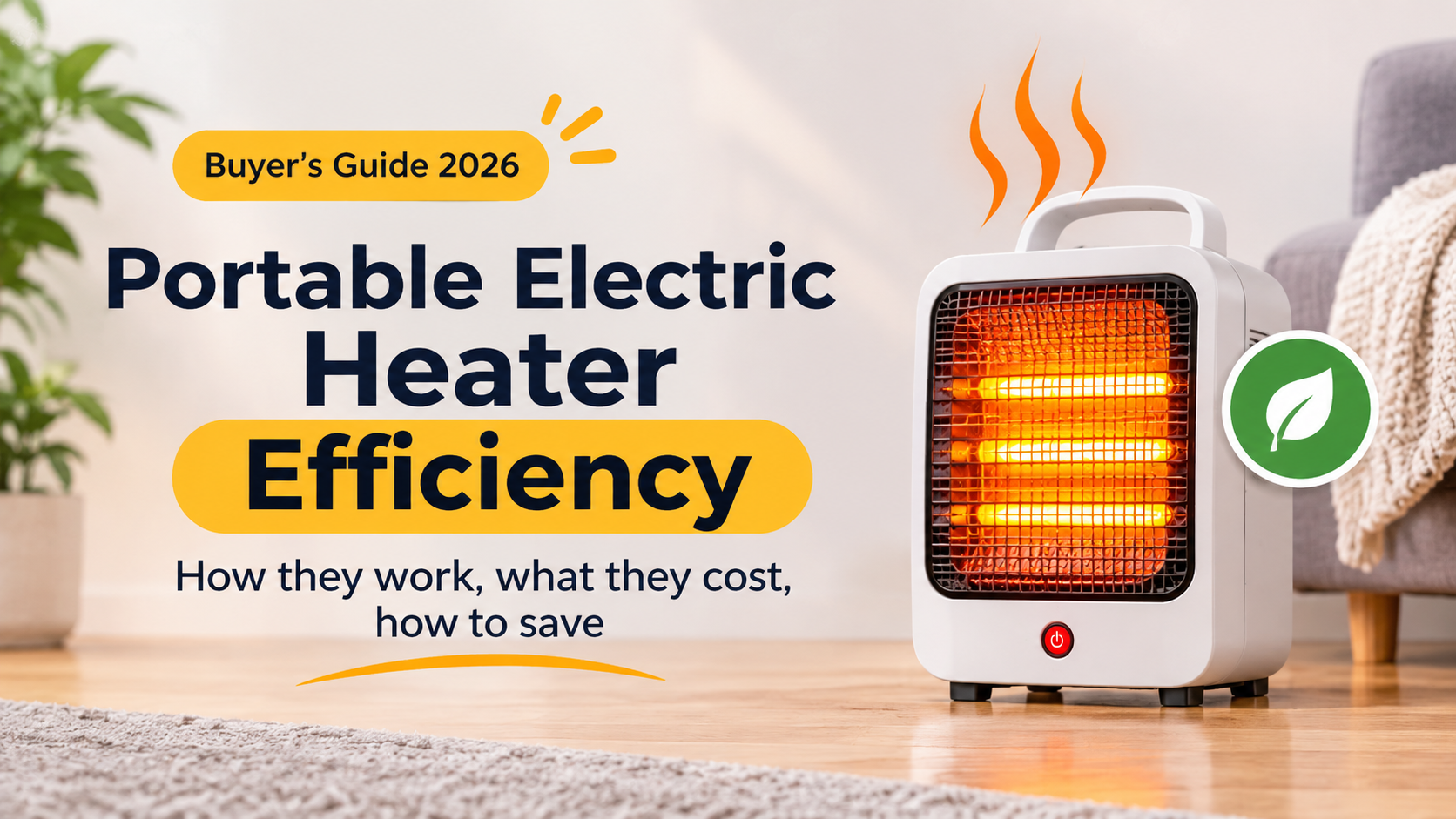
When the temperature drops, a portable electric heater feels like the easiest fix. Plug it in, and warmth arrives in minutes. But the electricity bill that follows can be a nasty surprise. So how efficient is a portable electric heater, really? And is there a way to stay warm without overspending?
In this guide to portable electric heater energy efficiency, you will learn how these heaters turn power into heat, what separates the main types, how to calculate running costs, and how to choose and use a heater so you get the most warmth for every unit of electricity.
Almost every portable electric heater is about 100% efficient at converting electricity into heat. A 1,500 W heater produces about 1,500 W of heat, or roughly 5,100 BTU per hour, whether it is ceramic, oil-filled, radiant or fan-forced. The real savings come from choosing the right type, sizing it to the room and using it smartly.
Table of Contents
- How Portable Electric Heaters Work
- Are Portable Electric Heaters Energy Efficient?
- Types of Portable Heaters Compared
- How Much Does It Cost to Run a Portable Heater?
- How to Choose the Right Wattage
- Features That Actually Save Energy
- 12 Tips to Reduce Heater Energy Use
- Portable Heater vs. Heat Pump
- Safety Essentials
- What to Look for Before You Buy
- Frequently Asked Questions
- Final Verdict
How Portable Electric Heaters Work
Portable electric heaters use resistive heating. Electric current passes through a heating element, such as a metal coil, a ceramic plate or a heated oil circuit. The element resists the current, and that resistance turns electrical energy into heat. A fan, a radiating surface or natural convection then moves that heat into your space.
Because nothing is lost to combustion or exhaust, and no fuel is burned in the room, all of the electricity drawn ends up as heat in the room. That is why the efficiency of nearly every plug-in heater is effectively 100%.
Are Portable Electric Heaters Energy Efficient?
In terms of converting power into heat, yes. They waste almost nothing. But “efficient” and “cheap to run” are not the same thing. Electricity is often one of the more expensive ways to produce heat, so a 100% efficient heater can still cost a lot if it runs for many hours.
It also means a more expensive heater is not automatically more efficient. A budget 1,500 W model and a premium 1,500 W model deliver the same amount of heat. What differs is how that heat is delivered, how well it is controlled, and how comfortable you feel.
Types of Portable Heaters Compared
Since efficiency is about equal, the best type depends on how and where you will use the heater.
Fan and Ceramic Heaters
These blow air across a hot element. They warm a small room very quickly, which makes them useful for short use in bathrooms, offices and bedrooms. The moment they switch off, the warmth fades.
Radiant and Infrared Heaters
Radiant heaters warm people and objects directly rather than heating the air. This makes them a smart choice for spot heating. If you sit at a desk or workbench, you can feel warm even while the room stays cool, so you can use a lower setting or a shorter run time.
Oil-Filled Radiators
These heat up slowly, but the hot oil keeps radiating warmth after the thermostat cycles off. They are quiet and well suited to bedrooms or closed rooms where you need steady warmth for hours.
Convection Panel Heaters
Panel heaters warm the air gently and quietly with low surface temperatures. They are good for slow, even heating but not for rapid warm-ups.
| Heater Type | Heats Up | Keeps Heat After Off | Best For |
|---|---|---|---|
| Fan / Ceramic | Very fast | No | Quick warm-up in small rooms, short sessions |
| Radiant / Infrared | Instant on the body | No | Spot heating at a desk, workbench or sofa |
| Oil-Filled Radiator | Slow | Yes, for a while | Bedrooms and longer, steady use |
| Convection Panel | Moderate | Slight | Quiet, low-surface-temperature heating |
How Much Does It Cost to Run a Portable Heater?
You can estimate the running cost with a simple formula:
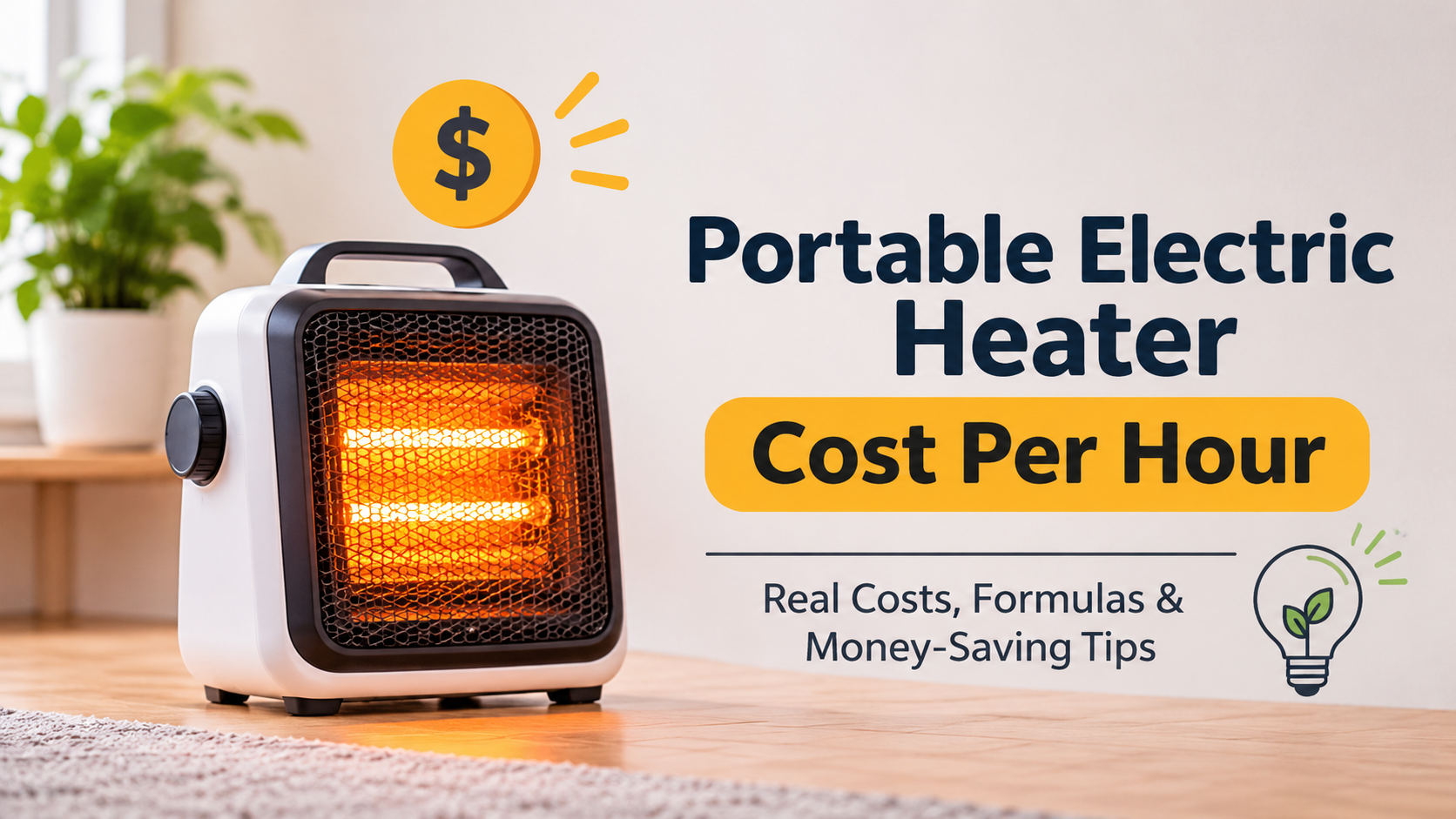
Running cost = kilowatts (kW) × hours of use × electricity rate per kWh
For example, a 1.5 kW heater running for 4 hours uses 6 kWh. At $0.15 per kWh, that costs about $0.90. Run it 4 hours every day for a month and the cost is roughly $27. At higher rates, or with longer use, the number climbs quickly.
To use your own numbers, check the wattage on the heater label (usually 750 W, 1,000 W or 1,500 W) and the price per kWh on your electricity bill.
How to Choose the Right Wattage
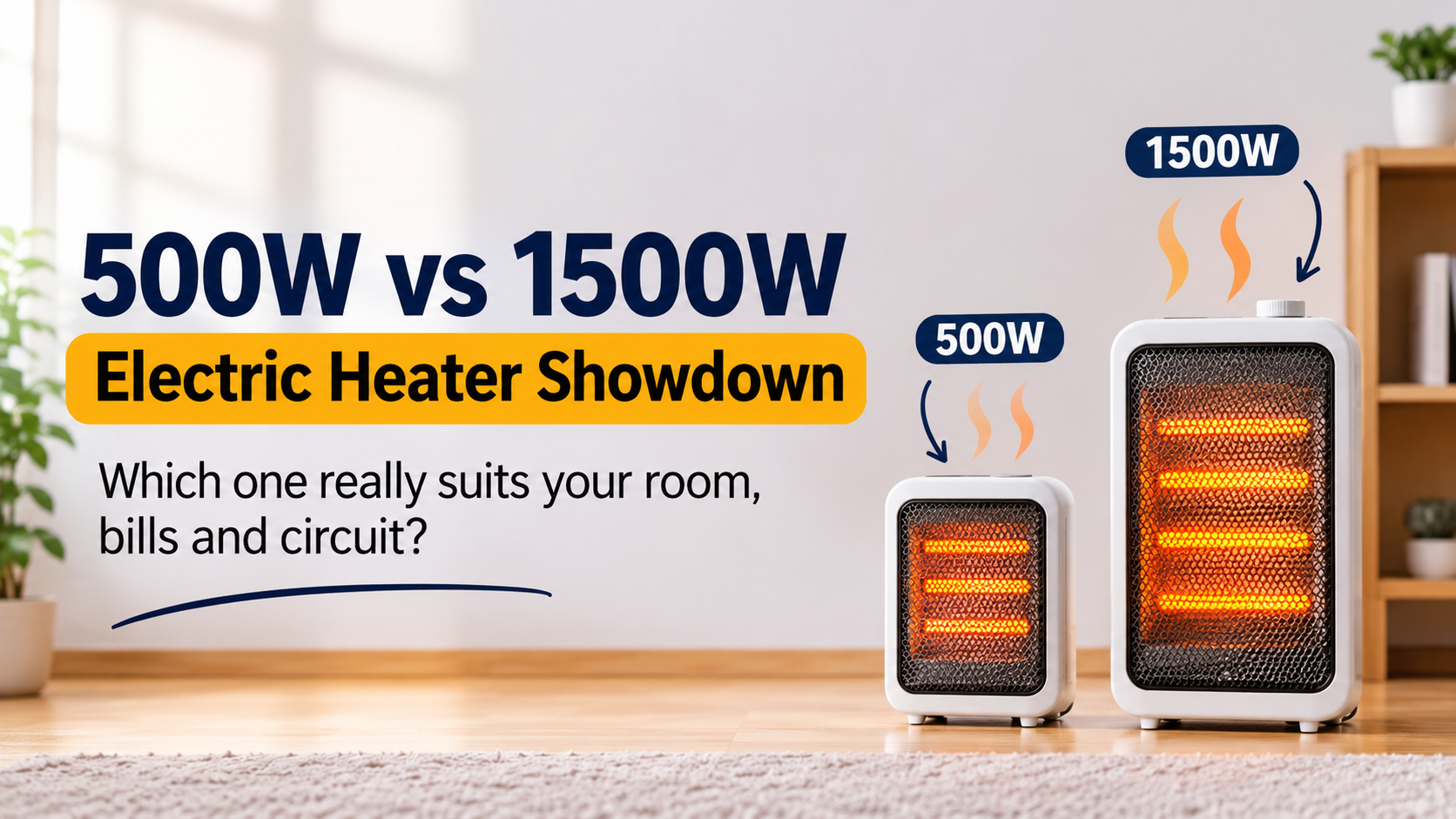
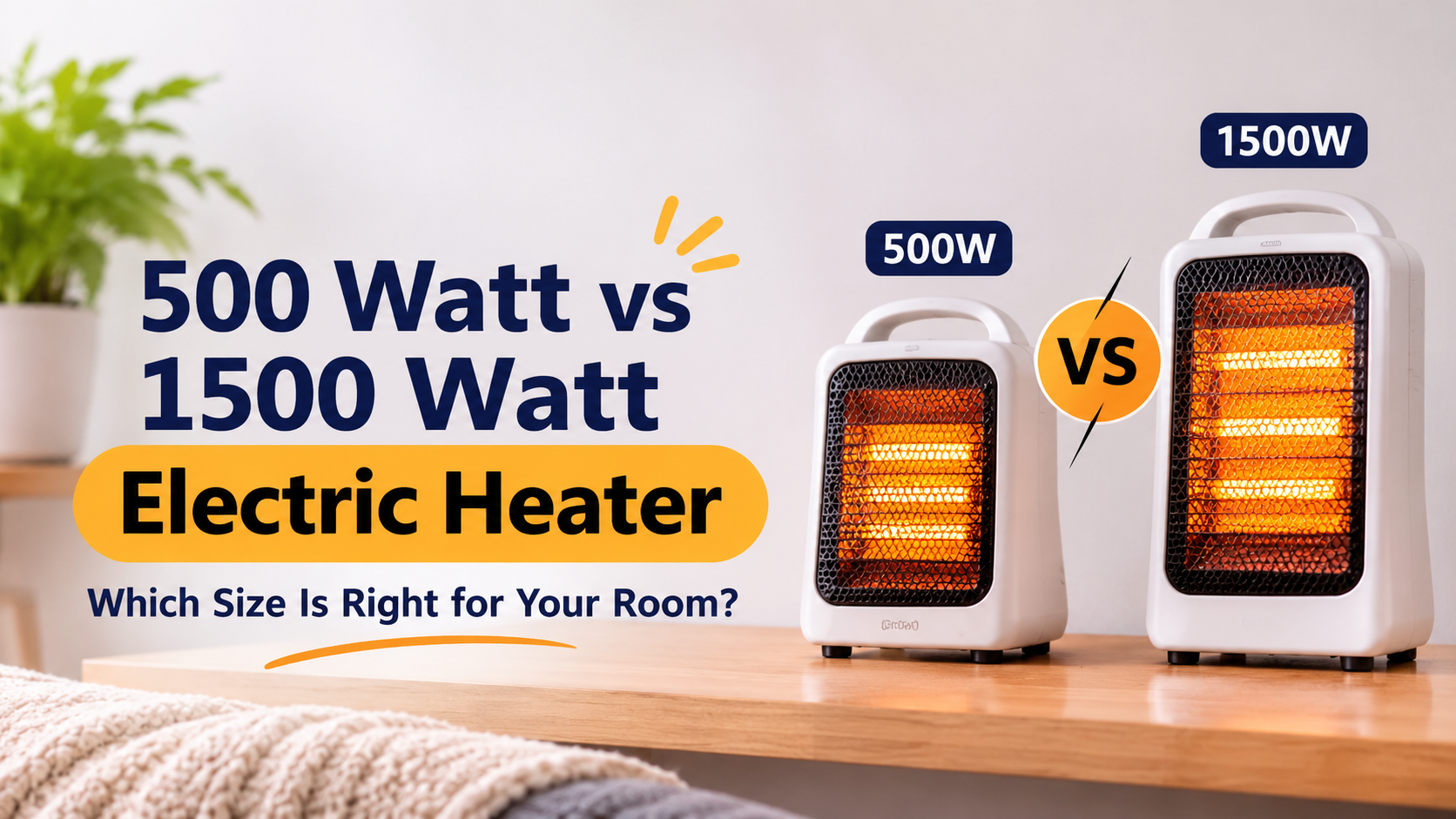
A heater that is too small runs nonstop and never gets the room comfortable. One that is too large can overshoot and cycle on and off. A helpful rule of thumb is about 10 watts per square foot (around 100 W per square meter) in a reasonably insulated room.
Most standard household outlets and circuits are designed around 1,500 W heaters, so very large spaces are better served by a heat pump or central heating than by multiple portable heaters on one circuit.
Features That Actually Save Energy
- Adjustable thermostat: holds the room at your target temperature instead of running at full power all the time.
- Timer or programmable schedule: prevents heating an empty room or running all night.
- Multiple power settings: lets you drop to 750 W or 1,000 W once the room is warm.
- Eco mode: automatically adjusts output to maintain temperature with fewer power spikes.
- Remote or app control: makes it easy to switch off without getting up.
- Tip-over and overheat protection: not an energy feature, but essential for safe operation.
Be cautious about marketing claims such as “energy-saving” or “up to 50% less power.” Because all resistive heaters convert power to heat at about the same rate, any real saving comes from controls and how you use the heater, not from a special heating element.
12 Tips to Reduce Heater Energy Use
- Heat only the room you are in. Close the door and avoid heating empty spaces.
- Seal drafts. Use weatherstrips, door snakes and window film to keep warm air in.
- Use a thermostat. Set it between 18°C and 21°C (about 65°F to 70°F) for comfort and savings.
- Use a timer. Start heating 20 to 30 minutes before you need the room, then switch off automatically.
- Choose radiant heat for spot heating. It warms you directly at a lower overall cost.
- Pick an oil-filled radiator for long sessions. It keeps radiating after the thermostat cycles off.
- Position the heater well. Place it where air can circulate, away from furniture and curtains.
- Use thick curtains and rugs. They reduce heat loss through windows and floors.
- Dress warmly. A sweater and warm socks let you set the thermostat lower.
- Use the lowest setting that works. A 750 W setting can be enough once the room is warm.
- Turn it off when you leave. A heater in an empty room is wasted money.
- Keep it clean. Dust on elements and vents can reduce airflow and cause odors.
Portable Heater vs. Heat Pump
If you need heat for many hours every day, a heat pump (including an inverter air conditioner with a heating mode) is far cheaper to run. It moves heat from outside into your home instead of creating it, so it can deliver about 2 to 4 units of heat for every unit of electricity.
| Feature | Portable Electric Heater | Heat Pump / Inverter AC |
|---|---|---|
| Efficiency | About 100% (1 unit of heat per unit of electricity) | About 200% to 400% (2 to 4 units of heat) |
| Upfront cost | Low | Moderate to high |
| Running cost | High for long hours | Much lower |
| Portability | Move it anywhere | Fixed or semi-fixed |
| Best use | Short, targeted heating | Many hours of daily heating |
A portable heater remains the right choice for occasional use, small spaces, renters, and spot heating. For all-day heating, a heat pump will pay for itself over time.
Safety Essentials
Efficiency means little if the heater is unsafe. Portable heaters are a common cause of home fires when misused, so follow these basics:
- Plug the heater directly into a wall outlet. Avoid power strips and thin extension cords.
- Keep at least 3 feet (about 1 meter) of clear space around it, away from bedding, curtains and furniture.
- Choose a model with automatic tip-over shutoff and overheat protection.
- Never leave it running unattended or while you sleep unless the model is designed for it and has the right safety features.
- Never use it to dry clothes, and keep it away from water unless it is rated for bathrooms.
- Look for recognized safety certification marks on the product.
- Check the cord and plug regularly. Stop using the heater if they feel hot or look damaged.
What to Look for Before You Buy
Use this checklist when comparing models:
- Wattage and room size: match output to the space.
- Heater type: radiant for spot heating, oil-filled for steady warmth, ceramic for fast warm-ups.
- Thermostat quality: digital thermostats are usually more precise than basic dials.
- Timer and eco mode: these features help cut wasted run time.
- Noise level: important for bedrooms and offices.
- Safety features: tip-over switch, overheat shutoff and cool-touch housing.
- Portability: handles, wheels and weight matter if you move it often.
- Warranty and reviews: real user feedback shows durability and noise better than specs alone.
Frequently Asked Questions
Which portable heater is the most energy efficient?
In terms of converting electricity into heat, they are all about equal at roughly 100%. The most economical choice is the one that fits your use: radiant for spot heating, oil-filled for steady heat in a closed room, and ceramic for quick, short warm-ups.
Do ceramic heaters use less electricity than other heaters?
No. A 1,500 W ceramic heater uses the same power as a 1,500 W oil-filled or radiant heater at full output. Savings come from thermostat control and shorter run times.
Is it cheaper to leave a heater on low all day or run it in short bursts?
Generally, heating only when and where you need it costs less. Running a heater continuously heats the space for hours you may not benefit from, and any heat you add is lost faster in a poorly insulated room.
How much electricity does a 1,500 W heater use per hour?
At full power it uses 1.5 kWh per hour. A thermostat may cycle it off part of the time, so actual use is often lower.
Are oil-filled heaters more efficient than fan heaters?
Not in raw efficiency. Oil-filled heaters keep radiating heat after the thermostat shuts off, which can make them feel more economical for long, steady use in a closed room.
Can a portable heater heat a whole house?
No. Portable heaters are designed for single rooms or personal spaces. Using several to heat a whole home is expensive and can overload circuits.
Is a heat pump cheaper than a portable electric heater?
For regular, long-hour heating, yes. A heat pump delivers roughly two to four times as much heat per unit of electricity, so it costs much less to run despite the higher upfront price.
Final Verdict
Portable electric heaters are about 100% efficient, so the biggest savings come from smart choices, not special technology. Pick a type that suits your habits, size the wattage to your room, rely on a thermostat and timer, seal drafts, and heat only the space you are using. If you heat for many hours each day, consider a heat pump for lower long-term costs.
Use the buying checklist above to compare models, and always prioritize safety features. With the right heater and good habits, you can stay warm and keep your electricity bill under control.