

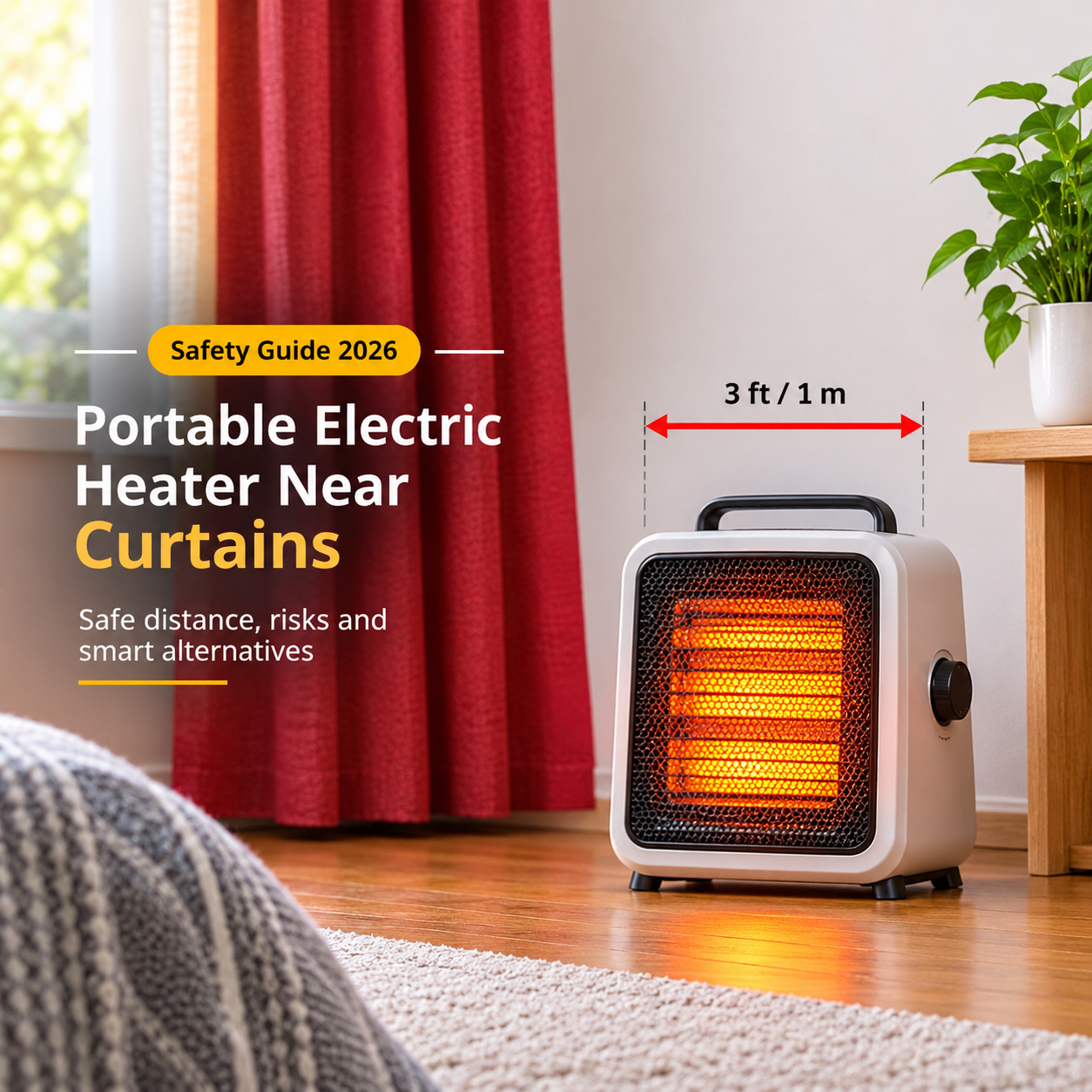
It is easy to understand why people put a heater beside a window: the glass is where the cold air comes from, and outlets are often nearby. The problem is that windows also have curtains, and fabric hanging close to a heater is one of the most common and preventable causes of home fires. Using a portable electric heater near curtains can be risky, even with a modern, well-built model.
This guide explains how far a heater should be from curtains, why that distance matters, which heater features help, and practical ways to stay warm near a window without taking chances.
Why Curtains and Heaters Are a Dangerous Mix
- Fabric ignites and spreads fire quickly: Light, loose or synthetic material can catch fire and carry flames upward fast.
- Curtains move: A draft, an open window, a pet or a child can swing fabric into the heater without anyone noticing.
- Heat builds up on fabric: Even if a curtain does not touch the heater, hot air blowing against it can slowly heat it to dangerous levels.
- Blocked airflow causes overheating: Fabric over an intake or outlet makes the heater run hotter than designed.
- Window spots are tempting: Because cold air collects there, people place heaters in the exact location where curtains hang.
How Far Should a Heater Be From Curtains?
The widely recommended rule is a minimum of 3 feet (about 1 metre) in every direction. The clear zone should also include bedding, furniture, clothes, paper, rugs and anything else that can burn. In front of the heater, where hot air is pushed out, more space is better.
Some heater manuals specify larger distances, especially for infrared and fan models. The manufacturer’s number always wins over a general rule of thumb.
Does the Heater Type Make a Difference?
Some heaters have cooler outer surfaces, which lowers the risk of accidental contact, but no portable heater is safe to use against fabric. Here is how the common types behave:
| Heater type | Heat behavior | Risk near curtains |
|---|---|---|
| Oil-filled radiator | Warm sides and top, no glowing element | Still hot; needs the full clearance |
| Ceramic fan heater | Hot air blasts from the front | Never point it at fabric; keep intake and outlet clear |
| Infrared / quartz | Glowing element radiates intense heat | Highest risk near drapes; keep far away |
| Convection panel | Moderately warm surface | Lower surface heat, but still keep 3 ft |
| Micathermic panel | Slim, wall-side friendly | Keep clear of curtains that move in drafts |
Heater Safety Features to Look For
Safety features cannot replace distance, but they add useful protection in case something goes wrong.
Common Mistakes People Make
Safe Ways to Stay Warm Near a Window
1. Move the heater, not just the curtain
Place the heater on a flat, hard floor surface away from the window, ideally against a wall, with a wide clear area around it. Warm air will still circulate through the room.
2. Tie curtains back securely
If you must keep the heater in a window area, use curtain tie-backs or hooks that hold the fabric well away from the heater, and make sure drafts cannot swing it free.
3. Switch to shorter curtains or blinds
Sill-length curtains, roller blinds, or shades keep fabric out of the heater’s zone. Window-adjacent spaces become much safer without long drapes hanging to the floor.
4. Seal the window instead
If cold air is the reason you want a heater near the window, reduce the cold at the source. Weatherstripping, window insulation film and thermal curtains (kept away from the heater) all help.
5. Use a thermostat and timer
Pick a model with an adjustable thermostat so it cycles instead of running at full power constantly. A timer is useful for pre-warming a room.
Safe Heater Habits Checklist
- Plug the heater directly into a wall outlet, never a power strip or extension cord.
- Place it on a stable, level, hard surface.
- Unplug it when you leave the room for long, go to bed or go out.
- Inspect the cord and plug for heat damage, discoloration or fraying.
- Test your smoke alarms every month and keep a fire extinguisher accessible.
- Keep children and pets away with a clear boundary around the heater.
- Read the manual and follow the distance guidance for your specific model.
How to Choose a Heater for a Room With Curtains
| Situation | Suggested heater | Why |
|---|---|---|
| Bedroom with long drapes | Oil-filled radiator on a clear floor area | Quiet, steady, no glowing element |
| Living room with large windows | Convection or micathermic panel placed against a wall | Even warmth, away from the window |
| Home office with blinds | Small ceramic heater with thermostat | Fast, compact, easy to position |
| Rental with limited outlets | Heater with timer and tip-over protection | Added safety if outlets are awkward |
Frequently Asked Questions
How far should a portable heater be from curtains?
Fire safety groups and manufacturers recommend at least 3 feet (about 1 metre) of clear space on all sides, and more in front of the heater. Always follow the distance printed in your heater’s manual if it is larger.
Can a heater with auto shut-off be placed near curtains?
No. Auto shut-off features reduce risk but cannot make it safe to place fabric close to a heater. Treat them as a backup, not a replacement for clearance.
Are oil-filled radiators safe near curtains?
They run cooler on the surface than glowing-element heaters, but they still get hot enough to be dangerous. Keep the same 3-foot clear zone.
What if my only outlet is by the window?
Tie curtains back securely, use a shorter curtain, or choose a heater that sits against a wall away from the window. Another option is to ask an electrician about adding an outlet in a safer spot.
What should I do if my curtains touch the heater?
Switch it off, unplug it once it is cool, and move either the heater or the curtains. If the fabric scorched or smells burnt, stop using that spot and check the heater for damage.
Final Thoughts
A portable electric heater and a curtain should never be neighbors. Keep at least 3 feet of clear space, choose a model with tip-over and overheat protection, and rearrange your room so the heater sits on open floor away from fabric. A few small changes, like tying back curtains or switching to shorter window coverings, can make the difference between a cozy room and a dangerous one.
Disclosure: Some affiliate sites earn a commission from qualifying purchases at no extra cost to readers. Add your own disclosure text here as required.