Disclosure: This article may contain affiliate links in the product sections you add. If you buy through them, we may earn a small commission at no extra cost to you.
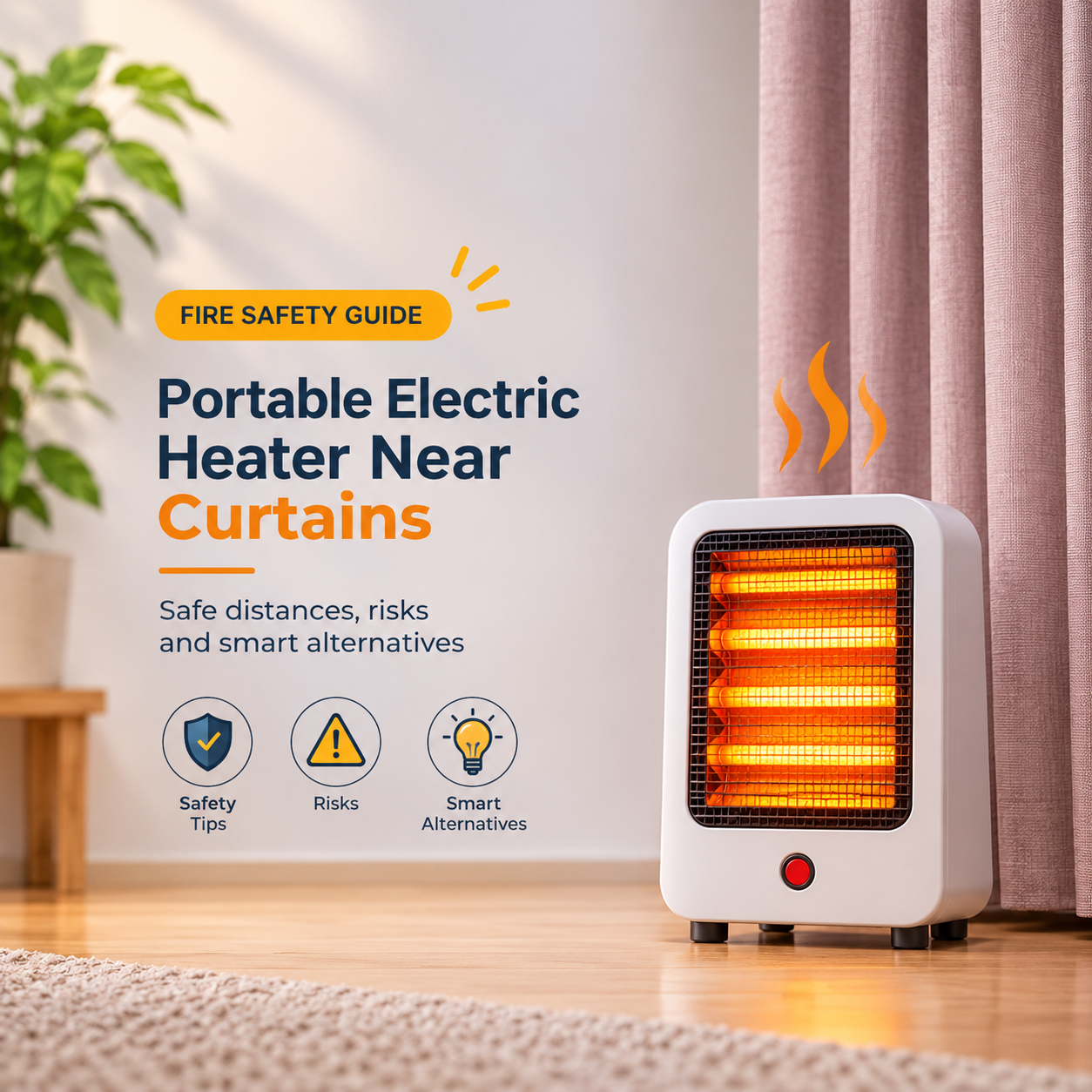
Windows are often the coldest spot in a room, so it is natural to put a heater right next to them. But that is exactly where the curtains hang. Using a portable electric heater near curtains is one of the most common and most preventable causes of home heating fires.
In this guide you will learn why curtains and heaters are a dangerous mix, how much space you really need, how different heater types behave, what to do if your room layout is tight, and how to keep that cold window area warm without taking risks.
No, you should not use a portable electric heater near curtains. Keep every heater at least 3 feet (about 1 meter) away from curtains and anything else that can burn. If your layout makes that impossible, move the heater, tie the curtains back, or choose a different way to warm the room.
Table of Contents
- Why Curtains and Heaters Are a Dangerous Mix
- The 3-Foot Rule
- How Different Heater Types Behave
- Which Curtain Fabrics Are Riskiest
- What to Do If Space Is Tight
- Safer Ways to Warm a Cold Window
- Safety Features to Look For
- Do and Don’t Checklist
- What to Do If a Curtain Is Scorched or Catches Fire
- Frequently Asked Questions
- Final Verdict
Why Curtains and Heaters Are a Dangerous Mix
A heater produces heat by running electricity through an element that can get extremely hot. Fabric is light, dry and full of air, which makes it easy to ignite and quick to spread flames. Put the two together and a small mishap can turn into a serious fire within moments.
- Direct contact or radiant heat: Fabric does not need to touch the heater. Strong radiant heat over time can dry out and ignite nearby material.
- Air movement: Drafts from windows and the airflow from fan heaters can push light curtains toward the heater.
- Fast spread: Once a curtain ignites, flames can travel upward to the ceiling quickly.
- Hidden hazards: A heater can be knocked over by pets or children, or a curtain can slip into the heater unnoticed while you are out of the room.
Space heaters are consistently named among the leading causes of home heating fires by fire safety organizations, and in most cases the cause is the heater being too close to something that can burn.
The 3-Foot Rule
Fire safety authorities commonly recommend keeping a portable heater at least 3 feet (about 1 meter) from anything that can burn, including curtains, bedding, furniture, clothing, paper and rugs. This clearance applies to the front, sides and back of the heater.
Always check your heater’s manual too. Some models specify a larger distance, and that number takes priority over any general rule.
How Different Heater Types Behave
No type of portable heater is safe to place against curtains, but they carry different risks.
Radiant and Infrared Heaters
These have very hot elements or reflectors that emit intense heat in one direction. They pose a high risk if anything flammable is in front of them.
Fan and Ceramic Heaters
The heating element is enclosed, but the fan can blow hot air and push light fabric around. Sheer curtains can drift into the airflow.
Oil-Filled Radiators
These run with lower surface temperatures than many other types and are generally steady and quiet, but the surface still gets hot enough to scorch fabric. They are still not safe against curtains.
Convection Panel Heaters
These typically have cooler surfaces and gentle airflow, but they still need clearance from anything combustible.
Which Curtain Fabrics Are Riskiest
Fabric type affects how fast curtains react to heat. None are completely safe near a heater.
| Curtain Material | Behavior Near Heat | Notes |
|---|---|---|
| Cotton and linen | Can ignite and burn quickly | Natural fibers burn readily, especially when thin and dry |
| Polyester and nylon | Can melt, drip and burn | Molten fabric can cause burns and spread flames |
| Sheer / voile | Very light, moves with air | Billows easily into a heater’s airflow |
| Heavy lined or thermal | Slower to catch, but still combustible | Good for insulation, but needs the same clearance |
| Flame-retardant treated | Resists ignition and spread | Safer, but not fireproof, so keep the distance |
What to Do If Space Is Tight
Many rooms do not have a perfect spot. Here are practical solutions.
| Situation | What To Do |
|---|---|
| Window with long floor-length drapes | Tie them back, or move the heater to a different wall |
| Heater under a window | Choose another spot, or shorten curtains to the sill and keep them well clear |
| Small room with limited space | Use a wall-mounted heater or a heater with a low, safe profile |
| Windy or drafty window | Seal the draft first so curtains do not blow toward the heater |
| Cold corner you want to heat | Use thermal curtains and window film instead of a heater |
If you cannot achieve safe clearance, the answer is not to risk it. Rearrange furniture, use a fixed heater in a better position, or choose a different way to heat the space.
Safer Ways to Warm a Cold Window
Often the real problem is heat loss at the window. Fix that, and you may not need a heater next to it.
- Thermal or blackout curtains: Insulated lining reduces heat loss through glass.
- Window insulation film: A clear film applied to the glass cuts drafts and heat transfer.
- Draft stoppers: Seal gaps under doors and around frames.
- Weatherstripping: Close gaps around window sashes.
- Cellular shades: The honeycomb structure traps air for better insulation.
- Move the seating area: Place chairs and beds away from the coldest wall.
- Heat the room from a safer spot: A heater on a clear wall can still warm the room evenly.
Safety Features to Look For
Safety features do not cancel the clearance rule, but they add protection if something goes wrong.
- Tip-over switch: Cuts power if the heater falls.
- Overheat protection: Shuts the heater off if it gets too hot.
- Cool-touch housing: Reduces burn risk and surface heat.
- Thermostat: Prevents constant full-power operation.
- Timer: Turns the heater off automatically.
- Recognized safety certification: Look for a respected safety mark on the product.
- Stable base: Reduces the chance of being knocked over.
Do and Don’t Checklist
What to Do If a Curtain Is Scorched or Catches Fire
- Unplug the heater if it is safe to do so, and move away from it.
- If there is a fire, leave the room, close the door behind you, and call your local emergency number immediately.
- Do not use water on an electrical fire. Only use an extinguisher if you are trained and it is safe.
- If you see scorch marks or smell burning, stop using the heater and have it inspected or replaced.
- Replace damaged fabric and review your setup before using any heater again.
- Check your smoke alarms and make sure there is one in the room or nearby hallway.
Frequently Asked Questions
How far should a heater be from curtains?
At least 3 feet (about 1 meter) in every direction, or more if the manufacturer’s manual says so.
Can I put a heater under a window?
It is best to avoid it. Curtains hang right above that area and drafts can blow them into the heater. If you must, keep curtains well clear and shorter than the sill.
Is an oil-filled heater safer near curtains?
Its surface may be less intense than some other heaters, but it can still scorch or ignite fabric. The 3-foot rule still applies.
Are flame-retardant curtains safe next to a heater?
They resist ignition better, but they are not fireproof. Keep normal clearance.
Can I tie curtains back and place the heater close?
Tying curtains back helps, but you still need the full clearance. Fabric can loosen or fall, so do not rely on a tie alone.
Is it safe to use a heater while I sleep?
Fire safety guidance generally advises turning heaters off when you go to sleep or leave the room. Use a warm blanket or a safer overnight heating solution instead.
Should I use a heater with a timer near windows?
A timer is useful, but it does not replace safe placement. Keep the area clear first, then use a timer to limit run time.
What is the safest way to heat a room with lots of curtains?
Place the heater on a clear wall away from all fabric, insulate the window so it loses less heat, and keep curtains tied back or shortened.
Final Verdict
A portable electric heater and curtains should never be neighbors. Keep at least 3 feet of clear space, choose a heater with strong safety features, and fix the cold window itself with insulation instead of pushing heat toward it. A few small changes to your setup can keep your home warm without risking a fire.
Use the checklists above to review your room today, and add your preferred heaters and window insulation products to this article to help readers choose safely.