







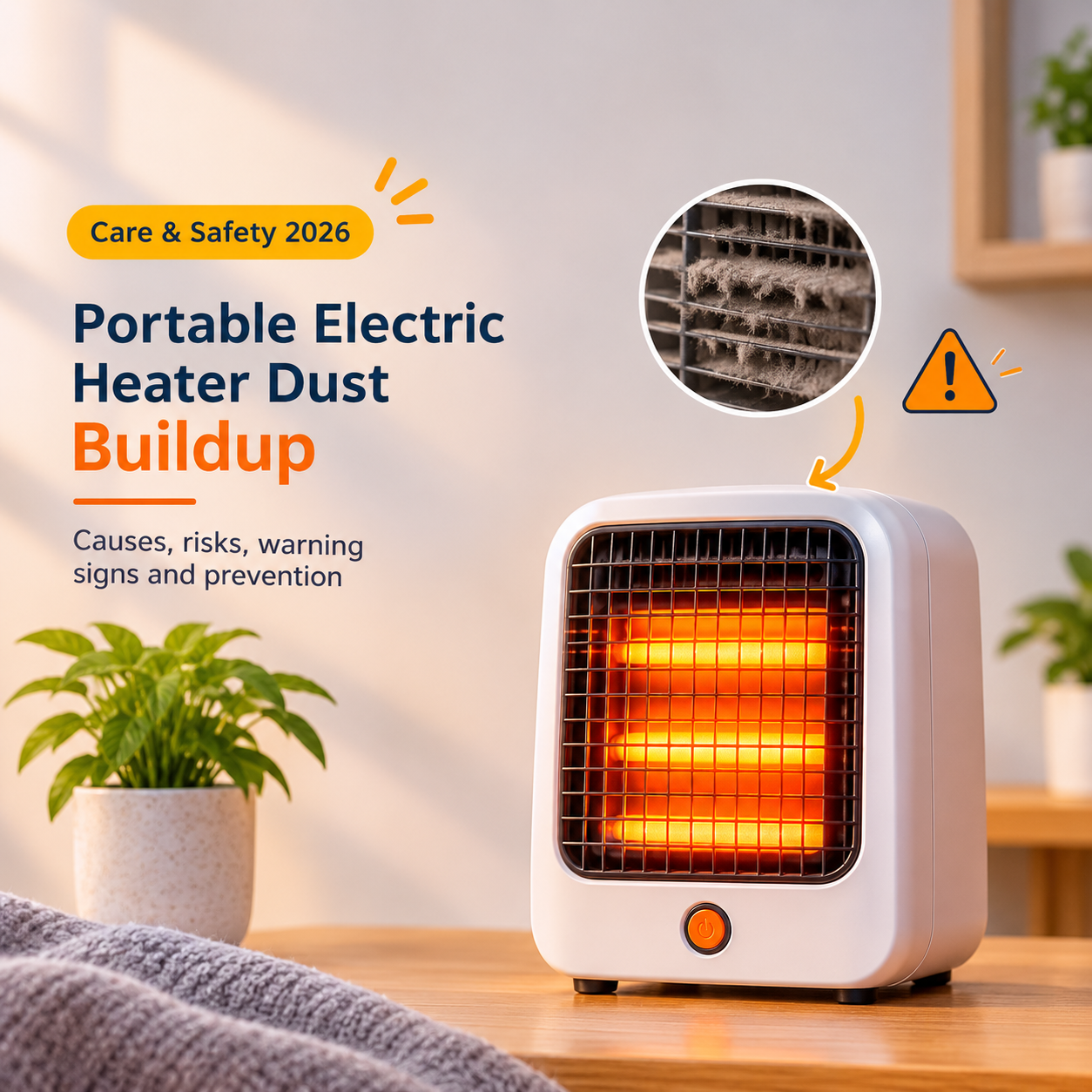
You pull your heater out of storage, switch it on, and a strange smell fills the room. It is a common experience, and the cause is usually the same: dust buildup on a portable electric heater. While light dust is normal, heavy buildup can reduce performance, cause overheating and even create a fire risk.
This guide explains where heater dust comes from, how it affects safety and performance, how to spot problems, and how to prevent buildup before it starts.
Why Dust Collects on Portable Heaters
| Cause | What happens | Prevention |
|---|---|---|
| Storage over summer | Dust settles on vents, element and fan | Cover or box the heater before storing it |
| Fan-driven airflow | Fans pull room dust and lint inside | Vacuum intakes regularly |
| Pets and carpets | Hair and fibers get sucked into low intakes | Place on a hard floor, groom pets |
| Dusty or renovated rooms | Fine dust gets into every opening | Clean the heater after any dusty work |
| Placement near beds or sofas | Lint from fabric reaches the heater | Keep a 3-foot clear zone |
How Dust Buildup Creates Problems
- Restricted airflow: Blocked vents trap heat inside the heater.
- Overheating: Parts run hotter than intended, which can trigger the safety cut-out or damage components.
- Burning smell: Dust cooking on a hot element creates an unpleasant odor.
- Fire risk: Lint and hair near a hot element can smolder, especially if buildup is heavy.
- Reduced efficiency: The heater works harder to warm the room.
- Air quality: Dust can be blown around the room, which may affect people with allergies.
Is the Burning Dust Smell Normal?
A short, mild smell when you first switch on a heater after storage is common, because dust on the element burns off. It should fade within minutes. A smell that continues, smells like hot plastic, or comes with smoke, sparks or unusual noises is not normal. Switch the heater off, unplug it when safe, and do not use it until it has been checked.
Warning Signs to Watch For
How Serious Is the Dust? A Quick Guide
Which Heater Types Collect the Most Dust?
| Heater type | Dust risk | Tip |
|---|---|---|
| Ceramic fan heater | High: fan draws in dust and lint | Check intake and grille often |
| Infrared / quartz | Medium: dust sits on reflector and guard | Dust gently when cool |
| Oil-filled radiator | Lower: no fan, but dust gathers on fins | Wipe exterior regularly |
| Convection / panel heater | Medium: dust collects in vents | Vacuum slots |
| Tower heater | High: slim vents clog easily | Vacuum intake and outlet |
Fan-driven heaters usually collect dust fastest because they move room air through the unit, but every type attracts some. Slim tower heaters with narrow vents also clog easily.
How to Remove Dust Safely
- Unplug the heater and let it cool completely.
- Vacuum the vents, intake and grille with a brush attachment.
- Use a soft brush to reach between slats and fins.
- Use compressed air briefly if the manual permits, keeping the can upright and at a distance.
- Wipe the exterior with a barely damp microfiber cloth.
- Let it dry fully, inspect the cord and plug, then reconnect.
Do not open the casing, spray liquids into vents or use harsh chemicals unless your manual specifically allows it.
How to Prevent Dust Buildup
Store it properly
Clean the heater before storing it, then place it in its original box or a clean bag. This stops dust from settling on the element over the warm months.
Choose a good location
Place the heater on a hard floor rather than carpet, away from bedding, upholstered furniture and curtains, and keep a 3-foot clear zone around it.
Control dust in the room
Vacuum and dust regularly, wash bedding and curtains, and keep pet hair under control. Fewer particles in the room means fewer in the heater.
Check before the season starts
Before first use each season, inspect the grille, vents and cord. Clean away dust, and run the heater briefly in a ventilated room to burn off any remainder.
When Dust Means It Is Time to Replace the Heater
- The heater smells strongly of burning even after cleaning.
- It shuts off repeatedly or trips the breaker.
- The casing is discolored or warped from heat.
- The cord or plug is warm, frayed or melted.
- The heater is old and dust has built up inside where it cannot be reached.
Frequently Asked Questions
Is dust buildup on a heater dangerous?
It can be. Dust and lint near a hot element can smolder, block airflow and cause overheating, which raises fire risk. Keeping the heater clean is a simple and important safety step.
Why does my heater smell like burning dust?
When a heater is used after storage, dust on the element burns off and creates a brief smell. If it fades quickly, it is usually harmless. If it continues, or smells like plastic or smoke, unplug the heater and have it checked.
How do I remove dust from inside a heater?
Unplug it, let it cool, and vacuum the vents with a brush attachment. A soft brush or short bursts of compressed air can help. Do not open the casing or spray liquids inside unless the manual allows it.
Can dust affect my air quality?
A dusty heater can blow dust and odors into the room, which may bother people with allergies or sensitivities. Cleaning the heater and keeping the room tidy helps.
How often should I check for dust?
Check vents and grilles every few weeks during heavy use, before the first use each season, and after any dusty work in the room.
Final Thoughts
Dust buildup is a normal part of owning a portable electric heater, but it should never be ignored. Keep vents clear, clean the heater regularly, store it properly and place it away from lint and fabric. If it smells strongly, overheats or shuts off, stop using it and get it checked. A few minutes of attention keeps your heater safer, quieter and more effective all season.
Disclosure: Some affiliate sites earn a commission from qualifying purchases at no extra cost to readers. Add your own disclosure text here as required. Always follow your heater manufacturer’s instructions for cleaning and maintenance.