

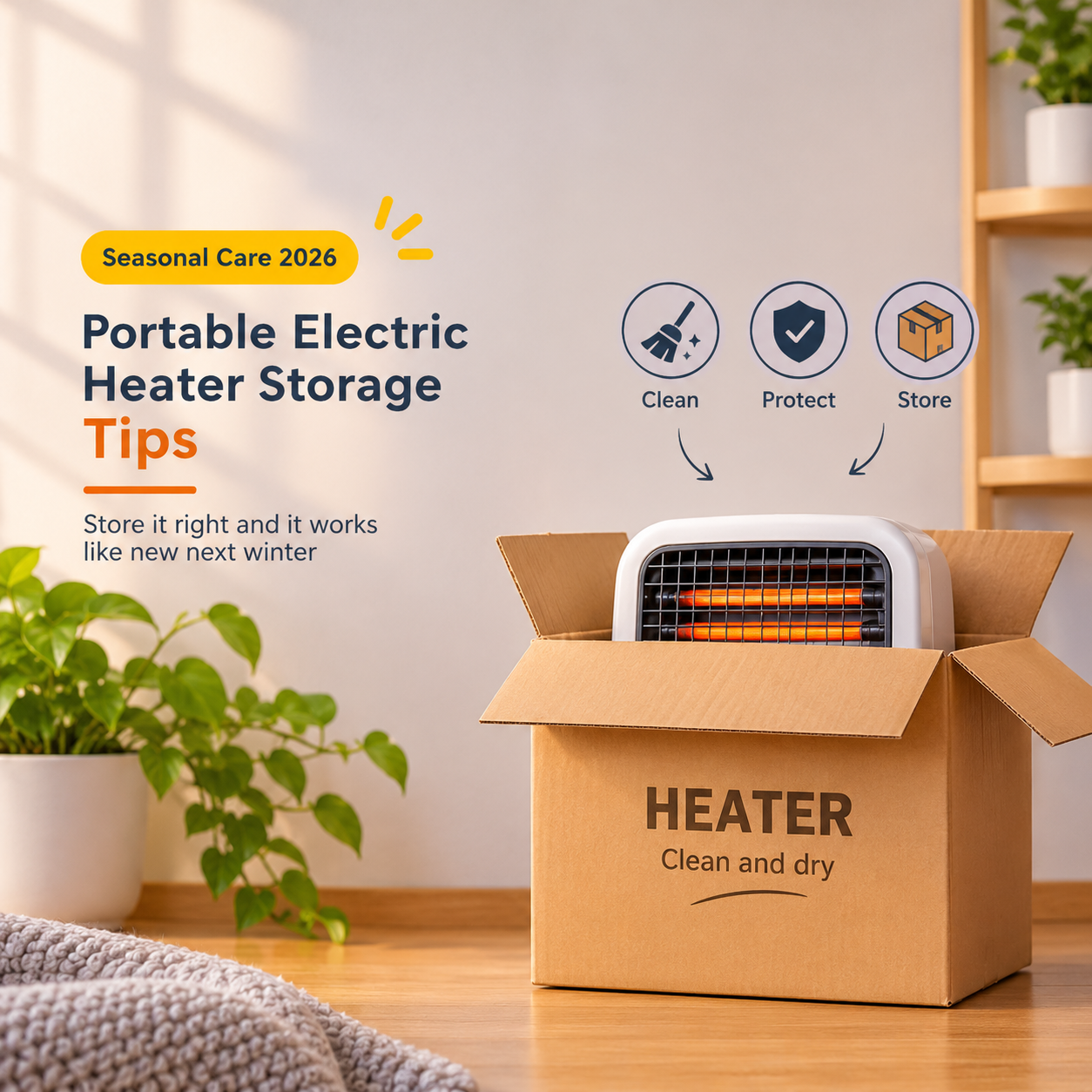
When spring arrives and the cold fades, the last thing most people think about is the heater. They switch it off, push it into a corner or the garage, and forget it until the first chilly night of the next winter. Unfortunately, that is how heaters end up dusty, damaged or unsafe. A few simple portable electric heater storage tips can keep yours clean, reliable and ready to go.
This guide explains how to prepare your heater for storage, where to keep it, how to protect the cord, type-specific advice, and what to check before you use it again.
Why Proper Storage Matters
- Prevents dust buildup: A covered heater collects far less dust on the element and vents.
- Avoids moisture damage: Damp air can corrode connections and damage electrical parts.
- Protects the cord and plug: Tight wrapping and crushing cause hidden wire damage.
- Prevents physical damage: Knocks can crack casings, bend grilles or break fragile elements.
- Improves safety: A heater stored well is less likely to fail or smell when you switch it on again.
Step-by-Step: Prepare Your Heater for Storage
1. Unplug and let it cool
Switch the heater off, unplug it, and wait until it has cooled completely. Storing a warm heater can melt packing material or trap heat.
2. Clean it
Vacuum dust from vents and grilles using a brush attachment, then wipe the casing with a barely damp microfiber cloth. Avoid soaking the unit or spraying liquid into vents.
3. Let it dry completely
Leave it to air dry for at least an hour. Moisture trapped during storage can cause corrosion and odors.
4. Inspect for damage
Look over the casing, plug and cord for cracks, fraying, discoloration or bent prongs. If you find damage, do not put it away to use later. Replace the heater or have it repaired.
5. Pack it properly
Place the heater in its original box if you still have it, or use a sturdy box or breathable cover. Avoid plastic bags that trap moisture for long periods.
How to Store the Power Cord
- Loosely coil the cord in large loops, without sharp bends or kinks.
- Do not wrap it tightly around the heater, which strains the wire where it enters the plug and housing.
- Secure the coil with a soft tie or hook-and-loop strap, not wire or tape that cuts into the insulation.
- Keep the plug protected so the prongs do not bend.
Where Should You Store a Portable Heater?
| Location | Pros | Notes |
|---|---|---|
| Closet or wardrobe shelf | Dry, protected, easy to reach | Keep away from clothes touching the heater if it is not fully cooled |
| Under the bed | Space-saving | Use a lidded box to keep dust out and check for moisture |
| Attic | Often spacious | Avoid if it gets very hot or humid |
| Basement | Cool and spacious | Avoid damp areas; raise off the floor |
| Garage or shed | Convenient | Only if dry and away from chemicals and extreme temperature changes |
Storage Tips by Heater Type
| Heater type | Storage tip | Watch out for |
|---|---|---|
| Ceramic fan heater | Keep intake and outlet free of dust; cover or box it | Avoid crushing the grille |
| Oil-filled radiator | Store upright and as the manual directs; keep wheels intact | Do not tip or lay flat unless the manual allows it, to avoid oil moving into the wrong parts |
| Infrared / quartz heater | Wrap with soft padding and keep in a box | The quartz element is fragile, so avoid knocks |
| Convection / panel heater | Store flat or upright per manual, in a dry spot | Protect the casing from scratches |
| Tower heater | Store upright in a box or tall cover | Do not stack things on top |
Common Storage Mistakes to Avoid
Storage Timeline Through the Year
| When | What to do |
|---|---|
| End of winter | Unplug, cool, clean, dry, inspect, pack |
| During storage | Check once or twice for moisture, pests or damage |
| Before first use next season | Unpack, dust again, inspect cord and plug |
| First run | Use in a ventilated room, watch for smells or noise |
| If anything seems wrong | Stop using it and have it inspected or replace it |
Space-Saving Ideas for Small Homes
- Use a slim, lidded storage box that slides under a bed.
- Store compact heaters on a high closet shelf in their original packaging.
- Keep the box labeled with the heater model, so you can find the manual easily.
- Store the manual and any remote or accessories in a zip bag taped to the box.
- If you have several heaters, store them together with a note of the last cleaning date.
What to Check When You Take It Out of Storage
- Unpack it and look for signs of moisture, pests, rust or damage.
- Wipe away dust and clear the vents.
- Inspect the cord and plug carefully.
- Place it on a hard, flat, level surface with a 3-foot clear zone.
- Plug it directly into a wall outlet and run it briefly in a ventilated room.
- Stop using it if you notice smoke, strong smells, sparks, unusual noise or a hot plug.
Frequently Asked Questions
Where is the best place to store a portable heater?
A dry, cool spot with a stable temperature, such as a closet shelf or a clean, dry room. Avoid damp basements, humid sheds and places with large temperature swings.
Should I keep the heater in its original box?
If you still have it, yes. The box fits the heater and protects it from knocks and dust. Otherwise, use a sturdy box or a breathable cover.
Can I store an oil-filled radiator on its side?
Follow the manual. Many manufacturers advise keeping oil-filled radiators upright, and tipping them can cause problems. Check the instructions for your model.
Is it okay to store a heater in the garage?
Only if the space is dry and free from extreme heat, cold and chemicals. Garages can have moisture and temperature swings, which may damage electrical parts over time.
What should I check before using a stored heater?
Look over the casing, cord and plug for damage or discoloration, remove dust from vents, and let it run briefly in a ventilated room. If you notice a lingering smell, noise or heat problem, stop using it.
Final Thoughts
The best portable electric heater storage tips come down to a few easy habits: clean it, dry it, inspect it, pack it carefully, coil the cord loosely and store it in a cool, dry place. Take a few minutes in spring and a few more in autumn, and your heater will be safer, cleaner and more dependable when the cold returns.
Disclosure: Some affiliate sites earn a commission from qualifying purchases at no extra cost to readers. Add your own disclosure text here as required. Always follow your heater manufacturer’s instructions for storage and maintenance.