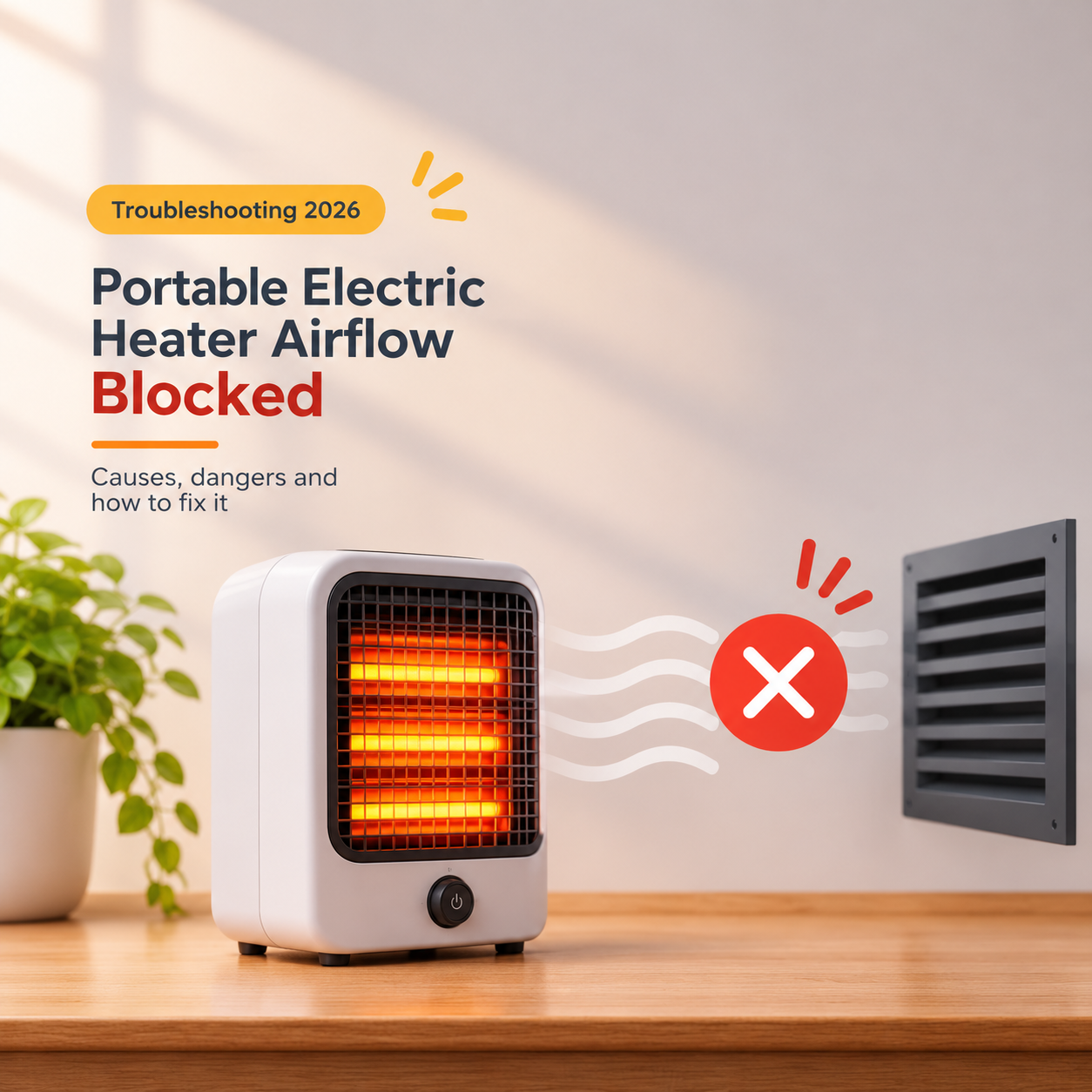
Your heater switches off after a few minutes, blows weak air, or the casing feels hotter than usual. In many cases, the problem is not a faulty heater at all but blocked airflow. Heaters rely on a steady flow of air to move heat into the room and to keep internal parts from overheating. When something gets in the way, performance drops and safety risks rise.
This guide explains why airflow gets blocked, how to recognize the signs, how to fix the problem safely, and how to prevent it.
Why Airflow Matters for a Portable Heater
- Moves warmth into the room: Fan and convection heaters depend on air to carry heat away from the element.
- Cools internal parts: Airflow stops the heater’s electronics and casing from overheating.
- Supports safety systems: Overheat protection works as a backup, but it should not be triggered constantly.
- Improves efficiency: Unrestricted airflow warms a room faster using less energy.
Common Causes of Blocked Heater Airflow
| Cause | What happens | Fix |
|---|---|---|
| Furniture or walls too close | Warm air cannot leave, intake starves | Move heater into open space |
| Curtains, bedding, clothes | Fabric covers vents and may overheat | Remove fabric, keep a clear zone |
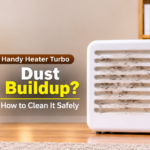
| Dust, lint and pet hair | Clogs grille, fan and filter | Unplug, cool, vacuum vents |
| Soft surface or carpet | Intake near the base gets blocked | Use a hard, level surface |
| Drying clothes on top | Blocks outlet and risks fire | Never use a heater as a dryer |
| Faulty or jammed fan | Air does not move properly | Stop use and have it checked |
What Happens When Airflow Is Blocked?
- Overheating: Heat builds up inside the casing instead of leaving it.
- Automatic shut-off: Safety cut-outs trip repeatedly, leaving you with a heater that stops mid-use.
- Burning smells: Dust or fabric on hot parts creates odors and smoke.
- Component damage: Constant heat stress shortens the life of the element, fan and wiring.
- Fire risk: Fabric, lint or paper near a hot, blocked heater can ignite.
- Poor heating: The room warms slowly and unevenly.
Signs Your Heater’s Airflow Is Blocked
How to Fix Blocked Airflow Safely
1. Switch off and unplug
Always disconnect the heater and wait for it to cool before touching anything.
2. Clear obstacles
Move furniture, curtains, bedding, clothes, boxes and anything else that is near or on the heater. Set it in open space on a hard, flat surface.
3. Inspect the vents
Look at the intake and outlet grilles for dust, lint, hair or foreign objects. Check the filter if your model has one.
4. Clean dust and lint
Use a vacuum with a brush attachment and a soft brush to remove buildup. Wipe the casing with a barely damp cloth and let everything dry completely.
5. Test it
Plug it directly into a wall outlet and run it on a low setting, watching for smells, noise, hot spots or shutdowns. If problems continue, stop using the heater.
Does the Heater Type Matter?
| Heater type | How blocking affects it | Tip |
|---|---|---|
| Ceramic fan heater | Fan and grille can clog; intake often at back or base | Keep back and base clear |
| Oil-filled radiator | No fan, but covering fins traps heat | Never drape items over fins |
| Infrared / quartz | Radiant heat reflects off nearby objects | Keep objects out of the beam path |
| Convection / panel heater | Relies on air passing through bottom and top vents | Keep both vents open |
| Tower heater | Narrow vents block easily | Check front and rear slots |
How to Prevent Blocked Airflow
- Choose a spot with plenty of open space, away from walls, furniture and fabric.
- Never place items on or in front of the heater, or use it to dry clothes.
- Keep pets and children from pushing objects toward the heater.
- Vacuum vents every few weeks and before each season.
- Do not use a heater inside a cabinet, under a desk or in a small enclosed space unless the manual permits it.
When to Stop Using the Heater
- It overheats or shuts off repeatedly even with a clear area and clean vents.
- You notice smoke, sparks or a strong smell of burning plastic.
- The fan makes grinding or rattling sounds.
- The plug, cord or casing is hot, discolored or damaged.
- Cleaning and repositioning does not restore normal airflow.
Frequently Asked Questions
Why does my heater keep turning off?
Many heaters have an overheat protection that shuts them off when internal temperatures rise. Blocked airflow is a common reason. Unplug it, let it cool, clear obstructions and dust, then try again. If it keeps shutting off, stop using it.
Is a blocked heater dangerous?
Yes. Blocked airflow can cause overheating, which may damage the heater and increase fire risk, especially when fabric is nearby.
How much space does a heater need around it?
A common guideline is at least 3 feet (about 1 metre) of clear space on all sides, with more in front. Your manual may specify larger distances, so follow that.
Can I put a heater in a cabinet or under a desk?
Only if the manufacturer explicitly allows it. Tight spaces restrict airflow and trap heat, so most heaters should be placed in open areas.
My heater blows weak air. What should I check?
Check for dust or lint on intake and outlet, a clogged filter if fitted, obstacles near the vents, and the fan’s operation. If cleaning does not help, the fan or motor may need professional attention or replacement.
Final Thoughts
Blocked airflow is one of the most common and fixable problems with portable electric heaters. Keep a wide clear zone, never cover or crowd the heater, clean the vents regularly and respond quickly to warning signs like shutdowns and burning smells. With good placement and basic care, your heater will warm your room more effectively and run more safely.
Disclosure: Some affiliate sites earn a commission from qualifying purchases at no extra cost to readers. Add your own disclosure text here as required. Always follow your heater manufacturer’s instructions for placement, cleaning and maintenance.