





Disclosure: This article may contain affiliate links in the product sections you add. If you buy through them, we may earn a small commission at no extra cost to you.
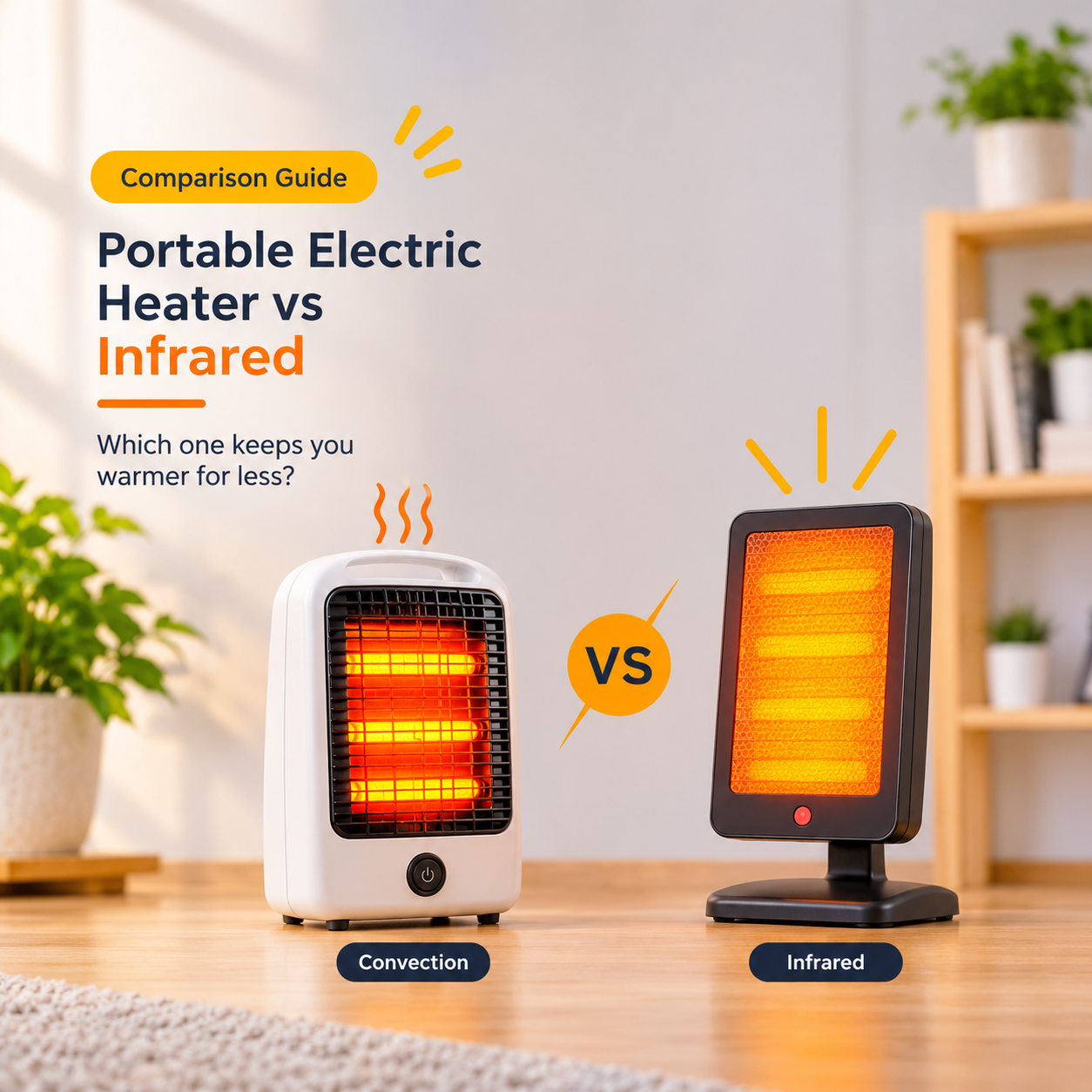
Choosing a heater sounds simple until you see the labels. “Portable electric heater” and “infrared heater” are often presented as two different categories, and the marketing for infrared models can make them sound dramatically more efficient. So which one is actually better for your home?
In this guide to portable electric heater vs infrared heater, you will learn how each one works, how they compare on warmth, cost, noise and safety, and which is the best match for your room and habits.
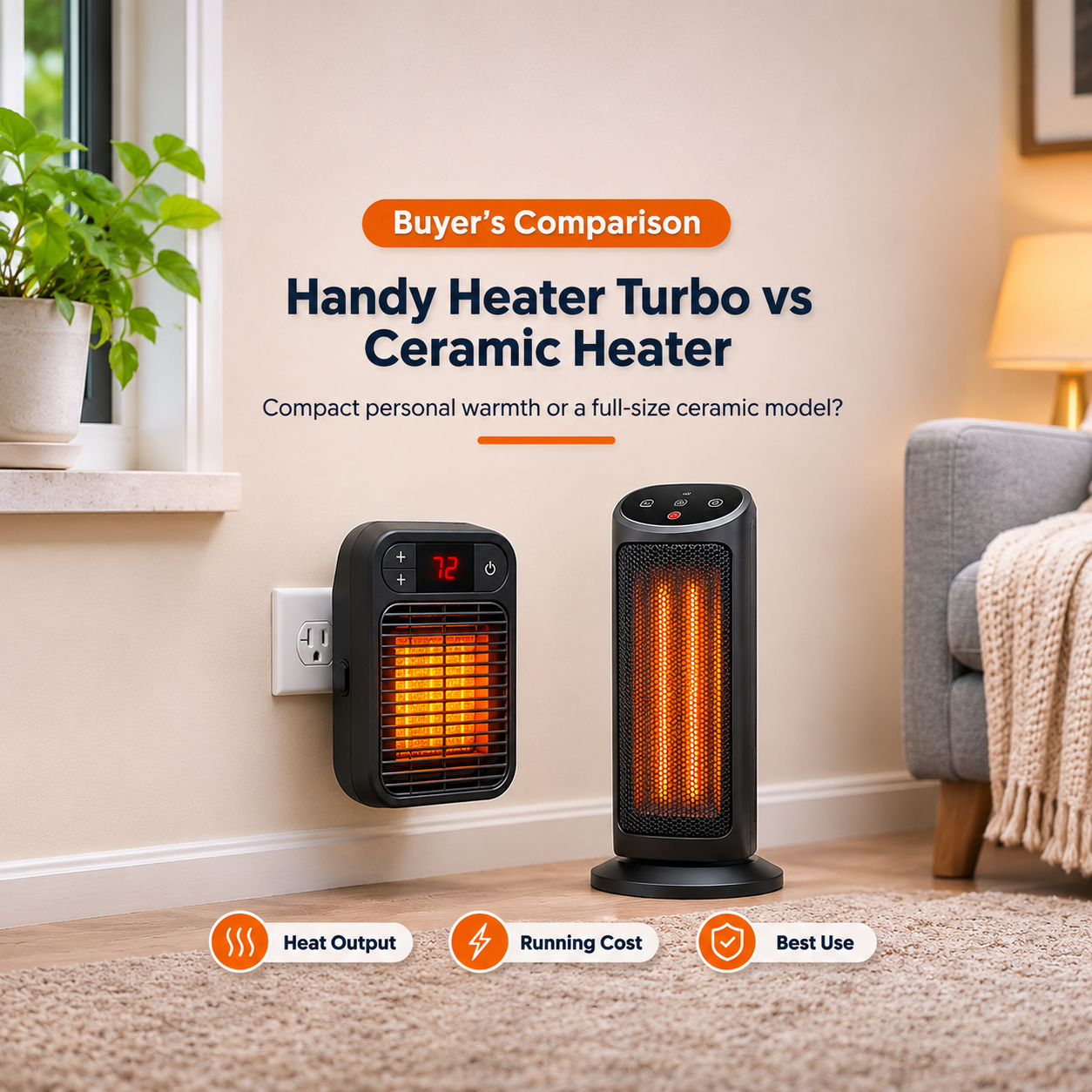
Both types are about 100% efficient at turning electricity into heat, so neither is magically cheaper at the same wattage. Choose a portable electric (convection) heater, such as a ceramic or oil-filled model, to warm a whole closed room. Choose an infrared heater to warm yourself directly in one spot, or in a drafty or open space.
Table of Contents
- What Is a Portable Electric Heater?
- What Is an Infrared Heater?
- How They Heat Differently
- Side-by-Side Comparison
- Energy Efficiency and Running Costs
- Which Is Better for Each Space?
- Pros and Cons
- Safety Considerations
- Noise and Air Quality
- How to Choose
- Frequently Asked Questions
- Final Verdict
What Is a Portable Electric Heater?
In everyday shopping, “portable electric heater” usually means a plug-in heater that warms the air in a room, known as a convection heater. They include:
- Ceramic and fan heaters: blow air across a hot element for fast warm-up.
- Oil-filled radiators: heat oil inside fins that release warmth slowly and keep radiating after the thermostat cuts off.
- Convection panel heaters: gently warm air that rises and circulates.
Technically, infrared heaters are also portable electric heaters. The difference is in how the heat reaches you.
What Is an Infrared Heater?
An infrared heater produces radiant heat. It emits infrared energy that travels in straight lines and warms the people, furniture and surfaces it hits, rather than heating the air first. It is the same principle as feeling the sun on your skin on a cold, clear day.
Common infrared types include quartz and halogen tubes, carbon elements and flat infrared panels. Many have no fan, so they run quietly.
How They Heat Differently
This single difference explains almost everything else. A convection heater needs time to warm the air, and that warm air rises and can escape through drafts. An infrared heater warms you the moment its rays reach you, but it does little for parts of the room it is not facing.
Side-by-Side Comparison
| Feature | Portable Electric (Convection) Heater | Infrared Heater |
|---|---|---|
| How it heats | Warms the air, which circulates through the room | Radiates heat that warms people and objects directly |
| Energy conversion | About 100% of electricity becomes heat | About 100% of electricity becomes heat |
| Best coverage | Whole room (small to medium) | The area in front of the heater |
| Feels warm | After the air warms up (fan models are quick) | Almost instantly on your skin |
| Air movement | Fan models blow air; oil and panel types are gentle | No fan in most models, no airflow |
| Noise | Fan heaters can be noisy; oil-filled are quiet | Usually silent |
| Drafty or open spaces | Warm air escapes quickly | Still warms you directly |
| Heat after switch-off | Oil-filled keeps radiating; fan stops fast | Stops quickly, panel types hold a little heat |
| Typical use | Bedrooms, living rooms, offices | Desks, garages, workshops, patios |
Energy Efficiency and Running Costs
This is where marketing can mislead. Both types use resistive heating and convert nearly all electricity into heat. At the same wattage, they cost the same to run. A 1,500 W convection heater and a 1,500 W infrared heater both use 1.5 kWh per hour.
Savings are possible in one situation: an infrared heater can feel warmer at a lower wattage if you are sitting in its path, so you may be comfortable with a smaller heater, or with the room set to a cooler temperature. That saves money because you use less power, not because the technology is more efficient.
Running cost = kilowatts x hours of use x electricity rate per kWh
Be skeptical of claims like “saves 50% on your bill.” A heater cannot create more heat than the electricity it uses. If you need heat for many hours every day, a heat pump is usually far cheaper than either type.
Which Is Better for Each Space?
| Where You Use It | Better Pick | Why |
|---|---|---|
| Bedroom | Convection (oil-filled or ceramic) | Even room warmth and quiet operation with a thermostat |
| Living room | Convection, or infrared for one seat | Whole-room warmth or targeted warmth for where you sit |
| Home office desk | Infrared | Warms you directly at a low wattage |
| Garage or workshop | Infrared | Heats you and your work area, even with drafts |
| Patio or open area | Infrared (outdoor-rated) | Air heaters lose their warmth into open air |
| Small closed room | Convection | Warms the whole space with a thermostat |
| Bathroom | Check ratings first | Use only models rated for bathrooms |
Pros and Cons
| Portable Electric (Convection) | Infrared | |
|---|---|---|
| Pros | Warms the whole room; thermostat control; many sizes and prices; oil-filled models hold heat | Instant warmth; silent; good for spot heating; works in drafty spaces; no airflow stirring up dust |
| Cons | Slow to feel warm in some types; fan noise; warm air rises and escapes; stops heating when switched off | Warms only what it faces; blocked rays create cold spots; glowing parts need clearance; not ideal for whole-room heating |
Safety Considerations
Both kinds of heaters can cause fires or burns if misused, and neither should be placed near curtains, bedding or furniture. A few differences to remember:
- Keep 3 feet (1 meter) of clearance around any heater. Infrared heaters project intense heat forward, so keep anything flammable well out of their path.
- Glowing elements: Some infrared heaters have exposed hot tubes or elements. Choose a guarded design if children or pets are around.
- Tip-over and overheat protection: Look for both on any heater you buy.
- Plug directly into the wall: Avoid extension cords and power strips.
- Do not leave heaters unattended, and avoid running them while you sleep unless the model is designed for that and has the right safety features.
- Recognized safety certification: Check the product for a respected safety mark.
Noise and Air Quality
Fan heaters make noise and can circulate dust, which some people notice. Oil-filled and panel heaters are quiet. Most infrared heaters are silent and do not move air. They are a pleasant fit for a home office or a quiet room, though they do not humidify or change air quality in any way. Neither type burns fuel, so neither produces combustion fumes.
How to Choose
- Decide what you want to heat: a whole room or just yourself.
- Check room size: use about 10 watts per square foot as a rough guide for a convection heater.
- Consider how you use the space: long steady heating favors oil-filled. Short bursts favor ceramic or infrared.
- Look at draft levels: drafty areas favor infrared.
- Check controls: a thermostat, timer and multiple power settings help control cost.
- Verify safety features: tip-over switch, overheat protection and a guarded design.
- Think about noise: choose a silent or quiet model for bedrooms and offices.
- Read reviews and warranty terms: real owner feedback shows durability and noise better than specs alone.
Frequently Asked Questions
Is an infrared heater more energy efficient than a portable electric heater?
Not in terms of converting electricity to heat. Both are about 100% efficient. An infrared heater can feel more efficient in spot heating because it warms you directly, which may let you use less power overall.
Which is cheaper to run?
At the same wattage they cost the same. The cheaper choice is the one that lets you stay comfortable at a lower wattage or for fewer hours.
Can an infrared heater heat a whole room?
It can warm objects and people across a room, but it is generally not as good as a convection heater for evenly warming all the air in a closed space. It works best when it is aimed where you are.
Which heater is better for a bedroom?
An oil-filled or ceramic convection heater with a thermostat is usually the better choice because it provides even warmth. Whatever you pick, follow safety guidance and do not leave it running unattended.
Are infrared heaters safe?
They are safe when used correctly, with proper clearance and safety features. The surfaces and rays can be very hot, so keep flammable items away.
Do infrared heaters work in a garage or workshop?
Yes, they are often a good fit because they warm you and your work area directly, even if the air stays cool or drafty.
Is an oil-filled heater a type of portable electric heater?
Yes. It is a convection-style heater that is slow to heat up but keeps radiating warmth after the thermostat cuts off, which makes it good for steady, longer use.
Is a heat pump better than both?
For many hours of daily heating, yes. A heat pump delivers roughly two to four units of heat per unit of electricity, so it is far cheaper to run, although it costs more up front.
Final Verdict
There is no universal winner. Both are equally efficient at turning electricity into heat, and both cost the same at the same wattage. Choose a portable electric (convection) heater if you want to warm a whole closed room evenly. Choose an infrared heater if you want fast, direct warmth for one person or area, or if you are heating a drafty or open space.
Use the comparison tables and checklist above to match the heater to your space, put safety features first, and add your recommended products to this article to help readers choose with confidence.