Disclosure: This article may contain affiliate links in the product sections you add. If you buy through them, we may earn a small commission at no extra cost to you.
Some rooms never feel quite warm enough, no matter how high the thermostat goes. Others are warm, but you are paying to heat spaces nobody is using. A portable electric heater for supplemental heating can solve both problems, but only if you use it the right way. Used badly, it can quietly increase your bill.
This guide explains what supplemental heating is, when it saves money and when it does not, how electric heat compares with gas and heat pumps, how to size and choose a heater, and how to use it safely.
A portable electric heater is a good supplemental heater when you use it to warm one room while lowering your central heating, or to fix a cold room. It will not save money if the central heat stays the same, or if you run it for many hours every day. Choose the right wattage, use a thermostat and timer, and follow safety rules.
Table of Contents
- What Is Supplemental Heating?
- How Zone Heating Can Save Money
- The Cost Reality Check
- When It Saves and When It Costs More
- Where Supplemental Heat Works Best
- Which Type of Heater to Choose
- How to Size the Heater
- Electrical and Circuit Safety
- Safety Rules
- Smart Strategies to Use Less Energy
- Buying Checklist
- Frequently Asked Questions
- Final Verdict
What Is Supplemental Heating?
Supplemental heating means adding extra heat to a room or area on top of your main heating system. The main system might be a furnace, boiler, heat pump or central electric heating. The supplemental heater helps in places where the main system falls short or where you want warmth without heating the whole home.
Portable electric heaters are popular for this job because they are inexpensive to buy, need no installation and can be moved from room to room.
How Zone Heating Can Save Money
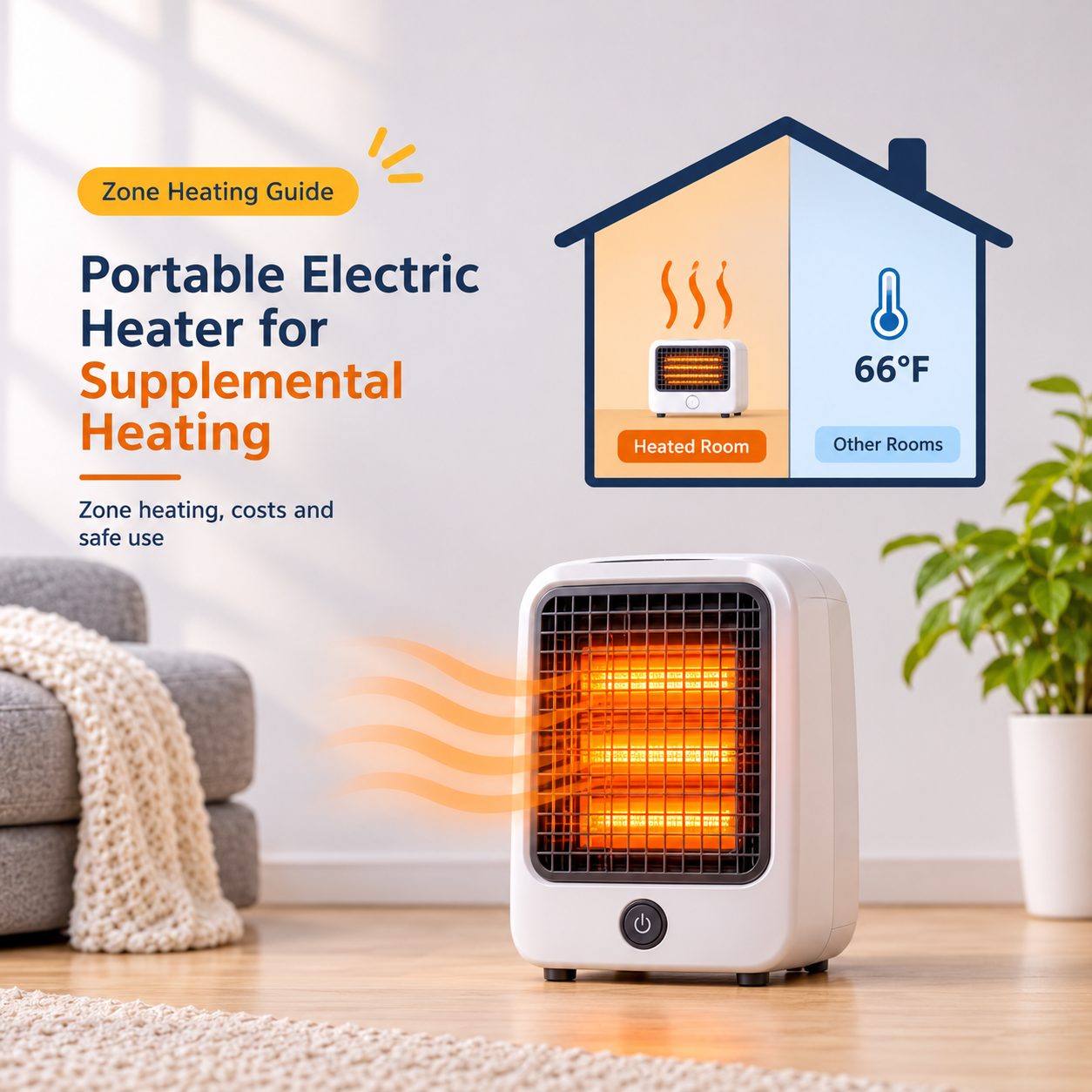
The idea behind supplemental heating savings is zone heating. Instead of heating every room to a comfortable level all day, you lower the central thermostat and use a small heater to keep the room you are in comfortable.
Energy agencies and utilities commonly note that setting your thermostat lower for the hours you are asleep or away reduces heating use, and that the savings grow with the number of degrees and the length of time. The supplemental heater only pays off if the money saved by lowering central heating is greater than the cost of running the heater.
The Cost Reality Check
A portable electric heater converts almost all electricity into heat, but electricity is often a more expensive source of heat than natural gas. That is why a small heater used in one room can cost more than it saves if your home is cheaply heated by gas and you do not lower the main thermostat.
The numbers above are an example with specific assumptions. Your costs depend on your local electricity and gas prices and the efficiency of your system. To compare for yourself, use this formula for the electric heater:
Running cost = kilowatts x hours of use x electricity rate per kWh
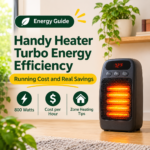
For example, a 1,500 W (1.5 kW) heater running for 4 hours uses 6 kWh. At $0.15 per kWh, that is about $0.90, or roughly $27 over 30 days of daily use. Compare that with the savings from lowering your central heating to see whether it makes sense.
When It Saves and When It Costs More
Where Supplemental Heat Works Best
Supplemental heaters are most useful for a specific, limited problem: a room that is always cold, a space you use for a few hours, or an area outside your central heating system. They are a poor choice for heating a whole house or for all-day use in a large room.
Which Type of Heater to Choose
All resistive heaters are about 100% efficient, so the right type depends on how you will use it.
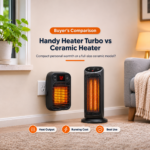
| Heater Type | Strengths | Limits | Good Supplemental Use |
|---|---|---|---|
| Ceramic fan | Fast warm-up, compact, affordable | Fan noise; heat fades when off | Home office, small rooms, quick boosts |
| Oil-filled radiator | Quiet, steady heat that lingers after cut-off | Slow to warm up, heavy | Bedrooms and rooms used for hours |
| Infrared / radiant | Instant warmth on your body, silent | Warms only what it faces | Desks, workshops, drafty spots |
| Convection panel | Quiet, low surface temperature, wall-mountable | Slower to feel warm | Rooms needing gentle background heat |
How to Size the Heater
A common rule of thumb is about 10 watts per square foot for a room with no other heat. When the heater supplements an existing system, you may not need the full amount. Too small a heater runs constantly, and one that is too large may cycle on and off too much or waste energy.
| Room Size | Typical Wattage | Note |
|---|---|---|
| Small (up to 100 sq ft / 9 m2) | 750 W to 1,000 W | Often enough alongside central heat |
| Medium (100 to 150 sq ft / 9 to 14 m2) | 1,000 W to 1,500 W | Use a thermostat to avoid wasted power |
| Large (over 150 sq ft / 14 m2) | 1,500 W and a better plan | Consider fixing insulation or using a heat pump |
Choose a model with several power settings and an adjustable thermostat so you can use less power once the room is warm.
Electrical and Circuit Safety
Portable heaters draw a lot of power. A 1,500 W heater on a 120 V supply draws about 12.5 amps, which is most of the capacity of a standard 15 amp household circuit. That is why heaters and other high-draw appliances on the same circuit can trip breakers or overheat wiring.
- Plug the heater directly into a wall outlet, never into a power strip or a thin extension cord.
- Do not run it on the same circuit as other high-power devices, such as a microwave, hair dryer or another heater.
- If the plug, cord or outlet feels hot, stop using the heater and have the wiring checked.
- If the breaker trips repeatedly, do not keep resetting it. Find out why.
- Electrical standards differ by country, so check the voltage and ratings in your region and your local rules.
Safety Rules
- Keep at least 3 feet (1 meter) of clear space around the heater, away from curtains, bedding, furniture and clothes.
- Choose a model with tip-over and overheat protection.
- Place it on a flat, stable, non-flammable surface.
- Never cover the heater or use it to dry clothes.
- Turn it off when you leave the room or go to sleep, unless your model is designed for unattended use and has the appropriate safety features.
- Keep children and pets away from it.
- Have working smoke alarms on every level of your home.
- Look for a recognized safety certification mark on the product.
- Inspect the cord and plug regularly and stop using the heater if they are damaged.
Smart Strategies to Use Less Energy
- Lower the central thermostat when you use a supplemental heater in an occupied room.
- Close the door to keep warm air in the room you are heating.
- Use a timer so the heater switches off automatically.
- Set the heater’s thermostat to a comfortable level, not the maximum.
- Seal drafts around windows and doors.
- Use thick curtains and rugs to reduce heat loss, and keep them clear of the heater.
- Dress warmly and use blankets to feel comfortable at a lower temperature.
- Use infrared for spot heating if you stay in one place.
- Fix the root cause of a cold room, such as poor insulation or blocked vents, before relying on a heater.
Buying Checklist
- Heater type: oil-filled for steady heat, ceramic for quick boosts, infrared for spot heating.
- Wattage: matched to the room and your circuit.
- Adjustable thermostat: keeps temperature steady and saves energy.
- Timer or programmable settings: avoid wasted run time.
- Safety features: tip-over switch, overheat protection and cool-touch housing.
- Noise level: important in bedrooms and offices.
- Portability: handles, wheels and weight if you will move it between rooms.
- Cord length: long enough to reach a wall outlet without an extension cord.
- Warranty and reviews: check real owner feedback and certification.
Frequently Asked Questions
Is a space heater good for supplemental heating?
Yes, for a single room or a limited problem. It works best when you lower your main heating and warm only the space you are using.
Will a portable heater lower my heating bill?
It can, but only if the savings from lowering central heating exceed the electricity the heater uses. If you leave the central heating unchanged, the heater adds to your bill.
Is electric heat more expensive than gas heat?
In many places, yes. Electric resistance heat is often costlier per unit of heat than natural gas, though prices vary widely by location.
What size heater do I need for supplemental heat?
Most rooms are well served by 750 W to 1,500 W. Use about 10 watts per square foot as a rough guide and choose a model with adjustable power settings.
Can I leave a supplemental heater on all night?
Fire safety guidance generally recommends turning portable heaters off when you sleep or leave the room. Consider warm bedding or a safer overnight solution.
Which type of heater is best for a cold bedroom?
An oil-filled or ceramic heater with a thermostat and timer is a common choice. Warm the room before bed and turn it off when you go to sleep.
Can I use two heaters in one room?
It is better not to. Running two high-wattage heaters, especially on the same circuit, increases the risk of overload. Improve insulation or consider a more suitable heating system.
Is a heat pump better than a portable heater for extra heat?
For regular, long-hour heating, yes. A heat pump can deliver roughly two to four units of heat per unit of electricity, so it is much cheaper to run, though it costs more upfront.
Final Verdict
A portable electric heater is a practical supplemental heater when it solves a specific problem, such as a cold room, a home office or a workshop. It saves money only when it lets you reduce your main heating and you use it with a thermostat and timer. Match the wattage to the room, respect circuit limits, and put safety first.
Use the checklist above to compare models, and add your recommended heaters to this article to help readers choose the right one for their space.