Disclosure: This article is for information. If you buy a product after reading it, the site owner may earn a small commission at no extra cost to you.
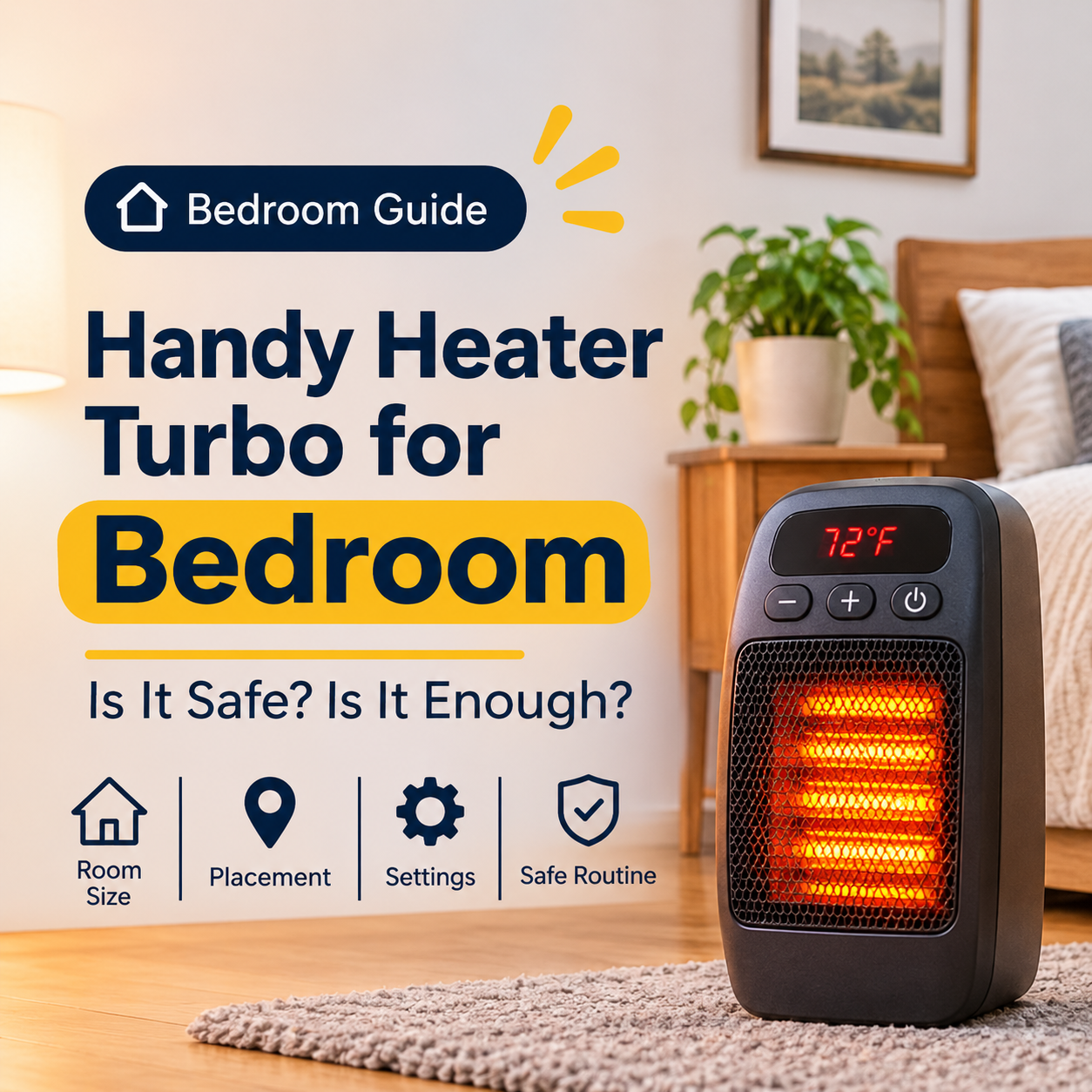
A cold bedroom is miserable, and a small plug-in heater looks like an easy fix. It is quiet, it takes up no floor space and it has a timer. That is why so many people search for the Handy Heater Turbo for bedroom use. But a bedroom is also the one room where heater safety matters most, because that is where people sleep.
This guide gives you a straight answer: when the Handy Heater Turbo makes sense in a bedroom, how large a room it can realistically warm, where to place it, which settings to use, and what safety authorities advise about heaters and sleep.
Why People Want It in the Bedroom
- Compact and cordless: it plugs straight into the wall, so it does not take up floor space or create a trip hazard.
- Quiet reputation: retailer descriptions highlight quiet operation for bedrooms and personal spaces.
- Thermostat from 60°F to 90°F: the heater cycles to maintain a chosen temperature.
- 12-hour timer: it can switch off automatically when the set time ends.
- Low price: it costs far less than a large heater, so it appeals as a low-risk try-out.
The Big Question: Can You Run It While You Sleep?
Retailer pages for this heater mention bedrooms and say the quiet operation lets you relax or sleep without being disturbed. Safety authorities take a clear and different position about space heaters in general.
- The U.S. Consumer Product Safety Commission (CPSC) advises people never to leave a space heater on when they go to sleep and never to place one close to a sleeping person.
- The National Fire Protection Association (NFPA) advises turning heaters off when you leave a room or go to bed.
- NFPA guidance quoted by insurers also advises against using a space heater in a child’s room, where children might knock it over or burn themselves.
The Handy Heater Turbo has an overheat shut-off, tip-over protection and a timer, but these features are a backup, not a green light for unattended use. A sleeping person cannot react to a smell, a sound or a hot plug.
Is 800 Watts Enough for a Bedroom?
The Handy Heater Turbo 800 is an 800-watt heater. A common rule of thumb is roughly 10 watts per square foot, which suggests about 80 square feet of comfortable coverage. Marketing material sometimes claims up to around 250 square feet, but that depends heavily on insulation, ceiling height and outdoor temperature. Independent consumer testing in Australia also found that a version of this heater delivered far less heat than its advertising suggested, so be conservative.
| Bedroom Type | Approx. Size | Realistic Expectation |
|---|---|---|
| Box room or small nursery-size room | 60–80 sq ft | Likely to feel noticeably warmer |
| Small bedroom | 90–110 sq ft | Modest warmth; works best with the door closed and good insulation |
| Typical bedroom | 120–160 sq ft | May only take the edge off, especially in very cold weather |
| Large primary bedroom | 200+ sq ft | Unlikely to heat the room; consider other heating options |
A simple way to judge fit: if your bedroom is bigger than about 100 square feet, or is poorly insulated, treat this heater as a personal warm spot rather than a way to heat the whole room.
Where to Place It in the Bedroom
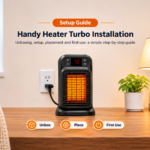
The heater sits directly in a wall outlet, so its position is decided by your outlets. That is the main practical problem in bedrooms, because many outlets are behind beds, nightstands and dressers. The manual calls for keeping 3 feet (0.9 m) clear of furniture, curtains, bedding, paper, clothing and pets, and CPSC gives the same 3-foot rule for bedding and drapes.
- Choose an outlet with open space in front of it and no furniture or fabric within 3 feet.
- Do not use an outlet behind or beside the bed or under a window with long curtains.
- Do not use an extension cord or power strip to move the heater to a better position.
- Check that the outlet is firm and does not feel warm after the heater has run for a while.
If your only free outlet is behind the bed or next to it, this heater is not suitable for that room.
Best Temperature Settings for a Bedroom
Sleep guidance commonly suggests a cool bedroom, often in the low-to-mid 60s °F, for comfortable sleep. Because the heater should be off while you sleep, use settings for the time you are awake in the room.
| Situation | Suggested Setting | Tip |
|---|---|---|
| Pre-warming before bedtime | 68°F–70°F | Run for 1 to 2 hours while you are at home |
| Reading or relaxing in the room | 66°F–68°F | Layer up so you can keep it low |
| Getting dressed on a cold morning | 68°F–72°F | Use the timer for 30 to 60 minutes |
| Energy saving | 62°F–66°F | Heater cycles off sooner |
Raising the thermostat does not make the heater warm the room faster. It only makes it run for longer. Also remember that the temperature may default to 90°F after a power interruption, so check the display after any outage.
A Safer Bedtime Routine
- Warm up early: Plug the heater straight into a wall outlet and set the thermostat and a 1 to 2 hour timer. Stay in the home.
- Close the door and windows: Heat stays in a closed room much better.
- Switch off before bed: Press the power button and unplug the heater before you get into bed.
- Let it cool: Do not touch the grille while it is hot.
- Sleep warm another way: Use layers, a warmer duvet and a thicker blanket.
Bedroom Safety Checklist
- Working smoke alarm in the bedroom. CPSC recommends smoke alarms inside every bedroom and outside sleeping areas.
- Direct wall outlet only. No extension cords, power strips or surge protectors, as stated in the manual.
- 3 feet of clearance from bedding, curtains, furniture, clothing and pets.
- Indoor, dry room only. Keep it away from water and damp areas.
- Check the plug and outlet. If either is hot, discolored or smells of burning, stop using the heater.
- Turn it off when you leave the room, not just the house.
Who Should Not Use a Plug-In Heater in the Bedroom?
- Anyone planning to run it all night, or to leave it on while they sleep.
- Parents considering it for a child’s or baby’s room.
- Rooms where the only outlet is next to or behind the bed.
- Homes with outlets that are loose, old or warm.
- Large bedrooms where an 800-watt heater cannot make a meaningful difference.
- People who cannot move away from the heater or react quickly, such as someone who is very ill, sedated or unable to move easily.
Noise, Light and Comfort
The heater is described as quiet, but it has a fan, so expect a soft fan sound rather than silence. The digital display may also be noticeable in a dark room, so check how bright you find it while you are still awake. Warm air blows directly from the unit, so avoid sitting or lying within the 3-foot zone.
Ways to Keep a Bedroom Warm Without Running a Heater Overnight
- Thermal or lined curtains: They cut heat loss through windows, but keep them well away from the heater.
- Draft stoppers: Seal gaps under doors and around windows.
- Rugs: A rug on a cold floor makes the room feel warmer underfoot, though it must stay clear of the heater.
- Layered bedding: A warm duvet, flannel sheets and a thick blanket do most of the work at night.
- Bedtime clothing: Warm socks and sleepwear make a lower room temperature comfortable.
- Whole-home heating: If your bedroom is regularly too cold, ask a qualified heating professional about proper room heating rather than relying on a small plug-in heater.
Running Cost in a Bedroom
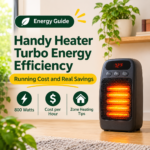
An 800-watt heater uses at most 0.8 kWh per hour while the element is on. At an example price of $0.16 per kWh, that is roughly $0.13 per hour at most, and often less because the thermostat cycles. A 2-hour pre-warm costs about $0.26 at full power. Your actual cost depends on your electricity rate.
Pros and Cons for Bedroom Use
| Pros | Cons |
|---|---|
| Compact and takes no floor space | Only 800 watts, weak for larger bedrooms |
| Adjustable thermostat and 12-hour timer | Must not be used while sleeping |
| Overheat shut-off and tip-over protection | Relies entirely on the wall outlet’s condition and position |
| Low purchase price | Bedroom outlets are often behind furniture, so clearance is hard |
| Quiet compared to many fan heaters | Consumer testing raised concerns about heat output and plug fit |
If a Different Heater Might Suit Your Bedroom Better
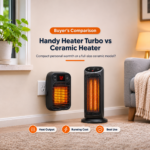
If your bedroom is larger, your outlets are awkwardly placed, or you want a heater you can position freely, look at a corded ceramic tower or oil-filled radiator that carries a recognised safety certification such as UL, ETL or CSA, with overheat and tip-over protection. Keep in mind that the sleeping rule applies to every space heater, not just this one.
Frequently Asked Questions
Is the Handy Heater Turbo good for a bedroom?
It can be good for a small bedroom when you are awake and in the home, as a quick way to take the chill off. It is not suited to heating large bedrooms or to running while you sleep.
Can I leave it on all night?
No. CPSC advises never leaving a space heater on when you go to sleep, and NFPA advises turning heaters off when you go to bed. Switch it off and unplug it before you sleep.
Can I use the timer to turn it off after I fall asleep?
This is not recommended. Even if the heater switches off by itself, it would still be running while you are falling asleep and it remains plugged in. Turn it off and unplug it yourself before you go to bed.
How big a bedroom can it heat?
A general rule of thumb for 800 watts is around 80 square feet. Marketing claims go up to about 250 square feet, but real results depend on insulation and outdoor temperature. Treat it as a small-room heater.
Can I use it in a child’s room or nursery?
This is not advised. Safety guidance recommends against using space heaters in children’s rooms, and the manual says to keep children and pets away from the hot grille.
What temperature should I set for a bedroom?
For pre-warming, 68°F to 70°F is a good start. For reading or relaxing, 66°F to 68°F. Sleeping rooms are often recommended to be cooler, in the low-to-mid 60s.
Can I plug it into an extension cord to reach a better spot?
No. The manual says to plug it directly into a wall outlet and not to use extension cords, power strips or surge protectors.
Is it quiet enough for a bedroom?
It is described as quiet, but it has a fan. Expect a soft fan sound while it runs.
Do I need a smoke alarm in the bedroom?
Yes. CPSC recommends smoke alarms inside every bedroom, and a carbon monoxide alarm outside sleeping areas for homes with fuel-burning appliances.
Final Thoughts
The Handy Heater Turbo is a reasonable choice for taking the chill off a small bedroom while you are awake: pre-warm the room, get dressed in comfort, read in a warmer corner. It is the wrong tool for heating a big bedroom, and it should never run while you sleep. Pick an outlet with a clear 3-foot zone, plug directly into the wall, switch it off and unplug it before bed, and rely on good bedding to keep you warm overnight. If your bedroom needs more than that, a properly sized, certified heating solution is worth the extra cost.
Features and instructions can vary by version and region. Always follow the manual supplied with your heater and the guidance of fire-safety authorities. This article is general information, not professional electrical or fire-safety advice.