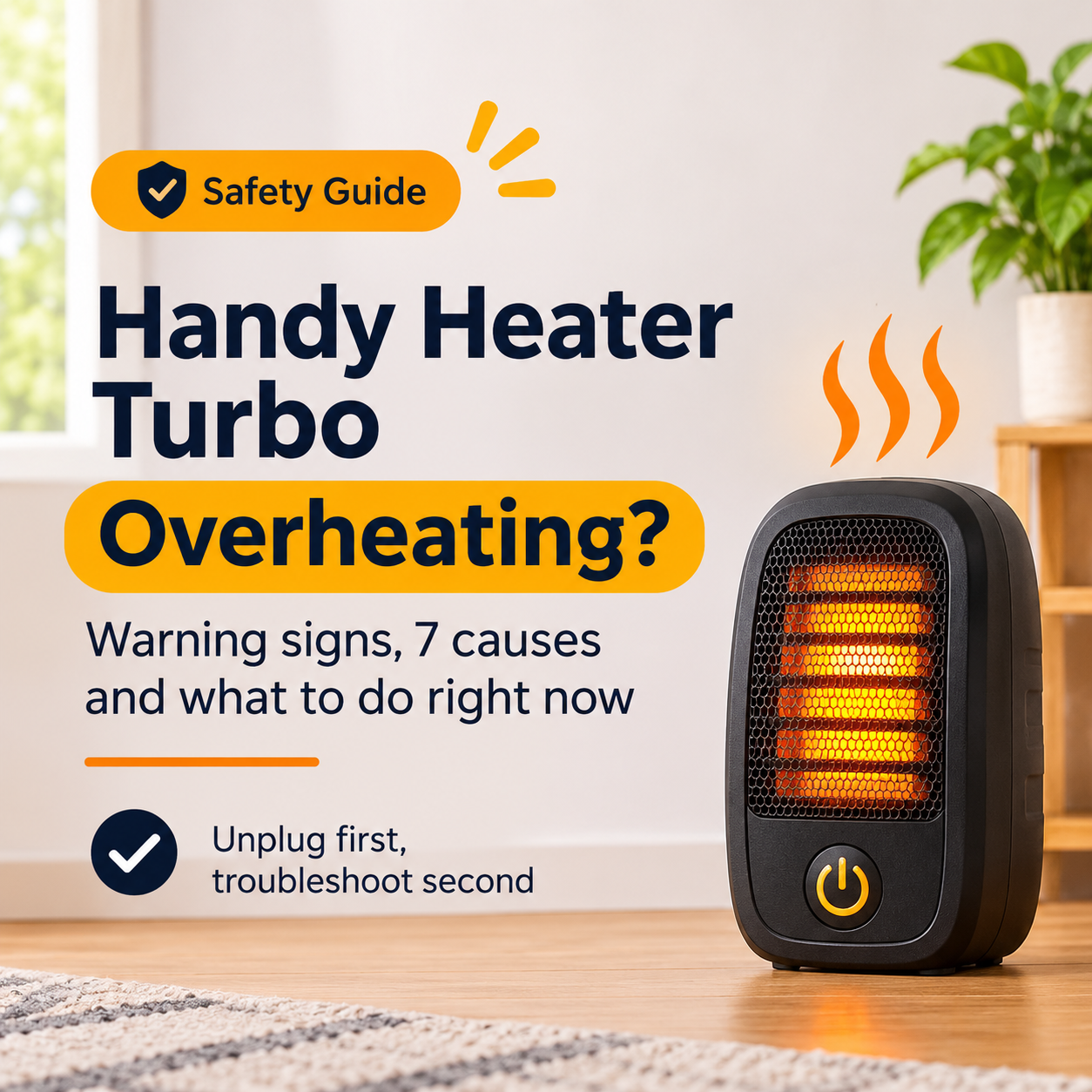
Heaters are meant to get hot, but there is a big difference between a heater that warms a room and a heater that is overheating. If your Handy Heater Turbo is overheating, with a casing that is too hot to touch, a plug that feels hot, a burning smell or frequent automatic shut-offs, you need to act quickly. Overheating is one of the main causes of heater damage and, in serious cases, house fires.
This guide explains the difference between normal heat and dangerous heat, lists the seven most common causes, shows what to do immediately, and helps you decide when to repair, claim a warranty or replace the heater. It is written in plain language, so you can follow it without any technical knowledge.
If your heater smells of burning, makes crackling sounds, has a hot plug or cord, or shows melted or discoloured plastic, switch it off and unplug it immediately. Do not use it again until the cause has been found and fixed. If you see flames or smoke, leave the room and call your local emergency number.
A heater usually overheats because of blocked vents, poor placement, an overloaded power connection, a weak or failed fan, a faulty thermostat or simply long non-stop use. Unplug it, let it cool for 30 minutes, clean the vents, move it to a hard flat surface with 3 feet of clear space, and plug it directly into a wall socket. If it still overheats, stop using it.
Normal heat or dangerous heat?
First, understand what is normal. A fan heater pushes very warm air out of the front, so the outlet will always be hot, and the casing around it can feel warm. The problem begins when the heat is out of control or appears in the wrong place.
As a simple rule, the heat should leave through the air outlet, not through the plug, the cord or the sides of the casing. When heat appears in places where it should not, something is wrong.
What to do right now if your heater is overheating
- Switch off the heater. Use the power button or the on/off switch.
- Unplug it. Pull the plug itself, not the cord, and only if it is safe to approach.
- Clear the area. Move people, pets and anything flammable such as curtains, bedding and papers away.
- Let it cool. Leave it on a hard surface, away from fabrics, for at least 30 to 60 minutes.
- Do not use it again yet. First find the cause using the checks below.
7 reasons your Handy Heater Turbo is overheating
1. Blocked or dusty vents
Heaters rely on a steady flow of air to carry heat away from the element. Dust, pet hair and lint on the intake or outlet, or a vent covered by a cloth or furniture, trap heat inside. The internal temperature rises quickly and the casing becomes very hot.
Fix: unplug the heater, wait for it to cool, then vacuum the intake and outlet with a soft brush attachment. Make sure nothing touches or covers the vents.
2. Poor placement
Placing a heater too close to a wall, sofa, bed or curtains reduces airflow and can make surrounding materials dangerously hot. Even if the heater is not overheating internally, the area around it can reach unsafe temperatures.
Fix: keep at least 3 feet (about 90 cm) of clear space on all sides and in front, and place the heater on a hard, flat, non-flammable surface. Always follow the distance given in your manual if it differs.
3. Overloaded or weak power connection
A heater draws a lot of power. Thin extension cords, power strips, loose sockets and shared circuits can overheat, especially at the plug and socket. This is one of the most dangerous causes because it can start a fire even when the heater itself seems fine.
Typical sign: the plug, cord or wall socket feels hot, smells of plastic or has brown marks.
Fix: plug the heater directly into a wall socket that is in good condition. Do not use extension cords or power strips. If the socket is hot, ask a qualified electrician to inspect it.
Never ignore a hot plug or socket. Stop using the heater and the socket until an electrician has checked them.
4. Weak or failing fan
The fan moves heat away from the element. If it spins slowly, makes noise or stops, heat builds up. Some heaters shut off automatically when this happens, but a failing fan is still a warning sign.
Fix: with the heater unplugged and cool, check that nothing blocks the blades and clean the vents. If the fan is slow, noisy or silent, stop using the heater and use your warranty or replace it.
5. Faulty thermostat or sensor
The thermostat is supposed to switch the heating element off when the room reaches the set temperature. If it fails, the element may stay on continuously, and the heater keeps getting hotter. This is a hidden fault that cleaning does not fix.
Typical sign: the heater never cycles off even in a warm room, the casing keeps getting hotter, or the safety cut-out trips repeatedly.
Fix: do not rely on the safety cut-out as a substitute for a working thermostat. Stop using the heater and replace it or claim the warranty.
6. Non-stop use for many hours
Compact heaters are built for short and moderate use. Running at full power for many hours in a row stresses the element, the wiring and the plastic parts. Heat accumulates, especially in a closed or small room.
Fix: use the thermostat, give the heater breaks, ventilate the room and never leave it running while you sleep or go out. If you need heat for long periods, choose a heater designed for it.
7. Damage, wear or age
Cracked plastic, a frayed cord, loose internal contacts and worn components create resistance, and resistance creates heat. Older heaters and heavily used heaters are more prone to this. Drops, knocks and years of dust build-up make it worse.
Typical sign: discoloured or soft plastic, a cord with damaged insulation, or an unusual smell that returns after cleaning.
Fix: replace the heater. Do not try to repair wiring or open the casing yourself.
Where is the heat coming from?
The location of the extra heat helps you find the cause quickly.
| Where it is too hot | Most likely cause | What to do |
|---|---|---|
| Casing and vents | Blocked airflow, poor placement, weak fan | Cool down, clean vents, add clear space |
| Plug and cord | Overloaded power, loose socket, damaged wiring | Unplug, use a wall socket, check the socket |
| Wall socket | Worn socket or overloaded circuit | Stop using it and call an electrician |
| Everywhere, and it never turns off | Faulty thermostat | Stop using and replace |
| Plastic parts, with a melting smell | Internal damage or heavy wear | Unplug and replace the heater |
Step-by-step checks before you use it again
- Let it cool completely. Wait at least 30 minutes with the heater unplugged.
- Inspect the plug, cord and casing. Look for brown marks, melted plastic, cracks and cuts. If you find any, do not use the heater.
- Clean the vents. Vacuum the intake and outlet and remove dust and hair.
- Check the fan area. Look through the grille to make sure the blades are not blocked.
- Choose a safe spot. Hard, flat, dry surface with 3 feet of clear space in all directions.
- Plug into a wall socket. No extension cord, no power strip.
- Run a supervised test. Run it on a medium setting for 15 to 20 minutes while you stay in the room. Check the casing, plug and cord every few minutes with the back of your hand.
If the heater overheats again, shows any warning sign, or the plug or cord feels hot, stop immediately and do not use it again.
6 habits that prevent overheating
Should you repair or replace an overheating heater?
For compact, low-cost heaters, repair is rarely worth it and often unsafe. Heaters contain high-power electrical parts, and opening the casing can cause electric shock and make any fault worse. Use this simple guide:
- Cause was simple (covered vent, dust, bad placement): clean it, correct the setup and test carefully. You can keep using it if it works normally.
- Cause is a failed fan, thermostat or internal part: use the warranty if you still have it, otherwise replace the heater.
- Plastic is melted or discoloured, the cord is damaged or the plug burnt: replace the heater immediately and have the socket checked.
What to look for in a safer replacement heater
- Overheat protection. It should cut power automatically when the temperature gets too high.
- Tip-over protection. It switches the heater off if it falls or is tilted.
- Adjustable thermostat. It prevents continuous full-power operation.
- Timer function. It helps you avoid leaving the heater on too long.
- Recognised safety certification. Look for UL, ETL, CE or the equivalent in your country.
- Cool-touch housing. This reduces the risk of burns.
- Honest wattage and specifications. Be careful with listings that promise whole-house heat from a tiny, low-power device.
- Clear warranty and return policy. It protects you if the unit fails early.
Frequently asked questions
Is it normal for a Handy Heater Turbo to get hot?
Yes. A heater is designed to produce heat, so the air at the outlet and the area around the grille will be hot, and the casing will usually feel warm. It is not normal if the casing is too hot to touch comfortably, if the plug or cord is hot, or if you smell burning.
Why does my heater smell like burning?
A light dusty smell can appear when a heater is used for the first time after storage, because dust burns off the element. A strong or lasting burning or melting-plastic smell is a warning sign. Unplug the heater and stop using it.
Can a heater overheat and turn off by itself?
Yes. Most heaters have an overheat cut-out that switches power off when the internal temperature gets too high. If this happens repeatedly, find out why instead of simply restarting it.
Is it safe to leave a heater on all night?
Safety guidance for portable heaters generally advises against leaving them running while you sleep or when nobody is in the room. Use a heater with a timer if you want heat before bed, and switch it off when you fall asleep.
Why is the plug of my heater hot?
A hot plug usually means high resistance in the connection, often from a loose socket, a damaged plug, a thin extension cord or an overloaded circuit. It is a fire risk. Unplug the heater and have the socket and plug checked.
Should I replace a heater that overheated once?
If the cause was clear and easy to fix, such as a covered vent, and it works normally after cleaning, you can keep using it with care. If it overheated for no obvious reason, shows melted or discoloured parts, or the problem returns, replace it.
Final thoughts
Overheating is a warning that something needs attention, not a problem to ignore. Start by switching off and unplugging the heater, let it cool, and then work through the likely causes: vents, placement, power connection, fan and thermostat. Many cases come from simple things such as dust or a power strip, and are easy to correct. If the heater shows any sign of damage, a hot plug or cord, or if it keeps overheating, stop using it for good.
A heater should give you warmth, not worry. When in doubt, choose safety, use your warranty or replace the unit with a certified heater from a reputable seller.
Disclaimer: This article is for general information only and is not a substitute for the manufacturer’s instructions or professional advice. Always follow your product manual and consult a qualified electrician or the manufacturer for repairs. Some pages on this site may earn a commission from qualifying purchases at no extra cost to you.