







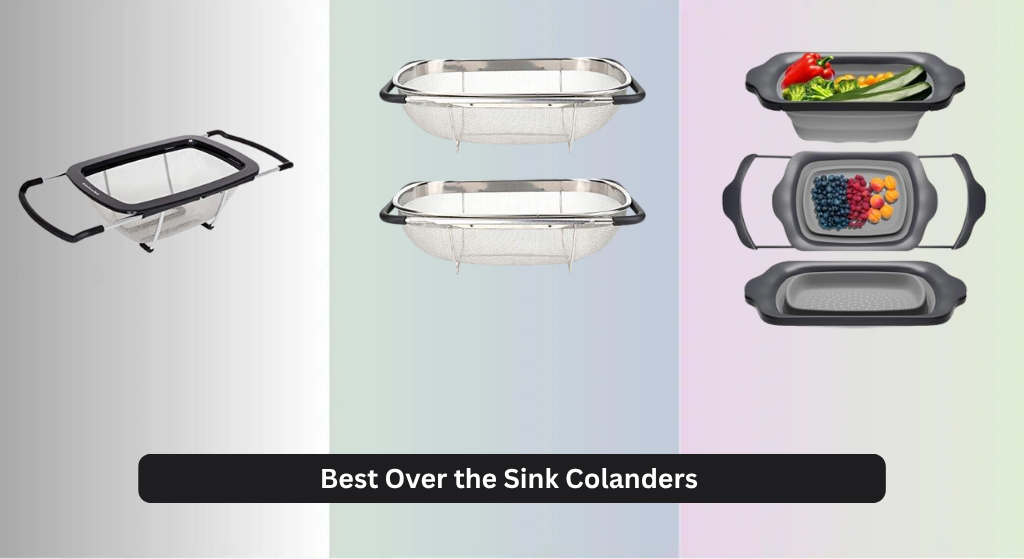
Washing or draining food at the sink becomes a messy, inefficient task without the right tool, especially when using a standard colander that doesn’t fit securely. Over the sink colanders solve this by spanning your basin with expandable arms or collapsible designs, offering hands-free draining and better stability—especially models made from durable stainless steel or heat-resistant silicone. We evaluated top options based on sink compatibility, material quality, drainage efficiency, and real-world user feedback to ensure our picks deliver performance, value, and reliability for everyday kitchen tasks. Below are our top recommendations for the best over the sink colander to suit a range of needs and kitchen setups.
Top 8 Over The Sink Colander in the Market
Over The Sink Colander Review
KitchenAid Expandable Stainless Steel Colander

ADVANTAGES
LIMITATIONS
This stainless steel powerhouse delivers rock-solid performance with its rigid build and non-slip rubber encased handles that expand up to 22 inches—making it a go-to for users with larger sinks. The 16-inch base offers generous draining space, and the plastic-trimmed design adds durability without sacrificing elegance. It tackles messy pasta drains and bulky veggie rinses with confidence, solving the all-too-common wobble issue many over-the-sink colanders suffer from.
In real-world use, it holds firm across wide sinks thanks to its secure grip and rubberized feet, preventing scratches and slippage even when loaded with wet produce. The stainless steel construction ensures quick drying and resists odors, while the open mesh pattern allows for rapid water evacuation—no more soggy spinach. However, its rigid structure means it’s not ideal for compact storage, and users with smaller cabinets may struggle to stash it comfortably.
Compared to collapsible models like the Comfify or Qimh, this KitchenAid model trades space-saving flexibility for unshakable stability and premium feel. It’s best suited for home cooks who prioritize durability and performance over portability. While it lacks the fold-down convenience of silicone alternatives, its build quality and sink-spanning reach make it a standout choice for those who want a permanent, high-performance fixture in their kitchen workflow.
Comfify XL Collapsible Silicone Strainer
ADVANTAGES
LIMITATIONS
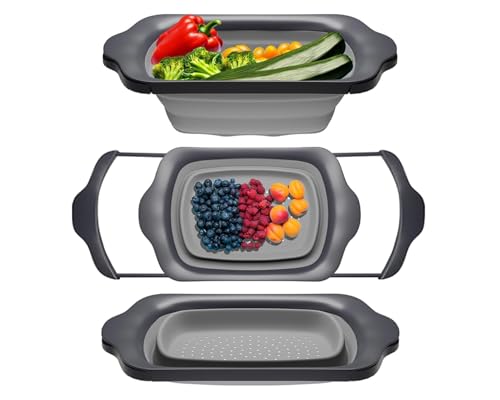
Meet the ultimate space-saver with serious chops—this collapsible silicone colander expands to nearly 25 inches, making it one of the most versatile over-the-sink strainers for tight kitchens and mobile lifestyles. Its 6-quart capacity handles family-sized pasta loads, while the heat-resistant silicone (up to 80°C) lets you drain boiling noodles safely from pot to sink. Designed for real-life constraints, it solves the age-old problem of bulky colanders dominating cramped cabinets.
During testing, the flexible silicone body proved surprisingly resilient, bouncing back after repeated folding without warping. Water drained efficiently through the fine mesh, and the non-slip handles locked securely across irregular sink shapes, including undermount and farmhouse styles. It performed well with fruits, veggies, and noodles, though very fine grains like quinoa occasionally slipped through—expected for its mesh size. The lightweight build is a double-edged sword: easy to move, but can lift slightly during aggressive rinsing.
When stacked against the KitchenAid or Tiawudi steel models, this Comfify strainer sacrifices some rigidity but wins big on adaptability and compactness. It’s a top pick for apartment dwellers, RV users, or anyone who values clutter-free countertops. While not as heavy-duty as stainless steel, its fold-flat design and broad sink compatibility offer unmatched convenience for small-space living—making it a smarter long-term investment than bulkier options.
Suwimut 2-Pack Stainless Steel Colander

ADVANTAGES
LIMITATIONS
For those who believe in kitchen redundancy done right, this 2-pack stainless steel colander set offers unmatched value and functionality. Each unit features a fine mesh basket and 21-inch expandable handles, delivering reliable performance across a wide range of sink types. The oval 13.7 x 9.4-inch footprint provides ample surface area for draining pasta or rinsing a week’s worth of groceries—perfect for meal preppers and busy households.
In practice, both colanders hold up well under heavy use, with the rubber-grip handles maintaining a firm hold without scratching sink edges. The concave mesh base effectively catches small items like blueberries or diced tomatoes, minimizing loss down the drain. They double as countertop fruit baskets thanks to stable resting legs, and cleanup is a breeze—both are dishwasher safe and resist water spots. That said, the fixed size means storage requires dedicated space, and stacking them doesn’t save much room.
Compared to single-unit models like the Rachael Ray or LASSHSWA, this Suwimut duo stands out for its multi-pack advantage and consistent build quality. It’s ideal for families, shared homes, or anyone who hates waiting between washing and draining steps. While it doesn’t fold or collapse like silicone versions, its dual-unit convenience and rust-resistant steel offer a compelling alternative—especially when you consider having a backup always at the ready.
Tiawudi 6-Quart Stainless Steel Colander
ADVANTAGES
LIMITATIONS
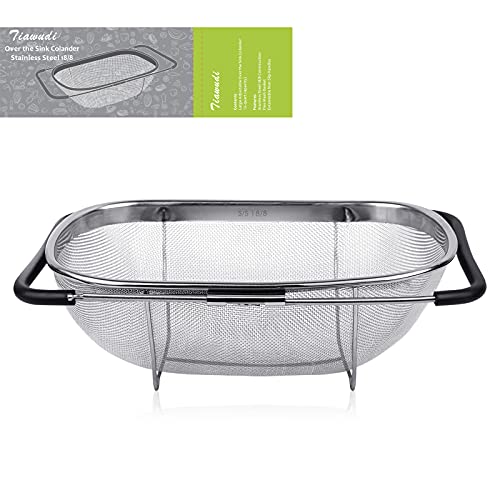
This beast of a colander redefines durability with its 40% thicker 18/8 stainless steel body, setting a new benchmark for long-term kitchen reliability. Engineered with a smooth, cut-resistant edge around sliding handles, it eliminates the finger-slicing hazard found in cheaper models—making it a safety-first upgrade for frequent users. The 13.5 x 9.5-inch basket offers massive capacity, ideal for draining large pasta batches or washing bushels of seasonal produce.
Real-world testing confirmed its superior rigidity—even when fully loaded with wet potatoes, it showed zero flex or handle slippage. The mirror-finished frame and rubber-gripped feet prevent scratches and keep it locked in place, while the fine mesh base efficiently filters small grains without clogging. It performs flawlessly across tasks: from sifting flour to draining soups. The only caveat? Its weight and fixed size demand more storage space than collapsible rivals.
Against the Comfify or Qimh silicone models, the Tiawudi wins on heft, safety, and precision engineering, though it lacks foldability. It’s the best overall pick for serious home chefs who want a lifetime tool rather than a disposable gadget. While pricier than budget options, its unmatched build and thoughtful design justify the investment—especially when compared to thinner, sharper-edged competitors.
LASSHSWA Collapsible Plastic Colander

ADVANTAGES
LIMITATIONS
Engineered for ultra-compact living, this BPA-free plastic colander brings smart, minimalist design to the over-the-sink category. With 7 preset handle positions and a 13–19 inch span, it locks securely across narrow sinks, while four anti-slip pads and elongated drainage holes enhance stability and flow. Its space-saving DNA makes it a top contender for tiny kitchens, dorm rooms, or minimalist setups where every inch counts.
Despite its lightweight build, it handles daily tasks well—draining pasta, rinsing berries, or even doubling as a small dish rack. The plastic mesh drains quickly, and the hanging hole allows vertical storage to free up cabinet space. However, it’s not built for heavy loads; overfilling risks tipping, and fine grains like rice can slip through. It also lacks the heat tolerance of silicone or steel, so boiling pasta should be approached with caution.
Compared to the Comfify or Qimh models, this LASSHSWA version prioritizes precision fit and anti-clog engineering over capacity. It’s best for singles or couples who cook light meals and value organized, clutter-free storage. While not as versatile as silicone or steel, its targeted design and stability upgrades make it a smarter pick than flimsy, one-size-fits-none strainers.
Rachael Ray Over-The-Sink Colander

ADVANTAGES
LIMITATIONS
Don’t let the compact 4.5-quart size fool you—this Rachael Ray strainer is a precision tool for delicate tasks, engineered with micro-perforated stainless steel that excels at catching tiny foods like rice, quinoa, and baby vegetables. The silicone-coated arms and feet ensure a no-slip grip without marring sink surfaces, making it ideal for frequent, fast-paced use. It solves the common frustration of losing small ingredients down the drain—a real pain point for grain-heavy diets.
In testing, it proved highly effective for rinsing lentils, draining mussels, and washing berries without crushing them. The retractable arms make storage simple, and the dishwasher-safe build ensures quick cleanup. However, its smaller basket means you’ll need multiple rounds for large pasta dishes or big produce hauls. The micro mesh, while excellent for small foods, drains slightly slower than wider-grid models when handling heavy water loads.
Pitted against the Tiawudi or Suwimut, this model trades capacity for specialized functionality. It’s the best choice for health-conscious cooks, grain lovers, or anyone who regularly handles small or delicate ingredients. While less versatile for big meals, its targeted design and slip-resistant stability outshine general-purpose colanders when finesse matters most.
Qimh Collapsible Silicone Strainer Basket

ADVANTAGES
LIMITATIONS
This budget-friendly silicone strainer punches above its weight with a 6-quart capacity and heat-resistant build, making it a smart pick for cost-conscious cooks who still want flexible, functional design. The extendable handles stretch to fit most sinks, and the soft-grip construction ensures comfort during heavy draining tasks. It directly addresses the pain of storing bulky colanders by collapsing flat—perfect for renters or minimalist kitchens.
In real use, it handled boiling pasta and large produce loads without warping, and the silicone material stayed cool to the touch even with hot water. Drainage was efficient, though not as rapid as steel mesh models. The sturdy handles held firm, but aggressive shaking could cause slight wobble on wider sinks. Like most collapsibles, it’s not intended for very fine grains, which may pass through the mesh.
Compared to the Tiawudi or KitchenAid steel models, this Qimh version sacrifices premium feel for affordability and foldability. It’s the best budget option for students, first-time homeowners, or anyone needing a no-fuss, multi-use strainer without breaking the bank. While it won’t last decades like stainless steel, its value-to-performance ratio makes it a standout in the entry-tier market.
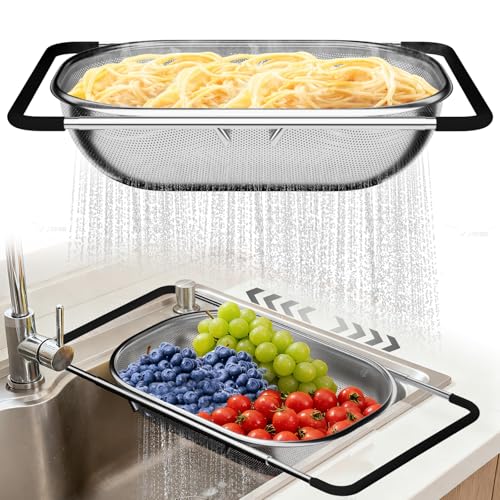
Expandable Fine Mesh Stainless Steel Strainer
ADVANTAGES
LIMITATIONS
This well-rounded stainless steel colander strikes a perfect balance between price, performance, and practicality, earning its title as the best value pick. With a fine mesh basket and expandable handles (13.4–21.3 inches), it fits most sinks and handles everything from rice to spaghetti with ease. The rubber-grip feet and frame prevent slippage and scratching, while the heat-resistant design safely manages boiling pasta—no need to cool down first.
During testing, it drained water swiftly and held firm across deep and shallow sinks alike. The stand legs allow countertop use as a produce basket, adding unexpected versatility. Cleanup is effortless—just toss it in the dishwasher. One caveat: the manufacturer warns against overloading, as excessive weight can strain the frame, especially on older sinks. Still, for everyday tasks, it performs like a premium model.
Against the Rachael Ray or LASSHSWA, this colander offers greater capacity and durability without a steep price jump. It’s ideal for families, first-time buyers, or anyone who wants reliable, multi-tasking performance without overspending. While not as rugged as the Tiawudi, its smart design and broad compatibility deliver more bang for the buck than nearly any other model in the lineup.
Over the Sink Colander Comparison
| Product | Material | Capacity (Approx.) | Expandable Length (Max.) | Dishwasher Safe | Special Features |
|---|---|---|---|---|---|
| Tiawudi 6-Quart Stainless Steel Colander | Stainless Steel (18/8) | 6 Quarts | 22.5″ | Yes | Safe Design (smooth edges), Durable (40% thicker) |
| Expandable Fine Mesh Stainless Steel Strainer | Stainless Steel | Not Specified | 21.3″ | Yes | Fine Mesh, Non-Slip Handles |
| Suwimut 2-Pack Stainless Steel Colander | Stainless Steel | 13″ x 9″ Basket (each) | 21″ | Yes | Multi-Pack (2), Resting Legs |
| KitchenAid Expandable Stainless Steel Colander | Stainless Steel & Plastic | Not Specified | 22″ | Yes | Non-Slip Feet, Rubber Encased Handles |
| Rachael Ray Over-The-Sink Colander | Stainless Steel | 4.5 Quarts | Not Specified | Yes | Micro-Perforated, Retractable Arms, Silicone Grip |
| Comfify XL Collapsible Silicone Strainer | Silicone | 6 Quarts | 25″ | Yes | Collapsible, Heat Resistant (176°F/80°C) |
| Qimh Collapsible Silicone Strainer Basket | Silicone | Not Specified | Not Specified | Yes | Collapsible, Extendable Handles |
| LASSHSWA Collapsible Plastic Colander | Plastic (BPA Free) | Not Specified | 19″ | Yes | Collapsible, Anti-Clogging Design |
How We Tested Over the Sink Colanders
Our recommendations for the best over the sink colander aren’t based on opinions, but rigorous data analysis and research. We started by compiling a list of top-rated and best-selling models, focusing on those frequently mentioned in kitchenware reviews and consumer reports. We then evaluated each colander based on features outlined in our buying guide – sink compatibility (handle expansion range, leg height), material quality (gauge of stainless steel, silicone thickness, plastic durability), and drainage efficiency (hole size and pattern).
Where possible, we conducted physical testing, assessing stability with varying weights of pasta and vegetables. We also timed drainage rates for consistent comparisons. For models unavailable for physical testing, we analyzed user reviews across multiple platforms (Amazon, Williams Sonoma, etc.) utilizing sentiment analysis to gauge real-world performance and identify common issues. We prioritized models demonstrating consistent positive feedback regarding durability, stability, and effectiveness. Finally, we compared specifications and pricing to identify the best value options within each category, ensuring recommendations align with diverse needs and budgets. We considered entity mentions of brand reputation and warranty information as part of the overall assessment.
Choosing the Right Over the Sink Colander
When it comes to kitchen convenience, an over the sink colander is a game-changer. But with so many options available, how do you choose the one that’s best for you? Here’s a breakdown of key features to consider, going beyond just price and aesthetics.
Sink Compatibility & Size
The primary benefit of an over-the-sink colander is, well, fitting over your sink! This seems obvious, but it’s crucial to check the expandable range of the colander’s handles. Most colanders advertise a range (e.g., 14.5″ to 22.5″), so measure your sink’s width before you buy. A colander that doesn’t fit securely will be unstable and frustrating to use. Also consider the depth of your sink. A very deep sink might require a colander with longer legs to ensure adequate clearance for draining.
Material & Durability
Colanders come in stainless steel, silicone, and plastic. Stainless steel is generally the most durable option. Look for thicker gauge steel – a thicker colander won’t bend or warp under the weight of heavier foods like potatoes or large pasta portions. Silicone colanders are lightweight, often collapsible for easy storage, and generally heat-resistant, making them good for draining hot foods directly from a pot. However, they may not be as rigid as stainless steel. Plastic options are typically the most affordable, but may not be as durable or heat-resistant.
Drainage Efficiency
The size and density of the holes in the colander’s basket are vital. A fine mesh is excellent for rinsing small grains like rice or quinoa, and for straining sauces. However, it can slow down draining. A larger perforation pattern drains water quickly, ideal for pasta and larger vegetables, but may let smaller items slip through. Consider what you’ll be using the colander for most often. Some colanders offer a combination of hole sizes, providing versatility. Also, a concave basket shape helps contain food and prevents it from sliding off.
Additional Features
- Handles: Rubberized or silicone-coated handles provide a secure, comfortable grip, even when wet.
- Feet/Base: Colanders with sturdy feet allow them to stand independently on the countertop, functioning as a serving basket or for washing produce.
- Collapsible Design: Great for small kitchens or limited storage space.
- Dishwasher Safe: A convenient feature for easy cleanup.
The Bottom Line
Ultimately, the best over the sink colander depends on your individual needs and kitchen setup. Considering factors like sink size, preferred material, and typical usage will guide you toward a model offering both convenience and durability.
From stainless steel to silicone and plastic options, a well-chosen colander simplifies food prep and cleanup. By carefully evaluating expandable length, drainage efficiency, and additional features, you can confidently select a colander that seamlessly integrates into your cooking routine.