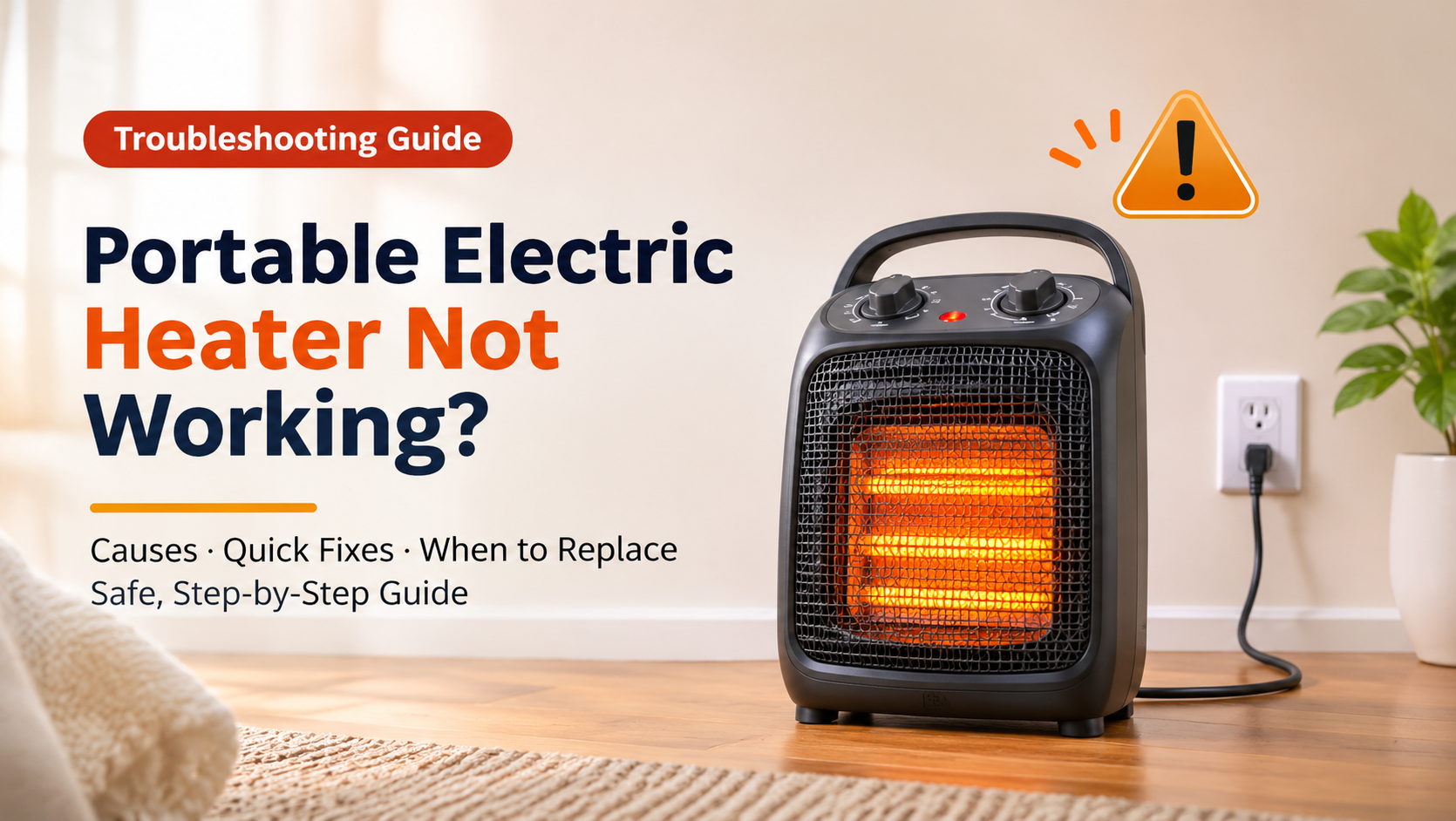
It is the coldest night of the week and your portable electric heater is not working. Maybe it will not switch on at all, maybe the fan spins but the air stays cold, or maybe it shuts off after a few minutes. The good news is that most heater problems come from a handful of simple causes, and many can be fixed in minutes without tools. This guide walks you through every common fault, shows you a safe step-by-step troubleshooting order, and explains when it is time to stop and replace the heater.
Table of Contents
- Step-by-step troubleshooting order
- Symptom guide
- Heater will not turn on at all
- Fan runs but no heat
- Heater turns off by itself
- Heater trips the circuit breaker
- Burning smell, clicking, or odd noises
- Remote, display, or controls not working
- 5-step safe reset
- Repair or replace?
- How to prevent problems
- Choosing a reliable replacement
- Frequently asked questions
- Conclusion
Step-by-Step Troubleshooting Order
Work through the checks below in order. They go from the easiest and most common to the least common causes, so you do not waste time.
Symptom Guide: What Is Probably Wrong
Match your problem to the likely cause using the guide below. Then read the matching section for fixes.
Heater Will Not Turn On at All
If there are no lights, no fan, and no heat, the heater is probably not receiving power or a safety switch is blocking it.
1. Check the Wall Socket
Plug a lamp or phone charger into the same socket to see if it works. If not, check the circuit breaker or fuse box. In bathrooms and kitchens, a GFCI or RCD outlet may have tripped, so press its reset button. Try a different socket in another room.
2. Remove Extension Cords and Power Strips
High-wattage heaters should be plugged directly into a wall socket. Extension leads and multi-plugs can overheat, drop voltage, or trip their own protection, which makes the heater appear dead.
3. Check the Tip-Over Switch
Almost every modern portable heater has a tip-over switch that cuts power if the unit tilts. If the heater sits on carpet, a slope, or something uneven, the switch may stay engaged. Move the heater to a flat, hard surface. Some units have a small button underneath that sticks, so gently press it a few times and check nothing is jamming it.
4. Check the Power Switch and Settings
Make sure the main switch is on, the thermostat is turned up above the current room temperature, and any timer is not set to off. Many digital heaters show the room temperature, and they will not heat if the target is lower than that reading.
5. Inspect the Plug and Fuse
In regions where plugs contain a fuse, such as the UK, the fuse may have blown. Replace it with the exact rating shown in the manual, never a higher one. Look at the plug and cable for scorch marks, bent pins, or cracks. If you see damage, stop using the heater.
Fan Runs but No Heat
If the fan spins but only cold air comes out, the power supply is fine, but the heating part is not working.
- Thermostat set too low: Turn it to maximum and wait a few minutes.
- Heat setting not selected: Many heaters have a fan-only mode, so choose a heat level such as low or high.
- Eco or auto mode: The heater may be holding at a low target temperature. Switch to a manual heat mode to test.
- Thermal cut-out tripped: A blocked grille or dusty element can trigger a safety cut-out that disables the heat but not the fan. Unplug, clean, and wait 30 minutes.
- Failed heating element or ceramic plate: This is a hardware fault. If the heater is under warranty, contact the seller. If not, replacement is usually more practical than repair.
Heater Turns Off by Itself
A heater that works for a short time and then stops is usually protecting itself or following a setting.
- Overheat protection: Dust on the grille, a blocked air intake, or a heater placed too close to a wall, furniture, or curtains can cause overheating. Clear at least one metre of space around the heater and clean the vents.
- Thermostat reached its target: The heater is working normally and cycling off. Turn up the target if the room still feels cool.
- Timer or auto shut-off: Many models have timers or auto-off after a set period. Check and reset.
- Tip-over switch triggered: A small vibration or uneven surface can trip it.
- Loose plug or damaged cord: If the heater cuts out when you touch the cable, stop using it.
- Dirty filter or failing fan: Reduced airflow causes overheating. Clean any removable filter, and listen for fan noise.
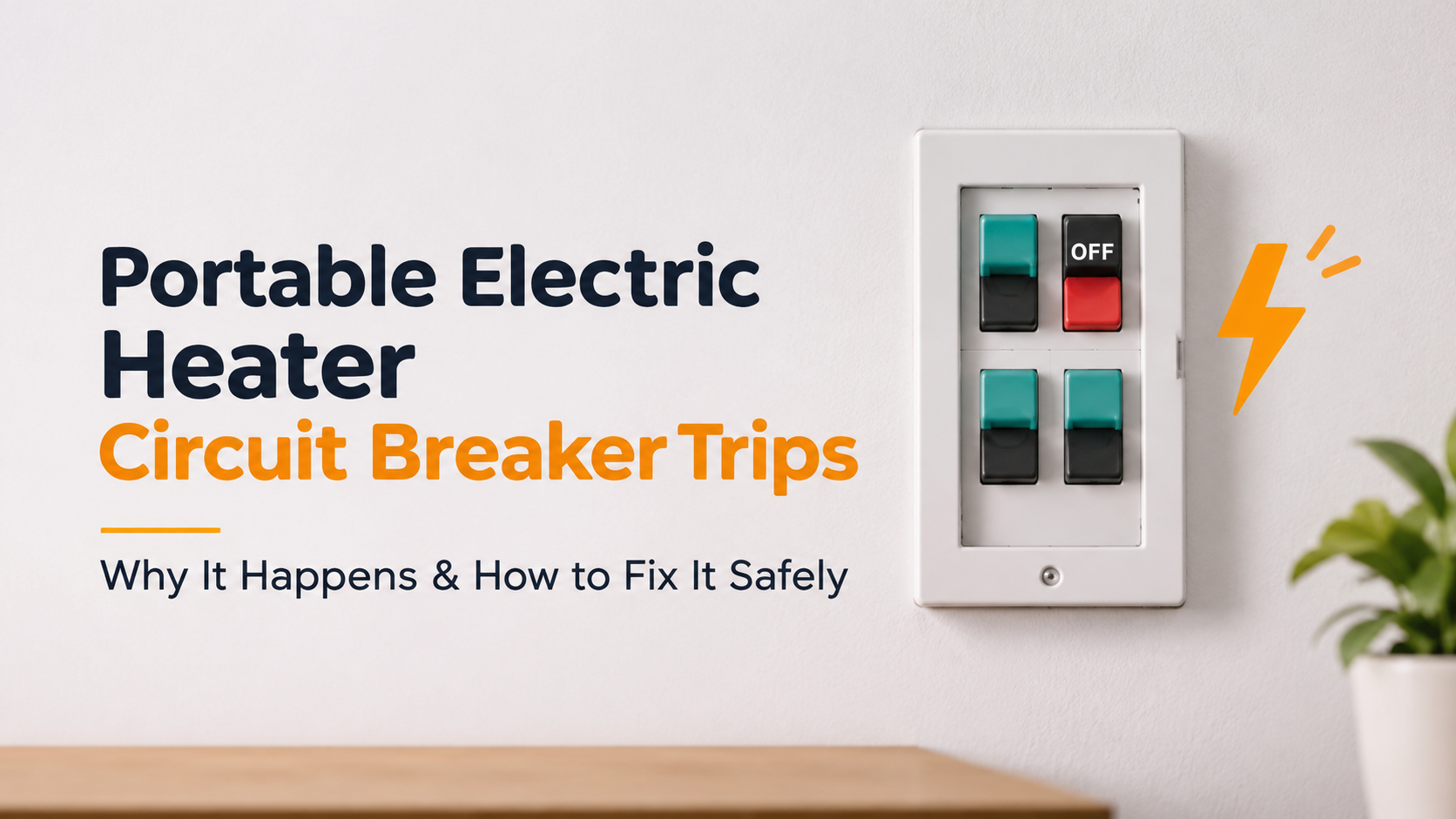
Heater Trips the Circuit Breaker
Most portable heaters draw 1500W to 2000W, which is a lot for a household circuit. If the breaker trips, check the following.
- Other high-power devices, such as a kettle, microwave, hair dryer, or second heater, may be on the same circuit.
- Use a lower power setting on the heater.
- Plug the heater into a different circuit.
- A breaker that trips immediately every time can signal a short in the heater or wiring. Stop using the heater and have it checked by a qualified electrician.
Burning Smell, Clicking, or Odd Noises
Burning or Dusty Smell
A light dusty or burning-dust smell is normal when you first use a heater after storage, as dust burns off the element. It should disappear within a few minutes. A strong, acrid, plastic or electrical smell is different. Unplug the heater immediately and do not use it again until it has been inspected or replaced.
Clicking
Soft clicking while the heater warms up or cools down is normal, caused by metal expanding and contracting or by the thermostat switching. Constant loud clicking or buzzing could signal a loose part or a failing thermostat.
Rattling or Grinding
This usually points to dust on the fan blades or a damaged fan. Unplug, clean with a soft brush or compressed air, and test again. If the noise persists, the fan motor may need replacing.
Remote, Display, or Controls Not Working
- Replace the remote batteries and make sure the remote is pointed at the sensor.
- Check that the heater is plugged in and the main switch is on, since many remotes only work in standby.
- Unplug the heater for a minute to reset the control board.
- If the display is blank but the heater has power, the control board may be faulty, which usually requires replacement or warranty service.
5-Step Safe Reset
A reset fixes many problems caused by tripped safety systems.
Comparison Table: Problem, Cause, and Fix
| Problem | Likely Cause | Quick Fix |
|---|---|---|
| No power at all | Socket, tip-over switch, fuse | Test socket, flat surface, check fuse |
| Fan, no heat | Thermostat, cut-out, element | Turn thermostat up, clean, reset |
| Shuts off by itself | Overheat protection, timer | Clear space, clean vents, check timer |
| Trips breaker | Overload or short | Use a dedicated circuit, lower setting |
| Strong burning smell | Damaged part or wiring | Unplug, stop use, replace |
| Remote not responding | Batteries or control board | New batteries, power reset |
Repair or Replace?
Many heaters are inexpensive, and internal repairs can be unsafe. Use this guide to decide.
- Check the warranty first. If the heater is still covered, contact the seller or manufacturer rather than opening it yourself.
- Replace budget heaters with failed elements, since repair cost often approaches the price of a new unit.
- Consider a professional for larger, expensive models such as premium oil-filled or infrared units, if only a part like a thermostat has failed.
- Never bypass safety devices such as thermal fuses or tip-over switches. They exist to prevent fires.
How to Prevent Heater Problems
- Clean the grille and vents monthly during winter with a soft brush or vacuum.
- Store the heater in its box or a dry cover during summer.
- Plug directly into a wall socket and avoid extension leads.
- Keep at least one metre of clear space around the heater.
- Do not use the heater in damp or steamy areas unless rated for bathrooms.
- Check the cord and plug every few weeks for wear or heat marks.
- Do not move the heater by pulling the cord, and avoid wrapping the cord tightly while hot.
- Run it on a stable, flat surface to protect the tip-over switch.
Choosing a Reliable Replacement
If your heater is beyond saving, look for these features in the next one:
- Overheat and tip-over protection: Essential for safety.
- Adjustable thermostat and timer: Reduces wear and saves electricity.
- Removable or washable filter: Makes dust cleaning easy.
- Sturdy build and thick power cable: Better long-term durability.
- Multiple power settings: Lets you avoid running at maximum all the time.
- Clear warranty: Look for one to two years or more.
- Heater type that fits the room: Oil-filled for steady heat, ceramic fan for quick boosts, infrared for direct warmth.
Frequently Asked Questions
Why is my portable electric heater not turning on?
The most common reasons are a dead socket, a tripped breaker, a tip-over switch that is engaged, an incorrect thermostat setting, or a blown fuse in the plug where fitted.
Why does my heater blow cold air?
The thermostat may be set too low, the heater may be in fan-only or eco mode, a thermal cut-out may have tripped, or the heating element may have failed.
How do I reset my electric heater?
Unplug it, wait 15 to 30 minutes, clean the vents, place it on a flat surface, and plug it directly into a wall socket. Some models also have a small reset button on the back or bottom.
Why does my heater keep shutting off?
It is usually overheat protection caused by dust, blocked airflow, or placement too close to objects. It can also be a timer, thermostat cycling, or a loose power connection.
Is it safe to repair a heater myself?
Simple checks such as cleaning, resetting, and replacing a plug fuse are fine. Opening the casing or repairing internal parts is not recommended unless you are qualified, because of the risk of electric shock and fire.
How long do portable electric heaters last?
Many last several years with proper care, although budget models may wear out sooner. Heavy daily use, dust, and power surges shorten the life.
Why does my heater smell like it is burning?
A brief dusty smell on first use after storage is normal. A strong or persistent burning smell means you should unplug the heater and stop using it until it has been checked.
Conclusion
When a portable electric heater is not working, start with the simple checks: power source, tip-over switch, overheat reset, and thermostat or timer settings. Clean the vents, plug straight into a wall socket, and keep the space around the heater clear. If you find a damaged cord, a hot plug, burn marks, or repeated breaker trips, stop using it and replace the unit or call a professional. With regular cleaning and sensible use, your next heater will stay safe and reliable all winter long.