





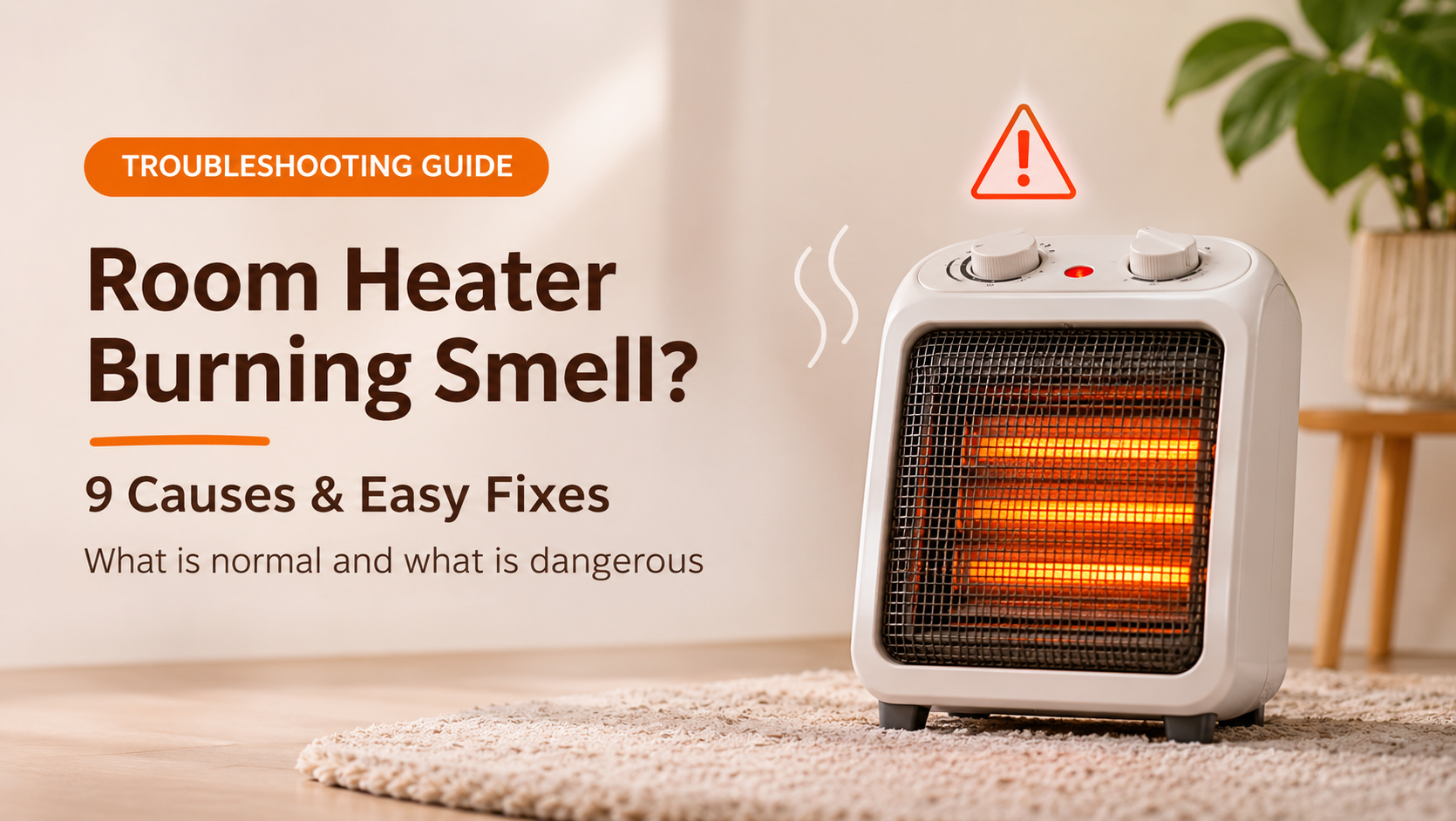
Few things worry people more than the smell of something burning from a heater. A room heater with a burning smell is sometimes harmless, such as dust burning off at the start of winter. But it can also be an early warning of overheating plastic, a damaged cord or an electrical fault. Knowing the difference can keep your home safe.
This guide explains what the smell can mean, what to do immediately, nine common causes with fixes, how to tell normal from dangerous, and what to look for in a safer replacement.
Immediate Steps When You Smell Burning
Do not wait to see whether the smell goes away. Follow these steps first, then investigate once the heater is off and cool.
Is a Burning Smell Always Dangerous?
No. Heaters are made of metal, plastic and wiring, and the heating element reaches very high temperatures, so a faint smell can happen when dust or coating burns off. What matters is the type, strength and duration of the smell. Use the decoder below to judge the risk.
9 Reasons Your Room Heater Smells of Burning
1. New heater burning off its coating
Why it happens: New heaters can carry a thin layer of manufacturing oil or protective coating on the element and metal parts. The first few uses heat it off and create a chemical or slightly metallic smell.
What to do: Run the heater on high for 15 to 30 minutes in a well-ventilated room, away from people, pets and flammable items. The smell should fade quickly. If it does not, or it smells of plastic, stop using it.
2. Dust burning off after storage
Why it happens: Over months in a cupboard, dust settles on the element and vents. When you switch the heater on, it burns off and gives a faint warm-dust smell.
What to do: Before the first use each season, unplug and clean the vents and grille with a vacuum and a soft brush. A faint smell that disappears within minutes is normal.
3. Clogged vents or filter causing overheating
Why it happens: Blocked airflow traps heat inside the heater. Parts get hotter than designed, and you may smell hot dust, plastic or metal, often followed by the heater shutting off.
What to do: Switch off, unplug and cool down. Clean the vents and filter. If the smell returns after cleaning, stop using the heater and have it checked.
4. Items too close to the heater
Why it happens: Clothes, curtains, blankets, bedding and furniture placed near a heater can scorch, which gives a burning fabric or paper smell. It is also a serious fire risk.
What to do: Switch off and unplug. Move everything at least 3 feet away and never dry clothes on or over a heater. Check nearby items for scorch marks.
5. Dust, lint, hair or debris on the element
Why it happens: Hair, pet fur, lint and small objects can fall onto the element or get drawn in by the fan, where they burn with a sharp smell of burning hair or fabric.
What to do: Unplug and let it cool. Remove visible debris carefully with a vacuum or a soft brush. Do not use the heater again until you are sure nothing is left inside.
6. Overheating plastic housing or internal parts
Why it happens: A faulty thermostat, failed fan or blocked airflow can make internal parts too hot. Plastic, insulation or glue begins to heat and gives a sharp plastic or rubber smell.
What to do: Stop using the heater immediately. This is a warning sign of a real fault. Have it inspected, or replace it, and do not use it in the meantime.
7. Overheated plug, cord or socket
Why it happens: A loose plug, worn socket, damaged cord or overloaded extension cord creates resistance and heat. The plug or socket may feel hot, discolor, and smell of hot rubber or plastic.
What to do: Unplug carefully. Check the plug and socket for brown or black marks and melted plastic. Replace the cord or plug and have the socket inspected. Never use an extension cord with a heater.
8. Overworked or failing fan motor
Why it happens: A worn motor works harder, runs hot and can produce a smell of hot varnish or burning oil, often with noise, a slow fan or weak airflow.
What to do: Switch off and unplug. If the smell and noise continue after cleaning, the motor needs professional repair or replacement.
9. Overheating wiring, failing element or electrical fault
Why it happens: Damaged wiring, a failing heating element or a faulty control board can overheat. This gives a sharp, fishy or acrid electrical smell, sometimes with sparks, smoke or tripped breakers.
What to do: Unplug at once if it is safe to reach. Do not use the heater again. This is a fire risk and needs a qualified technician, or the heater should be replaced.
Normal or Dangerous?
Normal Smells by Heater Type
| Heater Type | Smell That Is Often Normal | Smell That Is a Warning |
|---|---|---|
| Fan heater | Dust burning off at first use | Hot plastic, burning hair, hot motor smell |
| Ceramic (PTC) heater | Slight new-product smell | Sharp electrical or melting smell |
| Oil-filled radiator | Slight coating smell when new | Burning oil, which may mean a leak |
| Convector heater | Dust smell at season start | Hot plastic or scorched wiring smell |
| Halogen or quartz heater | Brief smell from dust or fingerprints on the tube | Burning plastic or a smell near the plug |
Quick Symptom Diagnosis Table
| What You Notice | Likely Cause | What to Do |
|---|---|---|
| Faint smell on first use of a new heater | Coating burning off | Ventilate and run on high briefly |
| Dusty smell after storage | Dust on the element | Clean and run again, ventilated |
| Burning hair or fabric smell | Debris or fabric near the heater | Unplug, clean, clear the area |
| Hot plastic or rubber smell | Overheating housing, plug or cord | Unplug and stop using the heater |
| Smell with a hot or discolored plug | Loose plug or damaged socket | Unplug carefully, repair or replace |
| Smell with smoke or sparks | Serious electrical fault | Unplug if safe, leave and call for help |
Step-by-Step Safe Check
Only do these steps once the heater is switched off, unplugged and fully cool, and the smell was faint or has gone.
- Ventilate the room. Open a window or door to clear any smell.
- Inspect the plug and cord. Look for brown or black marks, melting, cracks or a loose fit.
- Check the socket. Look for scorch marks or discoloration.
- Clean the vents and grille. Vacuum dust, hair and lint gently.
- Look for debris or scorch marks. Check the casing, base and the area around the heater.
- Clear the surroundings. Keep at least 3 feet of free space on all sides.
- Test in a ventilated room. Run it on a medium setting for 10 minutes while you stay in the room and watch for smell, smoke or heat at the plug.
- Stop and get it checked if the smell returns. Do not keep using a heater that smells again.
DIY Fix or Professional Help?
| You Can Do It Yourself | Leave to a Professional |
|---|---|
| Cleaning vents and the grille | Any plastic, rubber or electrical burning smell |
| Clearing items from around the heater | Repairing or replacing a damaged cord or plug |
| Ventilating and re-testing after a faint smell | Repairing the motor, wiring or control board |
| Checking the plug and socket by eye | Inspecting a scorched or melted socket |
Repair or Replace?
Replace the heater if it gave off a strong plastic or electrical burning smell, smoked, sparked, has a melted or discolored plug or cord, shows scorch marks, or is more than 5 to 7 years old. Safety is far more important than the cost of repair, especially for heaters used in bedrooms and children’s rooms.
What to Look for When Buying a Safer Room Heater
- Overheat protection that switches the heater off automatically if it gets too hot.
- Tip-over protection that cuts power if the heater falls over.
- Cool-touch or heat-resistant housing and flame-retardant materials.
- Thick, quality power cord and a snug plug.
- Accurate adjustable thermostat so it does not run flat out all the time.
- Correct wattage for your room size and your wiring.
- Trusted safety certification marks and a good warranty.
How to Prevent Burning Smells
- Clean the heater before the first use each winter.
- Keep at least 3 feet clear of curtains, beds, clothes and furniture.
- Plug directly into a wall socket and check the plug regularly.
- Never cover the heater or leave it running unattended for long periods.
- Replace old or damaged heaters instead of continuing to use them.
Frequently Asked Questions
Is it normal for a new heater to smell of burning?
A faint chemical or metallic smell during the first few uses is common as the coating burns off. It should fade quickly. A strong plastic smell or any smoke is not normal.
Why does my heater smell like burning dust?
Dust settles on the element during storage and burns off when the heater is switched on. Clean the vents and element area before the first use each season.
Can a heater with a burning smell start a fire?
Yes, if the cause is overheating wiring, a melting plug, or flammable items touching the heater. That is why strong or lasting smells should never be ignored.
Why does my oil-filled heater smell like burning oil?
A new oil heater may have a slight coating smell. A burning oil smell on an older unit can mean an oil leak onto the hot surface. Stop using it and replace it.
Should I keep using my heater if the burning smell goes away?
Only if it was a faint dust or coating smell. If it smelled of plastic or electricity, or the plug was hot, do not use it until it has been inspected, even if the smell has disappeared.
Is it safe to leave a heater on overnight?
It is safest not to. Use a timer if you must, keep it clear of bedding and curtains, and never leave a heater running if it has ever smelled of burning.
Conclusion
If your room heater smells of burning, the first rule is safety. A faint, short-lived dusty or chemical smell is often normal, especially with a new heater or at the start of winter. A strong plastic, rubber, fishy or electrical smell, a smell that grows, or any smoke, sparks or hot plug means you should unplug the heater, ventilate the room and stop using it until it is checked. Choose a heater with solid safety features, keep it clean and clear of flammable items, and replace it at the first real warning sign.