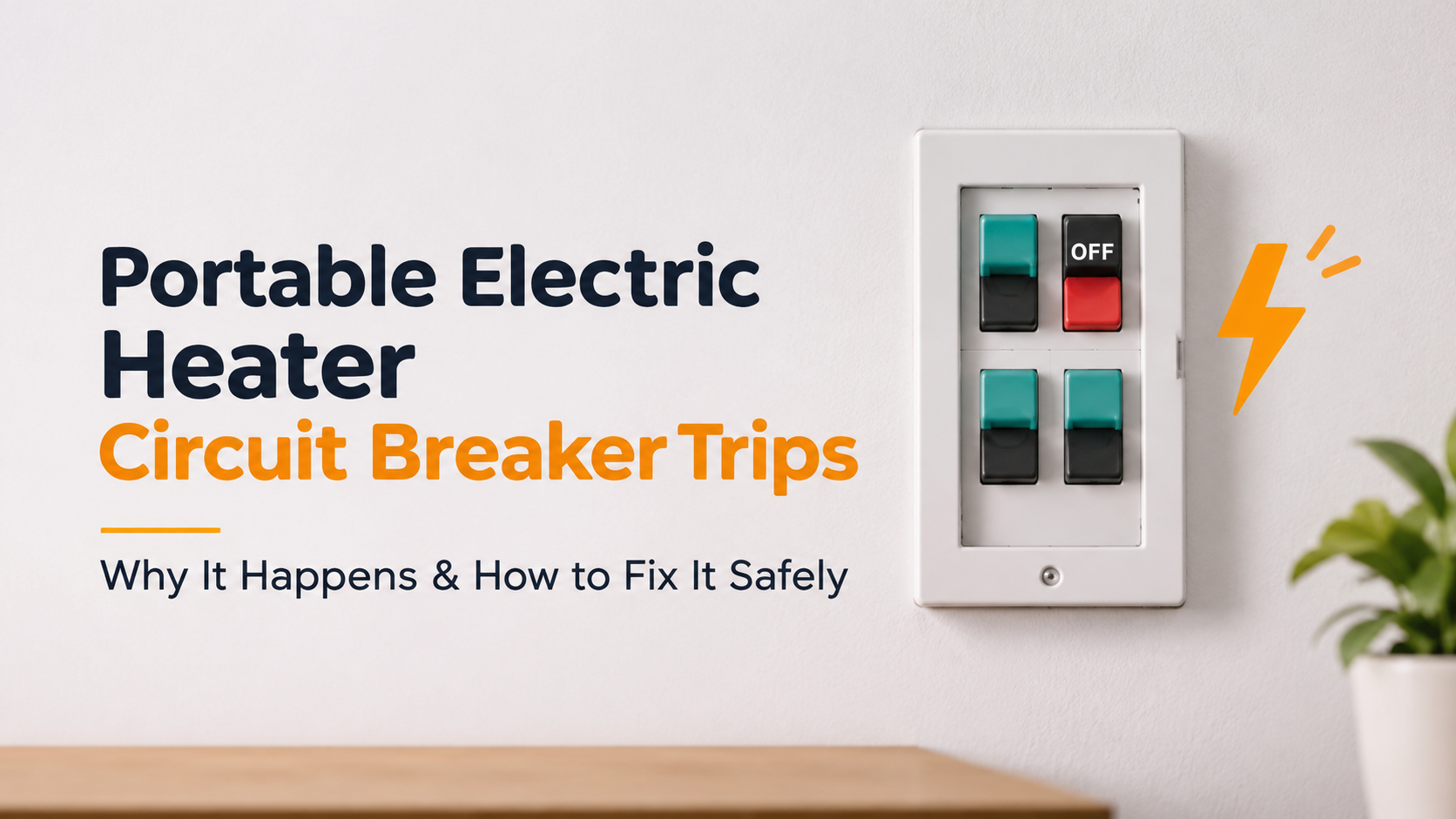

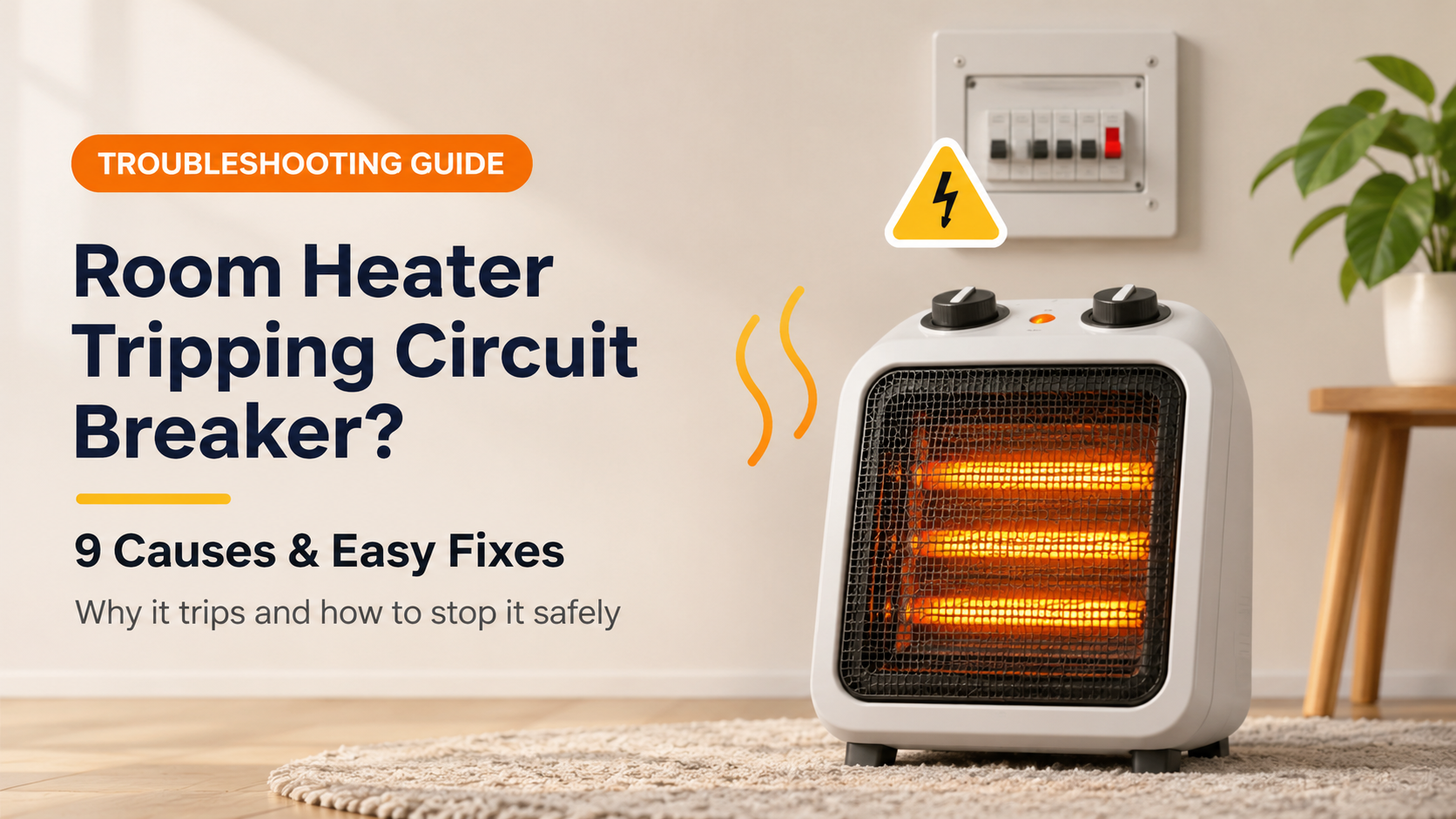
You switch on your heater and, a moment later, click. The lights go out or the breaker flips off. A room heater that keeps tripping the circuit breaker is more than an annoyance, because the breaker is doing its job: protecting your wiring and your home. Resetting it again and again without finding the cause can hide a real fault.
This guide explains why heaters trip breakers, nine common causes with fixes, how to tell an overload from a fault, safe reset steps, when to call an electrician, and what to look for in a safer heater.
Why Heaters Trip Circuit Breakers
A circuit breaker is a safety switch that cuts power when too much current flows, or when current leaks where it should not. Heaters are among the highest-power appliances in a home, so they often push a circuit close to its limit. When the combined load from all appliances on that circuit exceeds the breaker rating, it trips.
Which Kind of Breaker Tripped?
The type of protection that trips gives you a clue. An overload breaker reacts to too much current, while an earth-leakage breaker reacts to current escaping to earth, often from moisture or damaged insulation.
9 Reasons Your Room Heater Keeps Tripping the Breaker
1. Overloaded circuit
Why it happens: Heaters draw a lot of current, often 1000 to 2000 watts or more. When a heater shares a circuit with an air conditioner, geyser, iron, kettle or microwave, the combined load can exceed the breaker rating and trip it.
What to do: Run the heater alone on its circuit. Switch off or unplug other high-power appliances, and try a socket on a different circuit.
2. Heater power too high for the circuit
Why it happens: A high-wattage heater on a small-rated breaker or older wiring can trip even with nothing else running, because the heater alone is close to the circuit’s limit.
What to do: Use a lower power setting or a lower-wattage heater. If you need more heat, ask an electrician about a suitable or dedicated circuit instead of changing the breaker yourself.
3. Short circuit inside the heater
Why it happens: Damaged wiring, a broken element touching the casing or failed insulation can create a short circuit. The breaker then trips instantly, often with a bang or spark.
What to do: Unplug at once and stop using the heater. Do not reset the breaker again with it plugged in. The heater needs professional inspection or replacement.
4. Earth leakage or ground fault
Why it happens: Moisture, damp rooms, spills or damaged insulation allow current to leak to earth. An earth-leakage breaker (RCD or GFCI) trips to protect you from shock.
What to do: Keep heaters dry and out of bathrooms and wet areas. If an earth-leakage breaker trips with only this heater, stop using it and have it checked.
5. Damaged power cord or plug
Why it happens: A frayed, pinched, burnt or loose cord and plug can short or leak current, especially when the cord bends or the plug heats up.
What to do: Inspect the cord and plug for cracks, burns and loose pins. A damaged cord must be replaced by a qualified technician, never taped.
6. Extension cord or multi-plug overload
Why it happens: Thin extension cords and shared multi-plugs cannot safely carry a heater’s current. They overheat and may cause the breaker to trip, and they are a fire risk.
What to do: Plug directly into a wall socket. Never use a thin extension cord or multi-plug with a heater.
7. Dust, debris or moisture inside the heater
Why it happens: Conductive dust, damp and debris can create leakage paths or small arcs inside the heater, which may trip an earth-leakage breaker or overload breaker.
What to do: Unplug, cool down and clean the vents and grille. If it still trips, stop using the heater and have it inspected.
8. Faulty breaker or loose connection at the panel or socket
Why it happens: Breakers weaken with age and can trip below their rating. A loose wire at the breaker, panel or socket creates heat and nuisance trips, and a breaker that feels hot or smells is a warning sign.
What to do: Do not open the panel. An electrician should test the breaker and tighten or replace the connections. Never replace a breaker with a higher rating to stop the tripping.
9. Aging heater with deteriorating insulation
Why it happens: Over years, insulation around wires and the element breaks down from heat and dust. This increases leakage and shorts, so an older heater may start tripping breakers it never tripped before.
What to do: If the heater is more than 5 to 7 years old and trips breakers, replacement is usually the safest option.
Know Your Numbers: How Much Current Does a Heater Draw?
Current in amps equals power in watts divided by voltage. This shows why a heater uses so much of a circuit’s capacity. A common safety guideline is to keep continuous loads well below the breaker’s rating, around 80 percent.
| Heater Power | Approx. Current at 230 V | Approx. Current at 120 V |
|---|---|---|
| 1000 W | 4.3 A | 8.3 A |
| 1500 W | 6.5 A | 12.5 A |
| 2000 W | 8.7 A | 16.7 A |
| 2500 W | 10.9 A | 20.8 A |
For example, a 2000 W heater on a 120 V supply draws more than a typical 15 amp circuit can carry, which is why it trips. Check your own voltage and breaker rating to see how much margin you have.
What to Do After the Breaker Trips
Easy Fixes or an Electrician?
Quick Symptom Diagnosis Table
| What You Notice | Likely Cause | What to Do |
|---|---|---|
| Trips the moment it is plugged in | Short circuit, damaged cord or earth leakage | Unplug, stop using it, call an electrician or technician |
| Trips after a few minutes of running | Overload or a failing heater part | Run alone, use a lower setting, inspect the heater |
| Trips only when other appliances are on | Overloaded circuit | Run the heater by itself on that circuit |
| Earth-leakage breaker trips | Moisture or damaged insulation | Keep it dry and have it inspected |
| Plug or cord is hot | Loose plug, damaged cord or extension cord | Unplug and replace the cord or plug |
| Breaker feels hot or smells | Loose connection or faulty breaker | Call an electrician at once |
Step-by-Step Troubleshooting
- Unplug the heater. Make sure it is off before touching the breaker.
- Reset the breaker once. Switch it fully off, then on. If it trips immediately with nothing plugged in, the problem is the circuit, not the heater.
- Unplug other appliances on the same circuit. Remove other high-power items.
- Inspect the heater’s cord and plug. Look for burns, cracks, loose pins and hot spots.
- Plug the heater directly into a wall socket. Do not use an extension cord or multi-plug.
- Switch on at a lower power setting. If it runs on low but trips on high, the circuit cannot handle the full load.
- Try a socket on a different circuit. Compare the results.
- Clean the vents and grille. Remove dust and make sure the heater is dry.
- Stop and call an electrician if it trips again. Do not keep resetting.
DIY Fix or Professional Help?
| You Can Do It Yourself | Leave to a Professional |
|---|---|
| Running the heater alone on the circuit | Testing or replacing the breaker |
| Using a lower power setting | Checking wiring, sockets and the panel |
| Inspecting the cord and plug by eye | Replacing a damaged cord or plug |
| Cleaning vents and keeping the heater dry | Repairing a short or earth fault in the heater |
Repair or Replace?
Replace the heater if it trips breakers instantly, has a damaged cord or burnt plug, shows signs of burning, or is more than 5 to 7 years old. Repair makes sense only for newer heaters with a clearly identified, simple fault, such as a damaged plug or cord.
What to Look for When Buying a Heater That Suits Your Circuit
- Selectable power settings, such as 1000 W and 2000 W, so you can reduce the load when needed.
- Accurate thermostat so the heater cycles instead of drawing full power continuously.
- Wattage that matches your room and your circuit, not just the biggest unit available.
- Quality power cord and plug that are thick and snug.
- Overheat, tip-over and electrical safety features and trusted certification marks.
- Moisture-resistant construction if the heater will be used in humid areas.
- Good warranty and solid build quality.
How to Prevent Breaker Trips
- Run the heater alone, especially if it is a high-wattage model.
- Use a lower setting or a thermostat so the heater does not run at full power all the time.
- Check the plug and cord at the start of each winter.
- Keep the heater clean, dry and away from water.
- Ask an electrician to check the circuit if you often use several high-power appliances together.
Frequently Asked Questions
Why does my heater trip the breaker as soon as I switch it on?
An instant trip usually means a short circuit, earth leakage, or a damaged cord inside or outside the heater. Unplug it and do not use it until it has been inspected.
Can too many appliances on one circuit cause a trip?
Yes. Heaters draw a lot of current, so combining one with an air conditioner, geyser, iron or kettle can easily exceed the breaker rating.
Is it safe to reset the breaker again?
You can reset it once after unplugging the heater. If it trips again, stop. Repeated resetting can overheat wiring and hide a serious fault.
Can I install a bigger breaker?
No. The breaker rating is matched to the wiring. A larger breaker lets too much current flow and can cause wires to overheat and start a fire.
Why does my earth-leakage breaker trip with a heater?
It trips when current leaks to earth, often from moisture, dust or damaged insulation in the heater or cord. Keep the heater dry and have it inspected.
Is a heater that trips the breaker dangerous?
It can be. A trip is a warning of overload, a short or leakage. If it happens repeatedly or comes with a burning smell, sparks or a hot plug, stop using it and call a professional.
Conclusion
If your room heater keeps tripping the circuit breaker, treat it as a safety warning. Unplug the heater, reset the breaker once, run the heater alone, check the cord and plug, and try a lower setting. If it trips instantly, trips again after resetting, or comes with burning smells, hot plugs or a hot breaker, stop using it and call an electrician. Choose a heater with adjustable power and strong safety features that suits your circuit, and you will stay warm without risking your home.