

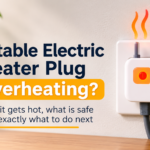

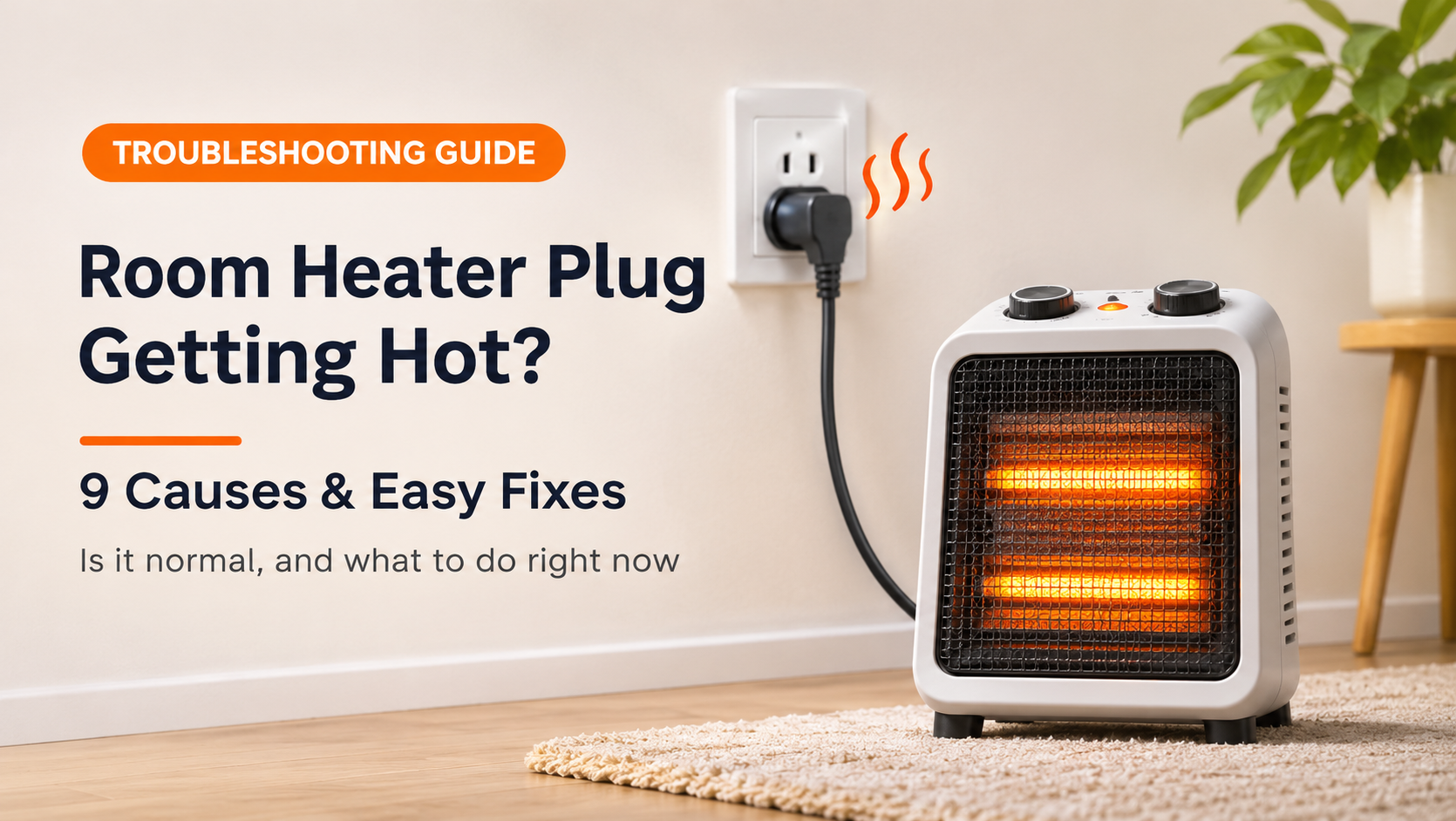
You reach behind your heater and the plug feels hot. A room heater plug getting hot is something you should take seriously. A heater draws a lot of current for hours at a time, so a plug can become slightly warm even when everything is fine. But a hot plug is also one of the earliest warning signs of a loose connection, a worn socket or a damaged cord, and it can lead to melting and fire.
This guide explains why heater plugs get hot, how to tell warm from dangerous, nine common causes with fixes, what to do right now, and what to look for in a safer setup.
Why Do Heater Plugs Get Hot?
Heaters pull far more current than most household devices. Wherever current flows through a poor connection, resistance turns some of that energy into heat. A tight, clean plug and socket have very low resistance, but a loose, dirty or worn one does not, and the heat concentrates at the pins.
Warm or Dangerous? The Careful Touch Test
Use your senses, not guesses. A plug that is mildly warm and stays that way is usually acceptable. A plug that is uncomfortable to hold, or one that is discolored, soft or smells of plastic, is not.
Where Can the Heat Build Up?
The heat can come from several places along the path from the wall to the heater. Check each one in turn.
9 Reasons Your Room Heater Plug Is Getting Hot
1. Loose plug in a worn socket
Why it happens: When the pins do not grip the socket firmly, the contact area shrinks and electrical resistance rises. With a 1000 to 2000 W heater, even a small resistance creates noticeable heat at the pins.
What to do: Unplug and test the fit. If the plug wobbles or falls out easily, stop using that socket. Have the socket replaced by an electrician.
2. Dirty, oxidized or corroded pins and contacts
Why it happens: Dust, grime, moisture and oxidation form a thin film on the pins and socket contacts. The film acts as a resistor, so heat builds up where the metal should touch cleanly.
What to do: Unplug, let it cool and wipe the pins with a dry cloth. Do not use water or sharp tools. If the pins are discolored or pitted, replace the plug.
3. Bent, worn or low-quality plug or adapter
Why it happens: Bent pins, cheap molded plugs and travel adapters often fit poorly or use thin metal. They overheat under a heater’s heavy load.
What to do: Replace worn or bent plugs. Avoid adapters and converters with heaters unless they are rated for the load, and use a well-made, certified plug.
4. Overloaded socket or multi-plug
Why it happens: Plugging a heater and other appliances into one wall socket or a multi-plug adds their currents together. The shared contacts and wiring carry more than they were designed to.
What to do: Plug the heater directly into its own wall socket. Never use a multi-plug or power strip with a heater.
5. Thin, coiled or long extension cord
Why it happens: Extension cords with thin conductors, or cords left coiled up, cannot shed heat or carry the load. The cord and its plug get hot, and the heater may also underperform.
What to do: Do not use an extension cord with a heater. If you must, use a heavy-duty cord rated above the heater’s power, fully unrolled, and keep it as short as possible.
6. Damaged or undersized heater cord
Why it happens: Broken strands inside the cord, pinched or crushed sections and cords that are too thin for the heater increase resistance and make the cord and plug warm.
What to do: Check the cord along its length for kinks, cuts and hot spots. A damaged cord must be replaced by a qualified technician, never taped.
7. Loose wiring or a faulty socket behind the wall
Why it happens: A loose terminal behind the socket plate creates heat inside the wall. The socket cover may feel warm or look discolored, and the plug may heat up as well.
What to do: Stop using that socket and call an electrician. This is a fire risk and must not be left.
8. Heater drawing more current than it should
Why it happens: An internal fault, failing element or damaged part can make the heater draw excess current. The plug and cord then carry more than normal, and they heat up.
What to do: Check whether the heater itself is also unusually hot, trips breakers or smells. Stop using it and have it inspected or replaced.
9. Plug close to the heater’s hot air or covered
Why it happens: A plug tucked behind the heater, under bedding or in the path of hot air can be warmed by its surroundings, which adds to normal contact heating.
What to do: Keep the plug and cord clear of the heater’s hot outlet and any bedding or furniture. Leave at least 3 feet of free space around the heater.
What to Do Right Now
How Much Current Does a Heater Draw?
Current in amps equals power in watts divided by voltage. The plug, cord and socket must safely carry this current for hours, which is why heaters stress connections more than lamps or chargers.
| Heater Power | Approx. Current at 230 V | Approx. Current at 120 V |
|---|---|---|
| 1000 W | 4.3 A | 8.3 A |
| 1500 W | 6.5 A | 12.5 A |
| 2000 W | 8.7 A | 16.7 A |
| 2500 W | 10.9 A | 20.8 A |
Quick Symptom Diagnosis Table
| What You Notice | Likely Cause | What to Do |
|---|---|---|
| Only the plug is hot, the cord is cool | Loose fit, dirty pins or a poor plug | Unplug, clean, and replace the plug if worn |
| Socket cover is warm or discolored | Worn socket or loose wiring | Stop using it and call an electrician |
| Cord is hot along its length | Thin, coiled or damaged cord | Replace the cord and avoid extension cords |
| Plug hot and heater also very hot | Heater drawing too much current | Stop using the heater and have it inspected |
| Plug hot with a plastic or burning smell | Melting plastic or arcing | Switch off at the breaker and call an electrician |
| Plug hot only in one socket | That socket is faulty | Try another circuit and have the socket checked |
Step-by-Step Safety Check
- Switch off and unplug the heater. If the plug is melted or smoking, use the breaker instead.
- Let everything cool for at least 30 minutes.
- Look at the plug. Check for discoloration, melted plastic, bent or blackened pins.
- Check the cord. Run your eyes and fingers along it for cuts, kinks and soft spots.
- Test the fit. A plug that wobbles or slips easily in the socket is a problem.
- Look at the socket. Check for brown or black marks and a loose or cracked faceplate.
- Remove extension cords and multi-plugs. Plug the heater directly into a wall socket.
- Test on a lower setting in a different socket for 15 minutes. Check the plug gently with the back of a dry hand every few minutes.
- Stop and call a professional if the plug gets hot again. Do not keep experimenting.
DIY Fix or Professional Help?
| You Can Do It Yourself | Leave to a Professional |
|---|---|
| Unplugging and inspecting the plug and cord by eye | Replacing a worn or discolored socket |
| Wiping dust from the pins with a dry cloth | Checking or repairing wiring behind the wall |
| Removing extension cords and multi-plugs | Replacing a damaged heater cord or plug |
| Moving the heater to a different socket | Any melted, smoking or sparking connection |
Repair or Replace?
Replace the heater’s plug or cord if it is damaged, but replace the whole heater if the plug is melted, the heater is more than 5 to 7 years old, or the heater itself is overheating or tripping breakers. Always replace a burnt or loose socket instead of continuing to use it.
What to Look for When Buying a Safer Heater
- Thick, quality power cord with a firm, well-molded plug.
- Selectable power settings so you can reduce the load on connections.
- Accurate thermostat so the heater cycles instead of running at full power all day.
- Overheat and tip-over protection and trusted safety certification marks.
- Correct wattage for your room, not larger than needed.
- Plug rated for the heater’s current, and a socket in good condition.
- Good build quality and a solid warranty.
How to Keep Plugs and Sockets Safe
- Check the plug and cord at the start of every winter and every few weeks of heavy use.
- Plug the heater directly into a wall socket, not a multi-plug.
- Keep the cord untangled and uncoiled, and away from furniture legs and doors.
- Replace loose, discolored or cracked sockets promptly.
- Do not leave a heater running unattended if its plug has ever been hot.
Frequently Asked Questions
Is it normal for a heater plug to be warm?
A plug that is mildly warm and comfortable to hold can be normal for a high-power heater. A plug that is hot, discolored, soft or smelly is not normal.
Why is my heater plug hot but the heater is fine?
The heater may be fine while the connection is poor. A loose socket, dirty pins, a worn plug or a damaged cord can heat up even when the heater itself works correctly.
Can a hot plug cause a fire?
Yes. Prolonged heat can melt plastic, damage insulation and ignite nearby materials. That is why a hot plug should never be ignored.
Can I use an extension cord with my heater?
It is best avoided. If you must, use a heavy-duty cord rated above the heater’s power, fully unrolled and as short as possible. Never use a multi-plug or thin cord.
Should I replace the socket or the plug?
If the plug fits loosely in several sockets, replace the plug. If it fits fine elsewhere but heats in one socket, that socket needs an electrician.
Is it safe to leave a heater on overnight with a warm plug?
It is safest not to. If the plug has ever felt hot, stop using the heater until the cause is fixed, and never leave a heater running unattended.
Conclusion
If your room heater plug is getting hot, act on it. Switch off, unplug if it is safe, let it cool and inspect the plug, cord and socket. Mild warmth that is stable can be normal, but a plug that is hot, discolored, soft or smelly needs attention. Remove extension cords, replace worn plugs and call an electrician for any socket or wiring problem. Choose a heater with a good cord and plug and safe power settings, and keep connections clean and tight so your heater stays safe all winter.