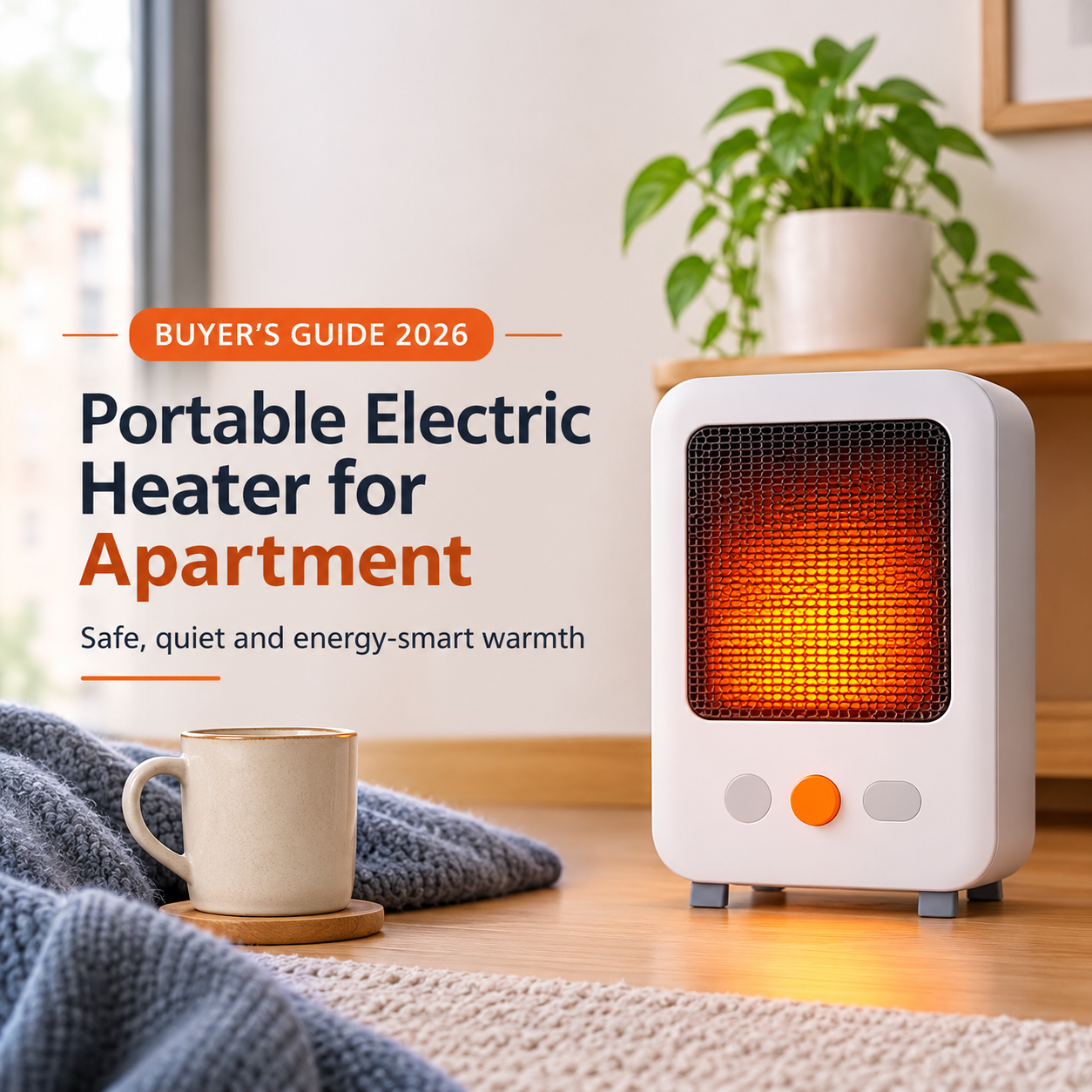
Cold winter evenings can make an apartment uncomfortable, especially when the building’s central heating is weak, uneven, or entirely outside your control. A portable electric heater for an apartment is one of the simplest fixes: plug it in, set the thermostat, and enjoy warmth in minutes. But with so many types, wattages and features, choosing the right one can feel confusing.
This guide explains how apartment heaters work, which types suit which rooms, how to pick the right wattage, what safety features matter, and how to keep your electricity bill under control.
Why Choose a Portable Electric Heater in an Apartment?
- No installation: Just plug it in. Ideal for renters who cannot modify the property.
- Zone heating: Warm only the room you are using instead of the whole home.
- Portable: Move it between bedroom, living room, bathroom and office.
- Clean operation: No fumes, flames or ventilation requirements, unlike gas or kerosene heaters.
- Affordable upfront: Good models cost far less than adding a permanent system.
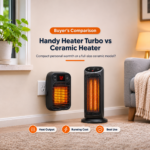
Types of Portable Electric Heaters Compared
Each heater type warms a space differently. Understanding the differences helps you match the heater to your habits.
| Type | Pros | Cons | Best for |
|---|---|---|---|
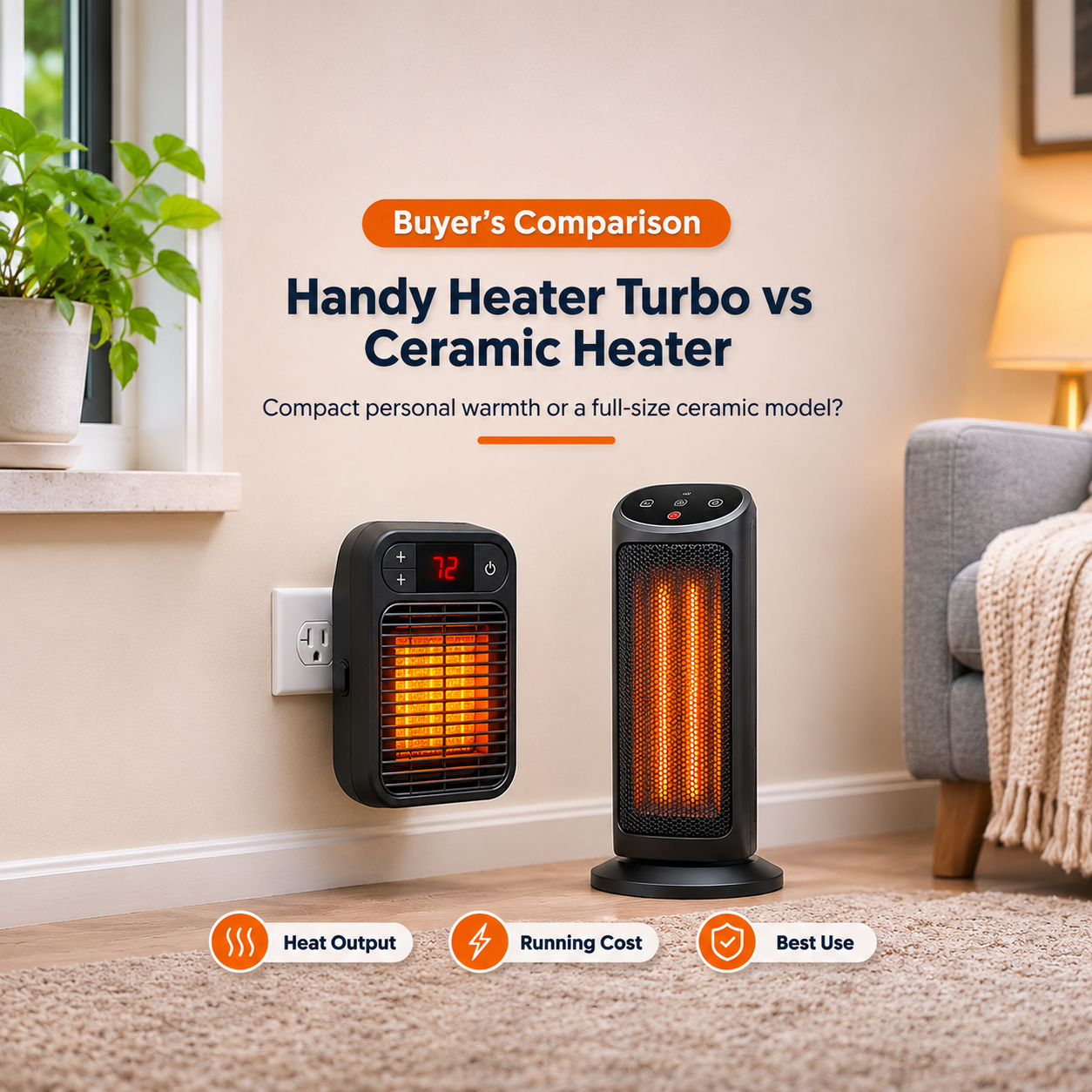
| Ceramic fan heater | Fast heat, compact, affordable | Can be noisy; heats only while on | Small rooms, bathrooms, desks |
| Oil-filled radiator | Silent, steady heat that lingers | Slow to warm up, heavy | Bedrooms, overnight use |
| Infrared / quartz | Warms people directly, instant | Heats objects in line of sight only | Spot heating at desk or sofa |
| Micathermic panel | Slim, quiet, fast and gentle | Higher price | Living rooms, wall-side placement |
| Convection heater | Even, quiet room warmth | Slower than fan models | Medium rooms, long use |
Ceramic Heaters
Ceramic heaters use heated ceramic plates and a fan to push warm air quickly. They are small, light and inexpensive, making them the most popular choice for apartments. Look for a quiet fan and an oscillation feature to spread heat.
Oil-Filled Radiators
These look like old-fashioned radiators. They heat oil sealed inside, which keeps radiating warmth even after the element cycles off. They are silent and great for bedrooms, but they take longer to warm the room.
Infrared Heaters
Infrared models warm people and objects directly rather than the air. They are excellent for a desk, reading chair or drafty corner, but less effective for heating a whole room.
How to Choose the Right Size and Wattage
A common rule of thumb is about 10 watts per square foot. Ceiling height, insulation, windows and climate all change the result, so treat it as a starting point.
Most standard outlets support a 1500W heater. Because of that limit, almost all portable heaters top out at 1500W, so very large open spaces may need two heaters in different rooms or help from central heating.
Key Features to Look For
- Adjustable thermostat: Keeps the temperature steady and reduces energy waste.
- Multiple heat settings: Low (about 750W) and high (1500W) modes give flexibility.
- Low noise level: Check decibel ratings if you will use it in a bedroom or home office.
- Timer and remote: Convenient for pre-warming a room or shutting off automatically.
- Compact footprint: Small apartments benefit from slim or tower designs.
- Easy-grip handle and cord storage: Makes moving and storing simple.
Safety Features You Should Never Skip
Heaters are a leading cause of home fires when misused, and apartments have shared walls and neighbors, so safety matters even more.
Safe Placement and Use Tips
- Keep at least 3 feet (about 1 metre) of clear space around the heater.
- Place it on a flat, hard surface, never on carpet edges, beds or sofas.
- Plug directly into a wall outlet; avoid power strips.
- Never cover the heater or dry clothes on it.
- Check the cord and plug regularly; stop using it if they feel hot or look damaged.
- Test smoke alarms and keep pets and children away from hot surfaces.
- Turn it off when leaving home or going to sleep unless the model is designed for unattended use.
Running Costs and Energy-Saving Tips
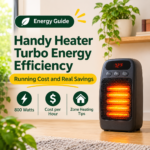
Electricity cost is a major concern for apartment dwellers. A 1500W heater running on high costs roughly 24 cents per hour at average U.S. rates, and your local rate may differ. Use these habits to save:
- Heat only the room you are in and close the door.
- Use the thermostat instead of leaving it on high continuously.
- Seal window and door drafts with weatherstripping or draft stoppers.
- Use thick curtains at night and rugs on cold floors.
- Pair an oil-filled radiator with a timer to stay warm at low running cost.
Which Heater Is Best for Which Room?
| Room | Recommended type | Why |
|---|---|---|
| Bedroom | Oil-filled radiator or quiet ceramic | Silent, steady, safe for long hours |
| Studio apartment | Ceramic tower or convection heater | Even warmth and a slim footprint |
| Home office | Infrared or small ceramic | Targeted heat at your desk |
| Bathroom | Small ceramic with splash protection | Rapid warm-up; check moisture ratings |
| Living room | Micathermic or 1500W convection | Gentle whole-room heating |
Common Mistakes to Avoid
- Buying by price alone and ignoring safety certification.
- Choosing too small a heater, then running it constantly.
- Using extension cords or crowded outlets.
- Expecting one 1500W heater to warm an entire open-plan home.
- Ignoring noise levels until the first night of use.
Frequently Asked Questions
Are portable electric heaters safe in an apartment?
Yes, when you choose a certified model with tip-over and overheat protection, plug it straight into a wall outlet, and keep it at least three feet from curtains, bedding and furniture.
How much does it cost to run a 1500W heater?
A 1500W heater uses 1.5 kWh per hour at full power. At about $0.16 per kWh, that is roughly $0.24 per hour, though a thermostat cuts the real cost because the heater cycles off.
Can I leave a heater on overnight?
Oil-filled radiators and models with a thermostat and timer are the best choices for sleeping hours. Never use a heater unattended if it lacks automatic shut-off features.
Can I use an extension cord?
No. Heaters draw high current, so use a wall outlet directly. If you must use an extension, choose a heavy-duty cord rated for the load, but avoid it whenever possible.
Will a heater overload my apartment circuit?
A 1500W heater draws about 12.5 amps on a standard 15A circuit. Avoid running it on the same circuit as a microwave, hair dryer or air fryer.
Final Thoughts
The best portable electric heater for your apartment balances room size, safety and running cost. Choose a certified model with a thermostat and automatic protections, match the type to your room and habits, and use it sensibly. Do that, and you can stay warm and comfortable all winter without worrying about the bill or the risk.
Disclosure: Some affiliate sites earn a commission from qualifying purchases at no extra cost to readers. Add your own disclosure text here as required.