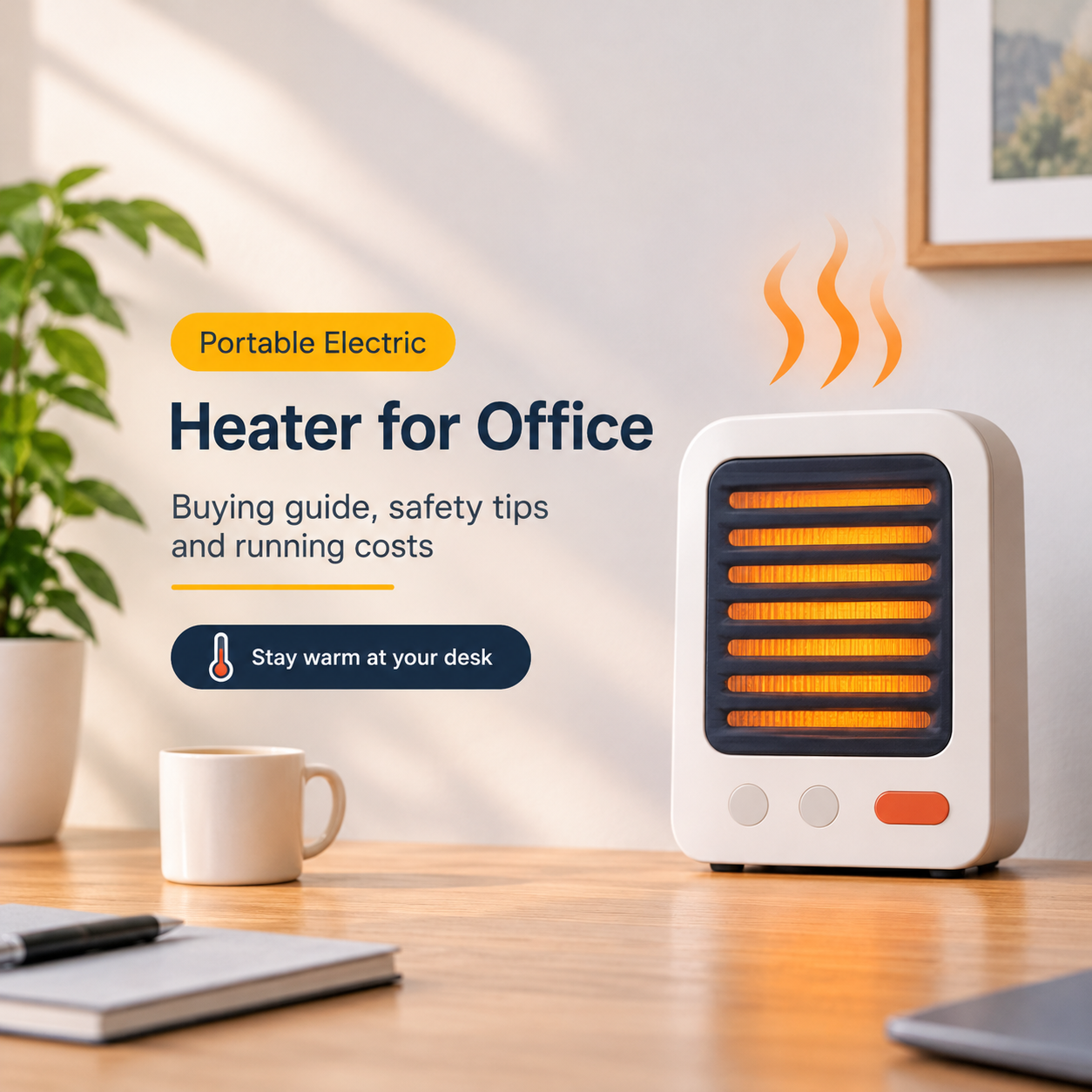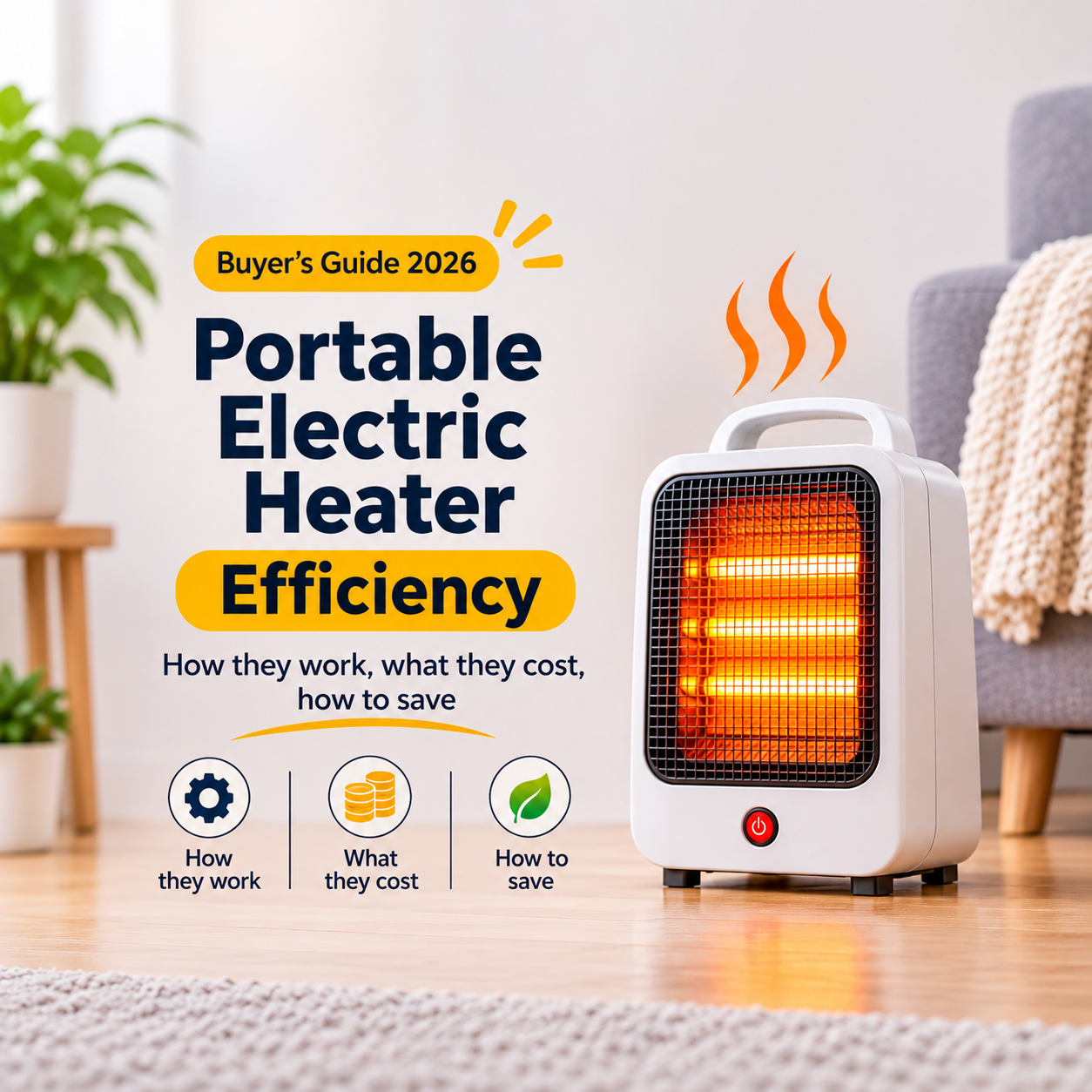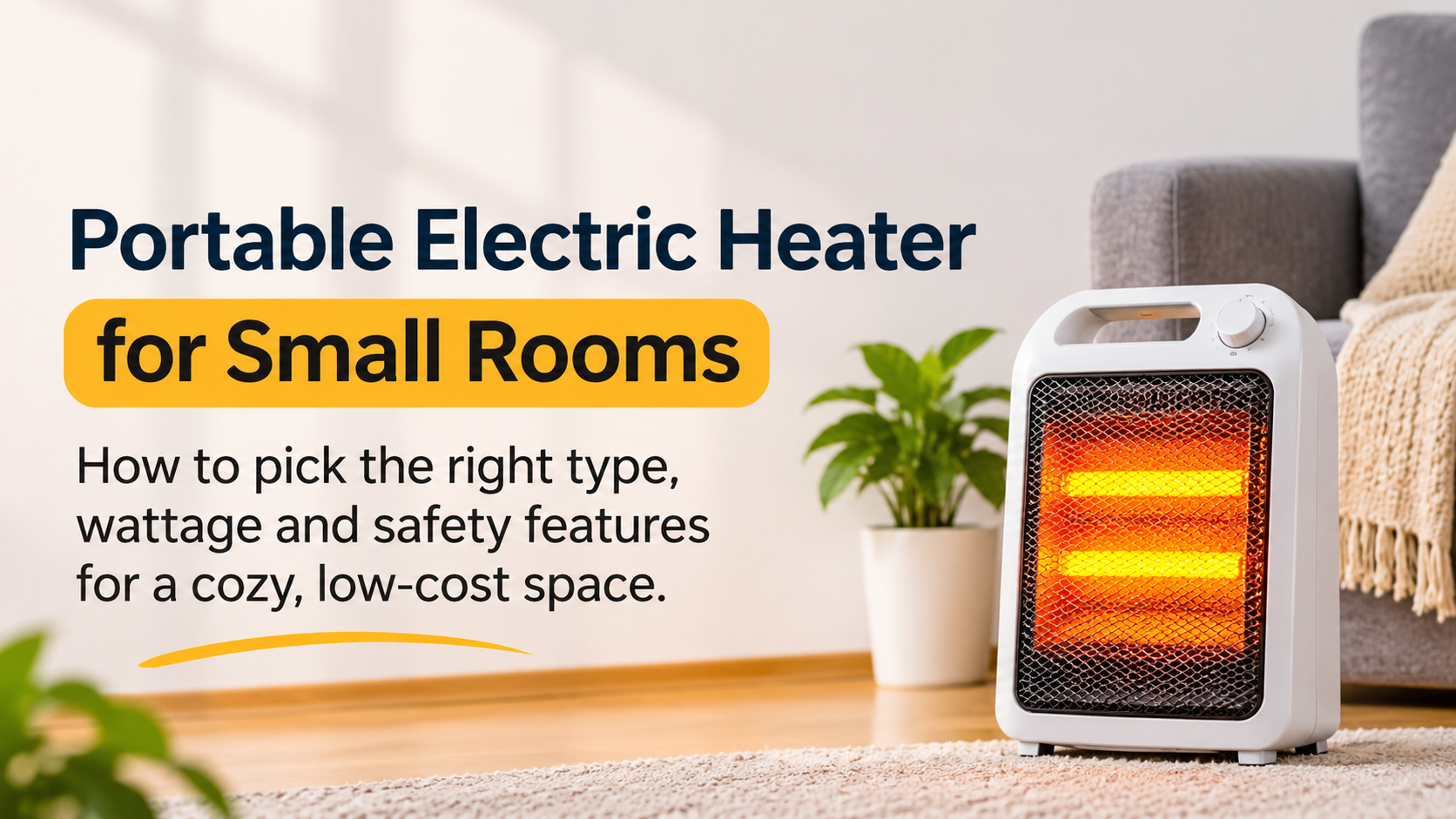
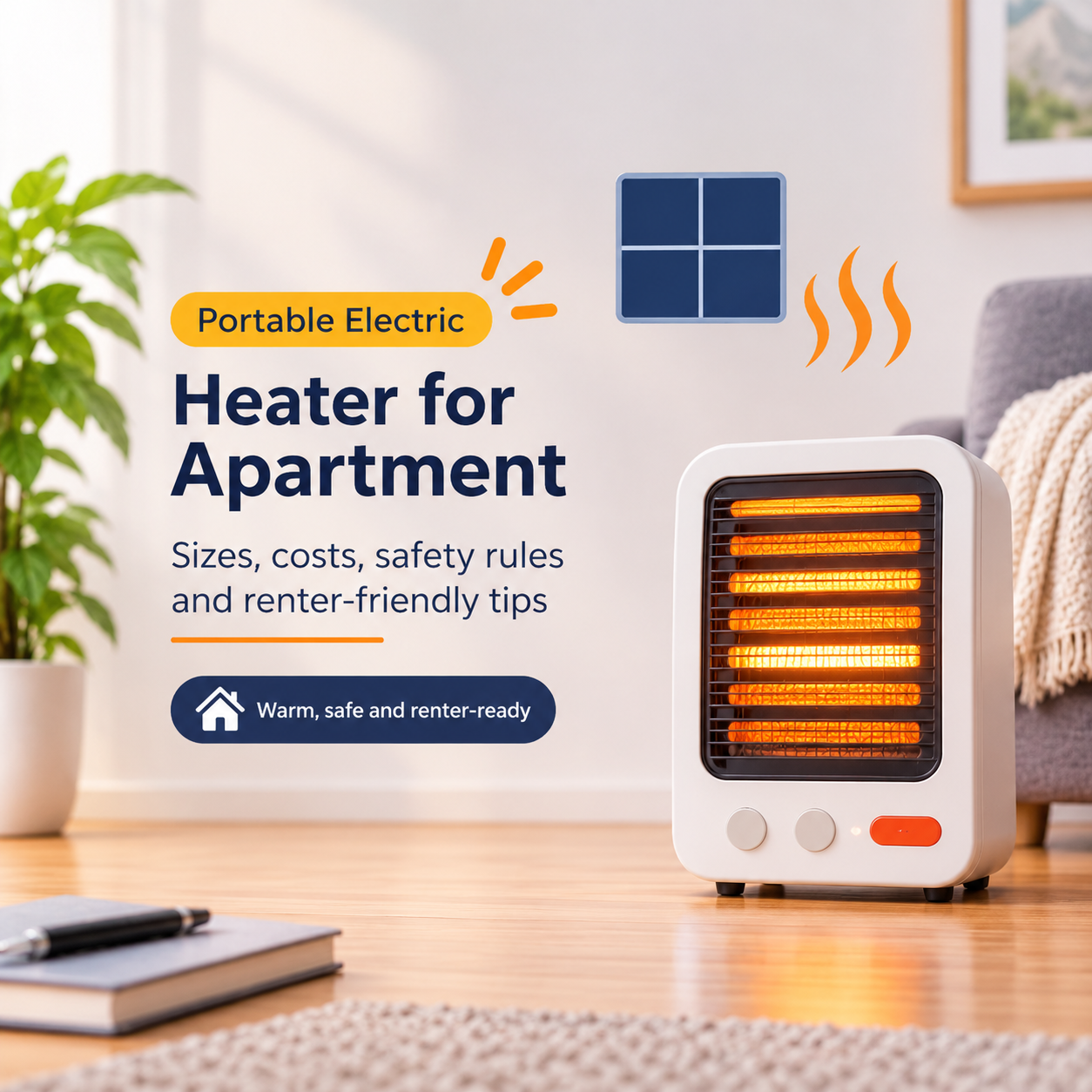

Apartment heating is rarely in your control. You may have an old radiator that barely works, a thermostat shared with the whole building, drafty windows or a landlord who decides when the heat turns on. A portable electric heater for apartment living gives you a simple way to warm the room you are actually using, without installation, permits or permanent changes.
Apartments also come with special limits: shared walls, older wiring, small rooms and lease rules. This guide explains which heater types work best, how to pick the right size, what it costs to run, and how to use one safely as a renter.
Why a Portable Heater Makes Sense in an Apartment
- Zone heating: Warm only the bedroom, living room or home office instead of the whole unit.
- Renter friendly: No installation, no drilling and nothing to remove when you move out.
- Fills heating gaps: Helpful when central heat is weak, uneven or turned on late in the season.
- Lower bills in many cases: If you pay for your own electricity, heating one room can cost less than raising the whole apartment’s temperature.
- Easy to move: Carry it from room to room, or take it with you to your next place.
Types of Portable Electric Heaters for Apartments

1. Ceramic Tower Heaters
Tower models use a ceramic element and a fan to push warm air across a room. They heat quickly, take little floor space and often come with a thermostat, oscillation and a remote. They are a good all-round choice for living rooms and small bedrooms. Because of the fan, look for a quiet or low setting if you share thin walls or sleep lightly.
2. Oil-Filled Radiator Heaters
These heaters warm sealed oil, which radiates gentle heat for a long time. They are silent, do not dry the air as much as fan models and keep releasing warmth even after the thermostat cycles off. They are heavier and slower to warm up, but they are among the best options for bedrooms.
3. Infrared (Radiant) Heaters
Infrared heaters warm people and objects directly rather than heating the air. That makes them useful when you sit in one place, such as on a sofa or at a desk, and in drafty rooms where heated air would escape. They are quiet, but the warmth is focused, not whole-room.
4. Wall-Mount and Panel Heaters
Slim panel heaters use convection and radiant heat in a low-profile design. Many stand on the floor or hang on a wall, which keeps them away from foot traffic. They run quietly and suit small bedrooms, bathrooms and tight apartments.
A Note About Gas, Propane and Kerosene Heaters
Fuel-burning heaters can release carbon monoxide and are not safe for indoor apartment use. They are also banned in most rental buildings. Stick to electric models, which produce no combustion fumes.
How to Choose the Right Heater Size
Heater power is measured in watts. A general guide is about 10 watts for every square foot of floor space with standard ceilings. Drafty windows, high ceilings or an exterior corner unit may need a little more.

Most portable heaters max out at 1500 watts, which is designed to suit a standard household outlet. In a large studio, one portable heater will usually warm only the area around it, so think of it as a zone solution, not a replacement for central heating.
Apartment Wiring and Circuit Limits
This is the part most buyers overlook. In many apartments, several outlets and rooms share a single circuit. A 1500 watt heater already uses most of the safe capacity of a typical 15 amp circuit, so adding a microwave, hair dryer, toaster or air fryer on the same circuit can trip the breaker or create a fire risk.

- Plug the heater into its own wall outlet and avoid sharing the circuit with other high-power appliances.
- If the breaker trips repeatedly, move the heater to a different room or lower its power setting.
- In older buildings, loose outlets or warm plugs are a warning sign. Stop using the heater and tell your landlord.
How Much Does It Cost to Run?
The formula is simple: kilowatts × hours used × price per kWh. A 1500 W heater uses 1.5 kWh per hour at full power. At an example rate of $0.17 per kWh, that is about $0.26 per hour.

A thermostat cycles the heater on and off, so real costs are usually lower than full-power running. If your utilities are included in your rent, you may not see the cost directly, but check your lease because some buildings limit or ban personal heaters for that reason.
Features to Look For
| Feature | Why It Matters in an Apartment |
|---|---|
| Adjustable thermostat | Holds a steady temperature and avoids wasting electricity. |
| Tip-over switch | Cuts power if a pet, child or bump knocks it over. |
| Overheat protection | Shuts the unit off if it gets too hot inside. |
| Quiet operation | Matters for sleeping and for neighbors through shared walls. |
| Timer or auto-off | Prevents running all night or while you are out. |
| Cool-touch exterior | Safer around pets, children and small spaces. |
| Compact and light | Easy to move and store in a small apartment. |
| Safety certification | A UL or ETL listing shows the product met recognized safety tests. |
| Remote or smart controls | Convenient when the heater is across the room or in the bedroom. |
Apartment Heater Safety Rules
Space heaters are a leading cause of heating-related home fires, and apartments have less margin for error. Follow these rules every time:
- Keep at least three feet of clear space around the heater. Curtains, bedding, sofas, clothes and papers must stay away.
- Plug directly into a wall outlet. Do not use extension cords or power strips.
- Place it on a flat, hard surface, never on a bed, couch or thick carpet where it can tip or overheat.
- Turn it off and unplug it when you leave home or go to sleep, unless the model is specifically built with reliable auto-shutoff and you are comfortable with its use.
- Test your smoke alarms regularly, and keep one near the sleeping area.
- Never use a heater to dry laundry, and avoid bathrooms unless the heater is rated for damp locations.
- Inspect the cord and plug for damage, and stop using the heater if you smell burning or notice unusual noises.
- Read your lease or ask your landlord. Some buildings restrict personal heaters.
Pros and Cons
Pros
- Targeted warmth in the room you use
- No installation and renter friendly
- Affordable to buy
- Portable and easy to store
Cons
- Heats a limited area
- Can raise electricity bills if run continuously
- Needs careful placement and supervision
- May be restricted by lease or building rules
Which Heater Fits Your Apartment?
- Small bedroom: An oil-filled radiator or a quiet panel heater for silent, steady warmth.
- Living room: A ceramic tower with thermostat and remote for fast, even heat.
- Home office: An infrared or compact ceramic heater aimed at your desk area.
- Studio apartment: A ceramic tower for the main zone, plus draft-proofing to keep the heat in.
- Bathroom: Only a heater designed and rated for bathroom use, kept away from water.
Tips to Keep Your Apartment Warm and Cut Costs
- Seal gaps around windows and doors with removable weatherstripping or draft stoppers.
- Hang thermal curtains and close them at night.
- Use rugs on bare floors to reduce heat loss.
- Close the door of the room you are heating so warm air stays put.
- Use the thermostat and timer instead of running the heater on high all day.
- Layer clothing and bedding so you can keep the heater setting lower.
Frequently Asked Questions
Are portable electric heaters safe for apartments?
Yes, when you choose a certified model with tip-over and overheat protection, plug it straight into the wall and keep the area around it clear.
What size heater do I need for a small apartment?
A 1000 to 1500 watt heater is usually enough for a bedroom or small living area. A larger studio will need extra help from central heat or a second heater in another outlet circuit.
Can I leave a heater on overnight?
It is safer not to. Use a timer, or turn the heater off before sleeping. If you use one overnight, choose a quiet, certified model with auto-shutoff and keep it well away from bedding.
Which heater type is quietest?
Oil-filled radiators and infrared heaters are silent, and panel heaters are usually very quiet. Fan-driven ceramic heaters make more noise.
Will a heater trip my breaker?
It can, especially if another high-power appliance shares the same circuit. Use a separate outlet and avoid running several heating or cooking appliances at once.
Does my landlord need to know?
Some leases and buildings restrict space heaters. Check your lease or ask building management to avoid problems.
Are electric heaters cheap to run?
They use plenty of power at full output, but a thermostat-controlled heater that warms only one room can be economical compared with heating the whole unit.
Final Thoughts
The best portable electric heater for apartment use is the one that fits your room size, noise needs and building rules. Choose oil-filled or panel for quiet bedrooms, ceramic tower for fast living room heat, and infrared for focused warmth where you sit. Match the wattage to the space, respect your circuit limits, pick a certified model with solid safety features and follow safe placement habits. Do that, and you can stay comfortable all winter without relying on a building thermostat you do not control.
Disclosure: This article may contain affiliate recommendations. We may earn a small commission at no extra cost to you if you buy through our recommendations.