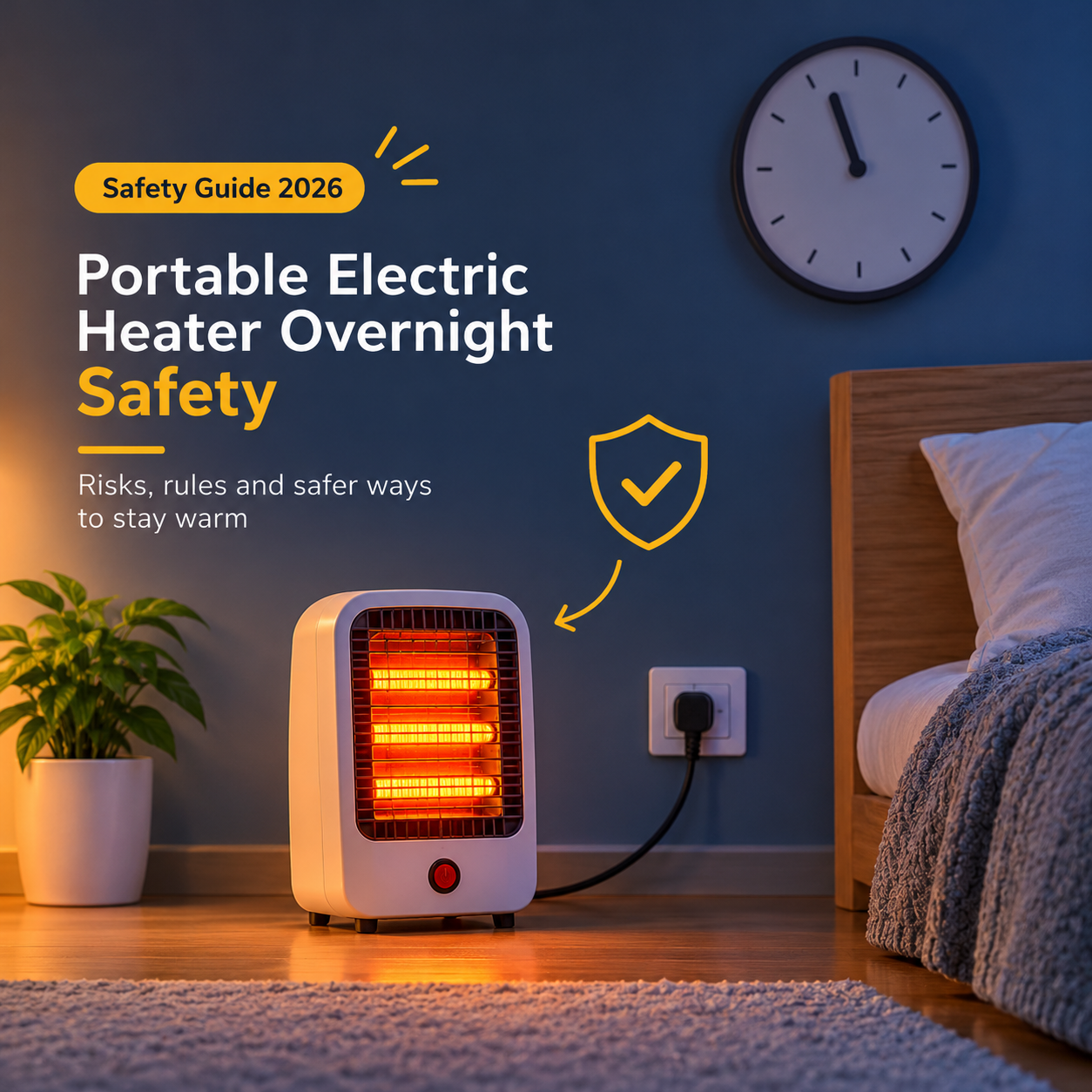
A chilly bedroom makes it tempting to switch the heater on, pull up the covers and drift off. Yet overnight is exactly when a heater problem is hardest to catch. If a heater tips, a blanket slides too close, or a cord overheats, nobody is awake to react. Knowing the facts about portable electric heater overnight safety helps you stay warm without taking unnecessary risks.
This guide covers what safety groups recommend, which features matter, how to set up a bedroom, and practical alternatives that keep you comfortable all night.
Why Overnight Use Is Riskier
- No one is watching: A fault, burning smell or tipped unit can go unnoticed for hours.
- Soft furnishings are close: Beds, blankets, clothes and curtains are all flammable and often near the heater.
- Long runtimes stress components: Plugs, cords and outlets heat up over many hours, and small faults grow.
- Movement while sleeping: Limbs, pets or bedding can bump, cover or push against the unit.
- Delayed reaction: A sleeping person responds more slowly to smoke and alarms.
What Do Safety Groups and Manufacturers Say?
Fire safety organizations commonly advise turning portable heaters off when you leave the room or go to sleep. Heater manuals often say the same thing. A few manuals describe limited overnight use for specific models with extra protections, but the wording varies. Your manual is always the final word, and ignoring it can also affect warranty and insurance claims.
Does the Heater Type Matter?
| Heater type | Characteristics | Overnight suitability |
|---|---|---|
| Oil-filled radiator | Steady, quiet, no glowing element | Often the preferred type if your manual allows overnight use |
| Convection / panel heater | Gentle, even heat | Reasonable choice with a thermostat and a clear zone |
| Ceramic fan heater | Fast but can be noisy | Fan noise and blast of hot air make it less suited to bedrooms |
| Infrared / quartz | Glowing element, intense radiant heat | Not suited to overnight use |
| Kerosene or gas heaters | Burn fuel, produce combustion gases | Never use while sleeping |
Choosing a lower-risk type improves your odds, but it does not remove the need for supervision, distance and safe wiring.
A Safer Bedtime Routine
The most reliable strategy is pre-warming. Run the heater while you get ready for bed, turn it off and unplug it before you sleep, then rely on bedding and insulation to hold the warmth.
If Your Manual Allows Overnight Use
Only consider overnight use if the manufacturer explicitly permits it. Even then, features and setup matter.
- Keep 3 feet (about 1 metre) clear on all sides, away from beds, curtains, clothes and papers.
- Use a hard, flat, level surface, not a bed, sofa or thick rug.
- Plug directly into a wall outlet, never a power strip or extension cord.
- Use the lowest setting that keeps the room comfortable.
- Check the plug and cord before sleeping and in the morning, and stop if they feel hot.
- Keep children and pets out of the clear zone, ideally in a separate room.
Smarter Alternatives to Running a Heater All Night
| Option | How it helps | Notes |
|---|---|---|
| Electric blanket or heated mattress pad | Warms the bed directly | Use only as the product instructions say, and replace old or damaged ones |
| Hot water bottle | No electricity needed | Use warm, not boiling, water and a cover |
| Layered bedding and thermal sleepwear | Keeps body heat in | Simple, quiet and very low risk |
| Insulation and draft sealing | Reduces heat loss | Helps every heating method |
| Programmable central heating or thermostat | Keeps the home at a set temperature | Best for long-term overnight warmth |
Insulation and draft sealing
The best long-term fix is keeping heat in. Weatherstripping, window film, thick curtains (kept well away from any heater) and door draft stoppers all reduce how much warmth you need.
Dress the bed, not the room
Layered blankets, a warm duvet, flannel sheets and warm sleepwear keep you comfortable at lower room temperatures without any heater running.
Smoke Alarms and Other Safeguards
- Install smoke alarms in every bedroom, outside sleeping areas and on every level.
- Test alarms monthly and replace batteries as recommended.
- Install carbon monoxide alarms if your home has any fuel-burning appliances.
- Keep a clear escape route and a fire extinguisher where you can reach it.
- Replace heaters that are old, damaged or have a frayed cord.
Common Mistakes to Avoid
- Falling asleep with the heater pointed at the bed.
- Placing the heater on the mattress, sofa or a pile of clothing.
- Draping a blanket over the heater to hold heat.
- Using a worn cord, extension cord or power strip.
- Relying on a thermostat as the only protection.
Frequently Asked Questions
Is it safe to leave a portable heater on overnight?
Many fire safety organizations advise turning heaters off when you sleep or leave the room. Some manufacturers allow overnight use for specific models with strong safety features, so read your manual and follow it strictly.
Which type of heater is safest overnight?
No portable heater is risk-free, but oil-filled radiators and thermostat-controlled convection heaters with tip-over and overheat protection are generally considered lower risk than glowing-element or fan models.
What temperature should a bedroom be at night?
Many sleep experts suggest a cool bedroom, often around 60 to 67 degrees Fahrenheit (about 16 to 19 degrees Celsius). Comfort varies from person to person, and layered bedding often works well at these temperatures.
Can a timer make overnight use safe?
A timer lowers the risk by limiting runtime, which makes it a good way to warm the room before bed. It does not make unattended all-night use risk-free, and it does not replace safe placement.
Do electric heaters produce carbon monoxide?
Electric heaters do not burn fuel, so they do not produce carbon monoxide. Fuel-burning heaters can, which is a serious danger while sleeping. Working smoke alarms and, if you have fuel-burning appliances, carbon monoxide alarms are important in every home.
Final Thoughts
For portable electric heater overnight safety, the most dependable plan is to warm the room before bed and switch the heater off before you sleep. If your manual permits overnight use, choose a thermostat-controlled, well-certified model, keep it on a hard floor with a wide clear zone, and plug it directly into a wall outlet. Combine that with good insulation, warm bedding and working smoke alarms, and you can enjoy a comfortable night with far less worry.
Disclosure: Some affiliate sites earn a commission from qualifying purchases at no extra cost to readers. Add your own disclosure text here as required. This article offers general safety information and does not replace your heater’s manual or local safety guidance.