

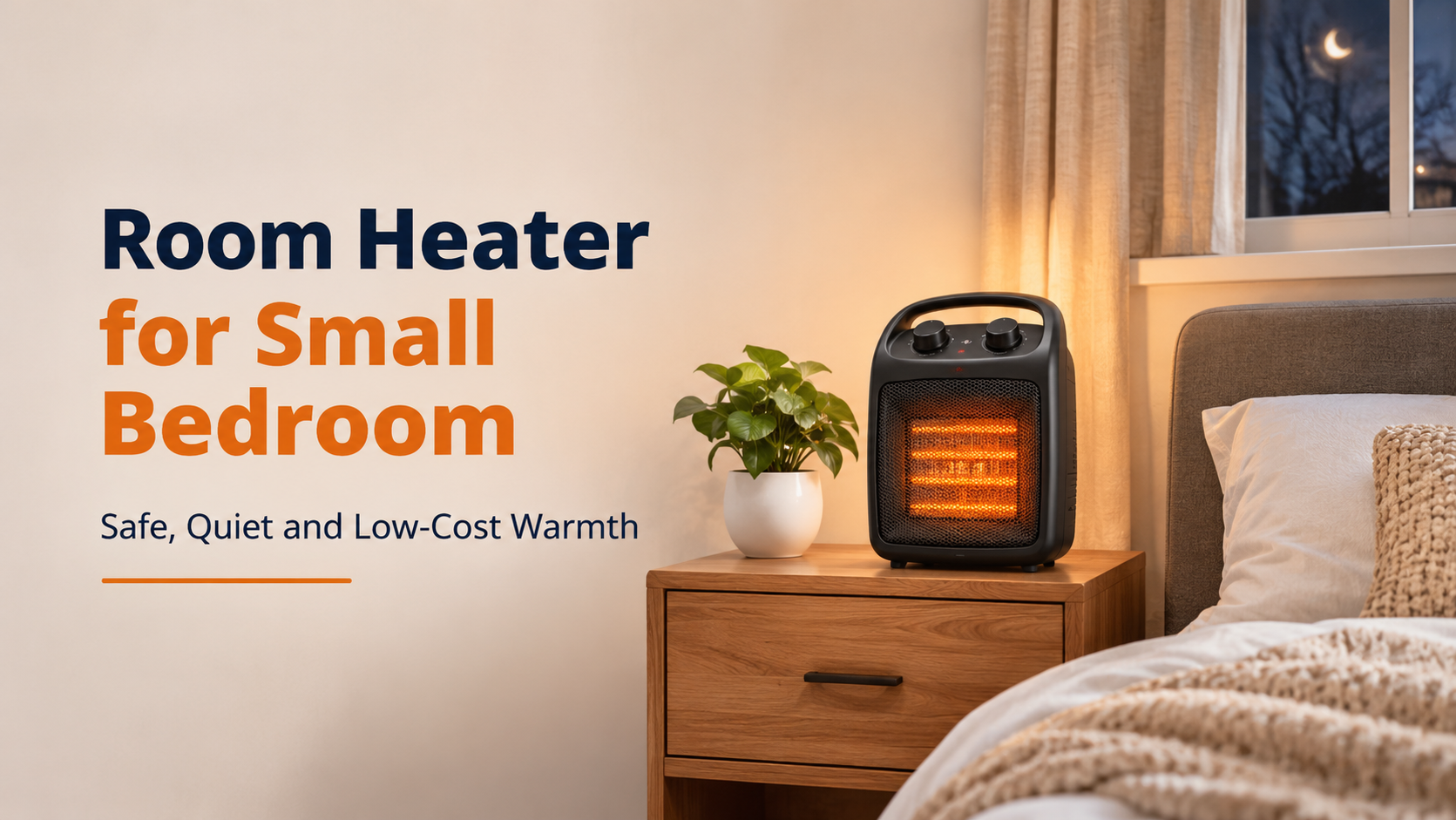
Room Heater for Small Bedroom: How to Choose the Safest, Quietest and Most Efficient One
A cold bedroom makes everything harder: getting out of bed, falling asleep, even getting dressed in the morning. For small bedrooms without central heating, a good room heater is the simplest fix. But small rooms come with their own rules. Buy a heater that is too powerful and you will overheat the room and waste electricity. Buy one that is noisy and it will ruin your sleep. Place it badly and it becomes a safety risk.
This guide is written for exactly that situation. You will learn how much power a small bedroom actually needs, which heater types are best (and worst) for sleeping spaces, how to place the heater safely, how much it costs to run and what to check before you buy. Everything is explained in simple language, with charts and tables to make decisions easier.
Quick Answer
- Size: A small bedroom (about 8 to 12 square metres, or 85 to 130 square feet) usually needs 800 W to 1,200 W. Go up to 1,500 W only if the room is cold, drafty or poorly insulated.
- Best types: Oil-filled radiators and convection panel heaters are the quietest, steadiest and most suitable for sleeping spaces.
- Must-have features: Adjustable thermostat, timer, tip-over switch and overheat protection.
- Smart habit: Warm the room before bed using a timer instead of running the heater all night.
How Much Power Does a Small Bedroom Need?
Bigger is not better when it comes to bedroom heaters. A heater that is too powerful heats the room quickly, then switches off and on constantly, which can create noise and uneven temperatures. One that is too weak runs flat-out for hours and still leaves the room cold.
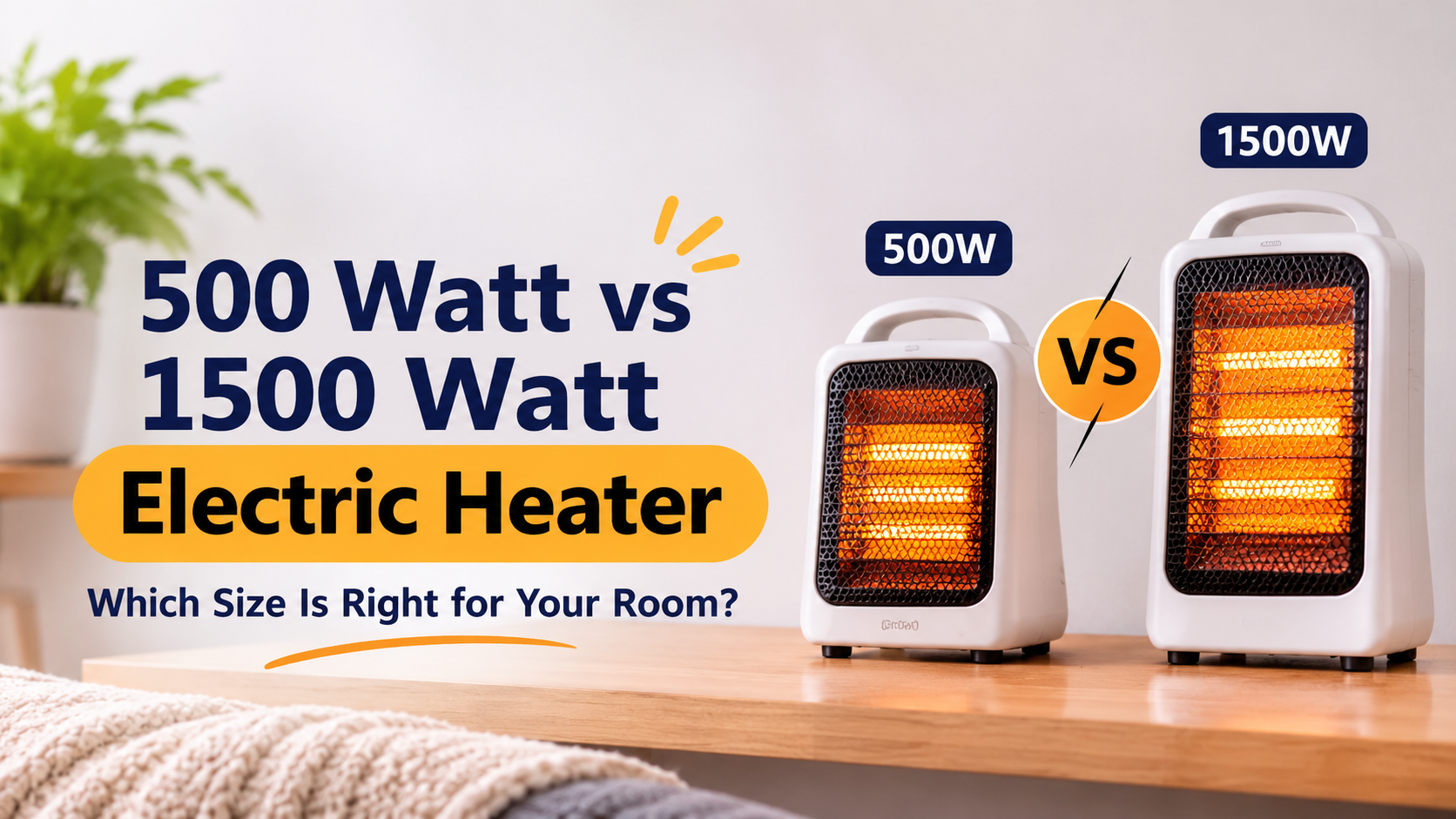
A common rule of thumb is about 100 watts per square metre (roughly 10 watts per square foot) for a reasonably insulated room with a normal ceiling height. Add 10–25% more if the room has large windows, thin walls, an exposed outside wall or a high ceiling.
What Makes a Heater Good for a Bedroom?
A bedroom is different from a living room. You spend long hours there, often asleep, so the priorities change. These are the qualities that matter most:
- Quiet operation. Fan noise and loud clicking can disturb sleep.
- Steady, even heat. Gentle warmth is better than blasts of hot air.
- Accurate thermostat. It holds your chosen temperature instead of running non-stop.
- Timer or auto shut-off. You can warm the room before bed and stop it automatically.
- Strong safety features. Tip-over protection, overheat cut-off and a stable base are essential near beds.
- Low light. Bright LED displays or glowing elements can keep you awake. Look for a display you can turn off.
- Compact design. Small rooms have little floor space to spare.
Best Types of Room Heater for a Small Bedroom
1. Oil-Filled Radiator
An oil-filled radiator heats sealed oil, which then warms the metal fins and radiates heat into the room. It is silent, holds warmth for a while after the element switches off and works well with a thermostat. It is slow to warm a cold room, so use a timer to preheat. It is also heavier and takes up some floor space, so check the size before buying.
2. Convection Panel Heater
A convection panel pulls in cool air at the bottom, warms it and releases it at the top, creating a gentle circulation. Most are fanless and nearly silent. Slim designs can be wall-mounted, which frees floor space in a small room and keeps the heater away from a tipping risk.
3. Ceramic Tower Heater
Ceramic tower heaters use a fan to push warm air into the room. They warm up quickly and take up little floor space, but the fan makes noise. They are better for preheating the room than for running while you sleep, unless you choose a model with a very quiet night mode.
4. Infrared Panel Heater
Infrared panels warm people and objects directly rather than heating the air. They are silent and give instant warmth, but the heat is directional, so they work better for warming yourself while you get dressed or read than for heating an entire bedroom. Avoid glowing quartz tubes in a sleeping space because of the visible light and very hot elements.
5. Compact Fan Heater
Small fan heaters are cheap, light and fast, which makes them handy for a quick boost in the morning. They are the noisiest and the least comfortable choice for long use in a bedroom.
| Heater Type | Noise | Warm-Up | Floor Space | Best Bedroom Use |
|---|---|---|---|---|
| Oil-filled radiator | Silent | Slow | Medium | Long, steady heating with a timer |
| Convection panel | Silent to very quiet | Medium | Small, can be wall-mounted | Everyday bedroom heating |
| Ceramic tower | Fan hum | Fast | Small | Preheating before bed |
| Infrared panel | Silent | Instant on the body | Small | Spot warmth while dressing or reading |
| Compact fan heater | Noticeable fan noise | Very fast | Very small | Quick morning boost only |
Types to Avoid in a Bedroom
- Gas, kerosene, charcoal or any unvented fuel-burning heater. They use up oxygen and can release carbon monoxide, which is extremely dangerous in a closed sleeping space.
- Cheap, uncertified heaters with no tip-over or overheat protection.
- Heaters with exposed glowing elements if children or pets share the room.
Where to Place a Heater in a Small Bedroom
Good placement improves comfort and safety. The best spot is usually near the coldest part of the room, often under or near a window, on a hard, flat floor and well clear of the bed.
- Keep the heater at least one metre away from beds, curtains, clothes and furniture.
- Plug it directly into a wall socket. Do not use extension cords or multi-plug adaptors.
- Choose a model with tip-over protection and overheat cut-off.
- Do not cover the heater, dry clothes on it or place anything on top of it.
- Do not leave it running unattended for long periods, and do not use it as your all-night heat source unless the manufacturer says it is designed for that.
- Test your smoke alarm regularly and keep a clear path to the door.
- Keep children and pets away from hot surfaces.
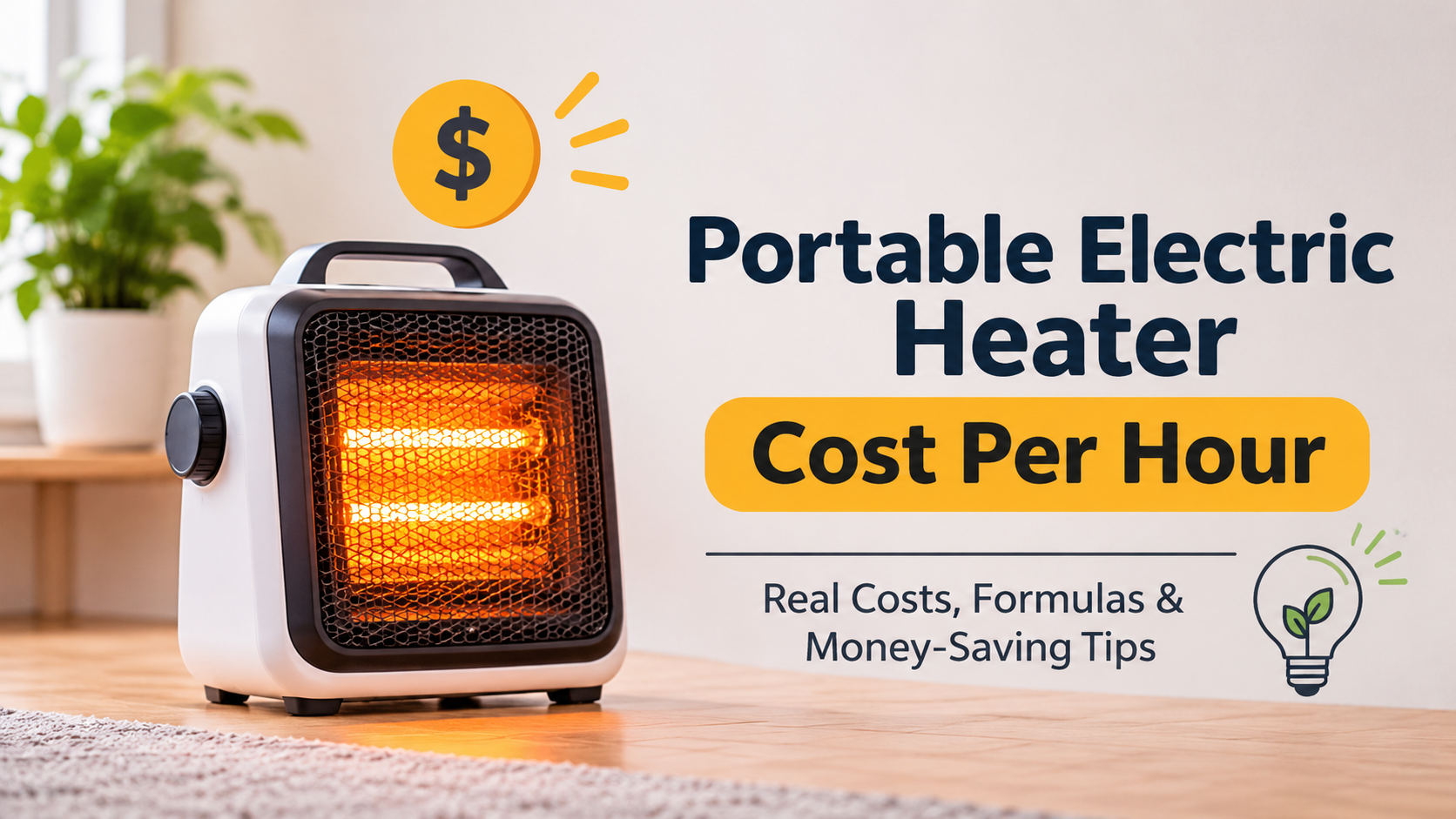
How Much Does It Cost to Run a Bedroom Heater?
Running cost depends on wattage, hours of use and your electricity price. The formula is simple:
A thermostat reduces the real running time, because the heater switches off once the room is warm. A well-sized heater in a small, closed bedroom often runs only part of the time after the first warm-up.
A Smart Bedtime Heating Routine
You do not need heat all night. Warming the room before you sleep and letting a thick blanket do the rest is cheaper and safer than running a heater for 8 hours.
Features to Look for When Buying
| Feature | What to Look For | Why It Matters in a Bedroom |
|---|---|---|
| Adjustable thermostat | Dial or digital control with clear temperature steps | Holds a comfortable temperature without overheating |
| Timer | Programmable on/off or auto shut-off | Lets you preheat and switch off automatically |
| Multiple power settings | Two or three levels, such as 800 W, 1,200 W, 2,000 W | Lets you reduce power once the room is warm |
| Tip-over switch | Automatic cut-off when knocked over | Essential near beds and in tight spaces |
| Overheat protection | Thermal cut-out if the unit gets too hot | Reduces fire risk if vents are blocked |
| Quiet operation | Fanless design or a quiet night mode | Protects your sleep |
| Display light control | Display that can be dimmed or turned off | Avoids bright lights in the dark |
| Size and weight | Compact, with handles or wheels if portable | Easier to move and store in a small room |
| Cool-touch surface | Lower surface temperature, safety grille | Safer for kids and pets |
| Certification and warranty | Recognised safety marks and at least a 1–2 year warranty | Reliable safety and after-sales support |
Our Verdict
For most small bedrooms, a 1,000 W to 1,500 W oil-filled radiator or convection panel heater with a thermostat and timer is the safest, quietest and most economical choice. If you want fast heat for getting dressed, add a small ceramic or fan heater as a short-term booster, and use it only while you are awake and in the room.
How to Keep a Small Bedroom Warm Without Overusing the Heater
A heater works best when the room can hold warmth. These low-cost steps help you use less power for the same comfort:
- Seal drafts around windows and under the door with weather-stripping or a draft stopper.
- Use thick or thermal curtains and close them at dusk.
- Lay a rug on cold floors, especially tile or concrete.
- Keep the bedroom door closed while the heater is on.
- Use bedding smartly. A good duvet, flannel sheets and a hot water bottle cut the need for all-night heating.
- Consider an electric blanket if you only need warmth in bed, and follow the manufacturer’s instructions carefully.
- Do not over-heat. Many people sleep best in a cool, comfortable room, often somewhere around 16°C to 19°C, though preferences vary.
Common Mistakes to Avoid
- Buying a heater that is too powerful for a small room.
- Placing the heater right next to the bed or under a curtain.
- Using a cheap extension cord with a high-power heater.
- Choosing a noisy fan heater for all-night use.
- Ignoring the timer and thermostat features.
- Leaving a heater on in an unattended room.
Frequently Asked Questions
What size heater do I need for a small bedroom?
Most small bedrooms of 8 to 12 square metres need about 800 W to 1,200 W. If your room is cold, drafty or has big windows, choose a heater up to 1,500 W with adjustable settings and use the thermostat to avoid overheating.
Which type of heater is best for a small bedroom?
An oil-filled radiator or a convection panel heater is usually best. Both are quiet, give steady warmth and work well with thermostats and timers. Ceramic tower heaters are good for quick preheating but have a fan that may be noisy for sleeping.
Is it safe to sleep with a room heater on?
It is safest to warm the room before bed and use a timer to switch the heater off. If you do use one while sleeping, choose a model with tip-over and overheat protection, keep it at least a metre from bedding, plug it directly into a wall socket and follow the manufacturer’s guidance. Never use gas, kerosene or any fuel-burning heater in a closed bedroom.
Is an oil-filled radiator or a convection heater cheaper to run?
At the same wattage, they use the same electricity per hour. The one that costs less is the one you can control better, so look for a good thermostat and timer, and use a heater that is correctly sized for the room.
How many watts do I need for a 10 x 10 ft bedroom?
A 10 x 10 ft room is 100 square feet, or about 9.3 square metres. The rule of thumb of 10 watts per square foot suggests about 1,000 W. A heater with adjustable settings around 800 W to 1,200 W is a sensible choice.
What is the best heater for a baby’s room?
Choose a quiet, stable heater with a cool-touch surface and strong safety features, place it well out of reach and follow your paediatrician’s and the manufacturer’s guidance. Many safe sleep recommendations suggest keeping a baby’s room around 16°C to 20°C, so a thermostat is very helpful.
Can I use a heater in a small bedroom without a window?
Electric heaters do not burn fuel or use oxygen, so they can be used in rooms without windows, but you should still keep the space clear and ventilate regularly. Never use a fuel-burning heater without proper ventilation.
Final Thoughts
The best room heater for a small bedroom is not the most powerful one. It is the one that matches the size of the room, runs quietly, holds a steady temperature and has the safety features you need around a bed. Choose a thermostat-controlled oil-filled radiator or convection panel heater, place it sensibly, use a timer to preheat and switch off, and back it up with simple habits like sealing drafts and using warm bedding.
Follow these steps and your bedroom will feel warm, quiet and comfortable all winter, without a shocking electricity bill.